
Sign up to save your podcasts
Or

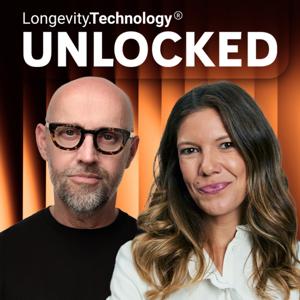


Guest: Joanna Bensz
Founder & CEO of Longevity Center and Longevity Academy
LinkedIn: https://www.linkedin.com/in/joanna-bensz-205b315/
Website: https://longevity-academy.com/, https://longevity-center.eu/
----------
What happens when longevity becomes a global industry before the medical system has agreed on what good longevity medicine actually looks like?
Phil Newman sits down with Joanna Bensz, entrepreneur, founder of the International Institute of Longevity, Longevity Academy and Round Table of Longevity Clinics, to explore how a rapidly expanding sector can develop credible standards while keeping pace with commercialization. They discuss the growth of longevity clinics, from premium destinations and telehealth platforms to sports centres and preventive health providers, and why Joanna estimates that only around 20% of the clinics she knows genuinely focus on diagnostics and interventions.
The conversation examines peptides, biological-age testing, clinical education and the need for protocols that connect biomarkers with appropriate interventions rather than simply adding more treatments. Joanna explains how Longevity Academy evolved from an internal doctor-training programme into an educational platform for clinicians, drawing on real-world clinic experience, biomarkers, testing and treatment decisions.
The episode goes beyond the clinic itself, examining the growing role of sports centres, retreats, AI, mental health, nervous-system regulation, nutrition and family health. Joanna argues that longevity should not be reduced to peptides or expensive interventions, but should include the everyday environments and behaviours that shape health across the lifespan.
In this episode, you’ll learn:
Ultimately, this episode asks whether longevity medicine can become a credible part of healthcare without losing scientific and clinical rigor as the market scales. For Joanna, the path forward involves better education, clearer standards, measurable outcomes, collaboration and a more integrated approach to health that extends beyond the traditional doctor-patient relationship.
Subscribe for weekly episodes exploring longevity science, preventative medicine, healthcare innovation and the systems shaping how we live longer and better.
----------
Host:
Phil Newman: https://qrco.de/bgXpNY
Sponsor: Longevity Investors Conference
The Longevity Investors Conference brings together the scientists working at the root of aging, the clinicians translating research into practice, the founders building the next generation of longevity companies, and the investors deciding what gets funded next.
The seventh edition takes place from 14 to 17 September 2026 at Le Grand Bellevue in Gstaad, Switzerland. Participation is limited and applications are reviewed individually.
Click the link below to apply for LIC 2026.
Link: https://www.longevityinvestors.ch/lic-2026
----------
Guests: Max Marchione
Founder & CEO of Superpower, Speaker at Longevity Investors Conference Gstaad 2026
LinkedIn and X: https://www.linkedin.com/in/maxmarchione/, https://x.com/maxmarchione
Website: https://superpower.com/
----------
What if the future of healthcare is not a better hospital, but a system designed to keep you out of one?
Phil Newman sits down with Max Marchione, co-founder and CEO of Superpower, to explore his vision for a preventive health platform combining advanced diagnostics, longitudinal health data, wearables, AI and clinicians in one continuous system.
Recorded as a Longevity Investors Conference special, the conversation examines why healthcare remains largely reactive and episodic, and what it would take to create an experience that continuously monitors health, connects biological signals and intervenes before problems become disease.
Max explains how Superpower uses AI to examine data across blood tests, medical records and wearables, identifying patterns that may be difficult to uncover during a short medical appointment. They also discuss where human clinicians remain essential, particularly when decisions involve prescriptions, hormone therapy or other higher-risk interventions.
The conversation explores the limitations of conventional blood-test reference ranges, the growing interest in peptides, including GLP-1 therapies and the controversial BPC-157, and why promising anecdotes must still be tested through rigorous clinical research.
They also discuss Superpower’s direct-to-consumer and employer-funded models, the observational health dataset the company is building, the regulatory debate around right-to-try laws and Max’s much larger ambition to help create healthier cities.
In this episode, you’ll learn:
If you want to understand how AI, continuous diagnostics and longitudinal data could shift healthcare from episodic treatment toward proactive health management, this episode connects an ambitious technological vision with the clinical, commercial and regulatory realities of building a new healthcare system.
Subscribe for weekly episodes exploring longevity science, preventive medicine and the systems shaping how we live longer and better.
----------
Host:
Phil Newman: https://qrco.de/bgXpNY
In this week’s Longevity News Roundup, Phil Newman examines South Korea’s emerging health tourism model, Network Bio’s biological data platform, Utah’s growing longevity economy, GenBio AI’s virtual cell system, and Longevica’s push toward clinical translation.
----------
News & References:
----------
Host:
Phil Newman: https://qrco.de/bgXpNY
Hosts:
Phil Newman: qrco.de/bgXpNY
Nina Patrick: qrco.de/bgXpKn
----------
Sponsor: YEARS
YEARS is a physician-led longevity clinic in Berlin that takes a proactive approach to health. Combining advanced diagnostics, biomarkers, imaging, and longitudinal data, YEARS helps identify health risks earlier and build personalized strategies designed to support healthier, longer lives.
Link: www.years.co/en
----------
Guests:
Jürgen Mehrtens
Co-Founder & CEO of YEARS
LinkedIn: www.linkedin.com/in/j%C3%BCrgen-mehrtens-116303b1/
Website: www.years.co/en
Alexandru Ardelean, MD
Specialist in Internal Medicine of YEARS
LinkedIn: www.linkedin.com/in/alexandru-c-ardelean-md-aba522109/
Website: www.years.co/en
----------
What if the future of preventive medicine is not simply better treatment, but knowing what is changing in the body years before disease appears?
Phil Newman and Dr. Nina Patrick sit down with Dr. Alexandru Ardelean, internal medicine specialist at YEARS, and Jürgen Mehrtens, CEO of YEARS, to explore how predictive biomarkers and longitudinal health data could reshape the way we understand aging and prevention.
Together they unpack the growing role of biomarkers such as GDF-15 and P-tau217. GDF-15 can reflect processes including mitochondrial dysfunction, hypoxia, oxidative stress, and chronic inflammation, while longitudinal measurements may reveal patterns that a single test cannot. They also discuss why these biomarkers are not yet used to prescribe specific treatments, but can help measure whether lifestyle interventions are working.
The conversation also explores how YEARS is building a standardized longitudinal dataset by requiring clients to undergo the same diagnostic framework over time, creating data that could eventually help researchers and pharmaceutical companies better understand aging.
They discuss biomarker variability, false negatives, patient adherence, community-based interventions, the role of partner gyms, YEARS' upcoming app, and the potential for private preventive medicine models to influence broader healthcare systems.
In this episode, you’ll learn:
If you want to understand how predictive biomarkers could move healthcare from reacting to disease toward continuously measuring and managing risk, this episode connects emerging biomarker science with the practical realities of preventive medicine, patient behavior, and the future of longevity clinics.
Subscribe for weekly episodes exploring longevity science, preventative medicine, and the systems shaping how we live longer and better.
Sponsor: FlexBeam
FlexBeam is a wearable red light therapy system that brings targeted support directly to where you need it most. Lightweight, portable, and easy to use, it fits naturally into your daily routine, making recovery and self-care more accessible whether you're at home, traveling, or between activities.
Click the link below to learn more and use code LONGEVITY.TECHNOLOGY for 10% off.
Link: rechargehealthas.sjv.io/jRQyQ5
----------
In this week’s Longevity News Roundup, Phil Newman examines how longevity is developing the clinical standards, biological models and infrastructure needed to move from promising technology toward real-world medicine.
----------
News & References:
----------
Hosts:
Phil Newman: https://qrco.de/bgXpNY
Hosts:
Phil Newman: https://qrco.de/bgXpNY
Nina Patrick: https://qrco.de/bgXpKn
----------
Sponsor: YEARS
YEARS is a physician-led longevity clinic in Berlin that takes a proactive approach to health. Combining advanced diagnostics, biomarkers, imaging, and longitudinal data, YEARS helps identify health risks earlier and build personalized strategies designed to support healthier, longer lives.
Link: www.years.co/en
----------
Guest:
Tom Rifai MD FACP DipABLM
Founder and CEO at Reality Meets Science®
LinkedIn: www.linkedin.com/in/flex5/
Website: realitymeetsscience.com/
Cristopher Gardner, PhD
Professor of Medicine and Director at Stanford Nutrition Studies Research Group
LinkedIn: www.linkedin.com/in/christopher-gardner-phd/
Website: med.stanford.edu/profiles/christopher-gardner
Stuart Phillips, PhD
Professor; Director, PACE and Professor, Kinesiology, Faculty of Science at McMaster University
LinkedIn: www.linkedin.com/in/stuartmphillips/
Website: mira.mcmaster.ca/our-faculty/stuart-phillips/
----------
What if the biggest advances in longevity have less to do with finding the perfect diet, and more to do with preserving muscle, improving movement, and building habits that last?
Phil Newman and Dr. Nina Patrick sit down with Dr. Christopher Gardner, Professor of Medicine at Stanford University and one of the world's leading nutrition researchers, Dr. Stuart Phillips, internationally recognized expert in skeletal muscle, aging, exercise, and protein metabolism, and Dr. Tom Rifai, lifestyle medicine physician and nutrition specialist, to separate nutrition science from social media hype.
Together they unpack why popular diet labels often distract from what truly matters, why muscle is emerging as one of the most important predictors of healthy aging, and how exercise, dietary quality, and sustainable behavior change consistently outperform quick fixes. From Mediterranean and vegan diets producing remarkably similar health outcomes when built around whole foods, to the growing challenges of preserving muscle during GLP-1 driven weight loss, the discussion highlights where the evidence is strongest and where public perception has drifted away from the science.
The panel also explores whether most people really need more protein, why resistance training matters far more than simply increasing protein intake, how clinicians should approach muscle preservation in older adults, and why food policy, environment, and long-term coaching may ultimately have a greater impact on population health than the latest nutrition trend.
In this episode, you’ll learn:
Whether you're trying to make sense of conflicting nutrition advice, optimize healthy aging, or understand where longevity science is actually headed, this conversation brings together decades of clinical research, practical medicine, and real-world experience to reveal the bigger picture.
Subscribe for weekly conversations exploring longevity science, preventative medicine, biotechnology, and the innovations shaping how we live longer, healthier lives.
Sponsor: FlexBeam
FlexBeam is a wearable red light therapy system that brings targeted support directly to where you need it most. Lightweight, portable, and easy to use, it fits naturally into your daily routine, making recovery and self-care more accessible whether you're at home, traveling, or between activities.
Click the link below to learn more and use code LONGEVITY.TECHNOLOGY for 10% off.
Link: rechargehealthas.sjv.io/jRQyQ5
----------
In this week's Longevity News Roundup, Phil Newman explores whether aging research has overlooked half the population, why supplement quality is becoming a scientific issue, how NAD+ science is moving into pharmaceutical development, and what superagers reveal about the limits of genetic prediction.
----------
News & References:
----------
Hosts:
Phil Newman: https://qrco.de/bgXpNY
Hosts:
Phil Newman: https://qrco.de/bgXpNY
Nina Patrick: https://qrco.de/bgXpKn
----------
Sponsor: Stride
Stride helps people understand and improve their wellbeing and longevity through personalised DNA, microbiome, blood biomarker testing, expert guidance, tailored supplements, and actionable insights grounded in robust human science.
Click the link below to learn more and use the code 'UNLOCKED' for your 10% discount.
Link: www.getstride.com/unlocked/
----------
Guest: Andrew Steele
Co-Founder & CEO of Stride
LinkedIn: www.linkedin.com/in/andrewsteeleathlete/
Website: www.getstride.com/eu/
----------
What if the future of healthcare isn't about finding disease earlier, but preventing it from developing in the first place?
Phil Newman and Dr. Nina Patrick sit down with Andrew Steele, founder and CEO of Stride and former Olympic sprinter, to explore how personalized health is evolving beyond wearables, blood tests, and genetic reports into a truly integrated model of prevention. Drawing on his experience as an elite athlete and entrepreneur, Andrew explains why collecting more health data isn't enough, and why the real challenge is helping people make better decisions that actually change long term behavior.
The conversation explores how Stride combines genetics, microbiome testing, advanced blood biomarkers, wearable data, and practitioner coaching into a single preventive health platform designed to prioritize the actions that matter most. Rather than overwhelming people with hundreds of recommendations, Andrew argues that sustainable health improvement comes from identifying a few highly personalized interventions that create momentum for broader lifestyle change.
They also discuss how longitudinal testing can reveal patterns that traditional healthcare often misses. Instead of relying on whether a biomarker sits inside or outside a population reference range, Andrew explains why understanding an individual's direction of travel over time may provide much earlier signals of future health risks. The discussion explores how integrating multiple biological data layers could eventually allow AI powered systems to identify preclinical risk years before disease develops.
The episode also examines the growing role of consumer health technologies, the limitations of existing healthcare systems, and why prevention increasingly sits outside traditional medicine. Andrew shares why he believes younger generations are embracing longevity as part of their identity, how behavioral psychology influences successful health interventions, and why human coaching remains essential even in an AI driven future.
In this episode, you’ll learn:
If you want to understand where personalized medicine is heading, how AI could transform prevention, and why the next generation of healthcare may be built around continuous, individualized guidance rather than reactive treatment, this episode offers an insightful look at the future of longevity.
Subscribe for weekly conversations exploring longevity science, precision medicine, biotechnology, AI, and the innovations shaping healthier, longer lives.
Hosts:
Phil Newman: https://qrco.de/bgXpNY
Nina Patrick: https://qrco.de/bgXpKn
----------
Sponsor: FlexBeam
FlexBeam is a wearable red light therapy system that brings targeted support directly to where you need it most. Lightweight, portable, and easy to use, it fits naturally into your daily routine, making recovery and self-care more accessible whether you're at home, traveling, or between activities.
Click the link below to learn more and use code LONGEVITY.TECHNOLOGY for 10% off.
Link: rechargehealthas.sjv.io/jRQyQ5
----------
In this week's Longevity News Roundup, Phil Newman and Nina Patrick examine new Alzheimer's therapies, the growing debate around experimental peptides, expanding access to investigational treatments, rapid advances in metabolic disease and encouraging progress in longevity gene therapy.
----------
News & References:
Hosts:
Phil Newman: https://qrco.de/bgXpNY
Nina Patrick: https://qrco.de/bgXpKn
----------
Sponsor: FlexBeam
FlexBeam is a wearable red light therapy system that brings targeted support directly to where you need it most. Lightweight, portable, and easy to use, it fits naturally into your daily routine, making recovery and self-care more accessible whether you're at home, traveling, or between activities.
Click the link below to learn more and use code LONGEVITY.TECHNOLOGY for 10% off.
Link: rechargehealthas.sjv.io/jRQyQ5
----------
Guests: Dylan V. Livingston
Founder and CEO of The Alliance for Longevity Initiatives (A4LI)
LinkedIn: www.linkedin.com/in/dylan-v-livingston/
Website: a4li.org/
----------
What if the biggest barrier to longer, healthier lives isn't scientific discovery, but public policy?
In this episode, Phil Newman and Dr. Nina Patrick sit down with Dylan V. Livingston, founder and CEO of the Alliance for Longevity Initiatives (A4LI), to explore how Washington is becoming one of the most important frontiers in healthy aging.
Based on his unusual journey from political campaigning to longevity advocacy, Dylan explains why extending healthy lifespan requires more than innovative biotechnology. It also requires regulatory reform, stronger public investment, and policymakers who understand the biology of aging. From his work advancing state-level Right to Try legislation to proposals for new FDA pathways that recognize therapies targeting multiple age-related diseases, he shares how policy could dramatically accelerate the translation of longevity science into clinical practice.
The conversation explores the growing role of biomarkers, surrogate endpoints, and ARPA-H's PROSPR program in creating clearer regulatory pathways for aging interventions. Dylan also discusses proposals for expanding NIH support for aging biology research, why the current funding landscape remains misaligned with the burden of age-related disease, and how advocacy organizations can help bridge the gap between researchers, biotech companies, regulators, and elected officials.
They also examine whether the United States can maintain its leadership in longevity innovation as countries around the world invest in their own longevity ecosystems, and why creating the right incentives today could determine who leads the next generation of medicine.
In this episode, you’ll learn:
If you want to understand how longevity is evolving from a scientific discipline into a healthcare and public policy movement, this episode explores the people, institutions, and regulatory decisions that could shape the future of healthy aging for decades to come.
Subscribe for weekly conversations exploring longevity science, biotechnology, preventative medicine, and the innovations transforming how we live longer and better.
From the publisher's feed