
Sign up to save your podcasts
Or

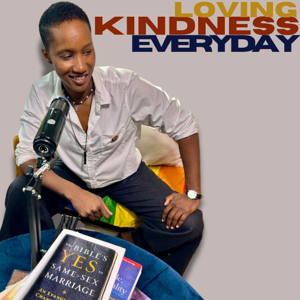


Did you know there's a free STEM program backed by the U.S. Air Force that puts telescopes, rocketry kits, science books, and hands-on learning tools directly into the hands of educators — at no cost? In this episode of Loving Kindness Every Day, we sit down with Natalie, also known as Cap H — veteran, scientist, community educator, and Civil Air Patrol Aerospace Education Member — to break down exactly what this program is, who it's for, and how your family can take advantage of it right now.
Natalie pulls back the curtain on the Civil Air Patrol's Aerospace Education Member (AEM) program: a $35/ ONE TIME LIFETIME membership fee that gives traditional and non-traditional educators access to free STEM kits, lesson plans, books, and resources covering science, technology, engineering, arts, and math. From building model rockets in the park with three-year-olds to launching real rockets with middle schoolers, Natalie shares how she brings aerospace education into classrooms, after-school programs, senior centers, and community spaces — often with nothing more than paper, tape, and passion.
We talk about the Civil Air Patrol's cadet program (think ROTC — but cadets actually fly), cybersecurity certifications, search and rescue training, and the pipeline it creates for young people entering STEM careers. We also get into the real challenges: why educators sign up and never order their free kits, why grant-funded programs disappear, and why parents — not schools — are the first line of defense when it comes to their children's education.
In this episode:
Whether you're a parent, a classroom teacher, a homeschooler, a youth program coordinator, or someone who works with seniors, this episode is your sign to get in the game — because there's a game being played, and your child deserves a seat at the table.
Search: Civil Air Patrol Aerospace Education Member Program
Have you ever lost anything and then realized that losing it might have been the best thing that ever happened to you?
Episode Sponsor: Asheville Sanctuary
In this episode, Kindness Calloway sits down with Debra Roberts, a 74-years-young artist, poet, bee bhakti, and Appalachian mountain dweller who has spent a lifetime at the crossroads of creativity and spirituality. Debra grew up in a vibrant arts and crafts household and has explored nearly every creative form imaginable — documentary film, dance, theater, poetry, ritual, and spontaneous kitchen rumba. In 2005, the honeybees called and she answered. She now lives deep in the mountains of Western North Carolina with her husband Joe, all manner of wildlife, and thousands upon thousands of honeybees she tends with full devotion.
Both Kindness and Debra have lived through house fires. Both lost everything. And what they discovered on the other side of that loss will make you rethink your relationship with your stuff, your sense of control, and your sense of self.
If you've ever held on too tight to something, someone, or some version of yourself — this conversation is for you.
You'll walk away from this episode with:
A new way of thinking about what you're actually attached to and why.
Permission to grieve the life you lost and excitement about the one being built.
Debra's grounded, nature-rooted wisdom on starting over with nothing but yourself.
A reminder that control was always an illusion, and that's actually good news.
Connect with Debra: Explore her world of art, bees, and Appalachian wisdom at Holy Mischief on Substack
Listen, follow and share:
🎙️ Search "Loving Kindness Everyday" on Apple Podcasts or Spotify and hit Follow so you never miss an episode.
⭐ A five-star review takes 30 seconds and helps this show reach someone who needs it today.
📲 Know someone rebuilding after a loss? Send them this episode. Kindness grows when we pass it on.
▶️ Watch on YouTube: Search Kindness Calloway and hit the 🔔 bell.
Loving Kindness Everyday. Real stories. Soul-deep conversations. The divine synchronicity that happens when vulnerability meets wisdom.
Some of the best things that have ever happened on this show started with a wrong turn.
I wasn't looking for Jessica Elaine Blinkhorn. I was trying to find Jessica Marshall from Episode 3.12… when her face stopped me mid-scroll.
I didn't know her personally—but I knew her.
I had seen her around my neighborhood more times than I could count. Full punk makeup. Music loud. Powerchair in motion. Completely, unmistakably herself.
So when her Instagram (@wheelie_an_artist) came up, I knew immediately: i know her.
I reached out on July 13th. She replied the same day. We had been living four blocks from each other.
That's Divine Synchronicity.
Several days later we ended up back at my apartment with Christian Amaro—who just happened to already be there.
No plan. Mics on. We just started talking.
"I'm still here. I don't really feel like doing this."
That's how this episode begins.
Because that's real life. And some conversations are too important to wait until you feel ready.
What followed was one of the most candid, necessary conversations we've had on this show.
We talk about gender, pronouns, and how my own thinking has been shifting—especially after Episode 3.12. But the conversation doesn't stay there.
It goes deeper.
Into what it actually means to live in a body that the world wasn't built for.
"The most disabling part about being disabled isn't my body. It's living within a system that feigns empathy but practices apathy."
Jessica Blinkhorn shares what most people don't see:
She shares how she escaped an assault.
How she nearly died alone in her apartment—trapped under a table, unable to breathe—until she found a way to move a laptop inch by inch to send a message for help.
"You find a way. You find a way to make it work."
We talk about the cost of survival:
And a system that caps her bank account at around $2,000— while simultaneously making independence nearly impossible.
"Having anything means losing everything for us."
We also talk about something most people don't know:
Disabled people in the U.S. effectively do not have marriage equality.
Because getting legally married can mean losing access to healthcare, caregivers, and life-sustaining support.
"We are the porcelain dolls of capitalism. Beautiful to look at—then put away."
This conversation will challenge you.
It challenged me. If you let it, it will change you. It changed me.
I woke up that morning thinking things were relatively fair. I went to sleep knowing I was wrong.
We also reference Saprea, a resource for survivors of childhood sexual abuse.
1 in 8 children are sexually abused before the age of 18.
If that's part of your story, you're not alone.
Jessica's work—including her project SPANKBOX—pushes people to confront how they think about disability, sexuality, and autonomy. It's uncomfortable. It's confrontational.
And it's necessary.
You'll hear everything as it happened:
The pauses. The background noise. The MARTA. The sound of her powerchair shifting so she can breathe.
I left it all in—so you can feel what it was like to be there.
And the episode ends the way it ends.
In real time.
Jessica looks outside. The sky is turning. We leave so I can get her home before the rain hits.
No perfect closing. No neat resolution. Just life continuing.
"They're going to talk about it… not to your face, but behind your back."
Not here. We say it out loud.
This episode follows directly from Episode 3.12: Breaking Every Box.
Jessica will be back. There's more to her story—especially the protest work she's been doing—and we'll bring you all of it. Check out more by searching "Loving Kindness Everyday" or "Kindness Calloway" online.
🕊️
In this Loving Kindness Everyday Special, Kindness Calloway sits with Richelle D. Brown, Snellville City Council candidate, for a deeply spiritual and uplifting exchange about faith, endurance, and divine purpose.
Richelle opens her heart about overcoming challenges, walking through the fire, and emerging refined but not consumed. Together, they explore how God's presence and love can guide not only personal healing but also public service — reminding us that even in the trials, grace leaves no trace of smoke.
✨ Don't forget to make your voice heard — Snellville votes on November 4th, we all vote on the 4th of November.
Breaking Every Box || LKE 3.12 Season 3 of Loving Kindness Everyday wraps with a boundary-breaking final episode you won't soon forget! 🎙️
Jessica Marshall first stepped into the public eye in the 1990s on The Phil Donahue Show, becoming one of the first trans women to openly share her story on national television. Decades later, she sits down with Kindness Calloway on Loving Kindness Everyday to reflect on that groundbreaking moment and everything that's come since.
In this conversation, Jessica opens up about her personal journey with estrogen, what it feels like to live in her body, and how hormone therapy has shaped her experience of womanhood. We also dive into one of today's most debated topics —> trans athletes in sports. Should there be a third category where trans and nonbinary people can compete? Jessica shares her unfiltered take, bringing honesty, passion, and lived wisdom to the conversation.
This episode isn't just about gender or sports it's about identity, truth, and the freedom to live beyond Every box society tries to put us in.
This episode goes deep into gender identity, ethical non-monogamy (ENM), BDSM, and sexual taboos and truths that rarely get this kind of open, real conversation.
Join the conversation! Reach out on social media —> let us know how You Feel!
✨ …and stay tuned —> Season 4 will be here before you know it, and the best is yet to come!
📍 Loving Kindness Everyday is Sponsored in part by Rachelle Tires and Wheels (@rtwcustoms) stop by and let them help you they are located at the corner of Boulevard and Memorial Drive in Southeast Atlanta, right across from Oakland Cemetery.
📍 Barber Logic (barberlogic.com) - Looking for the best barber shop in Atlanta, GA? Barber Logic offers expert haircuts, grooming, and personalized service in a modern, friendly atmosphere. (Ask for Tami 👉🏾 @tami_barberlogic) Also featured: Rob Thompson (@sk8tl_official) + Tiffany Calloway (@mrs.calloway)
Some Topics in the Episode Include:
Jessica Marshall Fire Artist Interview
Loving Kindness Everyday podcast
Kindness Calloway Podcast Season 3 finale
gender identity stories
nonbinary athletes in sports
ethical non monogamy ENM explained
BDSM discussion podcast
trans history Phil Donahue Show
taboo conversations podcast
queer podcast Atlanta
LGBTQ podcast 2025
gender transition stories
non monogamy podcast
Kindness Calloway season 4 podcast announcement
One night at the skating rink, Kindness Calloway comes across a scene that makes them stop and ask: "Wait—what are you doing?" That's how this unexpected conversation with Ria (@riabarkr) began.
What follows is a raw and inspiring exchange about more than just music. Ria shares how her mom trained her not only in voice but also in spiritual awareness, teaching her to use the reticular activating system (RAS) to focus her thoughts and create the life she wants. We talk about why training your mind is just as important as training your craft.
We're also joined by Tyyla (@tyylamusic), who was there the night Kindness and Ria first met, and we give a big shoutout to Ria's UK producer Jared (@jxred.wav) for his work on Bliss.
The episode closes with an invitation: take about four minutes to channel Bliss while listening to Ria's song by the name. Let yourself enjoy a moment of calm, clarity, and joy.
Thanks for tuning in to another episode! If you're looking to show Love ❤️ here are a few ways you can help us out:
Shop with Us:
Search for "Kindness Calloway" on your favorite online store
Or visit BentleyFortune.com and use coupon code " KindnesstheKID " at checkout
Support us TODAY for $0.00!
• Share this episode with a friend who might enjoy it
• Leave us a comment on YouTube.com/@KindnessCalloway
Your support means the world to us and helps us keep bringing you authentic stories and Divinely Inspired Conversations.
Until next time, keep spreading that kindness!
In this episode of Loving Kindness Everyday, Kindness Calloway sits down with acclaimed Bahamian-born artist Lillian Blades for a calming and detailed conversation that feels like one of her assemblages—layered, reflective, and deeply personal.
Born in Nassau, Bahamas in 1973 and now based in Atlanta, GA, Lillian Blades is celebrated for her large-scale mixed media assemblages inspired by her island upbringing, her West African ancestry, and the legacy of her late mother. She holds a BFA from Savannah College of Art and Design (SCAD), an MFA from Georgia State University (GSU), and has studied at the Skowhegan School of Painting and Sculpture as well as Caversham in South Africa. Her public commissions include works for Hartsfield-Jackson Atlanta International Airport and The East Atlanta Library, and her pieces are held in collections such as the Birmingham Museum of Art and The National Art Gallery of The Bahamas.
In our time together, Lillian shares in her own words how her process unfolds—weaving both found and constructed materials into luminous veils of art that evoke Memory, Spirituality, and Connection. Lillian reflects on the influences of her childhood home, her cultural identity, and the path that led to her solo museum exhibition Through the Veil (Sarasota Art Museum, 2025).
This conversation is not just about art—it is about heritage, artistry, and the power of creation. Sit with us as Lillian Blades talks us through her world of creation her process and the opens up about the journey behind her work and the spirit that continues to guide it.
Connor Lamb's story is already sparking important conversations about faith, authenticity, and courage in Christian communities nationwide. His honest account of life at UGA, his role in Athens Church, and the moment he chose truth over comfort is exactly the kind of raw, real conversation our world needs right now.
Meet Connor LambConnor Lamb lived what many would consider an exemplary college life at the University of Georgia. As a member of the 2022 UGA Homecoming Court, College Outreach Director at Athens Church, Christian fraternity leader, and University Judiciary Justice, Connor was known as "Mr. Christian" on campus. But behind this impressive resume was a young man wrestling with a truth he'd carried since childhood.
About Connor's JourneyConnor's story is one of remarkable achievement alongside a deep personal and spiritual struggle. After graduating from Johnson Ferry Christian Academy, he built an impressive career foundation as Director of Training and Manager at Chick-fil-A Roswell Corners before pursuing his Bachelor of Business Administration in Economics and Risk Management at UGA's Terry College of Business.
Throughout college, Connor served in multiple leadership roles - from his position as a University of Georgia Judiciary Justice for over three years to his impactful work as both College Outreach Director and Family Experience Director at Athens Church. His dedication to God, his community, his frat brothers and university was evident in everything he did.... but something changed.
The Conversation You Need to HearIn this deeply personal episode of Loving Kindness Everyday, Connor sits down with Kindness Calloway in an intimate living room setting to share his authentic story. This isn't about scandal or controversy - it's about a young man's courage to live truthfully despite the potential cost - lossing everything. Even his home.
Connor opens up about navigating same-sex attraction since a young age while simultaneously becoming one of UGA's most visible Christian leaders. He shares the real impact of choosing authenticity over expectation, and how his decision affected his relationships, his community, and his sense of self.
Why This Story MattersConnor's experience speaks to anyone who's ever felt caught between who they are and who others expect them to be, especially in the church. His story offers insight into:
This conversation showcases Connor not as a headline, but as a thoughtful, accomplished young man whose honesty has been helping others navigate their own difficult journeys.
Google "Kindness Calloway Podcast" to find us on all platforms and connect with our mission of creating space for honest, meaningful conversations. Follow our social media for more stories of courage, authenticity, and the beautiful complexity of human experience.
Episode: "Stuck Between the Cross and the Closet: Connor Lamb's Story" Show: Loving Kindness Everyday with Kindness Calloway
Available on all major podcast platforms
This is Loving Kindness Everyday - where real stories matter and every journey deserves to be heard with compassion and understanding.
Connect With UsSearch "Kindness Calloway Podcast" to find all our social media channels and join a community that values authentic storytelling and meaningful conversations about life's most important questions.
Recorded early in the summer of 2025, this episode captures a poolside conversation between Rob Thompson (@simpleempire787, IG) and Kindness Calloway. Rob shares the journey that's taken him from being a professional skater to working in finance, and ultimately choosing a new life path that reflects who he truly is.
Together, Rob and Kindness reflect on the shaping forces of his story—movement, discipline, reflection, and resilience—while exploring what it means to keep rolling forward through life's unexpected turns.
Feel the summer vibes and join us for a good time as we discuss life, living & new directions.
Today's episode of Loving Kindness Everyday was recorded at Rachell Tires & Wheels, right on the corner of Memorial and Boulevard in southeast Atlanta, Georgia.
While I was there, I met Alan D. Jenkins, and we ended up talking about Rivian, water, and responsibility. I'm excited to share that conversation with you, and I believe you'll find it just as thought-provoking as I did.
If you missed yesterday's episode, be sure to go back and listen. It was an exercise in Constructive Thought Redirection, blending music with uplifting audio in both English and Spanish. It's designed to help us shift our mindsets and choose better thoughts—something I think you'll really enjoy.
Beyond our discussion on electric vehicles, Alan also shared with me personally a bit of information about his work at Academy Mill Farm, a family-owned and operated farm providing grassfed meat from animals regenerating the soil. With deep roots in the land, Alan and farm are committed to protecting pastures, forests, streams, and the wildlife they share this home with. You can learn more by visiting Academy Mill Farm and No2Rivian.org to connect with Alan D. Jenkins and follow the ongoing Rivian battle here in Georgia.
✨ If you enjoyed this episode, please follow the show, share it with a friend, and rate it 5 stars on your favorite podcast app—> your support means something to Kindness and it really helps us grow and bring more conversations like this to you. So don't forget to hit subscribe so you never miss an episode! - > KindnessCalloway.com
From the publisher's feed