
Sign up to save your podcasts
Or

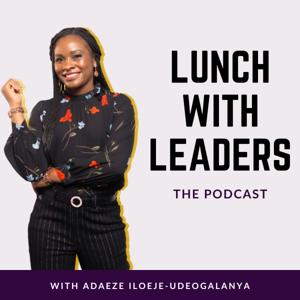


In this episode, Adaeze Iloeje-Udeogalanya talks with Chioma Aso, a systems engineer, entrepreneur, and founder of the nonprofit STEAM Divas.
Chioma shares her unique perspective on how our diverse backgrounds, including cultural knowledge, are invaluable assets in the world of technology and AI!
She introduces the concept of "systems thinking"—a holistic approach to problem-solving that considers how different parts of a system are interconnected.
This mindset, she explains, has been the key to her successful career across multiple industries, from manufacturing and aerospace to gaming.
Chioma also discusses her passion project, STEAM Divas, a nonprofit dedicated to empowering young girls by integrating the arts into STEM education. She believes that cutting off the artistic side of ourselves limits our potential and that true innovation comes from blending creativity with technical skills.
Through hands-on activities like building with electronics and learning the chemistry behind everyday products, she watches young girls transform from curious participants into confident innovators. The conversation also delves into Chioma's upcoming book on "Productivity Personalities," a framework for understanding how different people contribute to projects.
She identifies three key types: Early Starters who thrive on new projects, Deep Divers who specialize and go deep on one area, and Final Finishers who take projects across the finish line.
Understanding these personalities, she argues, is essential for building stronger teams and preventing burnout.
Key Takeaways:
Embrace Your Unique Background: Your cultural knowledge and life experiences are valuable assets that can bring a unique perspective to any field.
Adopt a Systems Thinking Mindset: Think holistically about how different parts of a system are interconnected to find innovative solutions.
Integrate Arts with STEM (STEAM): Don't neglect your creative side. Blending arts and technology leads to more well-rounded and innovative outcomes.
Understand Productivity Personalities: Recognize that people have different strengths and work styles (Early Starters, Deep Divers, Final Finishers) to build balanced and effective teams.
Memorable Quotes:
"When you bring in diverse talents, you are basically learning in a much broader field." [02:15]
"The whole world itself is the systems, and everything we do is systems." [05:37]
"I call myself the gateway drug to STEM. I'm hoping that I can trick them into looking at STEM differently." [53:05]
Timestamps:
[00:04] The value of cultural knowledge in tech.
[04:30] Introduction to systems thinking.
[11:00] The mission of STEAM Divas.
[30:00] The Productivity Personalities framework.
[40:00] Intellectual property: when to protect and when to share your ideas.
[52:00] Chioma's vision for the next generation of women in STEAM.
[61:00] Transitioning from corporate to entrepreneurship.
FAQs:
What is systems thinking? A holistic approach to problem-solving that considers how all parts of a system are interconnected.
What are the three Productivity Personalities? Early Starters (ideators), Deep Divers (specialists), and Final Finishers (implementers).
What is STEAM Divas? A nonprofit empowering young girls by integrating arts into STEM education through hands-on workshops and events.
Connect with Chioma:
Guest: Chioma Aso, Founder of STEAM Divas & Polymatrix Engineering
Website: steamdivas.org
Social: @steamdivas on LinkedIn, Instagram, and Facebook
In this episode, Adaeze Iloeje-Udeogalanya talks with Natasha Henry, founder of the health tech company Myocurrent, about her journey from patient to pioneer.
Natasha shares the harrowing personal health crisis that led her to pivot her career and dedicate her life to solving systemic issues in women's health.
For years, her debilitating symptoms from uterine fibroids were dismissed by doctors as "normal," culminating in a terrifying collapse and hospitalization with a critically low hemoglobin level of 2.4.
This traumatic experience became the catalyst for Myocurrent, a patent-pending, AI-powered solution integrating neuroscience to help women manage their conditions by translating complex patient data into an interpretable format.
The conversation delves into the multifaceted nature of leadership and success. Natasha challenges traditional models of leadership, arguing that true leadership is about service.
The discussion also explores the broader societal issues at play, from the historical dismissal of women's pain to the fact that uterine fibroids are a global issue affecting women of all races, a topic from Natasha's upcoming book.
Natasha also speaks on the importance of self-awareness and finding your voice, and how intentional mentorship, not saviorism, is the key to meaningful professional relationships.
This episode is a call to action for listeners to become advocates for their own health and support women-led innovation.
Key Takeaways:
Personal Crisis as a Catalyst: Natasha's life-threatening experience with uterine fibroids and the repeated dismissal of her pain by the medical system directly inspired her to create Myocurrent.
The Power of the Patient-Researcher: By refusing to be sidelined and taking ownership of her health journey, Natasha embodies the "patient-researcher" ethos, using her lived experience to drive innovation.
Leadership is Service: True leadership is not about command and control but about service, a quality Natasha argues women inherently possess.
Intentional Mentorship Over Saviorism: Effective mentorship is a two-way street. Know what you need, offer value in return, and be intentional about who you invest time with.
Memorable Quotes:
"I think this objective about leadership that leadership is served. And if women, by default, we know how to serve... You have to stop modeling the men you see. You have to lead in your own way." [26:33]
"Because something hasn't been done doesn't mean you can't do it, right?" [21:48]
"I think when it comes to owning your power, it's getting to know who you are. Outside of what the world calls you..." [38:36]
Timestamps:
[04:39] Natasha shares the personal health crisis that led to the founding of Myocurrent.
[08:43] The moment of validation after years of dismissal by the medical system.
[16:35] The mission of Myocurrent: integrating neuroscience and AI for women's health.
[31:29] Natasha discusses her upcoming book on the history of women's pain being dismissed.
[37:57] Advice for women on owning their power and being curious.
FAQs:
What is Myocurrent? A health tech company developing a patent-pending AI solution that uses neuroscience to help individuals manage uterine fibroids.
Are fibroids only a Black women's issue? No. In the episode, Natasha clarifies that her research shows it is a global issue affecting women of all races.
Connect with Natasha:
Guest: Natasha Henry, Founder of Myocurrent
Social: linkedin.com/in/natashahenry
Company: linkedin.com/company/myocurrent
Email: [email protected]
In this powerful solo episode of the Lunch with Leaders podcast, host Adaeze Iloeje-Udeogalanya, a TEDx speaker, leadership strategist, and founder of African Women in STEM, delivers a deeply personal reflection on one of the most overlooked barriers to career advancement for senior women in STEM and corporate leadership: social conditioning.
Adaeze uses this solo episode as a one-on-one conversation with her audience, creating an intimate space to explore a topic that many women recognize but rarely name.
The episode opens with a scenario that will feel painfully familiar to many listeners. You are in the room, the room you worked over a decade to earn a seat in. Someone asks for your recommendation. You know the answer. But instead of stating it with clarity and conviction, you hesitate.
You second-guess yourself. You mumble something vague, and the moment passes. Then someone else speaks up, the room nods in agreement, and everyone moves on. Everyone except you, because you know you just lost another opportunity to demonstrate your value.
Adaeze traces this pattern back to its roots: social conditioning. From childhood, women are taught to be likable, to smile more, to not be too certain, and to never make anyone uncomfortable.
These lessons are reinforced in school, at home, and especially in corporate environments where women, particularly women of color and African women in STEM, are often the only ones who look like them in the room.
Over time, these survival strategies become deeply ingrained habits. They show up as over-explaining, apologizing before stating an opinion, polling the room for consensus before sharing a recommendation, and softening language to avoid appearing too assertive.
Memorable Quotes
"What got you into the room and helped you survive is now the very thing that is stopping you from getting to your next level. And no one is going to flag it for you, except me." — [06:52]
"Every time you hold back, you're undermining your own authority to make others more comfortable and it's costing you." — [09:39]
"This week, in your next meeting, say the thing. State the recommendation. And like I said earlier, pause. Don't explain. Don't scan people's faces for approval." — [09:52]
"You're not unprepared, you're not unqualified, that's not it. But you've been conditioned for years to pause, to question, and ultimately to say nothing." — [01:50]
"Say the thing. That's it. Say it. Own it. Don't overthink it. Don't hold back. Don't apologize for it." — [08:32]
"At this level, the rules are different. Social conditioning in executive spaces is not quite correct." — [03:35]
Connect with African Women in STEM on Social Media:
Follow Adaeze Iloeje-Udeogalanya on LinkedIn
Follow African Women in STEM on LinkedIn
Follow African Women in STEM on Instagram
Join the African Women in STEM Membership
Visit the African Women in STEM Website
Watch Adaeze Iloeje-Udeogalanya's TEDX Talk on YouTube
Decision-Level Advisory Application | Fill this Form >>
This episode of "Lunch with Leaders" features a compelling conversation between host Adaeze Iloeje-Udeogalanya and Charis Loveland, an expert at the intersection of emotional intelligence (EQ) and Artificial Intelligence (AI).
They delve into the critical importance of a human-centered approach to technology, navigating career transitions in the age of AI, and the power of emotional intelligence in leadership.
Charis shares her inspiring journey from an English literature major to a leader in the AI space, offering valuable insights for women in STEM and anyone looking to thrive in our rapidly changing world.
Episode Key Takeaways
The Intersection of AI and EQ: AI is a powerful tool, but it must be guided by emotional intelligence to serve humanity. Leaders must prioritize human well-being and ethical considerations in the design and implementation of AI.
Navigating Career Transitions: Life is full of "disruptive events" or "life quakes." Embracing these transitions as opportunities for growth and self-discovery is crucial. Charis shares her personal experience with layoffs and how she navigated the "messy middle" to launch her own business.
The Power of Emotional Intelligence: EQ is a critical skill for leaders and individuals. It encompasses self-awareness, self-management, social awareness, and people management. Developing EQ can lead to greater success and fulfillment in both personal and professional life.
Human Connection in a Digital World: In an era of increasing automation and digital communication, genuine human connection is more important than ever. Leaders should foster environments that prioritize meaningful relationships and transparent communication.
FAQs
1. What is the difference between Artificial Intelligence (AI) and Emotional Intelligence (EQ)?
AI is the application of statistical techniques to data to make predictions. EQ, on the other hand, is about understanding and managing your own emotions and the emotions of others. It consists of four quadrants: self-awareness, self-management, social awareness, and people management.
2. How can we ensure AI is developed and used responsibly?
To ensure responsible AI, we need to prioritize human rights, dignity, and well-being in the design process. This includes bias testing, transparency, and involving diverse communities in the development of AI systems.
3. How can I navigate a career transition or a "messy middle" in my life?
Embrace the transition as an opportunity for growth. Reflect on your values, skills, and what you want to achieve. Seek support from your community and be open to new possibilities. Remember that everyone, even experts, starts somewhere.
Episode Timestamps
[03:56] - Charis Loveland's career journey and the "messy middle."
[15:33] - Defining Artificial Intelligence (AI) and Emotional Intelligence (EQ).
[24:35] - Rethinking value creation in the AI-driven economy.
[38:55] - The responsibility of leaders and women in STEM in shaping the future of AI.
[49:30] - Charis Loveland on her legacy and bringing "charisma back with charisma intelligence.
Follow Charis Loveland on Social:
Charis Loveland LinkedIn: https://www.linkedin.com/in/charisloveland/ (LinkedIn)
Booking link (Google Calendar appointments with Charis): https://calendar.app.google/ecgik1vFTb8GxpRB8
Coaching circle information page: https://mailchi.mp/7311fd8852e8/confident-connected-2026-coaching-circle (Mailchimp)
Chris’s substack: https://helloadversity.substack.com/
AI for Human Flourishing (toolkit / framework site): https://www.aiforhumanflourishing.com/ (AI For Human Flourishing)
In this solo episode of "Lunch with Leaders," Adaeze Iloeje-Udeogalanya shares a pivotal career insight: the shift from proving your worth to positioning yourself for leadership. Drawing from her own experiences as a woman in STEM, she explains how the common drive to over-prepare and seek validation can paradoxically hinder career progression.
Instead of constantly trying to prove you belong, she argues for a proactive approach of positioning, which involves shaping perceptions, asserting capability, and demonstrating readiness to lead. This episode is a guide for high-achievers, especially women in male-dominated fields, on how to build authority, own their decisions, and ultimately, secure their seat at the table.
Key Takeaways
FAQs
Q: What is the "Authority Code"?
A: The Authority Code is the mental and strategic shift from trying to prove your value to proactively positioning yourself as a leader. It's about owning your expertise and decisions rather than seeking external validation.
Q: How can I tell if I'm "proving" instead of "positioning"?
A: Signs of proving include over-preparing, over-explaining, hedging recommendations (e.g., saying "I think" instead of "I recommend"), and seeking constant agreement. Positioning, on the other hand, involves framing decisions, owning outcomes, and communicating with conviction.
Q: Why is being a high-performer not enough for advancement?
A: While high performance is essential, at senior levels, leadership is evaluated on the ability to be decisive, manage ambiguity, and demonstrate ownership. Simply being "right" or deserving is not enough; you must signal that you are ready to lead.
Timestamps
Connect with African Women in STEM on Social Media:
Follow Adaeze Iloeje-Udeogalanya on LinkedIn
Follow African Women in STEM on LinkedIn
Follow African Women in STEM on Instagram
Join the African Women in STEM Membership
Visit the African Women in STEM Website
Watch Adaeze Iloeje-Udeogalanya's TEDX Talk on YouTube
Decision-Level Advisory Application | Fill this Form >>
In this episode of "Lunch with Leaders," host Adaeze Iloeje-Udeogalanya sits down with Dr. Kim Nichols, a physician executive, speaker, and coach. Dr. Nichols shares her inspiring journey of discovering her true calling in empowering professional women to cultivate their authentic leadership presence.
The conversation delves into crucial topics such as the power of authenticity, the significance of mentorship and sponsorship, the art of setting boundaries, and the creation of psychologically safe work environments where individuals can thrive.
Co-author in Chronicles of Women in White Coats - 4th edition | Buy Book Available on Amazon
Key Takeaways
Memorable Quotes
"The best leaders develop other leaders and create spaces for others to be heard." - Dr. Kim Nichols
"Asking for help is a sign of strength, actually, it's not a sign of weakness." - Dr. Kim Nichols
"Logic can sometimes keep you exactly where you are instead of where you want to be." - Dr. Kim Nichols
FAQs
Q: How can I find my true calling?
A: Dr. Nichols suggests that finding your true calling is a process of self-reflection and can change over time. It's about understanding your values and what truly fulfills you, rather than conforming to external expectations.
Q: What is authentic leadership?
A: Authentic leadership is about leading as your true self. It involves being genuine, transparent, and comfortable in your own skin, which in turn inspires trust and authenticity in others.
Q: How can I overcome the fear of asking for help?
A: Reframe asking for help as a sign of strength. It shows that you are self-aware and open to learning. It also empowers others by allowing them to contribute their skills and knowledge.
Timestamps
LinkedIn: https://www.linkedin.com/company/level-up-with-drkimn/
Facbook: https://www.facebook.com/profile.php?id=61564571362046
Website: https://www.levelupwithdrkimn.com/
Email: [email protected]
In this powerful solo episode, Adaeze Iloeje-Udeogalanya challenges the pervasive belief that "no one is coming to save you" and reveals why this mindset is actually holding African women in STEM back from achieving their full career potential.
As a TEDx speaker, leadership strategist, and founder of African Women in STEM, Adaeze unpacks the incomplete narrative of self-reliance and introduces the complete truth: while no one is coming to save you, many people are willing to help you.
Through compelling statistics and real-world examples, Adaeze demonstrates that career success is never a solo journey. She reveals that only 1-2% of jobs come from job boards, while 85% are filled through networking, and 70% of jobs are never publicly advertised.
Drawing parallels from team sports and individual athletics, she illustrates how even the most successful people rely on networks, coaches, and support systems to reach their goals.
This episode is a wake-up call for high-achieving women who have internalized the belief that they must figure everything out alone. Adaeze provides practical insights on building genuine relationships, creating access and proximity to decision-makers, and positioning yourself strategically for opportunities.
She emphasizes that relationships, proximity, and access matter more than productivity alone, and encourages listeners to shift from working in isolation to building intentional connections that can open doors and accelerate career growth.
Frequently Asked Questions (FAQs)
Q: What does Adaeze mean by "no one is coming to save you, but many are willing to help"?
A: Adaeze explains that while you shouldn't wait for someone to rescue your career, many people are genuinely willing to support you. The key is to place yourself in the right environments, communicate what you're doing and why, and make it easy for others to see how they can help you. It's about shifting from isolation to strategic connection.
Q: How can I start building the right network if I've been working in isolation?
A: Start by having coffee chats with decision-makers, sharing your career goals with skip-level managers, and getting involved in conversations where strategy is discussed (not just task execution). Join communities like African Women in STEM where you can connect with like-minded professionals who understand your unique experience.
Timestamps
00:00 - Episode Introduction
00:56 - The "No One Is Coming to Save You" Mindset
01:56 - The Identity of Self-Reliance
03:04 - The Limits of Solo Success
04:26 - The Incomplete Phrase Revealed
05:11 - Asking for Help Is a Strength
06:03 - The Team Sport Analogy
07:11 - The Job Market Reality
08:11 - Relationships Matter More Than Productivity
09:07 - Critical Questions for Self-Assessment
10:19 - The Need for Centered Spaces
11:04 - Event Announcement
12:23 - Closing Remarks
Target Audience
•African women working in STEM fields
•Mid-career professionals feeling stuck despite high productivity
•Women who have internalized the "figure it out alone" mindset
•Professionals seeking to transition from effort-based to strategy-based career growth
•Anyone interested in building strategic professional relationships
Episode Themes
•Career Development & Strategy
•Professional Networking
•Leadership for Women in STEM
•Overcoming Isolation in the Workplace
•Diversity & Inclusion in STEM
•Personal Branding & Visibility
•Mentorship & Sponsorship
Connect with African Women in STEM on Social Media:
Follow Adaeze Iloeje-Udeogalanya on LinkedIn
Follow African Women in STEM on LinkedIn
Follow African Women in STEM on Instagram
Join the African Women in STEM Membership
Visit the African Women in STEM Website
Watch Adaeze Iloeje-Udeogalanya's TEDX Talk on YouTube
Decision-Level Advisory Application | Fill this Form >>
In this powerful Black History Month episode, Tamiko Nettles shares her 20-year journey advocating for marginalized communities—leaders, educators, students of color, and individuals experiencing homelessness.
As founder of Let Go Be Great, Tamiko reveals how she helps mission-driven leaders and teams thrive through empathy-based strategies, even in systems that don't prioritize emotional intelligence.
Tamiko discusses her unique approach using short stories and children's books to teach empathy in organizational settings, allowing leaders to see themselves through fictional characters and identify blind spots.
She emphasizes the importance of listening more than speaking, being vulnerable about struggles, and creating cultures where people feel safe to say "I'm not okay."
The conversation explores leading during difficult times, the danger of pouring from an empty cup, and why rest is resistance. Tamiko shares personal experiences of being in food lines while professionally dressed, highlighting how she brings lived experience to her advocacy work.
Her legacy goal is clear: ensure people don't lose sight of why they started their work and create spaces where those closest to the work are heard, valued, and supported.
Key Episode Timestamps
[00:00] Introduction & Opening Quote
[01:40] Guest Introduction - Tamiko Nettles
[04:05] What Led to Advocacy Work
[09:55] Working with Organizations That Lack Empathy
[14:49] Using Children's Books to Teach Empathy
[18:40] Leading When You Don't Feel Like Leading
[23:39] The Empty Cup Analogy
[33:24] Defining Success & Legacy
[37:37] Tamiko's Legacy Vision
[42:20] Message to Women Leaders
[49:00] Current Projects & Where to Find Tamiko
[50:25] Closing & Call to Action
Key Takeaways
1. Empathy Cannot Be Easily Taught - It requires intentional practice and creative approaches like storytelling to help leaders develop this critical skill.
2. Vulnerability Is Leadership Strength - Leaders who share their struggles give permission for others to do the same, creating healthier team cultures.
3. Listen, Then Respond - Hearing feedback isn't enough; leaders must act on what they hear or explain why they can't.
4. Rest Is Not Optional - Burnout prevents leaders from fulfilling their purpose. Taking breaks models healthy behavior for teams.
5. See People Beyond Titles - Understanding what people experience outside their roles creates more effective, compassionate leadership.
6. Define Success for Yourself First - Write down your vision before others influence it with their limitations or expectations.
FAQs
Q: What led Tamiko to advocacy work?
A: Her natural empathy and ability to observe what people aren't saying. She notices when individuals are overlooked, overwhelmed, or disconnected, and works to find solutions and resources to support them.
Q: How does she teach empathy in organizations that don't prioritize it?
A: Through short stories and children's books that allow leaders to see workplace dynamics through fictional characters, making it easier to identify issues in their own teams without defensiveness.
Q: What's her advice for leading when you're exhausted?
A: Be vulnerable and honest with your team. Share when you need a moment, take breaks without guilt, and model the behavior you want to see. This gives others permission to care for themselves too.
Q: What does she want her legacy to be?
A: For people to never lose sight of why they started their work, to create empathetic organizational cultures, and to ensure those closest to the work are heard and supported.
Q: Where can people connect with Tamiko?
A: Find her at @LetGoBeGreat on all platforms (Facebook, Instagram, LinkedIn).
Visit www.letgo-begreat.com for her books, journals, and team resources.
High performers, especially women in STEM, often stall not due to lack of skill, but because they keep playing the wrong game. TEDx speaker Adaeze Iloeje-Udeogalanya explains the unwritten rule: the criteria for promotion change at the senior level.
The skills that got you here—technical excellence, hard work, perfect execution—are now just the baseline. To advance, you must master the new game:
From Solver to Framers: Your value shifts from solving problems to framing them strategically. Context is more valuable than execution.
From Output to Influence: Success is measured by your ability to influence outcomes and empower others, not by your personal task output.
Advocacy over Activity: Your work doesn't speak for itself. Who speaks for you (advocacy) becomes more critical than the work you do.
Trust is the Top Priority: As shown in a client crisis story, the leader who protects the relationship and manages trust wins over the one who just fixes the technical issue.
Why You Feel Stuck: Positive performance reviews don't mean you're promotion-ready. Decision-makers are silently evaluating your ability to "read the room," set direction in ambiguity, and handle political dynamics—skills rarely on a review form.
The key takeaway: If the goalposts seem to have moved, they have. This isn't a failure; it's a signal to evolve. Stop waiting for instructions. Start setting the direction, framing strategic problems, and building the advocacy that unlocks senior leadership.
Episode Timestamps
(00:00 - 01:01) Adaeze introduces the Launch Your Leaders podcast, framing this as a solo masterclass on unwritten promotion rules.
(01:01 - 01:57) She opens with two critical questions: “If you were gone for a week, what stops?”and “Do you wait for instructions or set direction?” These frame the core problem.
(01:57 - 04:53) Adaeze explains the critical shift: hard work stops being a differentiator. High-performers, especially women in STEM, are often trapped in a responsive mode, waiting for clarity instead of proactively framing problems.
(04:53 - 06:06) A pivotal client crisis story illustrates the new rules. The professional who secured the promotion wasn’t the fastest technical solver, but the one who prioritized managing the client relationship and protecting trust.
(06:06 - 09:41) The episode urges aligning effort with strategic impact. Decision-makers watch how you interpret situations, not just if you can solve them. They value leaders who “read the room, not just run the play.”
(09:41 - 11:37) This explains the performance review disconnect. You’re told you’re doing great, yet passed over for promotion. Why? Because at senior levels, context-setting is more valuable than execution.
(11:37 - 13:07) The defining trait of a senior leader is the ability to frame problems to empower others. If the goalposts feel like they’ve moved, you’re right. It’s not a personal failure—it’s a signal to evolve your operating model.
Bottom Line: The skills that get you promoted to management (technical expertise, execution) are not the skills that get you to senior leadership (strategic framing, influence, advocacy). You must shift from solving assigned problems to defining what’s important.
(13:07 - End) Adaeze concludes with a call to be deliberate in designing your career moves.
Connect with African Women in STEM on Social Media:
Follow Adaeze Iloeje-Udeogalanya on LinkedIn
Follow African Women in STEM on LinkedIn
Follow African Women in STEM on Instagram
Join the African Women in STEM Membership
Visit the African Women in STEM Website
Watch Adaeze Iloeje-Udeogalanya's TEDX Talk on YouTube
Decision-Level Advisory Application | Fill this Form >>
In this powerful 42-minute conversation, host Adaeze Iloeje-Udeogalanya sits down with leadership expert Ranieka Weston to explore how professionals—especially high-performers—often hold themselves back through inherited narratives, fear of visibility, and poor negotiation skills.
Ranieka Weston is a seasoned leadership expert and thinking partner with over 20 years of experience across commercial learning, talent management, and executive coaching. She has held pivotal roles from sales manager to VP of talent management and understands the corporate complexities that can hinder authentic growth.
As a sought-after speaker and consultant, Ranieka specializes in guiding organizations through transformational change by leveraging the power of narrative. She is also a certified yoga instructor who integrates mindfulness and emotional regulation practices into her leadership work.
Ranieka shares her Negotiator’s Mindset Framework—built on Clarity, Courage, and Consistency—and reframes negotiation as a daily practice that goes far beyond salary talks. She reveals how generational beliefs can limit growth, why emotional regulation starts with the breath, and how to know when to leave a job vs. when to stay.
Listeners will walk away with practical tools to:
Identify and rewrite limiting stories
Set boundaries without guilt
Use breath and grounding to think clearly
Build a legacy through intentional impact
Perfect for leaders, coaches, and anyone ready to lead more authentically and negotiate for what they truly deserve.
Follow Ranieka Weston on Social:
LinkedIn: https://www.linkedin.com/in/raniekaweston/
Website: https://www.yournexthought.com
Email: [email protected]
Connect with African Women in STEM on Social Media:
Follow Adaeze Iloeje-Udeogalanya on LinkedIn
Follow African Women in STEM on LinkedIn
Follow African Women in STEM on Instagram
Join the African Women in STEM Membership
Visit the African Women in STEM Website
Watch Adaeze Iloeje-Udeogalanya's TEDX Talk on YouTube
From the publisher's feed