
Sign up to save your podcasts
Or


Subscribe now for early access, ad-free listening, and bonus content!
Shortly after taking office in 1969, President Richard Nixon believed he might intimidate, through military threats, the Soviet Union and North Vietnam into making concessions at the peace table. In Nixon's words, it was "Madman theory." It didn't work. Today, President Trump has tried to bluster and bluff his way to victory over Iran, even threatening to wipe out Iranian civilization. Now the president hopes a naval blockade will force Tehran into surrendering the Strait of Hormuz and its nuclear ambitions. Historian Carolyn Eisenberg is our guest.
Historian Carolyn Eisenberg teaches at Hofstra University. She is an expert on the Vietnam War and the author of Fire and Rain: Nixon, Kissinger, and the Wars in Southeast Asia.
 View all episodes
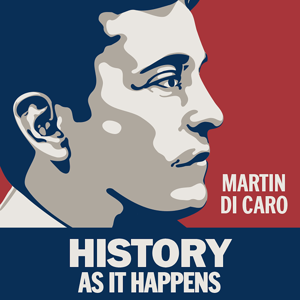
 By Martin Di Caro

4.4
6262 ratings
Subscribe now for early access, ad-free listening, and bonus content!
Shortly after taking office in 1969, President Richard Nixon believed he might intimidate, through military threats, the Soviet Union and North Vietnam into making concessions at the peace table. In Nixon's words, it was "Madman theory." It didn't work. Today, President Trump has tried to bluster and bluff his way to victory over Iran, even threatening to wipe out Iranian civilization. Now the president hopes a naval blockade will force Tehran into surrendering the Strait of Hormuz and its nuclear ambitions. Historian Carolyn Eisenberg is our guest.
Historian Carolyn Eisenberg teaches at Hofstra University. She is an expert on the Vietnam War and the author of Fire and Rain: Nixon, Kissinger, and the Wars in Southeast Asia.
8,474 Listeners

1,110 Listeners
743 Listeners

6,304 Listeners
724 Listeners

907 Listeners

14 Listeners

2,039 Listeners

7,244 Listeners
2,405 Listeners

16,525 Listeners

208 Listeners

385 Listeners
500 Listeners
496 Listeners