
Sign up to save your podcasts
Or

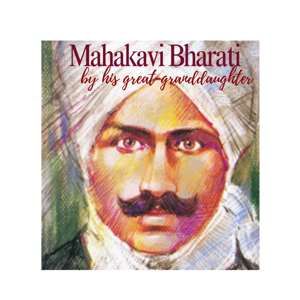


This episode introduces Bharati's writing on the Indian national movement. His perspective as a freedom fighter from India's South is uniquely valuable to us today. Much of the discussion surrounding India's freedom movement in our era focuses on key political figures from the North of the country, while the story of the freedom struggle in other parts of India has been largely neglected. The extraordinary involvement of intellectuals, artists, and educators provides an important counterpart to the political struggle; it is a particularly exciting aspect of the freedom movement that deserves deeper exploration. The period of the late nineteenth and early twentieth centuries brought together thinkers and creators from all across India, and from Europe, creating the conditions for a modern Renaissance in the country. It was a time of unparalleled excitement and dynamism, and the freedom movement also acted as a crucible for ideas that would provide the moral underpinnings of the post-colonial world order: human rights for all, social justice among nations, and a commitment to peace.
Music in this episode features one of Bharati's national songs, "Bharata Samudayam Vazhgave," sung by Bharati's family members as the poet himself sang it, and percussion by tabla maestro Bickram Ghosh and ghatam maestro V. Suresh, in a spectacular "jugalbandhi" that brings together North and South Indian classical traditions.
Executive Producer and Host: Mira T. Sundara Rajan
Engineer: Emma Markowitz
Producer: Bradley W. Vines
Music credits for "Bharata Samudayam Vazhgave:" composed by C. Subramania Bharati and performed by S. Vijaya Bharati, S. Mohan Bharati, Amrita Bharati, and Vidya; recorded by R.A. Shankar in Adelaide, Australia, January 1, 1988.
Music Credits for Ghatam and Tabla Duet: Drums of India, Bickram Ghosh on Tabla and V. Suresh On Ghatam.
Subscribe to Bickram Ghosh's youtube channel.
This is the next in my series of conversations with filmmaker Michael Wood, where we discuss some of poet C. Subramania Bharati's most famous and important contributions as a champion of women's rights. Bharati believed that women should be leaders, writing, in a poem entitled "Pudumai Penn," that the "new kind of woman" he imagined would "write all the laws" for society. No advocate of women's rights has been more impassioned, in India or elsewhere, during Bharati's times or since - or more convincing.
Episode 4 features A. Kanyakumari's "Melting Aura" played by her Carnatic String Ensemble. She writes: "This piece as the name suggests melts the listener's mood with its beautiful structure and scintillating Raga – the Charukesi. Though the piece is Indian Classical in its tone, the arrangement gives it another dimension without compromising the authenticity of the respective genres."
It also excerpts a scintillating performance on the ghatam, a traditional clay pot used as a percussion instrument in South Indian classical music, by leading ghatam maestro Suresh Vaidyanathan.
Executive Producer & Host: Mira T. Sundara Rajan
Engineer: Emma Markowitz
Producer: Bradley W. Vines
Music Credits for "Melting Aura":
Composed by Sangeetha Kalanidhi A Kanyakumari
Arranged By Raghavasimhan Sankaranarayanan
Performed in Octaves by: Guru A Kanyakumari, Kalaimamani Embar S Kannan, V Sanjeev, Anuthama Murali, Raghavasimhan Sankaranarayanan, Sayee Rakshith
Live Engineered, Mixed and Mastered by Raghavasimhan Sankaranarayanan
Music Credits for Ghatam Solo: Drums of India, V. Suresh On Ghatam - Bickram Ghosh
Bickram Ghosh writes:
"Ghatam is one of the most ancient percussion instruments of South India. It is a clay pot with narrow mouth and its soothing sound takes you to a different world.
"Experience the tranquilizing sound of Ghatam in the live performance of famous percussionist V. Suresh."
Subscribe to Bickram Ghosh youtube channel.
In this next episode with world-renowned filmmaker Michael Wood ("The Story of India"), the theme is Bharati's beloved Tamil language, and the poet's fight to preserve it against the encroachment of English. Bharati's concerns are highly relevant in today's world, where linguistic diversity is globally threatened, and the poet's attitude offers fascinating ways of meeting this challenge. Michael and Mira explore the idea of a future where Indian literature takes its place alongside major works from the Western canon, and quality translation forges new paths between cultures, building new hopes for mutual understanding.
Episode 3 features A. Kanyakumari's "Melting Aura" played by her Carnatic String Ensemble. She writes: "This piece as the name suggests melts the listener's mood with its beautiful structure and scintillating Raga – the Charukesi. Though the piece is Indian Classical in its tone, the arrangement gives it another dimension without compromising the authenticity of the respective genres."
It also excerpts a scintillating performance on the ghatam, a traditional clay pot used as a percussion instrument in South Indian classical music, by leading ghatam maestro Suresh Vaidyanathan.
Executive Producer & Host: Mira T. Sundara Rajan
Engineer: Emma Markowitz
Producer: Bradley W. Vines
Production Consultant: Jacqueline Santos
Music Credits for "Melting Aura":
Composed by Sangeetha Kalanidhi A Kanyakumari
Arranged By Raghavasimhan Sankaranarayanan
Performed in Octaves by: Guru A Kanyakumari, Kalaimamani Embar S Kannan, V Sanjeev, Anuthama Murali, Raghavasimhan Sankaranarayanan, Sayee Rakshith
Live Engineered, Mixed and Mastered by Raghavasimhan Sankaranarayanan
Music Credits for Ghatam Solo: Drums of India, V. Suresh On Ghatam - Bickram Ghosh
Bickram Ghosh writes:
"Ghatam is one of the most ancient percussion instruments of South India. It is a clay pot with narrow mouth and its soothing sound takes you to a different world.
"Experience the tranquilizing sound of Ghatam in the live performance of famous percussionist V. Suresh."
Subscribe to Bickram Ghosh youtube channel.
This is the first in a series of episodes where world-renowned filmmaker Michael Wood ("The Story of India") and Mira discuss C. Subramania Bharati. This episode covers the story behind the new book of Bharati's English writings, The Coming Age, reviews Bharati's life and times, and considers the place of his writing in a "decolonized curriculum".
Episode 2 features a composition by violinist A. Kanyakumari entitled "Melting Aura" and played by her Carnatic String Ensemble. She writes: "This piece as the name suggests melts the listener's mood with its beautiful structure and scintillating Raga – the Charukesi. Though the piece is Indian Classical in its tone, the arrangement gives it another dimension without compromising the authenticity of the respective genres."
Executive Producer & Host: Mira T. Sundara Rajan
Producer: Bradley W. Vines
Engineer: Ausma Lace
Production Consultant: Jacqueline Santos
Music Credits for "Melting Aura":
Composed by Sangeetha Kalanidhi A Kanyakumari
Arranged By Raghavasimhan Sankaranarayanan
Performed in Octaves by: Guru A Kanyakumari, Kalaimamani Embar S Kannan, V Sanjeev, Anuthama Murali, Raghavasimhan Sankaranarayanan, Sayee Rakshith
Live Engineered, Mixed and Mastered by Raghavasimhan Sankaranarayanan
Bharati 100 explores the life and work of C. Subramania Bharati, an iconic Indian writer and visionary of the early twentieth century. It is being launched on September 11, 2021, the hundredth anniversary of his death at age 38, and is based on a new Penguin Modern Classics book of Bharati's original writing in the English language, edited by podcast host and the poet's great-granddaughter, Mira T. Sundara Rajan. Episode 1 introduces the podcast themes and features music by violinist Ganesh Rajagopalan and S. Vijaya Bharati, and text by Mira T. Sundara Rajan.
Executive Producer & Host: Mira T. Sundara Rajan
Producer: Bradley W. Vines
Engineer: Ausma Lace
Production Consultant: Jacqueline Santos
Musical Selections: "Gurushree," composed by Ganesh Rajagopalan and performed by Ganesh Rajagopalan, Akshay Ganesh & Anantha R. Krishnan, https://music.apple.com/us/album/gurushree-single/1581049060, https://youtu.be/ISo6XAKuYA8 ; "Sahana" from album "Meditate With Ganeshji," produced by Emam, https://ganeshji.bandcamp.com; "Chuttum vizhi chudar than," composed by C. Subramania Bharati and performed by S. Vijaya Bharati, recorded by R.A. Shankar in Adelaide, Australia, January 1, 1988.
With thanks to Jean-Louis Andral.
From the publisher's feed