
Sign up to save your podcasts
Or

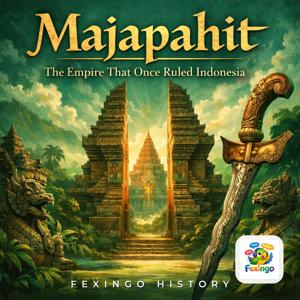


In this episode, Lucas and Luna explore a little-known chapter of Majapahit history: its massive ocean-going ships called jong. They discuss how these 200-foot-long vessels carried Javanese influence across the Indian Ocean, from the Maldives to Madagascar. The conversation covers the technical details of jong construction, the empire's strategic use of trade and naval power, and the legacy of this maritime tradition in the Nusantara region. Specifics include the Negarakertagama's descriptions of Majapahit's navy, the Chinese chronicles of Wang Dayuan and Zheng He, and the archaeological evidence from wrecks like the Java Sea Wreck. They also touch on the decline of the jong after the rise of the Islamic sultanates and the shift to smaller vessels. This episode is perfect for anyone interested in pre-colonial Southeast Asian naval history, shipbuilding, and the economic foundations of empire.
#Majapahit #Jong #MaritimeEmpire #Nusantara #NavalHistory #SoutheastAsia #Java #Shipbuilding #Trade #IndianOcean #Negarakertagama #WangDayuan #ZhengHe #JavaSeaWreck #History #FexingoHistory #AncientShips #MajapahitJong #IndonesianHistory #HayamWuruk
Keep every episode free: buymeacoffee.com/fexingo
In this episode, Lucas and Luna delve into the literary masterpiece that defined Majapahit: the Negarakertagama, a 14th-century epic poem by Mpu Prapanca. They explore how this text, rediscovered in the 19th century, provides a detailed account of Hayam Wuruk's royal progress across Java, the empire's vast tributary network, and the cultural life of the court. The conversation uncovers lost stanzas that hint at a rebellion against Gajah Mada, the symbolic meaning of the poem's structure, and how it was used to legitimize the king's divine rule. They also discuss the controversy over the poem's authorship and its role in modern Indonesian nationalism. Along the way, they touch on the poem's descriptions of rituals, the rice harvest, and the annual grand assembly at Trowulan, offering a vivid picture of Majapahit's golden age.
#Negarakertagama #MpuPrapanca #HayamWuruk #GajahMada #Majapahit #JavanesePoetry #Kakawin #PalapaOath #Trowulan #Nusantara #SoutheastAsiaHistory #14thCentury #HinduBuddhist #Candi #Bali #IndonesianHistory #History #FexingoHistory #SoutheastAsia #AncientJava
Keep every episode free: buymeacoffee.com/fexingo
In this episode, Lucas and Luna explore the Kutaramanawa, the legal code of Majapahit rediscovered in the 20th century. They discuss how this 14th-century text blends Hindu-Buddhist dharmashastra with local Javanese adat, regulating everything from debt and theft to inheritance and marriage. Learn about the structure of courts, the role of judges (dharmadhyaksa), and the harsh punishments prescribed, including fines, mutilation, and even execution. The conversation also touches on the influence of the Indian Manusmriti, the controversy over whether the code was actually enforced, and how the Kutaramanawa reveals the empire's sophisticated bureaucracy. A rare glimpse into the legal mind of ancient Java.
#Majapahit #Kutaramanawa #LegalHistory #JavaneseLaw #Dharmashastra #Adat #HayamWuruk #GajahMada #Trowulan #Manusmriti #Debt #Inheritance #JusticeSystem #HinduBuddhist #14thCentury #SoutheastAsia #History #FexingoHistory #IndonesianHistory #PalapaOath
Keep every episode free: buymeacoffee.com/fexingo
In this episode, Lucas and Luna explore the keris, the iconic wavy-bladed dagger that was far more than a weapon in Majapahit. They trace its origins to the 9th century, its rise as a symbol of authority and spiritual power, and its role in court ritual and rebellion. Learn about the legendary empu, or master smiths, who forged blades with cosmic significance, the Pamor pattern welding technique, and the keris's connection to Javanese cosmology. Discover how the Majapahit court used keris as heirlooms, how the Paregreg civil war saw keris politics at play, and how the tradition transformed under Demak. Featuring the empu of old, the keris of Hayam Wuruk, and the Surya Majapahit sun emblem's link to the blade's design. A deep dive into the object that embodied Majapahit's soul.
#Majapahit #Keris #Pamor #Empu #Trowulan #HayamWuruk #GajahMada #SuryaMajapahit #Paregreg #Demak #JavaneseCosmology #Weapon #Heirloom #SoutheastAsia #Indonesia #History #FexingoHistory #Bladesmithing #IndonesianHistory #PalapaOath
Keep every episode free: buymeacoffee.com/fexingo
In this episode, Lucas and Luna explore the role of the Wali Songo, the nine revered saints who spread Islam across Java during Majapahit's decline. They discuss how figures like Sunan Kalijaga and Sunan Ampel used Javanese culture — wayang puppetry and gamelan — to make the new faith accessible, while the coastal trading cities of Pasisir grew in power and wealth. The conversation examines the nuanced relationship between the Muslim merchants and the Hindu-Buddhist court, the strategic conversion of the Majapahit aristocracy, and how the Wali Songo's approach differed from the more assertive spread of Islam in other regions. Lucas highlights the syncretic blend that emerged, where Hindu, Buddhist, and Islamic elements coexisted, shaping modern Javanese identity. The episode also touches on the Wali Songo's political influence, their connection to the rising Demak Sultanate, and the lingering debates about their historical authenticity. This episode offers a fresh perspective on how cultural adaptation and strategic patience reshaped Java's religious landscape.
#WaliSongo #SunanKalijaga #SunanAmpel #Demak #Majapahit #Islamization #Java #Pasisir #Wayang #Gamelan #Sufism #Syncretism #SoutheastAsia #FexingoHistory #History #IndoIslamic #JavaneseCulture #IndonesiaHistory #IndonesianHistory #HayamWuruk
Keep every episode free: buymeacoffee.com/fexingo
When Hayam Wuruk died without a strong heir, Majapahit faced a succession crisis that thrust a young queen onto the throne. This episode explores the reign of Queen Suhita (r. 1429–1447), a female ruler who held the empire together during a turbulent period. We discuss her royal lineage as granddaughter of Wikramawardhana, her marriage to her cousin Rajasawardhana, and the political maneuvering of powerful nobles like Bhre Pandansalas. Suhita's reign saw centralization efforts, diplomatic challenges with the rising power of Demak, and the continued patronage of Hindu-Buddhist traditions at Trowulan. We also examine the fragmented historical sources—the Pararaton, the Wintang Mas inscription, and Chinese accounts from the Ming dynasty—that piece together her story. Why did Suhita vanish from Majapahit's official chronicles? How did she navigate a court dominated by male advisors? And what does her rule tell us about gender and power in medieval Java? Tune in to uncover the forgotten legacy of one of Southeast Asia's few reigning queens.
#Majapahit #QueenSuhita #FemaleRuler #SoutheastAsia #Java #Trowulan #Pararaton #BhrePandansalas #Rajasawardhana #Demak #MingChina #HinduBuddhist #SuccessionCrisis #WintangMas #BhumiJawa #Nusantara #History #FexingoHistory #IndonesianHistory #HayamWuruk
Keep every episode free: buymeacoffee.com/fexingo
In this episode of Fexingo History, Lucas and Luna uncover the story of the anonymous master architect who designed Majapahit's capital, Trowulan. They explore the engineering marvels of the city—from its intricate water management system to the majestic Candi Tikus and Candi Brahu. Lucas explains how the architect, likely a high-ranking royal engineer known as a sang pamegat, incorporated Hindu-Buddhist cosmology into the city's layout, using the Surya Majapahit as a guiding symbol. The conversation touches on the construction of brick and andesite structures, the role of corvée labor, and the influence of Javanese and Indian architectural traditions. Luna asks about the architect's identity, and Lucas reveals that while no name survives, the legacy of the city itself is a testament to their genius. The episode ends by reflecting on how Trowulan's ruins still inspire modern Indonesian architecture.
#Majapahit #Trowulan #Architect #CandiTikus #CandiBrahu #SuryaMajapahit #HinduBuddhist #JavaneseArchitecture #SoutheastAsia #MedievalCity #WaterManagement #SangPamegat #BrickConstruction #Andesite #CorveeLabor #History #FexingoHistory #Podcast #IndonesianHistory #HayamWuruk
Keep every episode free: buymeacoffee.com/fexingo
In this episode, Lucas and Luna explore the Surya Majapahit, the radiant sun emblem that served as the royal seal of Majapahit. They trace its origins to Hindu-Buddhist cosmology, its use on temples and coins, and its rediscovery in the 19th century. The discussion covers the emblem's nine-pointed design symbolizing the eight cardinal directions plus center, its appearance on the Negarakertagama manuscript, and its adoption by modern Indonesia as a national symbol. Lucas explains how the Surya Majapahit reflects the empire's ideology of cosmic order and centralized power, and how it contrasts with the Garuda Pancasila. The episode also touches on the emblem's role in legitimizing rulers and its connection to the sun god Surya in Javanese tradition.
#SuryaMajapahit #Majapahit #Emblem #SunSymbol #HinduBuddhist #CosmicOrder #Negarakertagama #Trowulan #HayamWuruk #GajahMada #JavaneseHistory #SoutheastAsia #Nusantara #Indonesia #Symbolism #History #FexingoHistory #Podcast #IndonesianHistory #PalapaOath
Keep every episode free: buymeacoffee.com/fexingo
Episode 11 of our Majapahit series turns to something you rarely see in history books: the royal regalia of a fallen empire. We explore the Surya Majapahit — the sunburst emblem that adorned thrones, banners, and temple walls from Trowulan to Bali. How did a Hindu-Buddhist sun symbol survive the Islamic conversion of Java? Why did Balinese kings adopt it as their own? And what does a 14th-century gold crown found in a Dutch museum tell us about Majapahit's self-image? Lucas traces the journey of the Surya from the Negarakertagama's poetic descriptions to the modern Indonesian coat of arms. Luna asks about the mysterious 'Mahkota Majapahit' — the crown that may or may not have belonged to Hayam Wuruk. We discuss the role of royal regalia in legitimizing power, the trade networks that brought gold and gems to Java, and the strange afterlife of these objects in colonial collections. Along the way, we touch on the keris as a spiritual artifact, the symbolism of the sun in ancient Javanese cosmology, and the quiet persistence of Majapahit imagery in Indonesian politics today. No battles, no conquests — just the quiet power of a symbol that outlasted an empire.
#Majapahit #SuryaMajapahit #HayamWuruk #Negarakertagama #RoyalRegalia #MahkotaMajapahit #Trowulan #Bali #HinduBuddhist #Keris #SunSymbolism #IndonesianHistory #ColonialCollections #SoutheastAsia #JavaneseCosmology #EmpireLegacy #FexingoHistory #History #GajahMada #PalapaOath
Keep every episode free: buymeacoffee.com/fexingo
Beyond battles and palaces, empires are built on laws. This episode explores the Kutaramanawa, Majapahit's legal code discovered in a Balinese manuscript. Lucas and Luna unravel its origins in Indian Dharmashastra, its blend of Hindu and local adat, and its surprising provisions—from fines for insulting a buffalo to death for sorcery. They discuss how the code balanced royal authority with village autonomy, its penalties for theft, debt, and adultery, and why it vanished after Islamization. A window into everyday justice in 14th-century Java, where the king's word was law but custom still held sway.
#Majapahit #Kutaramanawa #LegalHistory #HinduLaw #Dharmashastra #Java #Indonesia #Trowulan #HayamWuruk #GajahMada #Adat #Sorcery #Debt #Justice #SoutheastAsia #History #FexingoHistory #LegalCode #IndonesianHistory #PalapaOath
Keep every episode free: buymeacoffee.com/fexingo
From the publisher's feed