
Sign up to save your podcasts
Or

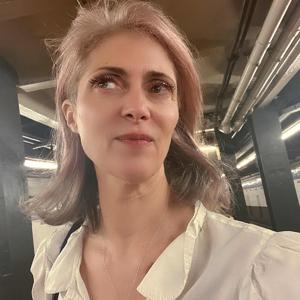


“[The Russians] always claim to free us and to help us. They free us from our houses, schools, hospitals, from our families, from everything. They want to make us completely free, and maybe even from our bodies.” - Oksana Hutnyk
It is the 29th of September, 2024, and I'm going to take us back a few years to, February 24th, 2022, the day Russia invaded Ukraine and started a war that is ongoing. We are going to hear from two people in Lviv, Ukraine, and by way of introduction, I'd thought I’d tell you how I know them.
I wound up in Ukraine on March 4th of 2022, a little over a week after the war started. I got over there simply because I wanted to go. Michael Moynihan of The Fifth Column podcast was then at Vice News. He was going to be heading over and I said, Hey, can I tag along with your crew? He said, sure. But then his trip was delayed.
I had already bought my ticket, so I headed over alone. I'm not a war correspondent, and I was only in Ukraine for about a week, so I'm not telling you some super-secret anything, but it is the case that you learn very quickly what the fog of war means, because nobody really knows what's going on. Modes of communication had been cut. I don't speak Ukrainian. It was a tense time, obviously; the country's being invaded.
I wound up in Warsaw and had no idea how I was getting into Ukraine. You can't take a bus, you can't take a plane, you can't drive over. But I got a DM from a woman on Twitter; I'll call her T. She was from the area around Lviv, Ukraine. She lived in Portland, Oregon now and had been following my reporting from that city in 2020 and 2021. She contacted me and said, Listen, I have a friend in Lviv. If you can get there, I'm sure you can hook up with her. I'm like, that sounds great.
I bought what I thought was a bus ticket to the border, to Przemyśl in Poland. It turned out to be a train ticket. On the train, I met a Ukrainian who was coming from Holland. Vitaly had been working there and was going back to Odessa. He had to. All Ukrainian men between certain ages were being called back to fight, and those in-country were not allowed to leave. The elderly and some women and children were allowed to get out. Anyway, Vitaly was also going back because he had family in Odessa. They'd been staying in his house; his sister and nieces and nephews. He's got to go back, first of all to fight, and also to see how they were doing. So we met, he spoke pretty good English, and we get to Przemyśl and it’s a madhouse.
We're not very far from the border, probably about 10 miles, but it's pretty much the middle of the night, and while there are some cabs, it’s a bit sketchy and what are they going to do? Take you to the border and drop you off in the woods? This doesn't sound so smart. Anyway we get off the train and walk past all this stuff that's already been donated. There are baby carriages, there's food, there's clothing, just piles of it. We walk past it all and to an area where there are a lot of people waiting, mostly men, mostly Ukrainian, coming from different parts of Europe. They've been working in Spain and other countries. There are a few Americans, these guys with an attitude like, We're going to go over and we're going to help the Ukrainians. I don't think things worked out well for a lot of them. My friend Antonio Hitchens wrote a really good piece about them for the New York Review of Books, you can read that here.
Anyway, I don't know what's going on, nor does Vitaly, and we are just waiting in this line of a couple hundred people. It's getting really cold, too. I went to Ukraine with just a child-sized knapsack, it had my computer a warm jacket that folded to about the size of a deck of cards and a tiny bit of clothing; I didn't pack much because I didn’t know how I was going to get around, if I were going to be on the back of a motorcycle or something. Anyway, I'm freezing; we're all pretty much freezing as we watch hundreds of people come out of this doorway, women, the elderly, children, carrying no more than a shopping bag and sometimes not even that. We don't know where they’ve come and we don’t get a chance to speak with any of them, but we figure, correctly, they are refugees coming from the eastern parts of Ukraine and into Poland. [For more on this journey see, “Dispatch from Ukraine: The Road to Lviv.”]
After about an hour and a half, two hours, the refugees peter out and we are allowed to walk in. Nobody knows where the train is going. It could be going to Odessa. It could or could not be stopping first in Lviv, but Vitaly feels pretty certain it will. Meanwhile, I’ve been trading messages with T in Portland, she’s saying, When and if you get to Lviv, my friend Oksana’s husband, he's going to be waiting for you at the train station. I'm like, okay; if we get there.
We board this train. It’s very rudimentary, no bathrooms, hardwood seats. We get on, it's about midnight now, and we're just sort of hurtling through the night. We can see nothing really out the windows and no way of knowing where we are going. A few young men walk through with rifles; a few young women ask to see some ID, which we show them. We have no tickets and no one asks for them. Meanwhile there are a couple of gals sitting next to us. They're probably in their thirties. They have gone over the border and dropped off their children. Think about this. It's the first week of the war. You want to keep your children safe so you cross the border and drop them off, hopefully with family, and then you go back because you want to go back. You want to help protect your country. This is the message I will get later on, over and over. In any case, they gals are very sweet with me. I hadn't eaten anything and they're forcing a sandwich on me. I'm like, I'm going to take their sandwiches, after what they are going through? No, no. But they’re like, You have to eat, eat please. I did.
Anyway, Vitali is just heroic and wonderful, and after about an hour and a half, the train stops. Are we in Lviv? Not sure. We all get off and walk for a bit through a dark empty area. Vitaly is going to try to catch a train for Odessa, he doesn't know if there will be one, we are all hoping the connections we need are going to happen. We walk through the darkness and then we make a turn, and in the distance, maybe a quarter of a mile, there are thousands of people, we walk toward and then through and among them, people trying to get out of Ukraine, people moving further in-country, aid organizations like World Central Kitchen there feeding and clothing people, and while it could have devolved into mayhem, it does not at all, there is no shouting or pushing, it’s like a very efficient ant colony working under bright lights in the middle of the night.
The train station is massive, with big wide gigantic steps leading in. T texts again -Oksana’s husband is there, he will meet me on the train steps, he's wearing a blue jacket. There are literally hundreds of people moving on the train steps, and I don't want to hold up Vitaly any longer; he’s been so wonderful and so protective, and he's got to catch a train to his family. I'm like, Go, go. I'm going to be fine. And he's says, No, we are going to find your friend’s husband. And he turns around and says, Maybe that is him. He is looking at a man looking at us, a man who holds up his phone, and on the phone is a picture of me. [He recognized me, he will later say, from my pink hair.] He and Vitaly grasp hands and say something I took to mean, I got her this far; you will take her now? Yes, I will take her.
I'm getting overcome remembering this, that people who don't know you at all will come in the middle of the night to pick you up, during the second week of a war. This…
The story of what happened when I visited with Edith Mitts, the mother of Gregory Cook, who’d murdered three of his meth buddies. A clip:
“He walked into the woods with her, and he said he made her take her shoes off,” Edith said. “And he threw her shoes and made her walk barefooted in the woods because he didn’t want her to run. And he says, ‘She said her feet were getting sore,’ and he says, ‘I squatted down and had her get on my shoulders. I didn’t want her to have to walk with her feet sore,’ and he says, ‘I packed her. I carried her, and we went on into the woods.’ And he said something or other about, she saw him get a rope and, his belt and… something, a knife. She knew I guess it had gotten to the point, and then she tried to calm him down. But he said, ‘Let’s have God pray with us. Let’s get on our knees and pray.’”
After he killed McKillop, Cook came to see his mother.
“He said, ‘Mom, do you have a belt?’” Edith recalled. “I said, ‘what do you need a belt for, Greg?’ He was standing out over the fence, and he says, ‘Oh, I was chasing [my dog] up through the weeds and I lost my belt in the bushes somewhere.’ He’d been putting her hand up there in that pond. He got rid of his shoes because of the tracking, and he had gotten rid of any ID.”
ID meaning McKillop’s head, hands, feet and tattoos…
Read the rest after the break.
People sometimes ask, where do you get ideas for stories? One place that I've gotten ideas is when I read a very small item someplace else, something like, "Man Nails Girlfriend's Fish to Floor" and I'll think, what the heck is going on there?
The way I found the story below started with a very small item in the Oregonian newspaper. Two bodies, a mother and her 14-year-old daughter, had been found in their home in Vancouver, Washington. There was very little known, aside from that foul play, or foul play by an outside party, was not suspected. But really the piece didn't even go that far, it seemed more concerned with handwringing about how the mother, who had been unemployed, had fibromyalgia, and her daughter had cerebral palsy, and life was so very hard and now they were dead and... that was it. I was like, what? I decided to look into the story, and that was… very, very much not it.
As I tell you in the audio, and will be telling you in further pieces I'll run this week and next, people have a hard time believing they've been taken advantage of, that they've been lied to, that, in believing the lies of others, they may have contributed to tragedies, including the murder of children. It's a terrible feeling, and as I explain in the audio, some people will do everything they can to push away the truth with both hands...
One of the super-cool things about being a journalist is that you can contact people whose work amazes you and say, “Come on my podcast!” and they almost always say, “Sure!”
As did Michael Powell, one of my favorite journalists working today, currently at The Atlantic and previously at The New York Times, where, during the height of our national meltdown (aka 2020 to 2022), Michael took on subjects many of his colleagues and others in media would not touch: DEI, Title IX, and using identity as a scythe to cut down those deemed not the right color or gender or whose whose views were opportunistically seen as problematic. “We lost our bearings,” says Michael, who kept true to course, and to say his clear-eyed work made me feel less crazy is an understatement.
Of deep value and delight is also his 2019 book, Canyon Dreams: A Basketball Season on the Navajo Nation. I felt as though I were living inside the work as I read, and I cannot wait to see Rez Ball, the movie it inspired and which opens September 27.
Also discussed:
* The explosive DNC protests that weren’t
* COVID would cool down the culture wars, right? [Insert laugh track here]
* The “scurrilous piece of journalism” in the Daily Beast by a writer I now admire*
* The firing of veteran New York Times science reporter Donald McNeil Jr.? “Not the best moment of the New York Times, at all.”
* The tenderness and importance of Jihad Rehab (now retitled The UnRedacted) and the shame of Abigail Disney
* “Hey Michael, you’re white…”
Plus, the permeability between worlds that you start to see when hanging in the Native world, the politician Michael always thought of as “a clown,” some high-tone hot boxes, and much more!
Want to become a paid subscriber? Skoden!
*Max Tani, now at Semafor
Cross-posted at Smoke ‘Em If You Got ‘Em
Canyon Dreams: A Basketball Season on the Navajo Nation, by Michael Powell
“Star New York Times Reporter Donald McNeil Accused of Using “N-Word, Making Other Racist Comments,” the Daily Beast piece that Michael calls “scurrilous” and which drove me up a tree…
Michael tweeted repeatedly in support of McNeil…
“The New York Times Succumbed to Another Mob. Journalism is Unrecognizable,” by Nancy Rommelmann (Newsweek)
“Kids and Cowards: What Really Happened to Donald McNeil at the New York Times,” by Nancy Rommelmann (Newsweek)
McNeil writes his own story on Medium, starting with, “NYTimes Peru N-Word, Part One: Introduction” (Medium)
“Sundance Liked Her Documentary on Terrorism, Until Muslim Critics Didn’t,” by Michael Powell (New York Times)
Michael wrote several articles about rez ball before embarking on the book, “For Navajo Team, a Season of Change and Challenge”…
… and “In Navajo Nation, a Basketball Elder Earns Respect.”
I inadvertently referred to Mendoza at “Menendez.” Management regrets the error
“The membrane between life and magic is very thin there…”
What’s in your hot box?
Michael: The Seven Storey Mountain by Thomas Merton
Nancy: Small Rain: A Novel by Garth Greenwell
Michael picks the outro
Clip I filmed in final day of “Reservation Dogs” shooting, season 1…
… and on the red carpet at Emmys 2024
Pulled into NYC yesterday after two+ weeks on the road, wanting not much more than to sleep 14 hours. Nope! There are pies to be baked - birthday party for this one tomorrow night - and cogitating about the next piece, about a certain flaccidity among protesters and why that might be and what we might see when school starts up again next week.
Until then, a reading from one Reason piece, “The Anarchist Dreams.” And here he is!
I thought this guy’s enthusiasm was darling. I know that might sound wacky, but he was so candid and excited. Someone later asked whether he knew I was press. I have no idea, and he was so caught up in the possibilities of the moment I don’t think he would have cared. A clip of our exchange:
"Come on everybody! Come on!" shouted a tall lanky guy all in black, with a garbage can lid painted with the anarchist A strapped to his back. What was he wanting everyone to do?
"I want to get all the way inside the DNC!" he said, pointing toward the United Center. "I mean what are we doing here? Isn't this what we came here to do?"
Maybe not everybody; maybe not the 70-year-old lady peace activist who I'd watch gasp as the fence came down. Maybe this kind of bravado was not for her.
"I've seen 70-year-olds do it!" he said. "We can do it if we do it together. If we can dream it, we can do it!"
He was clanging his garbage can lid when someone shouted, "Cops on all sides!"
I told you in the last post how I got pushed around a little by the cops, and how when I was extruded back into the protester-approved side of the fence a friend was there looking as unruffled as if I’d offered him a piece of gum. And here he is.
As mentioned (in the free portion), we all worked our asses off, which Matt Welch chronicles in this week’s “Fifth Column Firehouse #107: About Last Week.”
I’m burying the lede here, well, two: my first piece for The Atlantic published on Thursday. The opening of “The Democrats’ COVID Amnesia.”
If it weren’t for Americans’ collective amnesia, politicians would have to spend considerably more time taking pains to tell the truth. But, unburdened by what has been, President Joe Biden claimed on Monday night with a straight face that his vice president and designated successor accomplished a task that surely escaped your notice.
“Well, during the pandemic, Kamala helped states and cities get their schools back open,” the president said.
In fact, America’s public schools were kept closed in Democratic-run cities and states well into the Biden administration, as a direct result of Biden-administration policies. Democrats might count on Americans to be forgiving, but they are not stupid, and they would do well to not let the pageantry of televised politics obfuscate the fact that they are being lied to.
Second bit of news, which some of you have been told of and the rest of you better get ready to hear more about it: my new book, Forty Bucks and a Dream: Stories from Los Angeles is out September 17 and available now on Amazon for Kindle pre-order. (You do not need a Kindle - in fact I threw my last one in the garbage - to read on the Kindle app.) Our brave new world of publishing allows small publishers to see how many copies are selling so let’s see what you all can do! Paperback drops the 17th.
We listened to lots and lots of tunes on the meandering round-trip to and from Chicago, including from Elvis Costello. Seeing as its his 70th birthday today, and seeing as I listened to this album at least 500 times in high school, he gets the outro.
A reading of yesterday’s piece on why I find the press reporting on Kamala Harris’s kitchen prowess so corrupt. Look, I hope she can cook! But please, no more tongue baths about a short-lived four-year-old YouTube series where the only thing she makes to completion is a tuna sandwich.
Intro/outro music: “Kid Dynamite” by Matt Welch
Those who hate audio and/or just me on audio - someone who listened to me narrate my book To the Bridge, A True Story of Motherhood and Murder commented that my voice was so bad it even stressed out his dog - can read the piece instead.
I was heading out for an appointment at 4:45 when I thought I’d check, for the dozenth time, for updates on the Trump hush money trial, taking place 12 blocks from my house. Well, damn, the jurors had reached a verdict. Hustling past the buckets of live fish on Division Street, I made it to the courthouse just before the verdict was read. As they have since Tuesday, several hundred Trump supporters lined the streets outside of the courthouse. Aside from the guy shouting, “F**k you! And f**k your mother!” and holding a giant TRUMP 2024 sign, the supporters were nearly subdued; there were no boobs flashed, no hue and cry when the verdict came down: Guilty on all counts.
“But where did you read that?” asked a young man with one bead in his short beard and a red MAGA cap. I showed him my New York Times app. That he didn’t seem put out by it matched the mood of many in the crowd, who told me, variously, that it didn’t matter; that the verdict has only assured him the election; that they’re remaining calm because they were expecting this and that they were not worried.
There was some shouting, especially when a Biden supporter wandered into the mix, but overall, it was pretty chill, at least when I was there. Currently I can hear some sirens, and there may be some chaos coming. As a Politico reporter told me, “It’s already a powder keg, it just takes one spark. It’s going to be a long night.”
Indeed, flag-guy did direct, at no one in particular, a “F**k Antifa! F**k Alvin Bragg! F**k Leticia James and f**k you, too,” just as I was skedaddling.
Yesterday, in an exquisite bit of timing or maybe we’re prescient about this stuff, Sarah Hepola and I had the brilliant stone-fox Olivia Nuzzi on the Smoke ‘Em if You Got ‘Em podcast. Olivia is the Washington correspondent for New York Magazine, and a total fox, not that it’s AT ALL relevant to the work she does, which is top-tier. She began her career as a teenager at an alt-weekly in New Jersey and worked on the Anthony Weiner campaign (oh boy), and a story she wrote about that experience brought her to prominence. These days, she’s a rock-star writer with bylines in Politico, GQ, Esquire, and The Washington Post, and she was a finalist for the 2023 National Magazine Award for feature writing. She’s been covering the recent Trump trial from the courtroom — until she got kicked out, that is — and her insight into that uniquely American character has made her reporting a must-read. “Trump is not really there if he’s not being looked at by other people.”
Also discussed:
* “It’s certainly ‘Weiner.’”
* How an obsession with comedy led a political beat
* The peculiar power of being professionally curious
* Olivia did not steal Corey Lewandowski’s photo album!
* The journalist’s question: What the f**k is going on here?
* How to NOT bribe a cop
* Donuts as micro-aggression
* Is Trump sleeping during his trial, and if so, why?
* The beige oppression of a courtroom
* Why Trump needs a beauty blender
* Stormy Daniels: “I slept with THAT?!”
* Trump as the classic American striver
* “Bimbo eruptions”
* But ARE we living in a simulation?
* The greatness of Eddie Pepitone
* “Just because something is not true doesn’t mean it can’t be a problem”
* Olivia is named after who?!
Plus, how being unable to say “More Ovaltine, please” changed the course of Olivia’s career, one of the great movie soundtracks according to Sarah, Olivia’s predictions about the trial and the 2024 election, and much more, including after the break.
Cross-posted at Smoke ‘Em If You Got ‘Em
What do these four men have in common? They’ve all been guests (one in abstentia) on the Smoke ‘Em If You Got ‘Em podcast in the past two weeks. My cohost Sarah Hepola and I spoke with Michael Moynihan, “The Fifth Column" co-host and formerly with Vice, about the new William F. Buckley doc, when conservatives were intellectuals, and why half a Yoo-Hoo is an aphrodisiac. (134: Michael Moynihan and the Eternal Orgasm).
Next we had on Eli Lake, journalist and host of the great “The Reeducation of Eli Lake” podcast, to talk about the Democratic National Convention in Chicago in August (1968 redux?), Columbia protests, Tom Wolfe, Wikipedia lies, and what is PEN America anyway? Also: Eli writes our first AI outro! (135. Eli Lake on Campus Protests, Israel, and Marijuana as Jewish Kryptonite.)
Two days after the Harvey Weinstein rape verdict was tossed by the New York Court of Appeals, we hosted journalists Ann McElhinney and Phelim McAleer, the married couple behind "The Harvey Weinstein Trial: Unfiltered," to discuss why the mogul's New York sentence deserved to be overturned, the failures of journalism, Hollywood's transactional nature -- and what's next. (137: Harvey Weinstein, Interrupted.)
And dropping today, Coleman Hughes, host of “Conversations with Coleman” and author of The End of Race Politics, on campus protests, his viral "View" appearance, and why “hypocrites deserve free speech, too, but they should also be called hypocrites." (138. Coleman Hughes and The View of a Better Racial Future.) A free audio preview of Colemna’s episode is included here. As for a portrait in staying calm and collected on TV…
We are on a roll and would love for you to come along! Subscribers get full episodes and all sorts of weekly/monthly niceties.
And of course I appreciate your support here, especially as I gear up for covering the DNC from outside of the tent, so to speak. That gas mask isn’t going to pay for itself!
Cross-posted from Smoke ‘Em If You Got ‘Em podcast. Discussed:
* First Sunday Zoom
* Earthquake. Steve Kornacki.
* Eclipse mania
* Jennifer Senior wins award, keeps kicking ass
* “Harmonica virgins”
* Sarah’s new car, picture for paid subscribers only
* Lessons of Isuecardealers.com
* “The True Cost of the Church Going Bust,” by Derek Thompson (Atlantic)
* The Matt Welch
* Everyone meets at Paloma/Nancy’s apartment
* “My Mom Has No Friends,” by Monica Corcoran Harel (The Cut)
* Sarah’s first act of civil disobedience
* “Nut pick” definition
* The Journalist and the Murderer, by Janet Malcolm
* Ed Piskor Comics Beat
* Don’t give me a gun and tell me not to use it.”
* Bananas bananas bananas
* The best musical of all musicals told at the twilight of the American experiment
Update: Many of you have written asking that the paywall be taken off this interview. I grant your request.. this time! Upcoming interviews include former Portland Mayor Sam Adams and Deputy DA Nathan Vasquez, who going up against his boss, DA Mike Schmidt. The more paid subscribers we get, the more free material can be posted for the freeloaders good citizens of Oregon and beyond xx
Jessie Burke - former champion fencer, business owner, mother of three, and now-candidate for Multnomah County Commissioner - is one of my favorite Portland people. Courageous, loyal, no-b******t, we’ve worked together, eaten together, maybe not drank together (gotta fix that…) and together watched what was poised to be the next great American city start to crater around 2016 and, to many eyes, reach full catastrophe in 2021, with spikes in homelessness, murder, drug addiction, and citizens taking flight.
"We're really bottoming out. This has become a city run by children," Jessie told me that year, of local politicians equivocating as Portland literally burned.
That Jessie has now set her sites on fixing a host of public safety issues should surprise no one. She spearheaded the revivification of North Portland’s Kenton neighborhood in 2008 - her bakery, Posies, became an anchor tenant on what was then a tractor-trailer corridor - and in 2015, opened the Society Hotel in downtown Portland’s Old Town. A bright anomaly among the area’s many missions, the hotel and its staff now navigate a record number of overdoses and people in mental health crises - Jessie relays several horrifying stories of women in extremis - due in part to Oregon’s experiment with drug decriminalization, and years of political infighting that took precedence over the needs of citizens.
“There’s a lot of ideological posturing rather than the performing of services,” said Jessie, of leadership in conflict with itself. “You cannot live in a society that is all carrots and no sticks, and that’s sort of what we’ve created, we’ve created an incentive-only society.”
Also discussed:
* Dirty dealings at the Olympics
* The time Jessie’s employees would not serve a guy in a MAGA cap
* “I travel a lot to remember what normal is.”
* Why Jessie thinks Portland might be on the hero’s journey
* A naked woman is crying in the street and Portland outreach workers bring her… a cookie?
* What Jessie thinks of former Mayor Sam Adams saying he would nor run against and then, changing his mind
Learn about Jessie’s campaign at jessieburke.com.
This is the first in a series of conversations with candidates running for office in Portland, including the hotly-contested (or not?) race for district attorney, between DA Mike Schmidt (readers of this newsletter know I’ve had lots to stay about him) and Senior Deputy DA Nathan Vasquez. To hear the full episodes and bonus videos, become a paid subscriber or consider making a one-time donation.
Walk-on/off music: “Kid Dynamite” by Matt Welch
Episode notes:
Posies Cafe
To the Bridge: A True Story of Motherhood and Murder, by Nancy Rommelmann
“There is no place in the country better known as a bastion of good living, leisure and happy inebriation than Oregon’s largest little city, the low-lying mini-metropolis of Portland.” Freda Moon, “36 Hours in Portland” (New York Times, 2015)
“The Racist History of Portland, the Whitest City in America,” by Alana Semuels (Atlantic, 2016)
“Op-Ed: Outrage Culture is Out of Control,” by Nancy Rommelmann (LA Times, 2019)
“The loudest voices are not the smartest voices, and they don't know how much of anything works, and they don't understand how to move the needle." Jessie Burke, “The Dream of the 90s Died in Portland,” by Nancy Rommelmann (Reason, 2021)
The Fourth Turning Is Here: What the Seasons of History Tell Us about How and When This Crisis Will End, by Neil Howe
A correction! In the audio, I say “Damian Lewis,” when of course I meant Damian Lillard. Sorry, Dame!
From the publisher's feed