
Sign up to save your podcasts
Or

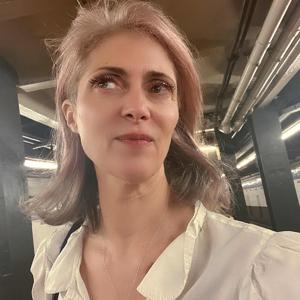


Good morning from the compound in Chinatown, where it seems I rarely am these days, it’s been a year of travel for work and for pleasure, work and pleasure that this morning at 1am appeared at my door, in the forms of Oksana Hutnyk and her two daughters, Diana, 13 and Viktoria, 7, who after a bowl of ice cream showed me the moves I’d shown her in her kitchen last March in Lviv, Ukraine, by doing a headstand and a handstand.
I know, pics or it didn’t happen, but they’d been traveling for who knows how many hours (first time in the States!) and I myself had gotten in 24 hours earlier, from Portland, where I am reporting on the murder of Rachel Abraham, whose tragedy, as it did two weeks ago, opens the latest episode of Smoke ‘Em If You Got ‘Em, which overall is a really good episode, and so I am sharing it here.
I scooted up to Portland after a very quick trip to LA, for a taping of Real Time with Bill Maher, on which Matt Welch was appearing for the 12th (!) time. The episode, with Wynton Marsalis and Scott Galloway, was great. Here’s a clip!
This trip to Portland was interesting and remunerative and heartbreaking. I posted a few videos to Twitter (@nancyromm), initially to report on what people keep telling me: that downtown had been overtaken by the homeless and the drug-addicted. I didn’t exactly find that to be the case, parts 1 and 2:
What I did see is what I’ve been seeing in NYC for the past year+, some sort of drug that lays people flat on their backs, rain or brutal sunshine. “Are you sure they’re not dead?” I’ve been asked. No, I am not sure, but they don’t look dead, they look out cold, in a posture very different from the heroin lean or nod. Maybe it’s fentanyl, maybe it’s a methamphetamine called P2P, which Sam Quinones, author of Dreamland (which I reviewed for WSJ) and The Least of Us: True Tales of America and Hope in the Time of Fentanyl and Meth, wrote about last year for The Atlantic. Whatever it is, we are seeing people under its effects more and more. I am so conflicted about hard drugs, a confliction at its core concerned with the human inside the addiction. I saw so many people collapsed on the sidewalks in Portland, their feet and legs a rictus of scabs, and then the two young men I refer to in video #2; maybe in their early twenties and with some animation about them, or the one did, an anticipation as he prepped his left arm.
Okay, it’s 10am, I have three lovely ladies still in their PJs and within earshot, eating breakfast. I hope you like the episode included here, and if you do, please subscribe! I leave you with a picture of Oksana and me in our fighting Ukrainians shirts…
… and an outro song, the very very beautiful “Los Alamos” by Jason Pontius xx
Nancy Rommelmann and Sarah Hepola are back! Talking about:
+ Why they love the Ben Dreyfuss essay "The World is Not Full of Monsters"
+ What videos they watch in the bathtub
+ "Who is Max Boot? Did he write for Gawker?"
+ And speaking of Gawker...
+ That NYT interview with 8 "conservative" men
+ Who's allowed to say the C-word (anyone!) and why they're in favor of bringing back "twat" (it's funny!)
+ The hell that are women's spas and why the one they'd open would be called F**k Your Intentions
+ Are 100% of hitchhikers murdered by serial killers or nah?
+ Virtual romances can be intense!
+ Why Nancy is the "#1 Nancy" of the two Sarah knows. (The other is a robot.)
And much more! Listen here or on Apple or your pod-catcher of choice
Shownotes:
"9th and Hennepin," by Tom Waits
Museum of Jurassic Technology
Joe Frank official website
"The World is Not Filled with Monsters," by Ben Dreyfuss
Ben Dreyfuss Substack
Elon Musk TED Talk 2022
Benjamin Franklin by Ted Burns (PBS)
The Witches, by Stacey Schiff
"The Things I'm Afraid to Write About," by Sarah Hepola
Normal People, by Sally Rooney
"The 'Pity Me!' Personal Essay" in Gawker
"The 8 Conservative Men Are Making No Apologies" in NYT
Entanglements, they're everywhere!
In this episode of the Paloma Media podcast, Sarah Hepola and I look at:
+ The Will Smith-Jada Pinkett Smith turmoil
+ The Johnny Depp-Amber Heard mess
+ Online's "cruelty in the name of justice!" flamers
Plus the modern complications of monogamy, Veronica Lake's hair (good!), the world of child actors in Hollywood (mostly bad), why John Updike got it right when he said, "Celebrity is a mask that eats into the face,” and more!
Shownotes!
"You can't just use me for social media." Jada Pinkett-Smith/Will Smith video
"Dread Carpet," Bill Maher on 2020's Depressing Oscar Best Pics
"I spoke up against sexual violence—and faced our culture's wrath. That has to change." Amber Heard Opinion piece (WaPo)
"Julia Louis-Dreyfuss's Last F******e Day"
"The Things I'm Afraid to Write About," by Sarah Hepola (Atlantic)
"Jena at 15: A Childhood in Hollywood," by Nancy Rommelmann (LA Weekly)
Paloma Media podcast is also available on Apple podcasts and the pod-catcher of your choice
Considering a paid subscription? I’d love that!
Liz Wolfe (associate editor at Reason) and I hop back into the studio to discuss Liz's recent grilling on Twitter over people accusing her of saying things she never said, the collective effervescence people experience from hating the same person or thing, huzzahs for the journalists who keep talking about what you're not (huh?) supposed to talk about (Katie Herzog! Sarah Hepola!), and the idea that garbage cancel campaigns bother us all the more because we stake our reputations on getting facts right, rather than slinging a lot of third-hand ephemeral b******t and retreating into the "blocked!" hidey-hole. Tune in!
Liz Wolfe’s supposedly controversial tweets
Emma Sarley/Frederick Joseph dog park confrontation (NY Post)
Sarah Hepola: The Things I'm Afraid to Write About (The Atlantic)
"But Donald, you've lost the newsroom." (Donald McNeil Jr. Medium post)
Please consider a paid subscription. We have some pretty cool and seismic upcoming plans on Substack and would love to have you along!
Hi all, on a Saturday night where I have forsaken all parties. The city doesn’t look too locked down, or not yet. I expect it’s coming. No one I know if freaked out, more, resigned. Let me know in the comments what’s like where you are.
Earlier this week at Paloma Media, where it was New York Week all week, I posted the following audio, which I’ll likely mention in the Sunday round-up, but wanted to get to you directly, in case you, too, are sitting home on a Saturday. It’s a reading of The Queens of Montague Street, my pocket-size memoir of being a truant teen in late 1970s Brooklyn, which you can buy on Amazon (it’s short!), or read as excerpted in the New York Times Magazine. A clip:
“Most of the time we just hung out, in front of the newly opened Baskin-Robbins, on the corner of Montague and Henry Streets. This corner was the epicenter of Brooklyn Heights, a community unaccustomed to seeing its daughters straddling mailboxes and flicking cigarette butts into the street. Nor were we used to fielding the looks we began to get: wary, unhappy, every father coming home from Wall Street and every mother on her way to Key Food shooting us stern, silent reprimands. It made me squirm, but it also pissed me off: What was I doing that was so horrible? And if they had something to say, why didn’t they say it? While our little petri dish of a neighborhood evidently considered hanging out anathema, I was on the fence; my dad had grown up in Greenwich Village, an Italian kid playing stickball and rolling tires in the Hudson River. Isn’t this what teenagers did?”
Consider becoming a paid subscriber. I have to say, I’m pretty stoked that a few of you have in the past week. Thank you!
Good morning on the 25th of April, and though I did not plan it, on this date in 1994, I was driving from Los Angeles to Illinois in a rented Ford Tempo with a pen pal of John Wayne Gacy’s, to visit the serial killer on death row shortly before his execution. Let’s say there was a lot of urgency to this trip, some of which could not be relayed in the feature, available for reading here and which I recorded for you last night (linked above!).
Why did I do this? First, because it had never been recorded. Second, because it was a rainy Saturday night and I’d just rolled back into town with nothing else planned for the evening. Third, I’d had contact a few days earlier with an academic interested in why I’d made the trip and what transpired.
I’ve written some unpublished stuff about how I wound up traveling with Rick, how the story wound up not where it’d been commissioned (Details magazine) but in the the LA Weekly (my first feature!); how I’d been so excited I waited at the newsstand on the corner of Hollywood Blvd. and Cahuenga at eight in the morning for the delivery truck to toss off the bundle of Weeklies and, seeing my story on the cover, went into a alley by the newsstand and screamed. There’s also a lot of other stuff, sex and drugs and rock ‘n roll and talking our way out of getting shot in the basement of a St. Louis ice-cream-parlor-cum-punk-rock-club, and the girl who, when I asked if she had a Tampax, said, “No, I’m Catholic.” Someday I’ll tell you, maybe over a Manhattan. There’s a little of it in here, in a beautiful 15-minute mini-doc about my daughter (and me), made a few years ago by the luminous Bennett sisters, Kelsey and Remy; it was Kelsey’s apartment I first sublet when I moved back to New York, which some of you remember fondly.
Soon after the Gacy piece published, the woman who would become my sister-in-law and I rented a $90 a month, 8-by-8 foot office in an earthquake-condemned building overhanging the Hollywood Freeway and called it Beyond the Office of the Super Vixens because why not?
We each had a little kid, as freelancers we never had enough money, and we realized, we needed to specialize in order to make a living, cover stories about serial killers not coming along often enough to feed the kitty. The two areas that interested me were sports and food; I wound up going with food and had a good sideline going with Bon Appetit and a gazillion food columns, until, after one too many people referred to me as a “food writer,” I shrugged the gig off like an itchy sweater.
Weirdly or not, murder is something I keep going back to, starting with Gacy, continuing with “Sacrificing Rebecca” and then, in 2018, To the Bridge, A True Story of Motherhood and Murder, which is many ways felt like the book I’d been gearing up my whole life to write. And look! It’s coming out in Russian in May.
In case you missed it, Paul Rossi, a math teacher at New York City’s $57,000 a year Grace Church High School, published an essay on Bari Weiss’s Substack “Common Sense,” called, “I Refuse to Stand By While My Students are Indoctrinated.” A clip:
My school, like so many others, induces students via shame and sophistry to identify primarily with their race before their individual identities are fully formed. Students are pressured to conform their opinions to those broadly associated with their race and gender and to minimize or dismiss individual experiences that don’t match those assumptions. The morally compromised status of “oppressor” is assigned to one group of students based on their immutable characteristics. In the meantime, dependency, resentment and moral superiority are cultivated in students considered “oppressed.”
All of this is done in the name of “equity,” but it is the opposite of fair. In reality, all of this reinforces the worst impulses we have as human beings: our tendency toward tribalism and sectarianism that a truly liberal education is meant to transcend.
Rossi goes on to detail what happened when he challenged this orthodoxy, essentially an all-school denunciation. You can hear more from Rossi in what I think is one of the most important and urgent and also lovely Fifth Column episodes to date.
Bari also did a Zoom with Rossi.
And here is Rossi’s head of school, what a f*****g mess.
John McWhorter, who for my money has one of the best brains out there (and, for good measure, a lovely speaking voice), wrote in a similar vein last week on his Substack, “It Bears Mentioning,” in a piece entitled, “No More Tests: We Should Measure Black Kids on Their ‘Desire to Know.’” A clip:
…I knew something was really wrong when in 2019 at a conference in New York City for the city’s principals and superintendents, participants were presented with an idea that to teach with sensitivity to race issues meant keeping certain issues in mind.
These included ways of looking at things that are “white” rather than correct: namely, objectivity, individualism, and valuing the written word. Schools Chancellor Richard Carranza was fine with this, happily telling the media that it’s white people’s job to do the “work” of identifying the racist assumptions in how they go about their business.
So: to stand outside of matters and analyze them with one’s own private mind, and perhaps couch one’s conclusions with the considered artifice of writing rather than the spontaneity of speaking, is inauthentic for black and Latino people. It is racist to impose such things on black and Latino (and Native American?) kids. Or at best, brown kids should be taught this uptight “white” business only as a gloomy alternative to the realness of just hanging out sharing passing personal impressions via chatting.
Can we, all of us, recognize and call out the jaw-droppingly blatant racism masquerading as progress at elite institutions and elsewhere? Yes, we can and we must. McWhorter ends the essay with an analogy I have not been able to shake:
Any white person who embraces the idea that precision is “white” is, quite simply, a bigot.
I pity them because what made them a bigot was infection by a virus idea.
There are worms which, as larvae, burrow into a grasshopper’s brain. (How does he know? I happen to like this kind of stuff – although I suppose it’s all a little precise for a black man …) The worms, as adults, are aquatic. They affect the grasshopper’s brain such that when the worms become adults, the grasshopper’s brain is transformed into driving the poor thing to seek water, dive into it, and drown – but allows the worms to be in water and thrive and reproduce.
Elect ideology makes good, smart white people drown themselves in nonsense.
Rossi & Fifth taped last week in Paloma Media while I was next door doing the Clubhouse we are now calling “Policing and Perception.” It got a little heated last week, several young people joining and stating they would not ask or entertain questions from anyone until he/she admitted to their white fragility. The panel, made up of law enforcement, PIOs, journalists and citizens remained courteous and the conversation was productive and, co-moderator Yael Bar tur and I are told, one we are not hearing elsewhere. Hop on if you’re inclined, every Wednesday at 8pm EST.
Do I have a little more spleen for you before we head to dessert? I do. I’ll save what I have to say about Portland Mayor Ted Wheeler for the Paloma Media podcast Matt Welch and I are doing this evening; suffice to say, I feel like chewing through tin cans at the man’s utter ineptitude in running the city these past two years, wtf did he think was going to happen?
Who stands with him? Well, maybe the silent majority, but they’re not going to stick their necks out. That, or they think his calling for peace is funny, laughing and cheering as black bloc walk into a local bar.
I’ve been pretty certain since last summer that none of the violence in Portland would not die down and, given the right medium, would grow.
I further think this reading Tonight We Bombed the Capitol: The Explosive Story of M19,…
A week ago tomorrow, I got on a plane Minneapolis, with no brief other than several days before asking my editor at Reason, “Do you want some stuff from Minneapolis if I go?” and her answering, “Totally.” I hit some of you lovely people up for crowd-funding, in exchange for promised extras. Well, sad face…
I will make up for the lack of extras now! Up top, an MP3 of me reading the first dispatch for Reason, two Minneapolis-area police officers talking about what it was like during last year’s mayhem following George Floyd’s death and what they expect to happen should the verdict not be to some people’s satisfaction. Short answer to that: the city burns.
Both are still on the job, though MPD is down nearly 25% in terms of active officers since last year, some quitting the force, others taking early retirement, dozens more on leave for PTSD. Check out this video, which I did not shoot and which shows how nuts it was on the ground in the days after Floyd was killed.
I drove and walked that area several times while I was on the ground. Much of it is still boarded up, empty lots where businesses used to be. But there’s also new construction.
The same cannot be said for the downtown core. In an upcoming piece, I walk with a finance guy through some of the skyways that connect downtown’s big buildings. Where there was once vibrant shopping and so many people — my guide compared it to New York City during the morning rush hour — now there is emptiness. Of the hundreds of stores we passed, all but four were closed for good.
This is not, I was made to understand, solely due to the looting after Floyd’s death, but what preceded it — retail already floundering, COVID — and what followed: In August, a man on the run from police shot himself in the head in the middle of downtown. Word immediately went out that MPD had killed another black man and the area was decimated.
“This is Dayton's, this was Marshall Field’s, this is the largest building on in Minneapolis right here, but it's abandoned now,” said my guide. “Look at all these vacancies; that’s Saks Fifth Avenue, vacant. That was A Sports Authority. This was all robust as s**t; this was the center of downtown.”
He also could not be identified. Kaia Hite, on the other hand, was front and center with the activists behind the courthouse and let me not only interview her — that piece is here — but take her picture.
I met someone who is running for city council at the courthouse. I may not run his interview, but do offer the following exchange, which I found pretty shocking:
The city sustained some pretty bad destruction last May.
“It was a lot of raw emotion and energy and people were responding to the loss of life. I definitely think that a building being burned, or a store being looted, these places are insured. These major corporations have tons of money and attorneys that can get that insurance for them. But also you can replace property; you can’t replace a human life.”
You mention you understand the raw emotion that fuels looting, which itself creates emotions and hardships, maybe even death. Let’s say you win election and have constituents who are afraid. Do you think your perspective on looting would change?
“Life experiences do change people’s perspective, of course. But I think I would still be in sympathy with the people whose lives have been hurt or lost at the hands of law enforcement.”
So it depends in a sense on who’s committing the death.
“Right, right.”
Another perspective I wanted to get, and without sounding reductive, was that of the Native community. My buddy Zane Spang, who I know from when we both lived in Portland, was smart and funny and properly pissed off. Do get a chance to read his take on what’s going on at George Floyd Square, which is less than a mile from his house. A clip:
There's such a weird dynamic when people approach me, as being a Native American. They bad-mouth themselves as to who they are. They feel like they need to make themselves less human to feel accepted by me, a person of color. There's something about that I don't enjoy. It's like, "You don't have anything to prove to me." It's great that you acknowledge stuff but, that's where I feel the conversation needs to keep going, let's talk about other stuff rather than, "F**k white people."
There was little time, to eat or see anything of the city other than wherever I was reporting and the inside of my hotel room. (That the temperature was in the 20s didn’t help the exploring.) Nellie Bowles, beautiful Nellie, was also in town doing some research and we did manage a dinner out at St. Genevieve, where chef/owner Steve Brown wooed us with champagne before dinner and Madeira afterwards, a bit of sparkle in a sometimes-bleak week.
My last interview was with another restauranteur, one who was ebullient and practical and generous and kind. He and his story will publish later this week, but as an amuse bouche I can tell you, I walked in starving and someone in the kitchen baked me a cookie, which I ate while warm and oozy in this beautiful room…
… which looked nothing like this after the looting of downtown three days after Floyd was killed, when bullets were pumped through the windows and the curtains slashed and every conceivable piece of glass that could break, broken. And look at it now.
You know what it is today? It’s Easter. It’s spring. It’s rebirth. It’s inevitable, may it always be.
I have been the worst cook for you! I will tonight cook up some grub for Matt Welch — go say happy 5th anniversary to those Fifth Column guys! - and, if he recuperates from vaccine #2 (it can be an ass-kicker) in time, Bill Schulz, watch a little MLB. Mostly I plan on refilling the glasses and watching them yell at their respective hometown teams…
I’ll also duck out a few times for this; if you’re in Clubhouse, pop in, I have it on good authority that Glenn Greenwald will be joining.
Until soon, with love and memories of the baklava I ate at an Upper West Side diner last night at 10:30…
Oh hey, what did Matt Welch and I do last night? Just as a snowstorm moved into NYC and right before we live-streamed his haircut on the new Paloma Media YouTube channel (which you should totally subscribe to)? We talked about Last Week’s Campaign to Cancel a Media Person Using What Radioactive Means Are at Hand.
“But Nancy,” you’re asking, “which campaign? There are so many…”
We’re talking about Donald McNeil, science writer for The New York Times since 1974. I wrote/videoed about this story on the last Substack, “How Not to Do Journalism,” and nothing I’ve since learned changes my opinion that the reporting on the story, “is superficial and relies on outraged tweets to amplify the story so that it becomes a story, whose impact depends on how well you respond to outrage-fueled stories. It’s like an old movie pitches, ‘If you liked our takedown of Bari Weiss, you’ll love what we’re doing with Don McNeil!’”
One question to ask: Why did information from an internal investigation at the Times in 2019 land last week in the in-box of someone at the Daily Beast (and perhaps other outlets)?
“Who decided this was an important thing to say right now?” Matt asks toward the end of the podcast. “The brave thing to do and that is never done in journalism is as follows: Not just getting the smoking gun at the heart of the story — which they didn’t in this case — but also to indicate, why did you get this story? Why now? You don’t see that a lot in journalism because they don’t want to tarnish their product with maybe the less than savory motives of the people who are feeding them the information.”
Maybe I’m wrong to see motivation here, to detect, through some in media’s amplification of this story, a sort of glee at the takedown of a colleague. But I don’t think so.
“It’s Pulitzer season and everyone knows Don is up for a big prize,” someone inside the Times told me. “The comments on the internal NYT Facebook group are just so mean.”
NB: I misspoke when I said the piece I wrote that included Sonmez appeared in Tablet (that was this piece, which was given another title but which I always think of as, “Good Luck, Portland”). “The Shiv in the Hand of Kindness” ran in Arc Digital, a year ago this week.
Thanks for tuning in to the first episode of the Paloma Media podcast. Here’s where we’re coming to you from xx
It is the case that the journalist who’s been covering a story but cannot be at the story stays glued to the story, and if she’s lucky, gets two people who were there to talk to her the next day. Hannah Ray Lambert, digital reporter for KOIN-TV in Portland, and Jeremy Lee Quinn, founder of and on-the-scene reporter for Public Report, were each kind enough to give me some of their time this morning.
Lambert’s been covering the protests since May and yesterday headed to Salem, the assumption being, because of what happened in DC on the 6th, that state capitols would come under assault. Turned out the action was in Portland, including attacking Democratic Party headquarters. Quinn started the day in Sacramento, but had a sense he should hop a plane to Portland, and did.
Two quotes from this morning, which hopefully dispel the idea that the protesters, of the type we are seeing here, have any appetite whatsoever for the Dems:
Quinn: “What was scrawled on the garage door of Nancy Pelosi’s home was, ‘WE WANT EVERYTHING’; they chanted that [last night] - I had never heard that one before - amongst the other chants, that were anti-Biden and anti-government. The unifying talking point that was going out before the inauguration for the West Coast anarchist/Antifa-aligned groups was, ‘No Prisons, No Police, No Presidents.’”
Lambert: “There’s no shortage of causes to get people out there. Even figures like Alexandria Ocasio-Cortez are not radical enough. In one of the speeches after the initial smashing of Democratic headquarters, there was a speaker who was saying, ‘Even AOC is not good enough for us.’ It’s very far left. Nobody is really going to make them happy who’s in establishment politics right now.”
I’ve been on the ground with Lambert, who also produced the report that showed, of the 1000 protest-related arrests in Portland from May through October, charges were dropped 91% of the time; she and I talk about whether she sees this changing. (Spoiler alert: probably not.) I’ve not (yet!) met Quinn, but I did watch his interview, right after the Capitol rampage, with Bret Weinstein; link below (and, covering some of the same territory, my appearance with Bret last fall).
Thanks for tuning in to this inaugural episode of the podcast! Pray for better tech! And…
Good morning, on the day before Christmas Eve. It’s 8am at the compound in Chinatown, aka, Paloma Media (of which, should you go follow on Twitter @PalomaMedia? Well, yes), which yesterday gots a little tricked out with equipment. Contrary to the recording you are about you hear, which you might listen to while making the pecan pie recipe below, I misspoke (bc: 7am/no coffee/no tech): the studio will be ready hopefully before the end of this year. Until then, please enjoy the vocal stylings of Matt Welch.
Anyway, I was already in bed last night when a text came through about a story brewing at New York’s hometown paper, or what I see as a story brewing, people willing to sacrifice crucial and life-threatening work on the alter of pettiness and the cultural climate. This bad behavior will need airing out, no doubt. Were it not for bad behavior, I would have no career so.
The recording here is of an article I titled, “The Lightening: What happens when you find out the mother you never met has thrown siblings you didn’t know you had off a bridge — and there’s a book coming out about it?” The piece (and photos!) is below the pie recipe, if you prefer reading. I am just glad you’re here! Also, while I am completely down with no-tech, may this be the no-est tech for a while.
Love and hot pie and all that xx
Pecan Pie (the king of pies!)
Oven to 375F
9-inch pie crust, par-baked (if that threw you off, you can buy store bought; there will pie crust tutorial with video soon)
6 T. butter, melted
4 eggs
1 cup dark corn syrup
1 1/4 c. brown sugar (I prefer dark but light is great too)
1 T. vanilla (pour with a heavy hand)
2 cups pecan halves
Dump pecans in pie crust. Whisk together other ingredients. Pour over pecans. Bake for 45 - 50 minutes, until the center is just set. Don’t freak out* about what that means: does it jiggle just a tiny bit? Great! Is it looking pretty firm there? All good. Cool on rack. Serve with whipped cream or vanilla ice cream and/or eat right from the pan.
*If there is one thing I would love to transmit with these baking tips it’s not to over-bake and to learn by touch/smell/sight when something is done and you should get it out of the oven right the heck now. This takes some experience. Come with me…
What happens when you find out the mother you never met has thrown siblings you didn’t know you had off a bridge — and there’s a book coming out about it?
THE LIGHTENING
I was making a connection in the DC airport when an email came through on my phone. Reception was poor, and I could see only the subject line:
I have some important things to discuss with you about your new book coming out, “To the Bridge.”
This is not necessarily what the author of a work of nonfiction wants to see six weeks out from publication. Had this person gotten an advance copy and was now going to tell me the book contained a major flaw that threw the whole thing off true? I reloaded the message until it came through:
Hi, my name is Christine ______. I’d like to first tell you that I am a child of Amanda Jo Stott-Smith. I was kept as a closed adoption so I wouldn’t be surprised if my name has never come up to you even with your research and studies. I was born November 2nd 1999. I’ve known about my adoption my entire life but just found out about the actions of my birth mom back in 2016 and have been following up on the articles written since I’ve heard about it. I want to talk to you because I’d love to buy your book and maybe get some insight with you. I would love to hear back from you!
I stared at the email. Contrary to what Christine wrote, I did know who she was. I knew the circumstances of her birth and adoption. I knew her father had killed himself before she was born. And I knew that several months before dropping her two youngest children from a bridge in Portland, Oregon, Amanda Stott-Smith wrote, of giving up Christine as a newborn, “I’ve never had so much joy and peace.”
I had four minutes before my flight boarded and could not properly respond to Christine’s email. I did have time to forward it to my editor, who replied, “Holy smokes.”
In the years I worked on the book, I had not once anticipated that Christine would contact me. I did not know enough about her circumstances to start that fantasy. More, I had been asked by Amanda’s grandmother, Jackie Dreiling, not to mention the sex of the baby Amanda had given up, her name or where she lived.
“I don’t want anyone putting two and two together,” Dreiling said. “This is a little girl whose father committed suicide and whose mother committed murder, I mean: she should never be identified.”
The newborn had not been relevant to the narrative, and I saw no problem omitting details about her. Amanda’s other children in any case were central to the story. Gavin, Amanda’s son from a brief relationship her freshman year in college, had been twelve when he refused to get in the car with his mother to pick up his two half-siblings. Amanda went alone to get the children. It would be only the third time all spring she had seen them, following a judge giving provisional custody of Eldon, age four, and his seven year-old sister Trinity to Amanda’s estranged husband Jason Smith. Amanda told family members she would be taking the kids to the Portland waterfront to see the fireworks. It was May 22, 2009, the start of the Memorial Day weekend. Amanda bought the children cotton candy, the last food she would feed them. Shortly after midnight she parked at a convenience store, purchased a 500ml box of Bandit Chardonnay, and sat in the front seat as her children slept in the back. At 1:19am, she dropped Trinity from the Sellwood Bridge. The girl fell ninety feet and landed in the Willamette River. Eldon hit the water within the minute. Trinity’s cries — “Help me! Help me!” — resulted in her rescue forty minutes later by two good Samaritans who motored their boat onto the river to find whoever was screaming. They also found Eldon. He had drowned. Amanda was caught later that day and, within the year, pleaded guilty and was sentenced to thirty-five years in prison before the possibility of parole.
After her rescue, Trinity was forbidden by her father to see Gavin. This cruelty compounded what was already the tragedy of these children’s lives. Inflicting cruelties would turn out to be something Jason was good at. He was a serial liar who wooed Amanda, while pregnant with Christine, with the promise of a luxurious life, then fell into a yearlong drug binge, blowing through a $240,000 trust fund. He and Amanda would spend nine years abusing each other, emotionally and physically; he took especial pleasure in humiliating her in public. He also had a rich mother who, according to Jackie Dreiling, “has a real track record of buying Jason out of every problem he’s ever had.” Amanda was increasingly seen as the problem: over-drinking, rash, jealous, a bad mother. Jason had the means to move her offstage and did. By the time she drove to the bridge, Amanda had no husband, no children, no home, nothing left to fight with. Or she did; she had two things, and the wherewithal to hurt Jason one more time.
Amanda’s family could not speak with one another about what they began to call “the incident” and, with two exceptions, would not speak to me, claiming anything I wrote would “only cause more pain” to Amanda’s surviving children.
I did not think this was true. I saw the social necessity of close investigation. And here was Christine, who had real skin in the game, in her way agreeing.
I wrote Christine the morning after I received her email, to say I did know who she was and would be happy to offer what insight I could. She sent her phone number and asked that we speak the next day.
“You may go ahead and text me as well,” she added. Within hours, Christine, who went by Christy, had texted me, “You are the only person I know who can answer my questions.”
I was aware the situation was bizarre, if not a first in human history. Also, that it might be devastating for Ch…
From the publisher's feed