
Sign up to save your podcasts
Or

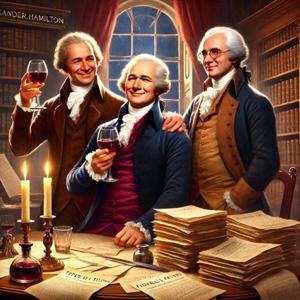


In this essay, Hamilton compares the powers of the President to those of the British King and the Governor of New York. He emphasizes that the President’s powers are far more constrained, with limited terms, the ability to be impeached, and a shared legislative power in declaring war. Unlike the king’s permanent rule, the President's authority is temporary, and subject to elections, with the Senate providing checks on appointments and treaties. This helps calm fears that the new executive would become a monarch-like figure.
Visit my website at Critical Skills | By the Author of WANTED: Eight Critical Skills You Need To Succeed (criticalskillsblog.com)
Hamilton makes a strong case for a single, energetic executive, arguing that one person can act more decisively and with greater accountability than a group. A single executive ensures swift, decisive action in times of crisis and avoids the conflicts and inefficiencies of shared power. The executive’s energy is essential for protecting the nation from external threats, enforcing laws, and safeguarding liberty, while its unity ensures a clear line of responsibility, making it easier to hold the President accountable to the people.
Visit my website at Critical Skills | By the Author of WANTED: Eight Critical Skills You Need To Succeed (criticalskillsblog.com)
Hamilton defends the four-year presidential term, arguing it provides stability in governance and allows the President to resist fleeting public opinion while pursuing the nation’s long-term good. Too short a term could weaken the executive, making the President overly dependent on the legislature or public opinion, and thereby less effective in decision-making. Hamilton asserts that a reasonable term gives the President the ability to enact policies that may initially be unpopular but are necessary for the public's well-being.
Visit my website at Critical Skills | By the Author of WANTED: Eight Critical Skills You Need To Succeed (criticalskillsblog.com)
This paper argues against limiting the number of terms a President can serve. Hamilton believes that allowing re-election encourages capable executives to continue in office and fosters stability. A prohibition on re-election could deter qualified individuals from seeking the presidency, disrupt continuity in leadership, and prevent the accumulation of necessary experience. Additionally, the people should have the right to choose the best leader, even if that means re-electing an incumbent. Hamilton concludes that re-election is essential for maintaining government efficacy and the people’s freedom to choose their leaders.
Visit my website at Critical Skills | By the Author of WANTED: Eight Critical Skills You Need To Succeed (criticalskillsblog.com)
Hamilton addresses the importance of securing the President’s salary, ensuring that it cannot be altered by Congress during the term, to avoid undue influence. He also defends the President's veto power, arguing it acts as a critical check on legislative overreach. The veto serves to protect the executive branch's independence and prevent hasty or unconstitutional legislation, while still allowing Congress to override a veto with a two-thirds majority, thus balancing power between the branches.
Visit my website at Critical Skills | By the Author of WANTED: Eight Critical Skills You Need To Succeed (criticalskillsblog.com)
Hamilton discusses two key presidential powers: control over the military and the power to grant pardons. The President, as Commander-in-Chief, must act quickly and decisively in times of war, which is why a single executive is preferable. The pardon power is also vital, allowing the executive to show mercy, especially in cases of insurrection or rebellion where reconciliation might be more important than punishment.
Visit my website at Critical Skills | By the Author of WANTED: Eight Critical Skills You Need To Succeed (criticalskillsblog.com)
Hamilton argues for the President’s role in treaty-making, but with the important check that treaties must be ratified by a two-thirds Senate vote. This arrangement balances the need for a strong executive in foreign affairs with legislative oversight. It ensures that treaties reflect the nation’s interests while preventing the President from acting unilaterally or engaging in secret deals that could harm the republic.
Visit my website at Critical Skills | By the Author of WANTED: Eight Critical Skills You Need To Succeed (criticalskillsblog.com)
This paper discusses the President’s power to nominate officials, with the Senate having the power to approve or reject appointments. Hamilton argues that requiring Senate confirmation prevents corruption and favoritism, as the President cannot unilaterally appoint individuals. The system promotes merit-based appointments while safeguarding against the dangers of a single individual having unchecked appointing power.
Visit my website at Critical Skills | By the Author of WANTED: Eight Critical Skills You Need To Succeed (criticalskillsblog.com)
Hamilton continues discussing the President’s appointing power and its connection to Senate approval. He reiterates that this system protects against abuses of power and ensures qualified individuals hold office. Additionally, Hamilton touches on the President’s role in foreign policy, making treaties, and commanding the military. He concludes that the structure of the executive ensures a balanced government, capable of strong leadership without the risk of tyranny.
Visit my website at Critical Skills | By the Author of WANTED: Eight Critical Skills You Need To Succeed (criticalskillsblog.com)
The Anti-Federalists feared that the executive branch, as outlined in the Constitution, would become too powerful and resemble a monarchy. They argued that the president's broad powers, including control over the military, the ability to veto legislation, and the lack of term limits, could lead to abuse of authority and unchecked executive dominance. The power to appoint officials and negotiate treaties without adequate oversight was also concerning, as it could lead to corruption and favoritism. The lack of direct accountability to the people heightened fears that the president could serve personal or elite interests over the public good. Overall, the Anti-Federalists saw the executive branch as a potential threat to liberty and democratic governance.
Visit my website at Critical Skills | By the Author of WANTED: Eight Critical Skills You Need To Succeed (criticalskillsblog.com)
From the publisher's feed
Welcome to "Making a Great America," a podcast dedicated to exploring the meticulous thought and effort that went into the design of the Constitution of the United States.
This series…
During the fall of 1787 and the spring of 1788, three remarkable men—John Jay, Alexander Hamilton, and James Madison—worked tirelessly to write a series of essays known as the Federalist Papers. These essays were crafted to convince the citizens of the newly independent states to ratify the Constitution, establishing a constitutional republic that balanced power and safeguarded liberties. Their efforts were instrumental in shaping the framework of the government we know today.
In "Making a Great America," we do not argue for or against any political position.
Instead, we aim to report history accurately, informatively, and with easy listening.
By delving into the writings and ideas of the Founding Fathers, we provide listeners with a deeper understanding of the Constitution's origins and the profound care taken to ensure a balanced and fair government. Our episodes are designed to be engaging and accessible, making complex historical concepts easy to grasp.
We believe that knowledge of our government and its creation is essential to its continued survival. As such, we encourage you to subscribe to our podcast and share it widely with friends, family, and colleagues. Together, let's foster a greater appreciation for the history that continues to shape our nation.
Benjamin Franklin explained to a curious woman after the continental congress finished about what kind of government was created.
His response: "A Republic . . . . IF you can keep it!"