
Sign up to save your podcasts
Or

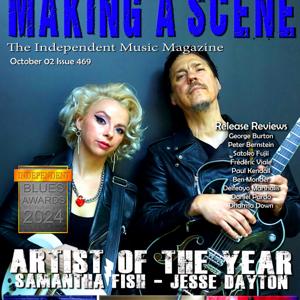


Making a Scene Presents - The Smart Tour Starts at Home: Building a Local Music Scene and a Regional Touring Business That Actually Makes Money
Why independent artists should stop measuring success by miles traveled and start building a music economy in their own backyard.
The Great American Touring Myth
Somewhere along the way, the music industry convinced independent musicians that success was measured by how far they could drive a van before somebody needed a shower. The mythology is practically woven into the fabric of popular music. You record an album, scrape together enough money for a vehicle that may or may not survive another inspection, load it with instruments and musicians, and head out across America in search of fame, fortune, and a truck stop with reasonably clean bathrooms. If you are particularly ambitious, you might even print a tour poster displaying fifteen cities in eighteen days, giving everyone the impression that your career is exploding. Never mind that the drummer is sleeping on somebody's couch in Cleveland, the bass player has developed an intimate relationship with gas station burritos, and the band's entire profit from last night's show disappeared into the fuel tank somewhere outside Columbus.
http://www.makingascene.org
Making a Scene Presents - The Next Music Industry Middle Class Will Be Built Around Relationships That Survive the Platform
The music industry has become remarkably good at collecting information about fans, tracking transactions, and creating new ways to sell music. Unfortunately, the people making the music are often the last ones allowed to benefit from all that information. As AI, Smart Media, blockchain payments, and fan loyalty systems reshape the business, independent artists have an opportunity to change who controls the relationships that make music valuable.
The Music Business Has a Relationship Problem
There is something wonderfully absurd about the modern music industry. We now have artificial intelligence that can create remarkably convincing recordings, algorithms that can predict which song somebody might enjoy next, and technology that allows a piece of cardboard with a tiny electronic chip to unlock an entire interactive album experience. Streaming services can measure listening activity across enormous global audiences, while sophisticated ticketing systems can identify fans who qualify for special concert access based on their listening habits. We have managed to develop some extraordinary tools, yet an independent musician can still perform in front of several hundred enthusiastic people on Saturday night and return home Sunday knowing almost nothing about the audience that just spent two hours cheering for them. Apparently, teaching a computer to imitate a symphony orchestra was easier than giving the guitar player a reliable way to stay in touch with the people who bought tickets.
http://www.makingascene.org
Making a Scene Presents - The American Music Tourism Act Is Now Law. Indie Artists Should Pay Attention to What Happens Next
Washington Has Officially Discovered That Music Makes People Travel
On October 9, 2026, President Donald Trump signed the American Music Tourism Act of 2025 into federal law. That sentence sounds like the sort of thing that normally causes musicians to politely nod, return to restringing a guitar, and assume somebody in Washington has once again created a committee to discuss creating another committee. This time, however, independent artists, venues, recording studios, festivals, local music organizations, and the communities surrounding them may want to keep reading. The law does not hand musicians checks, create an artist grant program, or magically turn the neighborhood club into a federally funded cultural palace. What it does is formally place music tourism inside the federal government's travel and tourism strategy, and the language Congress used is broad enough to include far more than America's famous musical landmarks. The White House confirmed that President Trump signed S. 195 into law on Friday, October 9, directing the Department of Commerce to promote domestic and international tourism to American locations and events important to music tourism. Read the White House announcement
http://www.makingascene.org
Making a Scene Presents an Interview with Reverend Raven
A musician is only as good as the last gig, and a career is measured less by a list of names than by the people in the room, the groove onstage, and whether the audience leaves smiling.
Still, the story is worth telling.
Born and raised in the Englewood neighborhood on Chicago’s South Side, Chief Raven found the blues in 1971 after seeing Freddie King perform at the Kinetic Theatre in Chicago. That moment set something in motion that never really stopped. After serving 16 years in the U.S. Navy, he moved to Milwaukee and began building a life around the music that had grabbed him years earlier.
In Milwaukee, Chief Raven developed a long friendship and musical partnership with Madison Slim, the veteran harmonica player known for his work with Jimmy Rogers. That collaboration lasted roughly a decade and became an important part of Raven’s musical life, placing him in the company of players deeply connected to the Chicago blues tradition.
http://www.makingascene.org
Making a Scene Presents - 25 Smart Media Products You Can Actually Build for Your Merch Table
How to Turn Ordinary Merch Into Physical-Digital Collectibles Without Setting Fire to the Tour Budget
The first generation of Smart Media Albums has arrived, and now comes the much more interesting question: what can an independent artist actually make with this stuff?
That question matters because nobody needs another technology looking for an excuse to exist. The music business has already provided artists with enough revolutionary tools that somehow require a monthly subscription, three passwords, a tutorial video and the patience of a Buddhist monk before anybody earns twelve dollars. Smart Media becomes interesting when we stop treating NFC as the product and start treating it as the invisible doorway inside a physical object a fan genuinely wants to own.
http://www.makingascene.org
Making a Scene Presents - The Album Is Not the Object Anymore
How Indie Artists Can Turn Almost Anything Into a Smart Media Collectible
For most of the recorded music business, the album had a fairly simple job description. It was the thing that contained the music. You bought the vinyl record, cassette or CD because that was how you got the songs, and the artwork, photographs and liner notes came along for the ride as part of the package. Digital music separated the songs from the object, and streaming finished the job by making the physical carrier unnecessary for listening. That sounds like terrible news for merchandise until you realize that the object has now been freed from its old job and can take on a much more interesting one: instead of merely carrying the recording, it can carry the relationship between the artist and the fan.
http://www.makingascene.org
Making a Scene Presents - We Solved Music Distribution. We Forgot to Solve Making a Living.
There was a time when one of the biggest problems facing an independent musician was simply getting a record into the marketplace. You could make a great album, spend money you probably didn't have recording it, press a few hundred CDs, load the boxes into your car and then discover that most of the record business had no particular interest in helping you put those CDs anywhere people might actually buy them. Distribution was a gate, and the people standing in front of that gate usually wanted to know who your label was, who your distributor was and whether somebody more important than you had already decided that you mattered. Independent musicians spent decades trying to get around that system, and eventually technology did something rather wonderful: it kicked a large hole in the wall.
http://www.makingascene.org
Making a Scene Presents an Interview with Wren and Wilde
Wren + Wilde is a Minnesota folk and Americana band led by singer-songwriter Hilary Yoder, whose distinctive “smoke folk” sound blends emotional honesty, roots-driven songwriting, and a dark, smoldering atmosphere that sets the group apart within the Midwest music scene.
At the heart of Wren + Wilde is a deep respect for storytelling. Their songs are built around lived experience, human connection, and the emotional tension between hope and heartbreak. Rich harmonies, earthy instrumentation, and Yoder’s expressive songwriting give the music an intimate quality, while the band’s grit and dynamic range keep it from ever feeling delicate or overly polished.
http://www.makingascene.org
Making a Scene Presents Gerry Casey's Interview with Jason Reilly Owner of Jamboja Studios
Jason Reilly is an Irish musician, songwriter, multi-instrumentalist, and studio owner whose work sits at the intersection of performance, recording, and artist development. Based in Castleblayney, County Monaghan, Reilly is closely associated with Jamboja Studios, a private residential recording facility created to give musicians the time, space, and equipment to focus completely on making music.
http://www.makingascene.org
Making a Scene Presents - Great Performances Beat Great Equipment
Spend enough time around recording musicians and you eventually witness a familiar little ceremony. Someone finishes a take, listens to the playback, makes a face normally associated with discovering something unpleasant in the refrigerator, and decides the studio needs an upgrade. Perhaps the microphone is not expensive enough. Maybe the preamp lacks whatever invisible magic lives inside transformers made during the Eisenhower administration. There could be something wrong with the converters, the monitors, the cables, or the plug-in collection, which already contains enough virtual compressors to control the dynamics of a small country. Whatever the culprit may be, it is remarkably comforting to believe that the disappointing thing coming out of the speakers can be corrected by something arriving from a delivery truck on Thursday.
Sometimes it can. Equipment matters, and pretending otherwise would be silly. A noisy microphone can make a quiet vocal difficult to record, an untreated room can turn a beautiful acoustic guitar into something that sounds as though it was tracked in a tiled bus station, and poor monitoring can fool an engineer into making decisions that collapse everywhere except inside the room where the mix was created. Good tools remove obstacles, and the history of recorded music is full of musicians and engineers using technology creatively enough to change what records could sound like.
http://www.makingascene.org
From the publisher's feed

14,248 Listeners