
Sign up to save your podcasts
Or


Wildlife crossings are amazing.
They’re one of the greatest tools in the toolbox when it comes to preserving migration and movement corridors in the Greater Yellowstone Ecosystem while keeping drivers safe on the road. They’ve been proven to reduce wildlife vehicle collisions by up to 90 percent, sometimes even more. It seems like a no-brainer, win-win solution.
Well, what may appear to be a simple answer to keeping people and wildlife safe while traveling is much more nuanced than you may think. There are countless people, agencies, and processes involved in taking a wildlife crossing from an idea to reality. We wish we could wave a magic wand and see numerous wildlife crossings pop up across the landscape. By the way, if anyone has a magic wand that they’d let us borrow for a while, please let us know.
Instead of sorcery, we have advocacy and collaboration. There are big moves in the Montana wildlife crossing space that we’re so excited to share with you. Joining us on the podcast is the Greater Yellowstone Coalition’s Wildlife Conservation Associate Nick Clarke. Based in Helena, Montana, Nick’s work focuses on making roads safer for people while ensuring Montana’s wildlife can move more easily across the region to reach seasonal habitats.
We’ll talk about how a wildlife crossing comes to fruition, what’s in store for Montana when it comes to future wildlife crossings efforts, what the Greater Yellowstone Coalition is currently working on the wildlife crossing world, and, of course, his favorite wildlife crossing structure.
Alright, let’s keep this traffic moving and jump into the conversation.
The Greater Yellowstone Ecosystem is the land of 49+ Indigenous Tribes who maintain current and ancestral connections to the lands, waters, wildlife, plants, and more.
Voices of Greater Yellowstone was created by the Greater Yellowstone Coalition, a conservation nonprofit dedicated to working with people to protect the lands, waters, and wildlife of the Greater Yellowstone Ecosystem, now and for future generations.
> Listen on Apple Podcasts, Spotify, or wherever you get podcasts.
> Sign-up for License Plate Updates
> Check out the License Plate Design and Our Favorite Wxings
> Join our Online Community and Receive Two FREE Stickers
> Donate to the Greater Yellowstone Coalition
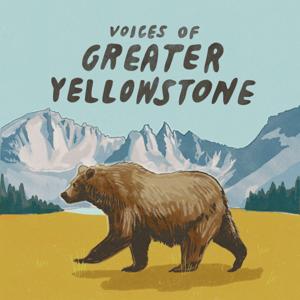
Podcast Artwork > Rachel Dunlap Art
Music > Redwood Trail by Audionautix is licensed under a Creative Commons Attribution license (https://creativecommons.org/licenses/...)
Thumbnail Photo > Library of Congress
Send us a note!
Support the show
 View all episodes
 By Greater Yellowstone Coalition

4.9
3434 ratings
Wildlife crossings are amazing.
They’re one of the greatest tools in the toolbox when it comes to preserving migration and movement corridors in the Greater Yellowstone Ecosystem while keeping drivers safe on the road. They’ve been proven to reduce wildlife vehicle collisions by up to 90 percent, sometimes even more. It seems like a no-brainer, win-win solution.
Well, what may appear to be a simple answer to keeping people and wildlife safe while traveling is much more nuanced than you may think. There are countless people, agencies, and processes involved in taking a wildlife crossing from an idea to reality. We wish we could wave a magic wand and see numerous wildlife crossings pop up across the landscape. By the way, if anyone has a magic wand that they’d let us borrow for a while, please let us know.
Instead of sorcery, we have advocacy and collaboration. There are big moves in the Montana wildlife crossing space that we’re so excited to share with you. Joining us on the podcast is the Greater Yellowstone Coalition’s Wildlife Conservation Associate Nick Clarke. Based in Helena, Montana, Nick’s work focuses on making roads safer for people while ensuring Montana’s wildlife can move more easily across the region to reach seasonal habitats.
We’ll talk about how a wildlife crossing comes to fruition, what’s in store for Montana when it comes to future wildlife crossings efforts, what the Greater Yellowstone Coalition is currently working on the wildlife crossing world, and, of course, his favorite wildlife crossing structure.
Alright, let’s keep this traffic moving and jump into the conversation.
The Greater Yellowstone Ecosystem is the land of 49+ Indigenous Tribes who maintain current and ancestral connections to the lands, waters, wildlife, plants, and more.
Voices of Greater Yellowstone was created by the Greater Yellowstone Coalition, a conservation nonprofit dedicated to working with people to protect the lands, waters, and wildlife of the Greater Yellowstone Ecosystem, now and for future generations.
> Listen on Apple Podcasts, Spotify, or wherever you get podcasts.
> Sign-up for License Plate Updates
> Check out the License Plate Design and Our Favorite Wxings
> Join our Online Community and Receive Two FREE Stickers
> Donate to the Greater Yellowstone Coalition
Podcast Artwork > Rachel Dunlap Art
Music > Redwood Trail by Audionautix is licensed under a Creative Commons Attribution license (https://creativecommons.org/licenses/...)
Thumbnail Photo > Library of Congress
Send us a note!
Support the show
26,243 Listeners
1,486 Listeners
3,950 Listeners
2,125 Listeners
24,351 Listeners
901 Listeners
3,399 Listeners
1,255 Listeners
5,778 Listeners
1,716 Listeners
5,487 Listeners
533 Listeners
105 Listeners
30 Listeners
0 Listeners