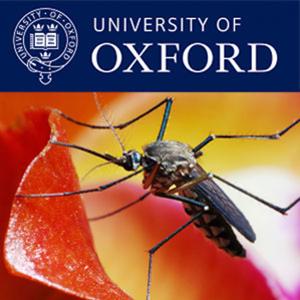
Malaria

Malaria

By Oxford UniversityEducation
Download on the App Store

Malaria episodes

  • 115 years of malaria in Africa
    115 years of malaria data collected in Africa gives the most detailed picture yet of where efforts to control malaria infection are being won and lost across the continent. The largest data repository of any parasitic disease in the world, it includes 7.8 million blood samples from more than 30,000 locations in 43 countries. The dataset was collected and analysed by KEMRI-Wellcome Trust researchers based in Kenya, and is the result of over 20 years of research funded by Wellcome.
    The study shows that sub-Saharan Africa has experienced a decline in the prevalence of P. falciparum – a parasite that causes malaria - from 40% prevalence in children aged 2-10 years old between 1900 and 1929 to 24% prevalence in the same age group between 2010 and 2015. This trend has been interrupted by periods of rapidly increasing and decreasing transmission, thought to be the result of several contributing factors.
    The study reveals that although previous global initiatives have contributed to an unprecedented decline in infection since 2000, reductions have not occurred uniformly throughout the continent, leaving large parts of West and Central Africa with high transmission rates of the disease.
    The researchers argue that new tools are needed for the low income and high malaria burden areas of Africa, where gains in malaria reduction have stalled. The researchers identify several challenges to malaria control, including emerging insecticide and drug resistance, and inadequate funding plans for replacing long-lasting insecticide-treated nets.

    18 min
  • Malaria control in Africa
    Professor Bob Snow from our KEMRI-Wellcome programme in Nairobi, Kenya, tells us how his research brings together epidemiological profiles and government policies to maximise malaria control programmes in Africa Quality data is vital to design better malaria control programmes. This project helps various African countries gather epidemiological evidence to better control malaria. Professor Bob Snow showed how sub-regional, evidence-based platforms can effectively change malaria treatment policies.
    Professor Bob Snow has developed a large programme of work on the phenotype of malaria disease, its relationship to parasite exposure and its wider public health burden.
    Technical advisor to the Kenyan Government (and member of a number of international malaria advisory panels), Professor Snow provides the bridge between basic malaria epidemiology and malaria control policy in the region.
    Malaria control in Africa.
    5 min
  • Malaria elimination in the Greater Mekong sub-region
    Dr Lorenz von Seidlein from our MORU unit in Bangkok, Thailand, tells us about his research on malaria elimination in the Greater Mekong sub-region Multidrug resistant P. falciparum malaria is now established in parts of Thailand, Laos and Cambodia, causing high treatment failure rates for artemisinin combination therapies, the main falciparum malaria medicines.
    A further spread from Myanmar to India then sub-Saharan Africa would be a global public health disaster. TME seeks the best ways to eliminate drug-resistant malaria, using both technical solutions and novel ways that engage entire communities.
    Dr Lorenz von Seidlein coordinates MORU’s Targeted Malaria Elimination (TME) study, which seeks to eliminate artemisinin resistant falciparum malaria by treating entire communities that have significant levels of subclinical malaria parasite infections and transmission with the antimalarial Dihydroartemisinin-piperaquine (DHA-PIP).
    6 min
  • Optimising malaria treatment
    Dr Georgina Humphreys coordinates the WorldWide Antimalarial Resistance Network (WWARN) study groups by encouraging partner engagement and managing the data curation and development of publications. WWARN is a network of research that analyses pooled data of numerous clinical trials. The sheer size of those data sets allows study groups to answer questions that couldn't be asked of a normal size clinical trial, such as the efficacy of an anti-malarial drug on malnourished or severely anaemic children. This research helps design policies to maintain the efficacy of current anti-malaria drugs, currently threatened by growing resistance.
    7 min
  • Finding the best malaria treatments
    Dr Mehul Dhorda heads the Asia Regional Centre of the WorldWide Antimalarial Resistance Network (WWARN). Artemisinin resistance is firmly established in many parts of Southeast Asia and threatens the lives of millions of people. To improve regional intelligence and aid containment efforts, Dr Dhorda promotes the collection of high quality data on malaria drug resistance. His research aims to simplify and harmonise data, securely store results and analyse comparative or collective pooled analyses.
    6 min
  • Malaria in Kenya
    There is a great need for better treatments for malaria and for a preventative malaria vaccine. SPACIAL EPIDEMIOLOGY & VACCINES
    Understanding the variation of malaria risk between houses, villages or region, and how malaria is transmitted in and around that variability helps develop better malaria control programmes and use their resources more wisely. Since malaria control tools are becoming less effective with time, progress in vaccine design is essential.
    6 min
  • Malaria in pregnancy
    In pregnant women, severe malaria is responsible for high maternal mortality, and uncomplicated malaria results in in high morbidity. Professor Rose McGready works on the treatment and epidemiology of uncomplicated malaria in pregnancy. Pregnant women are particularly vulnerable as pregnancy reduces the immunity to malaria, increasing the susceptibility to malaria infection and the risk of illness, severe anaemia and death. For the unborn child, maternal malaria increases the risk of spontaneous abortion, stillbirth, premature delivery and low birth weight - a leading cause of child mortality.
    8 min
  • Sharing data to fight malaria
    Over 250 Institutions participate in the effort of sharing data on the efficacy of antimalarial drugs, which involves standardising and re-analysing data. Professor Philippe Guérin is Director of the WorldWide Antimalarial Resistance Network (WWARN). The best lines of defence against malaria are avoidance of mosquito bites and effective drug therapy. WWARN tracks the emergence of antimalarial drug resistance to ensure that anyone affected by malaria receives effective and safe drug treatment.
    7 min
  • Artemisinin Resistance
    Artemisinins are very poweful tools in the treatment of malaria, and the emerging loss of their activity has the potential to create a major public health problem. MALARIA TREATMENT
    Dr Charlie Woodrow is based at MORU in Bangkok, Thailand, where he coordinates clinical and laboratory studies on resistance to artemisinins. Bringing together diverse datasets of clinical, in vitro and molecular data has helped better understand the emerging resistance, particularly in Myanmar.
    7 min
  • Getting the dose right
    Too high a dose can result in toxicity and side-effects, too low a dose can cause the illness to come back and at worse develop resistance. Professor Joel Tarning is Head of Clinical Pharmacology in our MORU Unit in Bangkok, Thailand. He's working towards drug dose-optimisation using novel pharmacometric modelling approaches. He is particularly interested in antimalarial treatments for children and pregnant women.
    7 min

About Malaria

From the publisher's feed

Malaria is an endemic disease in much of the world, and is a major contributor to child and infant mortality in many countries. Our malaria podcasts describe efforts by NDM clinicians and scientists,…

More shows like Malaria

Psychiatry by Oxford University

Psychiatry

57 Listeners

Philosophy for Beginners by Oxford University

Philosophy for Beginners

330 Listeners

Approaching Shakespeare by Oxford University

Approaching Shakespeare

329 Listeners

General Philosophy by Oxford University

General Philosophy

70 Listeners

Theoretical Physics - From Outer Space to Plasma by Oxford University

Theoretical Physics - From Outer Space to Plasma

59 Listeners

Critical Reasoning: A Romp Through the Foothills of Logic by Oxford University

Critical Reasoning: A Romp Through the Foothills of Logic

37 Listeners

The Secrets of Mathematics by Oxford University

The Secrets of Mathematics

41 Listeners

Critical Reasoning for Beginners by Oxford University

Critical Reasoning for Beginners

30 Listeners

Quantum Mechanics by Oxford University

Quantum Mechanics

20 Listeners

Critical Reasoning: A Romp Through the Foothills of Logic by Oxford University

Critical Reasoning: A Romp Through the Foothills of Logic

3 Listeners