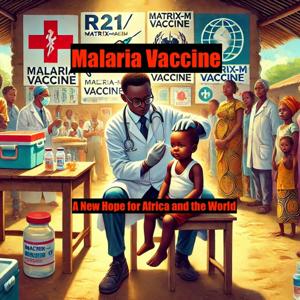
Malaria Vaccine

Malaria Vaccine

Download on the App Store

Malaria Vaccine episodes

  • Groundbreaking Malaria Treatments and Vaccines Gain Momentum Across Africa
    The past two days have brought significant developments and fresh insights into the global fight against malaria, particularly regarding new treatments and the ongoing rollout of malaria vaccines across Africa.
    A groundbreaking approval came from the Swiss agency for therapeutic products, Swissmedic, which has authorized the use of the first malaria treatment designed specifically for babies and very young children between two months and five years of age. As detailed by The Conversation Africa, this approval is profoundly important given that previous treatments used for this age group were simply modified versions of drugs for older children, not tailored for infants’ unique needs. Novartis, with support from Medicines for Malaria Venture, is introducing Coartem Baby on a not-for-profit basis, representing a major step toward bridging the treatment gap for millions of infants born annually in malaria-endemic areas. Ghana has already rolled out this new treatment, with additional approvals anticipated soon in Burkina Faso, Cote d’Ivoire, Kenya, Malawi, Mozambique, Nigeria, Tanzania, and Uganda. Nevertheless, successful deployment will require ongoing investment in local manufacturing infrastructure and funding for broad distribution, and overcoming challenges such as power outages, which may require innovative solutions like lyophilisation, or freeze-drying, to preserve the medication in difficult environments.
    Alongside treatment advances, the malaria vaccine campaign continues to gain momentum. According to a news roundup from The Medicine Maker, Nigeria, Africa’s most populous country, is scaling up its malaria vaccination efforts after a launch in December 2024 saw the first million doses of the R21/Matrix-M vaccine—targeted at children from five months of age—integrated into routine immunization programs, initially in Bayelsa and Kebbi states. Health officials have hailed the campaign as a monumental step forward, aiming to dramatically reduce malaria mortality and move toward a malaria-free Nigeria. Emphasis remains on the importance of completing the four-dose regimen and combining vaccination with proven measures like distribution of insecticide-treated bed nets and seasonal malaria chemoprevention.
    More countries are expected to introduce or scale up malaria vaccine programs in 2025 and beyond, according to Malaria Journal. Gavi, the Vaccine Alliance, continues to play a crucial role in supporting the delivery of vaccines to some of the most vulnerable populations, despite broader challenges in global health funding—a recurring theme in reports from organizations such as Think Global Health, which noted recent struggles with reduced budgets for immunization programs and public health initiatives.
    Despite these positive strides, adoption of the malaria vaccine still faces hurdles. A scientific article from MalariaWorld published on July 31, 2025, examined the ongoing challenges in vaccine uptake, emphasizing that community engagement
    This content was created in partnership and with the help of Artificial Intelligence AI.
    5 min
  • "Malaria Resurgence in Africa Spurs Vaccine Rollout and Ivermectin Advances"
    Rising malaria cases and recent advancements in malaria prevention strategies have kept the disease in the global spotlight over the past two days. Southern Africa is currently experiencing a major surge in malaria cases, with Zimbabwe reporting nearly 112,000 cases and 310 deaths by late July 2025, a stark increase from last year, according to reports from the Africa CDC. Botswana, eSwatini, and Namibia are also facing significant outbreaks, and authorities warn that without urgent intervention, years of progress in malaria control could be reversed. The outbreaks are attributed to lower use of insecticide-treated bed nets and environmental shifts fostering mosquito breeding, as noted by Dr. Merawi Aragaw of the Africa CDC. These trends highlight the pressing need for improved vector control, surveillance, and community engagement throughout the region.
    In light of these concerns, several African countries have accelerated the deployment of malaria vaccines in the past year. One major milestone was Nigeria’s malaria vaccine campaign, which began in December 2024. According to Gavi and Nigeria’s Ministry of Health, this rollout brought one million doses of the R21/Matrix-M vaccine to children from five months of age, integrating vaccination into national immunization programs and aiming to lower child mortality rates dramatically. Efforts in Bayelsa and Kebbi states have been touted by Nigerian health officials as a monumental step in the push towards a malaria-free country.
    Despite these efforts, community uptake of the malaria vaccine remains a challenge. A report published on MalariaWorld.org on July 31, 2025, highlights persistent difficulties in achieving widespread adoption of the vaccine, especially in reaching children under five. The report underscores the crucial role of community engagement and education in overcoming hesitancy and logistical barriers, suggesting that achieving high vaccination coverage will be essential for lasting progress.
    Complementing these vaccination campaigns, new research has demonstrated promising results from the use of ivermectin in controlling malaria transmission. The largest study of its kind, the BOHEMIA trial led by ISGlobal’s Malaria Elimination Initiative and published July 23, 2025, in the New England Journal of Medicine, found that mass administration of ivermectin in Kenyan communities reduced new malaria infections by 26 percent when combined with standard prevention measures like bed nets. The trial also recorded reductions in other parasitic infestations and was praised by global health experts as a significant step forward in malaria prevention, though its full adoption will depend on further research and programmatic feasibility.
    On the treatment front, developments continue for the most vulnerable. On July 31, 2025, Gavi reported the Swiss regulatory approval of the first malaria treatment specifically for babies and very young children, marking another critical advance in reducing sever
    This content was created in partnership and with the help of Artificial Intelligence AI.
    4 min
  • Malaria Vaccine Breakthroughs and Emerging Interventions Offer Hope Amidst Surging Cases in Southern Africa
    Global health experts report notable developments in the ongoing fight against malaria, with particular advances witnessed over the past 48 hours in vaccine deployment, scientific innovation, and outbreak response. Two first-generation malaria vaccines are now being introduced across Africa, with 19 countries incorporating them into routine childhood immunization programs as of April 2025. According to a July 24 article from Devex, early data demonstrate that these vaccines are helping curb severe malaria, reduce hospitalizations, and decrease child deaths. However, their effectiveness remains moderate and requires multiple doses to maintain protection.
    Researchers at GSK are working on a second-generation malaria vaccine, aiming to enhance efficacy, provide longer-lasting protection, and simplify delivery. This next wave of vaccines is driven by advances in technology and hopes to target multiple stages of the malaria parasite’s life cycle for improved results. Moreover, GSK is also focused on optimizing the dosing regimen for its current vaccine to boost coverage and reduce costs, a critical step for widespread implementation across lower-income settings.
    In India, new efforts are underway to develop a multi-stage malaria vaccine candidate called AdFalciVax. As reported by India’s public broadcaster on July 23, this candidate is designed not only to prevent human infection but also to interrupt transmission. Parallel research published on July 24 in MalariaWorld highlights immunoinformatics-based strategies seeking to create multi-epitope vaccines that could confer long-term immunity and lower the risk of resistance.
    Concurrent with vaccine progress, a landmark study published July 23 in the New England Journal of Medicine has demonstrated that mass administration of the antiparasitic drug ivermectin can reduce malaria incidence by 26 percent when administered alongside standard bed nets. Vax-Before-Travel reports that this largest study of its kind, known as the BOHEMIA trial, was conducted in Kenya and Mozambique and marks a new frontier in malaria control, particularly where existing interventions may be faltering. According to Dr. Regina Rabinovich of ISGlobal’s Malaria Elimination Initiative, this approach offers hope for countries struggling to contain the disease, although experts caution that new interventions must be paired with sustainable funding and strengthened health systems, especially as financial cuts continue to threaten public health programs globally.
    While new tools are being deployed, Southern Africa faces a surge of malaria cases. Data from the Africa CDC show dramatic rises in cases and deaths in Zimbabwe, Botswana, eSwatini, and Namibia, with Zimbabwe alone reporting more than 110,000 cases and 310 deaths by mid-2025, compared to much lower figures in 2024. Vax-Before-Travel and the Africa CDC underline low bed net usage and climate-driven shifts in mosquito habitats as contributing factors, while urging greater reg
    This content was created in partnership and with the help of Artificial Intelligence AI.
    5 min
  • Malaria Breakthrough: New Vaccine, Innovative Treatments, and Elimination Milestone Fuel Global Progress
    Global progress in the fight against malaria has taken several notable turns over the past 48 hours, as new breakthroughs and milestones have been reported on both vaccine development and disease eradication fronts.
    The Indian Council of Medical Research (ICMR) announced the development of AdFalciVax, a new malaria vaccine candidate that has demonstrated over 90 percent protection in mice. This vaccine leverages chimeric recombinant technology and targets two key proteins: circumsporozoite protein to prevent infection, and Pro6C protein—a fusion protein—aimed at disrupting parasite transmission through mosquitoes. Of additional significance is the vaccine’s stability at room temperature for up to nine months, a feature that could greatly simplify distribution efforts, especially in resource-limited areas. Plans for clinical trials in humans are underway, reinforcing optimism for global malaria control, according to ICMR.
    In Africa, recent field advances also set the stage for new control strategies. Research published in the New England Journal of Medicine and highlighted by the Centre for Tropical Medicine and Global Health shows that mass drug administration of ivermectin, typically used for other parasitic diseases, has led to a 26 percent reduction in new malaria infections among children aged 5 to 15 in Kenyan trials. Ivermectin works by killing mosquitoes that feed on treated individuals, thus offering added protection against malaria transmission. This large-scale BOHEMIA trial, funded by Unitaid, anchors hopes for integrating ivermectin into malaria control programs, with the potential to complement vaccines and insecticide-treated nets, as highlighted by Professor Marta Maia and Dr. Joseph Mwangangi from KEMRI-Wellcome Trust.
    Meanwhile, a major public health achievement was recorded in Asia. The World Health Organization officially certified Timor-Leste as malaria-free, making it the third country in the WHO South-East Asia Region to reach this milestone. The Global Fund reports that Timor-Leste had seen malaria cases reduce from over 223,000 in 2006 to zero in 2022, with no deaths since 2015. This accomplishment underscores the power of comprehensive public health strategies—combining surveillance, healthcare worker outreach, and community engagement—and offers hope to other regions struggling with malaria.
    Alongside these developments, researchers continue innovating on the vaccine front. As reported by the journal MalariaWorld, multi-epitope vaccine candidates targeting different blood stages of the malaria parasite are being designed using advanced immunoinformatics approaches. Such strategies are expected to further minimize resistance and offer long-term immunity.
    Additional momentum is seen through collaborations aiming to reduce costs and improve accessibility of next-generation malaria interventions. BioProcess International notes that Eyam and the Medicines for Malaria Venture have joined forces to develop a $1 malaria sho
    This content was created in partnership and with the help of Artificial Intelligence AI.
    4 min
  • Groundbreaking Advancements in the Global Fight Against Malaria: New Vaccines, Treatments, and Immunization Efforts Offer Hope
    In recent days, the global fight against malaria has made headlines for several significant scientific and public health developments, with a focus on new vaccines and treatments aiming to curb the impact of the disease.
    On July 20, Indian health authorities announced major progress in the development of a novel malaria vaccine named AdFalciVax. Spearheaded by the Indian Council of Medical Research in collaboration with the National Institute of Malaria Research and several biotechnology partners, AdFalciVax stands out as the country’s first indigenous recombinant chimeric vaccine designed to target two critical stages of the Plasmodium falciparum parasite, which causes the deadliest form of malaria. The vaccine’s primary innovation lies in its dual-stage protection—guarding vaccinated individuals while also aiming to reduce broader community transmission.
    According to the Economic Times, AdFalciVax has demonstrated robust efficacy in preclinical trials, suggesting potential advantages over current single-stage malaria vaccines. Developers highlight features such as broader protection through its two-stage targeting, a lower risk of immune evasion, the prospect of longer-lasting immunity, and extended thermal stability. These qualities could make vaccine distribution and storage significantly easier in tropical regions where malaria is endemic. Currently, AdFalciVax remains in the early research and development phases, with future plans for out-licensing to manufacturers for broader development and potential commercial-scale production.
    While India advances its own vaccine candidate, international efforts to combat malaria have also accelerated. The Global Health Innovative Technology Fund announced a $5.5 million investment into preclinical development of a malaria vaccine, in collaboration with the European Vaccine Initiative, Osaka University, and other global partners. The project’s goal is to address the gap in efficacy and duration of protection offered by existing vaccines. Over 260 million people contract malaria yearly, with nearly 600,000 deaths, underscoring the urgent need for more effective prevention tools—especially in African nations where children under five bear the greatest burden.
    Meanwhile, the safety of earlier malaria vaccines continues to be a focus. A recent study released on July 15 reaffirmed the safety of the RTS,S/AS01E malaria vaccine one year after children received their third dose, giving reassurance about its use in ongoing immunization efforts. The introduction of this vaccine in Nigeria, documented by Magnum Photos, marks another milestone: with support from Gavi, the Vaccine Alliance, UNICEF, and WHO, Nigeria’s Ministry of Health began distributing one million vaccine doses to children, adding it to routine immunization schedules. For many families, this offers new hope after years of suffering high child mortality from malaria.
    Additionally, a new malaria treatment, Coartem Baby, has been approved for ne
    This content was created in partnership and with the help of Artificial Intelligence AI.
    4 min
  • Malaria Breakthrough: Vaccines and Targeted Treatments Offer Hope for Vulnerable Infants
    The past several days have seen significant developments in the global fight against malaria, with particular focus on vaccines and targeted treatments for young children. Malaria remains a widespread and deadly disease, especially in Africa, where children under five years old continue to account for more than 70 percent of malaria deaths, according to the Africa CDC.
    One of the standout moments this week came on July 8, when Novartis announced Swissmedic’s approval of Coartem Baby (Riamet Baby), making it the first malaria medication specifically indicated for newborns and young infants. This approval is particularly crucial, as until now, treatments were only available for infants weighing over 4.5 kilograms, leaving a critical gap for the most vulnerable newborns at risk of rapid malaria complications. Previously, these infants had to receive medications designed for older children, increasing their risk of overdose and toxicity. The new therapy, developed in partnership with the Malaria for Medicines Venture and supported by data from the Phase II/III CALINA study, is indicated for babies weighing as little as 2 kilograms and addresses acute, uncomplicated infections due to Plasmodium falciparum. Novartis intends to introduce Coartem Baby in malaria-endemic areas on a primarily not-for-profit basis, and regulatory pathways are now opening in eight African countries that participated in its development. The drug's approval marks a major step forward in protecting infants who previously had limited options for targeted care. Novartis CEO Vas Narasimhan expressed pride in this milestone, emphasizing the company’s decades-long commitment to delivering scientific breakthroughs where they're most needed.
    Simultaneously, the international community is pressing ahead with broader immunization efforts. On June 25, Gavi, the Vaccine Alliance, concluded its latest replenishment cycle at the Health and Prosperity through Immunization Global Summit in Brussels. Gavi secured over $9 billion in commitments aimed at saving at least eight million lives and protecting 500 million children between 2026 and 2030 from diseases preventable through vaccines, including malaria. However, a funding gap emerged after the United States announced it would halt all contributions, raising concerns about vaccine safety—a claim Gavi has robustly refuted. According to the Malaria Consortium, this $2.9 billion deficit could lead to the deaths of more than 1.2 million children in low- and middle-income countries over the next five years unless the shortfall is urgently filled. Gavi is exploring innovative financing models to ensure its progress is not reversed, with particular emphasis on sustaining momentum in malaria vaccine rollouts.
    On the African continent, individual countries continue their own vaccine implementation strategies. For instance, Nigeria approved the R21/Matrix-M malaria vaccine in April 2023, joining Ghana and leading a push for expanded use across high
    This content was created in partnership and with the help of Artificial Intelligence AI.
    4 min
  • Combating Malaria: Breakthroughs, Challenges, and the Path Forward
    Recent developments in the global fight against malaria are showing both remarkable progress and emerging challenges, particularly regarding the deployment and efficacy of new vaccines and medicines. Malaria continues to pose a significant health threat, having claimed nearly 600,000 lives in 2023, with the majority of deaths occurring in sub-Saharan Africa and disproportionately affecting children under five, reports the Yale School of Public Health.
    Among the most notable advancements is the launch and ongoing rollout of new malaria vaccines. Two vaccines, RTS,S/AS01 (Mosquirix) and R21/Matrix-M, have been recommended for broader use since 2021. According to a recent report from the Yale School of Public Health, while these vaccines have generated hope, challenges remain. The efficacy of these vaccines is modest and tends to wane over time, and there are growing concerns about the malaria parasite developing resistance to current vaccine-induced immunity. Dr. Amy Bei of Yale emphasizes the importance of developing next-generation vaccines that account for the genetic diversity of malaria parasites in endemic regions. To this end, her team has established a field lab in Senegal to monitor genetic mutations and study how these variations might undermine vaccine effectiveness.
    The R21/Matrix-M vaccine, in particular, has been in focus in recent days. Researchers publishing in Frontiers in Immunology observed that R21/Matrix-M induces strong immune responses in both children and adults, sustaining anti-malarial antibody levels associated with vaccine efficacy. However, as highlighted by MalariaWorld, the success of immunization campaigns can be undermined by inadequate booster uptake, which is critical for long-term protection.
    Local stories further illustrate the impact of these vaccines. In Kenya, the malaria vaccine is already changing lives, giving hope to families that have long battled the disease. MalariaWorld showcased the experiences of children, such as six-year-old Elian, whose improved health reflects the vaccine’s promise. In The Gambia, the London School of Hygiene & Tropical Medicine reports that vaccination campaigns in the village of Sotuma Sainey Kandeh have resulted in zero malaria cases over the past year among more than 3,500 vaccinated individuals, including infants as young as five months.
    Access and affordability remain central issues. A major summit in Brussels co-hosted by the European Union and the Gates Foundation recently secured over $9 billion in pledges for Gavi, the Vaccine Alliance, aimed at protecting 500 million children by 2030, as reported by the World Economic Forum. This funding includes substantial price reductions for malaria and rotavirus vaccines, as well as financing for African vaccine manufacturing. However, Gavi still faces a significant gap in reaching its $11.9 billion goal, with some major donors unable to commit funds due to domestic budget cycles.
    Parallel to vaccine efforts, pharmaceutical
    This content was created in partnership and with the help of Artificial Intelligence AI.
    5 min
  • Malaria Vaccine Price Plunges, Boosting Access and Momentum in Global Fight
    Global efforts to combat malaria have reached a pivotal moment this week, as major developments in vaccine strategy, financing, and pricing intersect with ongoing public health challenges. According to MalariaWorld, the price of the world’s first approved malaria vaccine, RTS,S, for children in endemic countries will be reduced by more than half, to less than $5 per dose. This dramatic price drop is expected to improve access for millions of families across sub-Saharan Africa and other malaria-prone regions, where affordability has long been a barrier to widespread vaccination.
    The pricing news coincides with continued high stakes in malaria control. A recent review in the journal Biomedicines underscores that malaria’s annual mortality exceeds 60,000, with some 350 million people at risk of infection globally. Children under five remain especially vulnerable, making the latest cost reductions for pediatric vaccination particularly consequential.
    Financing for malaria vaccine rollout and immunization programs was a major focus at the recent Gavi Summit in Brussels. Global Biodefense reports that the summit concluded with over $9 billion in pledges from world leaders to immunize 500 million children, with special emphasis on malaria, measles, and polio campaigns. The European Union, India, Nigeria, and the Gates Foundation emerged as top contributors, while Gavi announced additional private partnerships and development bank financing to bolster the malaria vaccine campaign and similar initiatives.
    However, concerns have been raised about the U.S. decision to withdraw funding for Gavi, based on vaccine safety claims that experts broadly reject. Global health leaders, including Dr. Paul Offit of the Children’s Hospital of Philadelphia and Atul Gawande, former USAID global health lead, have warned that the U.S. move could result in hundreds of thousands of preventable child deaths. Nonetheless, Gavi’s new strategic plan and radical operational reforms promise to help offset some of the impact by localizing vaccine manufacturing and delivery in Africa and ensuring more sustainable global coverage.
    In the field, interventions beyond vaccination remain vital. ContagionLive reported on July 4 that a mass drug administration campaign in southeast Senegal successfully reduced malaria incidence by 55% during the intervention year, without serious adverse effects. However, the protective effect waned after the program was paused, highlighting the necessity of sustained, community-wide approaches, including repeated annual campaigns and ongoing sensitization, alongside vaccination.
    While RTS,S represents a breakthrough, its long-term effectiveness and the parasite’s ability to evolve are areas of active research. Some recent scientific commentary and video analysis suggest that malaria parasites are already adapting to the pressure exerted by vaccination, signaling that future solutions will require ongoing innovation and next-generation vaccine candidat
    This content was created in partnership and with the help of Artificial Intelligence AI.
    4 min
  • Malaria Vaccines Gain Momentum Across Africa, Boosting Elimination Efforts
    In the ongoing battle against malaria, significant advancements and expansions in the use of malaria vaccines have been noted, particularly over the recent months.
    As of early April 2025, the rollout of the RTS,S and R21 malaria vaccines is progressing steadily. The World Health Organization (WHO) prequalified the RTS,S vaccine in July 2022, and the R21 vaccine in December 2023, ensuring their safety and quality. Currently, 19 countries in Africa, including Benin, Burkina Faso, Burundi, Cameroon, and others, are incorporating these vaccines into their childhood immunization programs and national malaria control plans[1].
    The demand for these vaccines is unprecedented, with at least 30 African countries planning to introduce them into their immunization programs. The availability of two effective vaccines has ensured sufficient supply to meet this high demand, benefiting children in areas where malaria poses a major public health risk[1].
    The RTS,S/AS01 and R21/Matrix-M vaccines have demonstrated their efficacy in reducing malaria cases. The RTS,S vaccine has shown a modest efficacy of approximately 33–36% in reducing clinical malaria cases over four years, although its protection wanes without booster doses. It has a favorable safety profile, with mild injection site reactions and transient fever being the most common adverse events[2].
    Despite the progress, challenges remain. The efficacy of these vaccines can vary depending on the genetics of the local *P. falciparum* population, and there is ongoing concern about the emergence of drug-resistant strains and new variants of mosquitoes. However, the introduction and scaling up of these vaccines are seen as crucial in enhancing global malaria elimination efforts[3].
    In a broader context, malaria-related mortality in Africa has decreased significantly, from 808,000 in 2000 to 580,000 in 2022, thanks to innovative public health measures. Nine African countries have already eradicated malaria, but the fight is far from over due to threats from climate change and emerging resistant strains[3].
    The WHO and other health organizations continue to emphasize the importance of using these vaccines in conjunction with other control interventions, such as insecticide-treated nets (ITNs) and effective case management, to achieve optimal results in reducing malaria transmission[4].
    As more countries prepare to introduce and scale up the use of these vaccines in 2025, the global health community remains hopeful that these efforts will significantly contribute to the ultimate goal of malaria elimination.
    This content was created in partnership and with the help of Artificial Intelligence AI.
    3 min
  • Malaria Vaccine Prices Slashed, Improving Access for Endemic Countries
    In a significant development in the fight against malaria, recent news highlights substantial progress and upcoming changes in the availability and affordability of malaria vaccines.
    As of the past few days, it has been announced that the price of the world's first malaria vaccine, RTS,S, will be slashed by more than half. By 2028, the cost per dose is expected to drop to less than $5 in endemic countries, thanks to a commitment by drugmakers Bharat Biotech and GSK. This price reduction is made possible through process improvements, expanded production capacity, and cost-effective manufacturing, along with minimal profit margins. The partnership between GSK and Bharat Biotech, which began in 2021, has been instrumental in this achievement, with Bharat Biotech investing over $200 million in new manufacturing facilities and technology transfers[3][5].
    This reduction in price comes at a critical time as the rollout of both the RTS,S and the newer R21 malaria vaccines continues to gain momentum. By early April 2025, 19 countries in Africa had already incorporated these vaccines into their childhood immunization programs and national malaria control plans. These countries include Benin, Burkina Faso, Burundi, Cameroon, Central African Republic, Côte d’Ivoire, Chad, Democratic Republic of the Congo, Ghana, Kenya, Liberia, Malawi, Mozambique, Niger, Nigeria, Sierra Leone, South Sudan, Sudan, and Uganda. Additional countries are expected to introduce and scale up these vaccines throughout 2025[1].
    The R21 vaccine, which was prequalified by the World Health Organization (WHO) in December 2023, has shown promising results, particularly in areas with highly seasonal malaria transmission. In such regions, the R21 vaccine has reduced malaria cases by 75%, a efficacy rate similar to that of the RTS,S vaccine when administered seasonally[4].
    Both vaccines are recommended for use in children living in areas with moderate to high malaria transmission. They have been shown to reduce uncomplicated malaria by around 40%, severe malaria by about 30%, and all-cause mortality by 13%. These vaccines are part of a broader strategy that includes other control interventions such as insecticide-treated nets (ITNs) and effective case management[2].
    With the support of global health organizations like Gavi, the introduction of these vaccines through routine immunization programs is set to expand. By the end of 2025, 12 endemic countries in Africa will have introduced the RTS,S vaccine, further enhancing access to life-saving malaria prevention for children[5].
    These developments mark a significant step forward in the global effort to combat malaria, offering hope for millions of children living in areas where the disease remains a major public health risk.
    This content was created in partnership and with the help of Artificial Intelligence AI.

    4 min

About Malaria Vaccine

From the publisher's feed

In the heart of a bustling research lab at Oxford University, Dr. Sarah Johnson peered intently into her microscope. For years, she and her team had been working tirelessly on a project that could change the lives of millions. Their goal? To create a vaccine that could finally put an end to one of humanity's oldest and deadliest foes: malaria. Sarah's journey had begun years earlier when, as a young medical student, she had volunteered in a rural clinic in Burkina Faso. There, she had witnessed firsthand the devastating impact of malaria, particularly on children. The image of a mother cradling her feverish child, helpless against the parasites ravaging the little one's body, had stayed with her ever since. "We're close," Sarah muttered to herself, adjusting the focus on her microscope. "I can feel it." And indeed, they were. After years of painstaking research, countless failures, and glimmers of hope, Sarah and her team had developed a vaccine they called R21/Matrix-M. It was a mouthful of a name, but it held the promise of saving countless lives. Meanwhile, in a small village in Ghana, Kwame sat outside his home, swatting at mosquitoes in the evening air. His young daughter, Ama, lay inside, her small body wracked with fever. Malaria had struck again, as it did every year when the rains came. Kwame had lost his eldest son to the disease three years ago. Now, as he listened to Ama's labored breathing, he prayed for a miracle. Little did he know that halfway across the world, that miracle was taking shape in the form of a tiny vial of vaccine. Back in Oxford, Sarah's team received the news they had been waiting for. The results from their latest clinical trial were in, and they were nothing short of remarkable. The R21/Matrix-M vaccine had shown an efficacy rate of up to 77% in young children who received a booster dose. "This is it!" Sarah exclaimed, her eyes shining with excitement as she shared the news with her team. "We've done it!" But what exactly had they done? How did this tiny vial of liquid manage to outsmart a parasite that had been outwitting humans for millennia? The secret lay in the vaccine's clever design. It targeted a specific protein found on the surface of the malaria parasite called the circumsporozoite protein, or CSP for short. Think of CSP as the parasite's coat – by teaching the body's immune system to recognize and attack this coat, the vaccine effectively stopped the parasite in its tracks before it could cause harm. But the R21/Matrix-M vaccine had another trick up its sleeve. It included a special ingredient called an adjuvant – Matrix-M. This adjuvant worked like a megaphone for the immune system, amplifying the body's response to the vaccine and making it more effective. As news of the vaccine's success spread, it reached the ears of world leaders and health organizations. In boardrooms and government offices, plans were set in motion to bring this life-saving vaccine to those who needed it most. Ghana, Nigeria, a