
Sign up to save your podcasts
Or

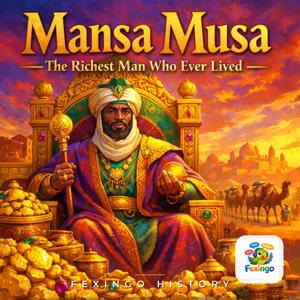


Everyone knows Mansa Musa was rich in gold. But what if the true engine of the Mali Empire's power wasn't gold at all? This episode dives into the salt trade—the silent, strategic commodity that made the empire indispensable. We trace the grueling caravans to Taghaza, the salt mines in the Sahara where slaves extracted slabs of rock salt under brutal conditions. We explore how salt was more valuable than gold in the Sahel, used as currency and essential for survival. Lucas and Luna discuss the geography of salt routes, the role of the farba (imperial officials) in controlling production, and how Mansa Musa's monopoly on both gold and salt gave him unprecedented leverage. They also touch on the famous story of Ibn Battuta's visit to Taghaza and the curious fact that the miners lived in houses made of salt. This episode offers a fresh angle on Mansa Musa's economic empire, revealing that his legendary wealth was built as much on a mineral necessity as on glittering nuggets.
#MansaMusa #MaliEmpire #SaltTrade #Taghaza #Sahara #IbnBattuta #MedievalAfrica #Farba #GoldAndSalt #TransSaharanTrade #WestAfricanHistory #Sahel #AfricanEmpires #SaltMines #EconomicHistory #History #FexingoHistory #Podcast
Keep every episode free: buymeacoffee.com/fexingo
Who was the woman who raised the richest man in history? In this episode, Lucas and Luna explore the shadowy figure of Sogolon Kédjou, Mansa Musa's mother. Drawing on the oral traditions of the Mande griots and the writings of Al-Umari, they piece together the life of a queen who navigated the treacherous politics of the Mali Empire. Sogolon wasn't just a mother — she was a political strategist, a regent who held the realm together during her son's legendary pilgrimage, and the force behind the architectural patronage that made Timbuktu a center of learning. The episode also examines the broader role of women in Malian court life, from the kèlèmousso (warrior women) to the farba's wives who managed trade networks. Lucas and Luna discuss the controversies around Sogolon's origins — was she a princess from the Sahel or a concubine who rose to power? — and the silence of the written sources that forces historians to rely on the jeliw's songs. A rare glimpse into the maternal lineage of a medieval African empire.
#SogolonKédjou #MansaMusa #MaliEmpire #WestAfrica #Mande #Griot #Jeliw #AlUmari #QueensOfAfrica #Timbuktu #Hajj #OralTradition #MedievalAfrica #WomenInHistory #AfricanEmpires #History #FexingoHistory #Sahel
Keep every episode free: buymeacoffee.com/fexingo
In 1324, Mansa Musa's pilgrimage to Mecca flooded Cairo's markets with so much gold that the value of the metal collapsed — and didn't recover for over a decade. This episode dives into the economics behind the legend: how much gold did Musa actually spend? Why did al-Maqrizi and Ibn Iyas record the crash so meticulously? And what does it tell us about the global gold trade in the 14th century? We explore the Mamluk reaction, the role of qadi and moneylenders, and the long shadow Musa's generosity cast over Cairo's economy. Drawing on al-Umari's Masalik al-Absar and al-Maqrizi's own account, we separate inflation from anecdote and trace the real impact of one man's wealth on a medieval metropolis.
#MansaMusa #CairoGoldCrash #MaliEmpire #GoldTrade #MedievalEconomics #AlMaqrizi #IbnIyas #MamlukSultanate #AlUmari #MasalikAlAbsar #Pilgrimage #1324 #GoldInflation #FexingoHistory #WestAfrica #MedievalAfrica #History #Podcast
Keep every episode free: buymeacoffee.com/fexingo
In this episode, Lucas and Luna explore the judicial revolution set in motion by Mansa Musa during the Mali Empire's golden age. They focus on the role of the Qadi al-jama'a, or chief judge, and how Mansa Musa's pilgrimage brought Maliki legal scholars to Timbuktu, transforming it into a center of Islamic jurisprudence. The conversation covers the appointment of the first Qadi al-jama'a by Mansa Musa, the integration of Islamic law with the traditional Kouroukan Fouga code, and the lasting impact on the Sahel's legal traditions. They also touch on the famous Qadi of Timbuktu, Al-Aqib ibn Mahmud, and his role in building the Sankore Madrasah. The episode highlights the tension between customary Mande law and Sharia, and how Mansa Musa navigated this balance to consolidate his empire.
#MansaMusa #MaliEmpire #Timbuktu #Qadi #IslamicLaw #Maliki #KouroukanFouga #Sankore #Sahel #WestAfrica #14thCentury #History #FexingoHistory #LegalHistory #AlUmari #IbnBattuta #SundiataKeita #Mande
Keep every episode free: buymeacoffee.com/fexingo
The Mali Empire under Mansa Musa was not only a land of immense wealth but also a kingdom that engaged in sophisticated diplomacy with North African powers. This episode explores Mansa Musa's embassy to the Marinid sultan of Morocco, Abu al-Hasan Ali, in the 14th century. We examine the motives behind the diplomatic mission, the gifts exchanged, and the political context of the western Sahel and Maghreb. Lucas and Luna discuss the challenges of cross-Saharan travel, the role of the Malian farba (governor) in facilitating the embassy, and the significance of the alliance in the broader geopolitical landscape of the time. Drawing on accounts by Ibn Khaldun and al-Umari, this conversation sheds light on the strategic ties between the Mali Empire and Morocco, highlighting how Mansa Musa projected power beyond Africa's shores.
#MansaMusa #MaliEmpire #Marinid #Morocco #Diplomacy #IbnKhaldun #AlUmari #Fez #Niani #Farba #Sahel #SaharanTrade #AbuAlHasanAli #WestAfrica #NorthAfrica #MedievalHistory #FexingoHistory #AfricanHistory
Keep every episode free: buymeacoffee.com/fexingo
Mansa Musa’s death in 1337 left the Mali Empire in the hands of his son, Maghan I. But Maghan’s reign lasted barely four years, and by 1341 the empire was fraying at the edges. This episode unpacks what we actually know about Maghan I — a figure so obscure that even his name is disputed. Lucas and Luna sift through the fragments: Ibn Khaldun’s curt entry in Kitab al-Ibar, the Tarikh al-Sudan’s conflicting genealogy, and the elusive evidence for a failed military campaign against Gao. They explore why Malian tradition remembers Maghan as a weak ruler, how the jeliw (griots) preserved his story, and what his short reign reveals about the fragility of imperial succession in the medieval Sahel. Along the way, they consider the broader pattern of succession crises that would eventually unravel the empire. This is a deep dive into a nearly forgotten ruler — and a cautionary tale about what happens when a giant’s shoes are too big to fill.
#MansaMusa #MaghanI #MaliEmpire #WestAfrica #IbnKhaldun #TarikhAlSudan #Jeliw #Griot #Sahel #Niani #Gao #KeitaDynasty #SuccessionCrisis #MedievalAfrica #KankuMusa #SundiataKeita #History #FexingoHistory
Keep every episode free: buymeacoffee.com/fexingo
In this episode, Lucas and Luna explore a lesser-known facet of Mansa Musa's legacy: his patronage of scholarship and the book culture that flourished in Timbuktu under Mali's rule. They discuss the founding of the Sankore Mosque and university, the arrival of scholars from across the Muslim world, and the vast manuscript libraries that collected works on astronomy, medicine, law, and Sufi mysticism. The conversation touches on the role of the Qadi al-jama'a in building a legal curriculum, the influence of al-Sahili's architecture on learning spaces, and the survival of these texts through the 2012 crisis in Mali. Lucas explains how the Ahmed Baba Institute now holds thousands of manuscripts, many dating from Mansa Musa's era, and what they reveal about intellectual life in the Sahel. The episode also includes a brief, organic discussion of how listener support through buy me a coffee dot com slash fexingo keeps the show ad-free.
#MansaMusa #Timbuktu #Sankore #MaliEmpire #Manuscripts #AhmedBabaInstitute #alSahili #Qadi #Sahel #WestAfrica #IslamicScholarship #BookCulture #Sufism #14thCentury #History #FexingoHistory #AfricanHistory #LostLibrary
Keep every episode free: buymeacoffee.com/fexingo
After the hajj, Mansa Musa didn't just build mosques—he transformed how justice worked across the Mali Empire. This episode explores the forgotten figure of the Qadi al-jama'a, the chief judge who brought Maliki law to the Niger bend and reconciled it with Mande custom. Drawing on al-Umari's Masalik al-Absar and the Tarikh al-Sudan, we trace how Mansa Musa imported legal scholars from Cairo, established qadis in every major city, and used Islamic courts to centralize power over fractious provinces. We also examine the tension between sharia and the Kouroukan Fouga, the ancient constitution of Sundiata Keita, and how everyday disputes—over gold, salt, inheritance, and marriage—were adjudicated in places like Timbuktu, Gao, and Niani. This is the story of how a ruler used law as an instrument of empire, and how the legal legacy of Mansa Musa outlasted his gold.
#MansaMusa #MaliEmpire #Qadi #Timbuktu #Maliki #Sharia #KouroukanFouga #AlUmari #TarikhAlSudan #IslamicLaw #WestAfrica #Sahel #Niani #Gao #SundiataKeita #MedievalAfrica #History #FexingoHistory
Keep every episode free: buymeacoffee.com/fexingo
Mansa Musa, the legendary 14th-century ruler of the Mali Empire, left an indelible mark on history through his lavish hajj and immense wealth. Yet one of the greatest mysteries surrounding him remains unsolved: where is he buried? In this episode, Lucas and Luna explore the clues left by medieval chroniclers like al-Umari and Ibn Khaldun, the conflicting accounts of his death in 1337, and the deliberate secrecy surrounding Malian royal burials. They discuss the possibility of his tomb being hidden in the ancient capital of Niani, or even in a remote, unmarked location in the Sahel. They also examine the role of the griots and oral traditions, and the challenges archaeologists face in locating his grave without disturbing Mali's cultural heritage. Join us as we uncover the historical and spiritual significance of Mansa Musa's lost tomb, and consider how modern curiosity meets ancient reverence.
#MansaMusa #MaliEmpire #LostTomb #Niani #AlUmari #IbnKhaldun #Griots #OralTradition #Sahel #Archaeology #Mande #Keita #WestAfrica #MedievalAfrica #RoyalBurial #History #FexingoHistory #HiddenTomb
Keep every episode free: buymeacoffee.com/fexingo
In this episode, Lucas and Luna trace the exact path of Mansa Musa's legendary 1324 hajj from the Mali capital of Niani to Mecca. They follow the caravan through the Sahel to the salt mines of Taghaza, across the Sahara to the trading hub of Tuat, then to Cairo, where the Mansa's gold spending crashed the economy. Along the way, they discuss the logistics of moving thousands of people and camels, the diplomatic encounters with Mamluk Sultan al-Nasir Muhammad, and the lasting impact of the pilgrimage on Mali's relations with the Islamic world. The episode draws on the eyewitness account of Al-Umari, who interviewed Cairo officials who met Musa, and on the later writings of Ibn Battuta, who traveled the same route a generation later. Lucas explains how the hajj was not just a religious journey but a carefully orchestrated display of Mali's power and wealth, with Musa distributing gold so lavishly in Cairo that its value took a decade to recover. The conversation also covers the building of mosques along the route, the role of the architect al-Sahili, and the political calculations behind Musa's decision to make the pilgrimage when he did.
#MansaMusa #MaliEmpire #PilgrimageRoute #Hajj #Niani #Taghaza #Tuat #Cairo #AlUmari #IbnBattuta #AlNasirMuhammad #AlSahili #WestAfrica #Sahel #Sahara #MedievalHistory #AfricanHistory #FexingoHistory
Keep every episode free: buymeacoffee.com/fexingo
From the publisher's feed