
Sign up to save your podcasts
Or

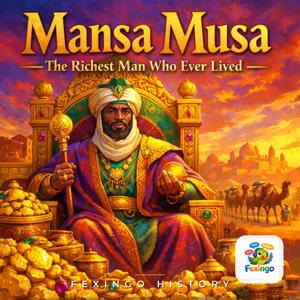


How did Mansa Musa's Mali Empire extract and trade its legendary gold without revealing the secret locations of its mines? This episode explores the silent trade of Wangara, a ritualized barter system that allowed Malian gold to flow across the Sahara while keeping the sources hidden from foreign merchants. Drawing on accounts from the geographer al-Bakri and the historian al-Umari, we uncover the ingenious protocols—beating drums, leaving goods under cover of darkness—that safeguarded the empire's wealth for centuries. We also examine the role of dyula merchants, the impact of the gold-salt exchange with Taghaza, and how this system shaped Mali's economy and diplomacy. Join Lucas and Luna as they decode one of history's most successful commodity trading systems.
#MansaMusa #SilentTrade #Wangara #MaliEmpire #GoldTrade #TransSaharanTrade #AlBakri #AlUmari #Dyula #Taghaza #SaltTrade #Sahel #WestAfrica #MedievalAfrica #History #FexingoHistory #Podcast #EconomicHistory
Keep every episode free: buymeacoffee.com/fexingo
We often hear about Mansa Musa's gold, but in this episode Lucas and Luna explore how salt — not gold — was the true engine of the Mali Empire's wealth and influence. They trace the journey of salt from the Sahara's mines at Taghaza and Taoudenni to the markets of Timbuktu, Niani, and beyond, following the trade routes that connected Mali to North Africa and the Middle East. Lucas explains the brutal conditions of salt mining, the silent barter system used by Berber and Mande traders, and how salt was literally worth its weight in gold in the forest regions of West Africa. They discuss the role of the Wangara merchants and the dyula trading networks, and how Mansa Musa's control over both salt and gold allowed him to dominate trans-Saharan commerce. The episode also touches on the archaeological evidence from the Taghaza salt mines and the accounts of Ibn Battuta and Al-Umari that describe this essential commodity's role in Mali's economy. By the end, the listener understands why salt shaped the power of the Sahel more than any single gold mine.
#MansaMusa #SaltTrade #Taghaza #Taoudenni #TransSaharanTrade #MaliEmpire #WestAfrica #IbnBattuta #AlUmari #Wangara #Dyula #SilentTrade #Sahel #GoldSaltTrade #Sahara #Timbuktu #History #FexingoHistory
Keep every episode free: buymeacoffee.com/fexingo
Mansa Musa's Mali Empire wasn't just about gold and salt. This episode explores the environmental policies that sustained its wealth: how the farba managed forests, the role of the jeliw in tracking climate cycles, and the controversial theory that Mali's gold boom triggered a mini ice age. Lucas and Luna discuss the Kouroukan Fouga's conservation laws, the impact of trans-Saharan trade on West African ecosystems, and why Mansa Musa's capital Niani was abandoned partly due to deforestation. A fresh look at the ecological footprint of Africa's richest empire.
#MansaMusa #MaliEmpire #EnvironmentalHistory #Sahel #Deforestation #KouroukanFouga #Farba #Jeliw #Niani #WestAfrica #GoldMining #Climate #TransSaharanTrade #Sustainability #IbnBattuta #AlUmari #History #FexingoHistory
Keep every episode free: buymeacoffee.com/fexingo
In Episode 70 of Fexingo History, Lucas and Luna explore Mansa Musa's strategic diplomatic alliance with the Marinid sultanate of Morocco. They delve into the 1324 embassy sent from Fez to Niani, the exchange of gifts including a golden sword, and the forgotten treaty that solidified trans-Saharan ties. The episode reveals how Musa's outreach to the Marinids was a calculated move to secure his empire's western flank, protect trade routes, and bolster his religious legitimacy as a patron of Islam. It also touches on the role of the Marinid scholar al-Sahili, who later became Musa's master builder in Timbuktu. Drawing from al-Umari's Masalik al-Absar and Ibn Khaldun's accounts, the conversation uncovers a layer of Mansa Musa's statecraft rarely discussed: his pivot from Egypt to Morocco after the failed economic deal with the Mamluks. This episode offers a fresh perspective on the Mali Empire's foreign policy and its lasting impact on West African history.
#MansaMusa #MaliEmpire #Marinid #Morocco #alSahili #IbnKhaldun #alUmari #MasalikAlAbsar #Fez #Niani #diplomacy #transSaharan #goldtrade #medieval #WestAfrica #History #FexingoHistory #alliance
Keep every episode free: buymeacoffee.com/fexingo
In this episode, Lucas and Luna explore the role of the Qadi al-jama'a, the chief justice of the Mali Empire under Mansa Musa. Drawing on the writings of al-Umari and Ibn Battuta, they discuss how Mansa Musa appointed a Maliki jurist to oversee a legal system that blended Islamic law with Mande customary traditions. The episode covers the Qadi's responsibilities—from adjudicating disputes in Niani and Timbuktu to supervising the farba governors and ensuring tax compliance. Lucas explains how Mansa Musa's patronage of Islamic scholarship attracted jurists from Cairo and Fez, and how the Qadi's court handled cases involving trade, marriage, and criminal law. The hosts also touch on a famous legal controversy over the treatment of the Wangara merchants and how the Qadi navigated tensions between Shariah and local practice. This episode offers a nuanced look at legal pluralism in a pre-modern African empire, revealing how Mansa Musa used law to consolidate power and project legitimacy across the Sahel.
#MansaMusa #MaliEmpire #Qadi #IslamicLaw #WestAfrica #Maliki #AlUmari #IbnBattuta #Niani #Timbuktu #Farba #Wangara #Shariah #LegalHistory #SundiataKeita #Sahel #History #FexingoHistory
Keep every episode free: buymeacoffee.com/fexingo
When Mansa Musa gave away so much gold in Cairo that the metal's value crashed for a decade, it wasn't just a story of staggering generosity — it revealed a sophisticated economic system built on weights, measures, and trust. In this episode, Lucas and Luna explore how the Mali Empire managed its gold economy: the use of the mithqal standard inherited from North African trade, the role of the farba as royal inspectors, the silent trade rituals that protected gold sources, and the debasement crisis that followed Musa's hajj. We look at the gold dust currency (tibar), the copper and cowrie alternatives, and how Wangara merchants kept the system running without a single minted coin. Along the way, we touch on the famous Catalan Atlas depiction of Musa, the limits of our evidence from al-Umari and Ibn Battuta, and what modern economists still get wrong about 'the richest man ever.'
#MansaMusa #MaliEmpire #GoldStandard #Mithqal #Tibar #Wangara #Farba #SilentTrade #AlUmari #IbnBattuta #CatalanAtlas #WestAfricanHistory #EconomicHistory #GoldCurrency #Hajj #MedievalAfrica #History #FexingoHistory
Keep every episode free: buymeacoffee.com/fexingo
After Mansa Musa's death in 1337, the Mali Empire faced a turbulent succession that nearly unraveled everything he built. This episode follows the brief reign of his son Maghan I, the coup by his uncle Sulayman, and the disastrous rule of Sulayman's son Mari Djata II, whose tyranny and debauchery plunged Mali into chaos. Drawing on the accounts of Ibn Battuta and the oral traditions of the jeliw, we explore how the farba system of provincial governance strained under weak leadership, how the gold-wealth from Bambuk and Bure fueled court intrigue, and how the Mande empire's decline began not with external invasion but with internal rot. We also examine Mari Djata II's death by leprosy in 1373, the succession of his brother Musa II, and the brief restoration under the farba of Niani, N'Djamena? No—Kanku Musa's nephew? Actually, the jeliw recall a regent named Diata? We'll untangle the sources. This is the story of how a golden age ended—not with a bang, but with a court drowning in gold and blood.
#MaliEmpire #MansaMusa #MariDjataII #IbnBattuta #WestAfricanHistory #MedievalAfrica #SuccessionCrisis #Farba #Bambuk #Bure #Wangara #Jeliw #SundiataKeita #Mande #Niani #Timbuktu #History #FexingoHistory
Keep every episode free: buymeacoffee.com/fexingo
Every king needs a memory. For Mansa Musa of the Mali Empire, that memory was carried not in ledgers or chronicles, but in the voices of the jeliw — the griots. In this episode, Lucas and Luna explore the role of the jeliw in preserving Mansa Musa's reign: how they were trained, what they sang, and how their oral histories survived centuries without writing. They discuss the Kouroukan Fouga, the epic of Sundiata, and the specific jeliw families who guarded Musa's legacy — families like the Kouyaté and the Diabaté. Lucas explains how griots were more than praise-singers: they were diplomats, genealogists, and living archives. The conversation touches on the tension between written and oral history, the challenge of dating events in griot tradition, and what modern scholars have learned from recording jeliw performances in Mali and Guinea. It also examines the limits of oral tradition — what gets remembered, what gets forgotten, and why Mansa Musa's own rise is shrouded in silence compared to Sundiata's. A thoughtful look at how history is made, not just recorded.
#MansaMusa #MaliEmpire #Jeliw #Griot #KouroukanFouga #SundiataKeita #OralHistory #WestAfrica #Kouyate #Diabate #Niani #Timbuktu #Mande #AlUmari #IbnBattuta #EpicOfSundiata #History #FexingoHistory
Keep every episode free: buymeacoffee.com/fexingo
In this episode, Lucas and Luna dive into the military might behind Mansa Musa's Mali Empire. Beyond the gold and the hajj, Mali fielded a formidable army that protected trade routes and expanded territory. Lucas explains how the farba system organized provincial levies, how the cavalry used stirrups and chain mail from North Africa, and how the navy on the Niger River supported campaigns. They discuss the role of the Wangara gold miners as a strategic resource, the use of poisoned arrows by infantry, and the command structure under the mansa. Lucas also touches on the controversial practice of taking captives and how the army projected power across the Sahel. A focused look at the soldiers, tactics, and logistics that made Mali a medieval superpower.
#MaliEmpire #MansaMusa #AfricanMilitaryHistory #Sahel #Farba #Wangara #NigerRiver #Cavalry #MedievalWarfare #WestAfrica #GoldTrade #Mandinka #KeitaDynasty #SundiataKeita #TransSaharanTrade #FexingoHistory #History #MedievalAfrica
Keep every episode free: buymeacoffee.com/fexingo
In this episode, Lucas and Luna explore the overlooked institution of Mansa Musa's royal harem — not a secluded prison, but a complex political and economic engine. Drawing on Al-Umari's accounts and oral traditions, they discuss how wives, concubines, and female relatives wielded influence through diplomacy, trade, and family alliances. Learn about the roles of women like the queen mother (mansa kunting), the political marriages that secured peace, and the farba who managed female-led estates. The episode also touches on the griottes who preserved history and the legal rights women held under the Kouroukan Fouga. A fresh angle on gender and power in the Mali Empire.
#MansaMusa #MaliEmpire #RoyalHarem #WestAfrica #WomenInHistory #AlUmari #KouroukanFouga #Griottes #QueenMother #Farba #Mande #Niani #Timbuktu #OralTradition #MedievalAfrica #GenderHistory #History #FexingoHistory
Keep every episode free: buymeacoffee.com/fexingo
From the publisher's feed