
Sign up to save your podcasts
Or

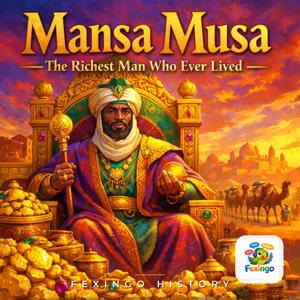


This episode is a deep dive into the actual mechanics of gold mining and production in Mansa Musa's Mali Empire. We explore the specific goldfields at Bambuk, Bure, and the legendary Wangara secret mines. Lucas explains how the Malians extracted gold through placer mining in riverbeds and shaft mining in the savanna, and how the farba system controlled production and trade. We discuss the famous tradition of the silent trade or dumb barter in Wangara, where gold was exchanged for salt without direct contact, as described by medieval geographers like Al-Umari and Al-Bakri. The conversation also covers the role of Soninke and Mandinka miners, the environmental impact of medieval gold mining, and how Mali's gold reached North Africa and Europe. The episode ties this all together to explain how Mansa Musa's legendary wealth was built on a sophisticated, secretive, and highly organized gold industry that remained a mystery to outsiders for centuries.
#MansaMusa #MaliEmpire #GoldMining #Bambuk #Bure #Wangara #AlUmari #AlBakri #SilentTrade #MedievalGold #Farba #Soninke #Mandinka #WestAfrica #SaharanTrade #MedievalAfrica #History #FexingoHistory
Keep every episode free: buymeacoffee.com/fexingo
This episode explores one of the great mysteries of the Mali Empire: the fabled lost city of Niani's royal mint, where some historians believe Mansa Musa struck gold coins that never entered the historical record. Lucas and Luna sift through the evidence—from Al-Umari's descriptions of Mali's gold trade to the complete absence of Mansa Musa's own coinage in archaeological finds—and ask whether the mint ever existed or was a legend born from European wishful thinking. They examine the farba system of controlled gold distribution, the role of the dyula merchants, and the practical reasons why Mali may have deliberately avoided minting coins. Along the way, they discuss the one possible exception: a mysterious gold dinar that surfaced in 19th-century Morocco, now lost. What does the absence of coinage tell us about Mansa Musa's economy? And what would the discovery of his mint mean for African history?
#MansaMusa #MaliEmpire #GoldCoins #Mint #Niani #Farba #Dyula #AlUmari #AfricanHistory #SaharaTrade #Wangara #Currency #GoldTrade #MedievalAfrica #IslamicNumismatics #LostCity #History #FexingoHistory
Keep every episode free: buymeacoffee.com/fexingo
While Mansa Musa is famous for his gold and his pilgrimage, his power ultimately rested on his army. This episode explores the military structure of the Mali Empire under Mansa Musa in the early 14th century. Lucas and Luna discuss the role of the farba, the provincial governors who commanded local levies, and the elite royal guard of cavalry and infantry. They examine how Mali's army was organized to control trade routes and vast territories, using both mounted horsemen armed with spears and bows and foot soldiers. The conversation touches on the use of iron weaponry, leather armor, and the lack of standing armies in the pre-modern Sahel. Lucas explains how Mansa Musa's wealth funded a formidable military that maintained peace along the Niger River and protected the gold fields of Bambuk and Bure. The episode also explores the logistical challenges of supplying an army in the Sahel and the diplomatic intimidation that often made actual battle unnecessary. Listeners will come away with a concrete picture of how Mansa Musa projected power beyond his treasury.
#MansaMusa #MaliEmpire #AfricanHistory #MilitaryHistory #MedievalAfrica #Sahel #farba #Cavalry #NigerRiver #Bambuk #Bure #IronWeaponry #MedievalArmy #WestAfrica #KeitaDynasty #14thCentury #History #FexingoHistory
Keep every episode free: buymeacoffee.com/fexingo
In 1324, an Andalusian poet and architect named Abu Ishaq al-Sahili traveled back from Mecca with Mansa Musa's hajj caravan. But he didn't just accompany the emperor — he transformed the built environment of the Mali Empire. This episode follows al-Sahili's journey from Granada to Timbuktu, where he designed the Djinguereber Mosque, the Sankore Madrasa, and the royal palace at Niani. We explore how his distinctive style — blending Andalusi brickwork with local Sudano-Sahelian traditions — created landmarks that still stand today. We also look at the debate: did al-Sahili really introduce fired brick to West Africa, or was he adapting techniques already in use? And what happened to him after Mansa Musa died? This is the story of the man who gave Mali its most famous buildings.
#AlSahili #MansaMusa #MaliEmpire #Timbuktu #DjinguereberMosque #SankoreMadrasa #AndalusiArchitecture #SudanoSahelian #WestAfrica #MedievalAfrica #Granada #Niani #Hajj1324 #IslamicArchitecture #FiredBrick #MalianHistory #History #FexingoHistory
Keep every episode free: buymeacoffee.com/fexingo
In the 14th century, Mansa Musa didn't just dazzle Cairo with gold during his Hajj — he strategically exchanged lavish gifts with rulers from the Mamluk Sultanate to the Marinid Sultanate of Morocco. This episode explores the sophisticated diplomatic gift economy of the Mali Empire, from the horses, ivory, and gold dust sent to Sultan al-Nasir Muhammad to the ceremonial robes and exotic animals that flowed back. Drawing on Al-Umari's accounts and Ibn Battuta's later observations, we uncover how Mansa Musa used gift-giving as a tool of statecraft, embedding Mali in a network of mutual obligation and prestige. The episode also touches on the role of the farba (imperial agents) and the dyula networks that enabled such long-distance transactions, and reveals the little-known story of why Mansa Musa sent the Mamluk sultan a set of girls as a gift — and what the sultan did with them.
#MansaMusa #MaliEmpire #DiplomaticGifts #AlUmari #IbnBattuta #MamlukSultanate #MarinidSultanate #GiftEconomy #TransSaharanTrade #14thCenturyDiplomacy #AfricanHistory #MedievalHistory #Hajj #Farba #Dyula #SultanAlNasirMuhammad #History #FexingoHistory
Keep every episode free: buymeacoffee.com/fexingo
We know Mansa Musa as the richest man in history, but who actually built the legendary mosques and universities of Timbuktu? In this episode, Lucas and Luna explore the forgotten role of the architects and masons who created the Sankore Madrasa, Djinguereber Mosque, and Sidi Yahya Mosque. They discuss the local Mande building traditions, the use of mud-brick and salt, the influence of the Andalusian poet-architect al-Sahili, and how these structures became centers of learning. The conversation also touches on the challenges of preserving these UNESCO World Heritage sites today. Discover the hands behind the golden age of Mali.
#MansaMusa #Timbuktu #SankoreMadrasa #Djinguereber #SidiYahya #alSahili #MaliEmpire #SudanoSahelianArchitecture #Mudbrick #UNESCO #WorldHeritage #AfricanHistory #MedievalHistory #IslamicArchitecture #History #FexingoHistory #ArchitecturalHistory #WestAfrica
Keep every episode free: buymeacoffee.com/fexingo
When we talk about the Mali Empire, we talk about Mansa Musa—the gold, the Hajj, the libraries. But what about the women who shaped that world? In this episode, Lucas and Luna explore the roles of women in 14th-century Mali: from noblewomen managing estates and trade while men were on pilgrimage, to the powerful queen mothers who influenced succession, to the everyday lives of women in Mande society. Drawing on the accounts of Ibn Battuta and Al-Umari, as well as the Sunjata epic and the Kouroukan Fouga charter, we uncover a society where women could own property, inherit, and even hold significant political sway—though within a patriarchal framework. We look at specific figures like the queen mother Sogolon Kedjou, the griottes (female griots), and the women of the dyula trading networks. This episode challenges the one-dimensional view of medieval West Africa and highlights the complexity of gender dynamics in the Mali Empire.
#MansaMusa #MaliEmpire #WomenInHistory #MedievalAfrica #IbnBattuta #AlUmari #KouroukanFouga #SundiataKeita #SogolonKedjou #Griottes #Dyula #Mande #Niani #Timbuktu #WestAfricanHistory #QueenMothers #GenderHistory #FexingoHistory
Keep every episode free: buymeacoffee.com/fexingo
In 1324, Mansa Musa set out on his legendary pilgrimage to Mecca with a caravan so vast it reshaped economies from Cairo to Medina. But what carried that caravan across the Sahara? In this episode, Lucas and Luna explore the unsung workhorses of the Hajj: the tens of thousands of camels that hauled gold, food, water, and tens of thousands of people across 4,000 miles of desert. They examine how Mali sourced these animals — from the nomadic Berber and Tuareg traders who supplied them, to the specialized 'farba' officials who managed logistics. The hosts also unpack the camels' daily needs — 20 gallons of water every few days, constant veterinary care, and the staggering amount of fodder carried for the journey. Along the way, they touch on a little-known environmental impact: how the Hajj caravan may have overgrazed the Sahel. Finally, they consider what the camel meant to Mande culture — not just as a beast of burden, but as a symbol of wealth and the connection to the wider Islamic world.
#MansaMusa #Camels #Hajj #MaliEmpire #TransSaharanTrade #SaharaDesert #Berber #Tuareg #Farba #Cairo #Mecca #1324 #Sahel #Logistics #WestAfrica #Caravan #History #FexingoHistory
Keep every episode free: buymeacoffee.com/fexingo
In this episode, Lucas and Luna explore the intellectual legacy of Mansa Musa's Mali Empire, focusing on the libraries of Timbuktu. They discuss how Mansa Musa's patronage attracted scholars and scribes, leading to a golden age of manuscript production. The conversation covers the contents of the libraries—texts on astronomy, mathematics, medicine, and law—and the challenges of preservation. They touch on the role of the Sankore Madrasa, the work of Ahmed Baba, and the modern efforts to digitize and protect these fragile documents. The hosts also examine the myth of Mansa Musa's personal library and what surviving manuscripts reveal about trans-Saharan intellectual exchange.
#MansaMusa #Timbuktu #Manuscripts #AhmedBaba #Sankore #MaliEmpire #WestAfrica #MedievalAfrica #Libraries #Astronomy #Mathematics #Medicine #TransSaharan #OralTradition #Preservation #Digitization #History #FexingoHistory
Keep every episode free: buymeacoffee.com/fexingo
In 1324, Mansa Musa embarked on a pilgrimage to Mecca that would become legendary. This episode follows the emperor's 4,000-mile journey across the Sahara, through Cairo's Mamluk court, and into the Arabian Peninsula. We explore the logistics of moving a caravan of 60,000 people and 12,000 slaves, the massive gold expenditure that crashed Cairo's economy for over a decade, and the political calculations behind Musa's diplomatic overtures to Sultan al-Nasir Muhammad. Drawing on the accounts of al-Umari and Ibn Battuta, we separate historical fact from the myths that have grown around the richest man who ever lived. Discover how one journey transformed Mali's place in the medieval world and cemented Musa's legacy as a global power broker.
#MansaMusa #Hajj #MaliEmpire #WestAfrica #MedievalAfrica #Cairo #Mamluk #alUmari #IbnBattuta #1324 #Sahara #Gold #Economics #Diplomacy #Pilgrimage #History #FexingoHistory #WorldHistory
Keep every episode free: buymeacoffee.com/fexingo
From the publisher's feed