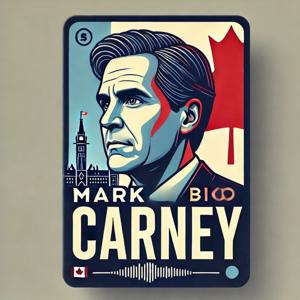
Mark Carney - Biography Flash

Mark Carney - Biography Flash

By Inception Point AINewsPoliticsHistory
Download on the App Store

Mark Carney - Biography Flash episodes

  • Carney's Economic Nationalism: Buy Canada, Tariff Fights, and TIFF Spotlight
    Mark Carney BioSnap a weekly updated Biography.
    Mark Carney has had an eventful week that could well reshape the Canadian political and economic landscape. On September 5, Carney, as Prime Minister, stepped before the cameras in Mississauga to announce a sweeping set of measures designed to bolster Canadian industries reeling from recent U.S. tariffs—his biggest play yet in the unfolding trade standoff. He touted a $5-billion Strategic Response Fund for affected firms and, perhaps more headline-grabbing, rolled out the long-anticipated Buy Canada policy. According to Global News, this new procurement strategy means the federal government will now prioritize Canadian suppliers, a bold response to mounting protectionism. Carney also announced $370 million in targeted help for canola farmers after China slapped a devastating 75.8 percent tariff on Canadian canola, framing it as a direct investment in biofuels as Ottawa scrambles to soften the blow.
    Notably, Carney’s government has paused its ambitious 2026 electric vehicle mandate—a move he spun as pragmatic, but pundits and opposition leader Pierre Poilievre were quick to pounce, with Poilievre saying Carney’s retreat means the Conservatives were right all along. CTV News covered Carney’s tour of a major Toronto manufacturing plant, where he made much of the new support programs for small and medium businesses, reskilling for as many as 50,000 workers, and extra flexibility in Employment Insurance for those thrown off-balance by tariffs. This marks Carney’s most aggressive turn toward economic nationalism, putting worker security and domestic industry front and center.
    Between the hard policy news, there was room for a softer image. On September 4, Carney addressed the glittering opening of the 50th Toronto International Film Festival, where according to CPAC he played host, bantered with the crowd, and fondly recalled the comedic genius of John Candy. As he joked about his own role and paid tribute to Canada’s cultural giants, Carney reminded the room of his roots—and perhaps quietly countered his reputation as a technocrat with an appeal to shared national story.
    Earlier in the week Carney chaired a high-stakes cabinet planning forum in Toronto, as reported by CPAC, focused on U.S. relations, trade strategy, and cost-of-living issues. He revealed that a senior team was already in Washington hashing out the response to Trump-era tariffs and the broader challenge of U.S.-Canada trade realignment.
    Social media and news chatter have been dominated by Carney’s tariff response and the Buy Canada announcement, with hashtags like #BuyCanadian and #CanolaSupport trending. Much of the buzz reflects both anxiety and guarded optimism about Carney’s move to counter rising economic uncertainty with big, nationalist gestures. The political class is watching closely—while his candid, sometimes wry press style is earning him some goodwill, the high stakes and sharp opposition barbs mean this week’s headline
    This content was created in partnership and with the help of Artificial Intelligence AI.

    5 min
  • Carney's Big Bet: Balancing Trade, Energy, and Global Alliances
    Mark Carney BioSnap a weekly updated Biography.
    Mark Carney has dominated Canadian headlines over the past few days as his tenure as prime minister faces its most consequential test yet. The biggest story on the business front is his government's launch of the Major Projects Office, an ambitious effort to accelerate approvals for nation-building projects. The office, based in Calgary with satellites nationwide, promises to slash regulatory wait times and unify environmental reviews, aiming to kick-start long-delayed energy and infrastructure projects. Dawn Farrell, a heavyweight from Trans Mountain and TransAlta, was tapped as CEO, a move widely praised by the Canadian Association of Petroleum Producers. They lauded Carney’s push as a game-changer for LNG, pipelines, and carbon capture, with $100 billion in energy investment potentially unlocked. Politico and Marine Link have noted investor enthusiasm but caution that a “significant policy reset” is still needed to truly position Canada as a global energy superpower.
    On the international stage, Carney made waves with a Kyiv visit, reaffirming military and financial support for Ukraine. Most notably, he highlighted Canadian backing for King’s College London’s million-dollar campaign against weapons of mass destruction disinformation—a nod to the country’s deepening role in European security. His speech in Sophia Square, coinciding with Ukraine’s independence anniversary, added a personal touch to his foreign policy credentials.
    Trade remains turbulent. Despite earlier “elbows up” rhetoric, Carney stunned many by dropping most counter-tariffs on U.S. goods and scrapping the digital services tax. This tactical retreat has left Canadian businesses and some voters uneasy, as tariffs on Canadian exports are actually higher since his arrival. According to Global News, critics say Carney’s conciliatory approach with President Trump yielded little in the short term, betting instead on a Supreme Court reversal and the 2026 Mexico-Canada-US trade renegotiation. Meanwhile, New Hampshire is organizing a cross-border business mission after its exports to Canada plummeted forty percent year over year—a stark illustration of how deeply the trade war is hitting regional economies.
    In parliament, all eyes are on Carney as he gears up to face Conservative leader Pierre Poilievre, whose procedural prowess in the House will test Carney’s political mettle. CTV reports that upcoming issues—including a tough-on-crime bill, the October budget, and emissions reforms—promise a bruising parliamentary session.
    Away from politics, Carney’s climate legacy suffered a blow as his Net Zero Banking Alliance, a green finance group he founded, halted all activities. The Telegraph reports that a wave of defections sparked by Trump’s anti-ESG campaign and bank withdrawals—most recently HSBC, Barclays, and five major Canadian banks—have forced a major rethink. The group’s future rides on an imminent vote to overhaul its membership
    This content was created in partnership and with the help of Artificial Intelligence AI.
    4 min
  • Mark Carney's European Blitz: Rewriting Canada's Global Script in a Week
    Mark Carney BioSnap a weekly updated Biography.
    In the past few days Mark Carney has been everywhere and the headlines are impossible to miss. Global News reports that Prime Minister Carney kicked off a high-stakes European tour on August 24, meeting leaders in Poland and Germany before wrapping in Latvia with strategic stops aimed at shoring up alliances shaken by President Donald Trumps escalating trade war with Canada. In Poland, Carney inked a sweeping partnership with Donald Tusk, locking down new deals on energy and defense and chasing industrial partnerships in aerospace while highlighting Canadas unwavering support for Ukraine. According to an official PMO news release, these meetings are Carneys first official visits to Poland, Germany, and Latvia, explicitly focused on cementing trade, critical minerals, and defense ties as Ottawa pivots away from a volatile Washington and towards Europe.
    In Berlin, Carney was seen with Chancellor Friedrich Merz, collaborating with senior industrial leaders and finalizing a critical minerals pact meant to insulate Canada from future supply chain shocks. The World Socialist Web Site notes Carney’s whirlwind tour set off in Kyiv on Ukrainian Independence Day, where he pledged a game-changing two billion Canadian dollars in weapons and relief packages for Ukraine. This mammoth aid package is being rolled out with nearly a billion earmarked for armored equipment and a push for joint Canadian-Ukrainian drone ventures. The optics are crystal clear: Carney is painting Canada as the indispensable transatlantic bridge in a world riven by war and protectionism.
    Latvia saw Carney making headlines again, this time on the tarmac with troops at the Ādaži military base. The Canadian Press and CTV confirm he pulled the wraps off a three-year extension for Operation REASSURANCE, keeping more than two thousand Canadian troops stationed in the Baltic through 2029—a direct signal to Moscow that Canada is there to stay. He also trumpeted the largest military pay hike in a generation, with raises retroactive to April and extra support for families shifting posts, as covered by cpac and LSM Latvia.
    On the economic front, Carney stunned commentators by rolling back tit-for-tat tariffs under CUSMA, receiving a rare shout-out from Trump himself—according to World Socialist Web Site, Canada is ready to ‘restart’ key trade negotiations after months on ice. The PMO, meanwhile, is working overtime on social media, pushing video clips of Carney greeting troops, shaking hands with European leaders, and hailing a new order for NATO submarines.
    There have been no high-profile controversies, but the pace and scope of announcements—new security partnerships, historic military pay rises, billions redirected to Ukraine, and public gestures with world leaders—hint at a prime minister intent on making this moment part of his lasting legacy. If history judges significance by bold gestures and visible leadership, Mark Carney just rewrote t
    This content was created in partnership and with the help of Artificial Intelligence AI.
    4 min
  • Carney's European Blitz: Redefining Alliances, Trade, and Security
    Mark Carney BioSnap a weekly updated Biography.
    Here is a direct update on Mark Carney, who recently made headlines across Europe and North America. In the past several days, Carney has been in the international spotlight for a whirlwind diplomatic trip, which kicked off with his arrival in Kyiv on August 24, where he attended Ukraine’s Independence Day celebrations and met with President Volodymyr Zelenskyy. Social media, including Instagram, was abuzz with images of the visit, underscoring Canada’s continued support for Ukraine during a time of ongoing conflict and global uncertainty.
    Almost immediately afterward, Carney traveled to Poland, signing a new strategic partnership focused on energy and security with Poland’s Donald Tusk, a move that could redefine Canadian-European ties, especially with Poland touted as Europe’s fastest-growing economy. This defense and economic pact was widely reported by Global News and CTV and marks a significant shift in Canada’s European outreach. Coverage highlighted Canada’s opening the door to increased military cooperation, with Carney not ruling out the possibility of sending Canadian troops to Ukraine, although details and timelines remain unconfirmed.
    In Berlin on August 26, Carney held a joint news conference with German Chancellor Friedrich Merz. There he addressed the intensification of Canada-Germany collaborations, especially advancing the Critical Minerals Action Plan—a direct follow-up to commitments made at this year’s G7 summit. The focus is on Canada’s readiness to stockpile critical minerals for defense and technology, especially in areas like rapid AI development. Canadian and German officials stressed the urgency of diversifying energy supply chains and welcomed the deepening of these economic and security alliances. Carney’s remarks were picked up by outlets like CNW and CPAC, with the joint commitment to further elevate the transatlantic partnership.
    On the trade front, Carney generated domestic headlines by announcing the removal of most retaliatory tariffs against the United States under CUSMA, following direct talks with President Trump. However, Canada will keep tariffs on steel, aluminum, and autos while a new consultation process begins to review strategic sectors—an important move given the shifting winds of the global trade environment. At a recent press conference, Carney emphasized shifting Canada from reliance to resilience, promising new trade deals and expanded markets for Canadian workers and businesses.
    Beyond the policy and headlines, Carney’s trip has had ripple effects across social media, with both supporters and critics weighing in. European commentators generally praised the renewed alliance spirit, while Canadian observers remain focused on the domestic impact of shifting trade policies and potential military commitments. So far, no major scandals or surprise announcements have emerged, but diplomatic sources hint at possible future summits involving Ukraine, Rus
    This content was created in partnership and with the help of Artificial Intelligence AI.

    4 min
  • Carney Drops Tariffs: Bold Strategy or Risky Gambit for Canada?
    Mark Carney BioSnap a weekly updated Biography.
    The biggest story around Mark Carney this week is his bold move as Prime Minister to drop most of Canada’s retaliatory tariffs against the United States. On August 22, Carney announced that Canada will scrap the 25 percent counter-tariffs on a wide range of U.S. food and consumer goods—a legacy left by Justin Trudeau—starting September 1. These tariffs had become a headache for Canadian businesses and consumers, driving up costs and souring relations with the country’s largest trading partner. According to The Japan Times, analysts and business leaders had been warning for weeks that the tariffs were hurting Canadian companies and risked making Carney himself vulnerable to political blowback if cost-of-living frustrations grew louder.
    The move intends to both soothe the Americans and restart trade talks, which had stalled amid President Donald Trump’s protectionist posturing. Carney had campaigned vigorously promising to take a hard line with Trump, and this sudden olive branch sparked a flurry of reactions. Global News reports that while some see this as an overdue gesture that could ease economic pressure, critics—including opposition leader Pierre Poilievre—are accusing Carney of “capitulation” and climbing down from his campaign rhetoric. Interestingly, the tariffs on steel, aluminum, and autos will stay in place for now, leaving room for continued haggling over these critical sectors.
    His recent phone call with Trump has gotten considerable coverage across CBC, CTV, and Reuters, with both leaders publicly stressing that they are eager to get along after what’s being described as a “productive and wide-ranging conversation.” Trump called Carney “a good person” and said he wanted to be “very good to Canada.” Social media is buzzing with pundits debating whether Carney’s strategy is savvy, weak, or the only way to move forward as CUSMA trade reviews loom next month.
    On the business front, officials have teased a new Canadian industrial strategy focused on jobs, housing, defense investment, and strategic sector transformation. Carney says Canada will move “from reliance to resilience,” positioning this not just as a tactical retreat but as part of a vision to build the G7’s strongest economy and help Canadian companies seize new opportunities.
    Carney’s appearances on national networks and government press releases over the last few days have kept him in the spotlight, and his decision is almost universally described as “significant,” with near-term uncertainty but potential long-term impact on national competitiveness, trade relations, and political momentum. No major scandals, social media dust-ups, or speculative drama have surfaced—though observers are watching closely to see if Carney’s gamble pays off, especially in a political world where patience for high-stakes diplomacy is wearing thin.
    Get the best deals https://amzn.to/3ODvOta
    This content was created in partnership and with the help of Artificial Intelligence AI.

    4 min
  • Carney's Balancing Act: Diplomacy, Strikes, and Pride Flags
    Mark Carney BioSnap a weekly updated Biography.
    Mark Carney has had an incredibly eventful few days that read like a blend of high diplomacy, controversy, political calculation, and a swirl of social media drama. As Prime Minister, Carney took center stage by virtually joining the Coalition of the Willing, engaging with President Zelenskyy of Ukraine and a roster of world leaders to reinforce Canada’s position of supporting robust security guarantees for Ukraine. The summit, held in the wake of talks between Donald Trump, various European figures, and Zelenskyy, put Carney in the mix as a steady voice for coordinated Western action and humanitarian focus—particularly in pushing for the unconditional return of Ukrainian children, a cause Canada now co-chairs alongside international partners, as noted on the official Prime Minister of Canada website.
    He then doubled down with a series of public remarks praising the United States’ openness after the Trump-Putin summit. Global News captured Carney highlighting the importance of credible security arrangements, placing Canada in lockstep with NATO and allied nations on Ukraine while navigating an increasingly unpredictable geopolitical climate.
    Yet for all the gravitas abroad, back home Carney's government faced heavy criticism after intervening in the Air Canada flight attendants' strike. According to the Canadian Union of Public Employees, the Carney Liberals sided with corporate interests by ending the job action after just 12 hours and sending it to forced arbitration. Labour leaders slammed this as a betrayal of workers and a fundamental blow to collective bargaining—charges that could have long-term implications for Carney’s relationship with unions and his party’s reputation among progressive voters.
    On the business front, Carney fielded questions about the U.S.-Canada trade relationship and was compelled to address lingering controversy over the Air Canada dispute in a brief on-camera exchange documented by CPAC, suggesting this story isn’t going away.
    Meanwhile, the culture wars raged on social media, with a viral Instagram post from August 17th pointing cameras at Carney’s office as it swapped the Canadian flag for a Pride flag—fuelling debate and winning both applause and indignation online. Another Instagram voice amplified a narrative of Carney abandoning his riding of Nepean, lamenting on “no accountability” after 150 days without a local office.
    Rounding out the tabloid buzz, social accounts caught Carney touting Canada’s coordinated Ukraine policy, while fact-checkers had to swat down a TikTok video falsely attributing a jobs scheme announcement to the PM. As Carney walks the fine line between statesmanship and the heat of home front controversies, his next steps will be closely watched by all corners of the political spectrum.
    Get the best deals https://amzn.to/3ODvOta
    This content was created in partnership and with the help of Artificial Intelligence AI.
    4 min
  • Mark Carney's Pivotal Week: Military Boost, Trade Tension, and Pride Surprise
    Mark Carney BioSnap a weekly updated Biography.
    Mark Carney has been at the center of Canadian politics over the past week, making headlines on multiple fronts. One of the most biographically significant developments was his August 8 announcement in Trenton, Ontario, where he rolled out the largest pay raise for Canadian Armed Forces members in a generation. Carney, speaking alongside Minister of National Defence David McGinty, promised up to a 20 percent increase for new privates and 8 to 13 percent for higher ranks, retroactive to April 1, 2025, with a new Military Service Pay benefit to honor years in uniform. The package is aimed squarely at revitalizing recruitment and retention while meeting NATO’s 2 percent defense spending target this year, set to reach 5 percent of GDP by 2035. This marks a turning point in Canadian defense policy, a move widely acknowledged as a boost to national security and a strong signal to allies and rivals alike according to the Prime Minister’s Office.
    Not to be outdone by hard policy, Carney’s public appearances have kept the press and social media buzzing. He made a surprise appearance at Vancouver’s Pride parade on August 3, striding down the route with a small delegation and earning almost 1900 likes and hundreds of comments on Instagram, a moment described by attendees as “cheerful, quick and well received,” even if some commented the event felt “a bit underwhelming” given his reticence to engage with the crowd or take questions afterward as reported by 604tv and citynews.
    His BC tour continued through the week, including a stop at the Canadian Forces Maritime Experimental and Test Ranges in Nanoose Bay, where he donned a navy suit and joked with military staff about “firing a torpedo.” That same day, Carney made headlines for his $1.2 billion commitment to support Canada’s softwood lumber sector, which has been particularly battered by the ongoing tariff war with the US. According to Global News, this marks a pivot from the hardline “elbows up” posture Carney campaigned on, toward a pragmatic stance focused on softening impact on Canadian business and avoiding retaliation.
    The persistent trade tensions with the Trump administration have dominated recent discussion. The Hub Canada noted Carney's reserved leadership at closed-door meetings with premiers, where his quiet approach reportedly risks obscuring for Canadians the real stakes behind ongoing negotiation strategies. In Ottawa, after attending the Metis Major Project Summit, Carney fielded reporter questions and emphasized his focus on building Canadian industry and pursuing “win-win” solutions in labor, lumber, steel, and more, while hinting that discussions with American officials are ongoing but not finalized. Associated Press captured his remarks at a Trenton press conference, where he stressed the need for strategic adjustment to minimize domestic economic pain and signaled upcoming consultations ahead of the 2026 KUSMA review.
    On social media
    This content was created in partnership and with the help of Artificial Intelligence AI.
    4 min
  • Carney's Gambit: Canada's Palestine Pivot Sparks US Trade War
    Mark Carney BioSnap a weekly updated Biography.
    This past week, Mark Carney has been at the center of some of the most consequential headlines of his political career. On July 30, in Ottawa, Prime Minister Carney stunned the international community by announcing Canada’s intention to recognize Palestinian statehood at the upcoming UN General Assembly in September, a move conditional on the Palestinian Authority implementing major reforms including the exclusion of Hamas from elections and a commitment to demilitarization. According to an official statement from the Prime Minister’s Office, Carney cited the erosion of hope for a two-state solution due to increased West Bank settlement activity, growing settler violence, and the deepening humanitarian crisis in Gaza. Canada also pledged $40 million in new funding for Palestinian aid and stability. The announcement was widely discussed on social media, with Toronto4Palestine’s Instagram post garnering thousands of likes and comments, sparking heated debate across platforms.
    The diplomatic shockwaves were almost immediate. Mere hours after Carney’s announcement, US President Donald Trump responded by raising tariffs on Canadian goods from 25 to 35 percent, an escalation that marks the most significant trade dispute between the neighbors in years. Carney went public with his disappointment and promised that Ottawa would continue to negotiate while working to protect the Canadian economy, as detailed by Global News and Hindustan Times. The timing was no coincidence—trade talks had already been at an “intense phase,” reported CTV News, with Trump issuing an August 1 deadline for a new deal. The sudden tariff hike, paired so transparently with Canada’s diplomatic pivot on Palestine, has fueled considerable speculation among political observers that Carney’s gamble could rewrite both his legacy and Canada’s standing in global affairs.
    In the background of this high-stakes drama, Carney made a notable public appearance in Inuvik in Canada’s Arctic, as covered by APTN News. There, he met with Inuit leaders to discuss the controversial Bill C-5, which has faced pushback from northern communities. Local coverage highlighted his return to his hometown of Fort Smith and sign-waving constituents urging him to scrap the bill—a rare moment of retail politics amid global headlines.
    Collectively, the past week saw Carney’s leadership defined not only by major policy declarations and economic brinkmanship but also by visible grassroots engagement and a rapidly intensifying public profile both offline and across social media. In terms of long-term significance, his move to recognize Palestine—paired with the resulting rupture with the US—may become the defining moment of his prime ministership.
    Get the best deals https://amzn.to/3ODvOta
    This content was created in partnership and with the help of Artificial Intelligence AI.
    4 min
  • Carney's Trade Crucible: PM Faces Tariff Threats, Slashes Tolls & Fares Amid Global Tensions
    Mark Carney BioSnap a weekly updated Biography.
    Mark Carney has been making headlines across Canada and beyond in the last few days as the country’s Prime Minister faces pivotal moments both at home and on the global stage. Negotiations with the United States over a major trade and security deal have entered what he calls an intense phase with a hard August 1 deadline looming, set by President Donald Trump. Carney, speaking in Prince Edward Island on Monday according to CTV News and Global News, emphasized Canada will only sign a deal that is good for Canadians and he’s standing firm even as Trump threatens 35 per cent tariffs on Canadian imports not protected under the current Canada-U.S.-Mexico Agreement. The Trump administration’s latest EU deal imposed a new 15 percent tariff on European goods and set the tone for what Carney is up against – with even higher duties on Canadian steel, aluminum, and potentially copper and automobiles if talks stall. With public and business anxiety mounting, Carney is urging calm but not giving ground, reminding the press that Canada is America’s number two trade partner and that fair terms, not just any deal, remain the goal. Coverage from the National Post and CTV highlights that expectations for a breakthrough before Friday are low, and Carney has been careful to manage those down.
    Domestically, Carney has been visible in the Atlantic provinces, where he announced a dramatic reduction in Confederation Bridge tolls from over fifty dollars to twenty dollars and slashed eastern ferry fares by half, moves his government says are about lowering costs for everyday Canadians. This rollout grabbed buzz on both social and traditional media, with interviews and news conferences streamed on CPAC and widely shared clips making the rounds online.
    He is also in the thick of controversy over Bill C-5, travelling to the Northwest Territories to meet with Inuit leaders and encountering public protest – albeit on a small scale. On APTN National News, Carney acknowledged a handful of locals imploring him to scrap the bill, but insisted broad opposition has not materialized. His return to his hometown of Fort Smith brought out well-wishers and critics alike, and Carney reflected on the significance of being back in a region central to his roots, comparing it to his time guiding the nation through past crises.
    Political commentators are weighing in with some sharp criticism. Policy Options calls Carney’s vaunted “nation-building” agenda a retread of old ideas – tax cuts, a civil service hiring freeze, promises of interprovincial trade and infrastructural megaprojects, and cost-savings from AI. The magazine argues his plans are underwhelming and risk reinforcing an outdated status quo rather than delivering real structural change at a time of international volatility and grassroots demand for bold leadership. Carney’s government has so far brushed aside these critiques, but there is growing buzz in policy circles for a Royal
    This content was created in partnership and with the help of Artificial Intelligence AI.
    5 min
  • Mark Carney's High-Stakes Trade Gamble: Inside a PM's Pivotal Week
    Mark Carney BioSnap a weekly updated Biography.
    Mark Carney has had a dramatic and headline-grabbing week at the center of Canada’s biggest political and economic storm in years. Fresh from a tense Muskoka retreat with the premiers, Carney has been making headlines daily while facing down the most important trade deadline of his career. On July 22 he stood before the assembled premiers and media in Huntsville, reiterating that, amid President Trump’s escalating threats of 35 percent tariffs on Canadian goods, Canada “will not accept a bad deal”—a mantra repeated across virtually every major outlet including CBC and CTV News. With the August 1 deadline looming, Carney has hammered home that his government will only sign a new trade agreement "in the best interest of Canadians" and is ready to walk away if the terms threaten core national sectors. According to TT News and Breakbulk News, Carney is signaling a tough approach, hinting at protective measures for industries such as aluminum and lumber that are particularly exposed to American tariffs.
    This hard line comes after a G7 handshake with Trump in June set a July 21 target for a new trade deal, a deadline now slid to August 1 as negotiations drag on. While Dominic LeBlanc and Carney’s top team shuttle in and out of Washington, Carney has also been facing pressure at home, as provincial premiers—such as Saskatchewan’s Scott Moe—have started tempering public expectations for a “zero-tariff” outcome, voicing support for Carney’s steady, patient stance.
    Amid the headlines, Carney’s wider agenda has not slowed. On July 24, he made a highly visible trip to Inuvik and Fort Smith in the Northwest Territories, making a rare appearance on APTN National News and sitting for the network’s first prime ministerial interview since 2016. The focus: urgent talks with Indigenous leaders over the controversial Bill C-5 and highly sensitive issues such as Inuit child welfare funding and Arctic sovereignty. Reporters and local demonstrators alike confronted Carney with calls to scrap the legislation, but he downplayed their prevalence, framing the visit as an opportunity for partnership and progress.
    Businesswise, Carney’s office has confirmed substantial new federal commitments: expanded border spending, the appointment of a fentanyl czar, and a defense pledge to raise NATO spending to five percent of GDP by 2035, as reported by the Independent Institute. Social media channels, especially CTV News and CPAC, have buzzed with Carney clips this week, with “elbows down” diplomacy trending among political analysts. In short, Carney’s week has been a masterclass in modern political brinkmanship—combining backroom haggling, public resolve, and shrewd management of both national and international expectations. No major unconfirmed reports or personal scandals have surfaced; every move has been carefully calibrated for maximum public and political impact.
    Get the best deals https://amzn.to/3ODvOta
    This content was created in partnership and with the help of Artificial Intelligence AI.
    4 min

About Mark Carney - Biography Flash

From the publisher's feed

"Mark Carney Bio Snap" is your ultimate source for tracking the evolving life and leadership of Mark Carney, Canada’s new Prime Minister. This regularly updated podcast delivers deep insights into his career trajectory, policy decisions, and the philosophies shaping his governance. From his early days at the Bank of Canada and the Bank of England to his influential role in global finance, Carney’s journey to the highest office is one of intellect, strategy, and vision. Each episode breaks down his latest speeches, economic policies, political maneuvers, and leadership style, providing a clear and concise snapshot of his impact on Canada and the world. Whether you’re a political enthusiast, an investor following his economic moves, or someone keen on understanding how a financial expert-turned-politician is shaping the future, this podcast delivers expert analysis in an engaging, fast-paced format. Stay tuned as "Mark Carney Bio Snap" chronicles his story—one update at a time!