
Sign up to save your podcasts
Or

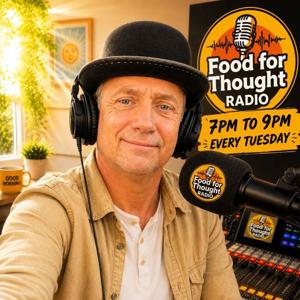


In this episode, I’m joined by Mark “The Bowler Hat Farmer”, Hans-Günther Kern and Craig Worrall for a wide-ranging conversation about food, culture, land and connection. Mark shares his first impressions of life in Ecuador, from the strength of local community and food culture to the opportunities he sees for diverse, small-scale growing. We talk about what it means to support local growers, preserve cultural identity and create practical training opportunities for future farmers, including ideas for building a learning hub around the new farm project in Vilcabamba.
Hans then takes us deep into seasonal growing wisdom, from leaf mould and biodynamic composting to green manures, crop timing and working with natural rhythms through winter. Later, Craig brings the conversation back to wild food, foraging and the human microbiome, reflecting on resilience, ancestral foodways and the deep intelligence of landscapes. Altogether, it’s a rich exchange on rebuilding food culture, restoring biodiversity and remembering our place within the living world.
In this episode, I sat down with Natalie from Organity to talk about building a food-led community movement in South Buckinghamshire and the Chilterns. Natalie shared how Organity began in her garage, why she is so committed to chemical-free food, and how the project has grown into far more than a veg box or farm shop. We explored her approach to vetting growers and makers, the balance between ethics and affordability, and her wider vision for a farm shop of the future: a place for nourishment, conversation, learning, alternative health, and genuine human connection.
Later, Andy Jaffe from WeGrow CIC joined us to discuss another side of the same story: reconnecting people with land. Andy explained how WeGrow helps families and communities come together to grow food, share skills, and rebuild local resilience. Across both conversations, a clear theme emerged: food is the catalyst, but community is the real goal. From shared growing spaces to local hubs, from trusted suppliers to seed swaps, this episode is all about practical ways people are creating healthier, more connected futures from the ground up.
Broadcasting from Ecuador, I sat down with Andy Munro and Rexil’s Case to dig into one of the biggest pressures facing farmers right now: fertiliser dependence, especially nitrogen, and what happens when supply chains become unstable. We explored the difference between conventional NPK fertilisers and biostimulant-led approaches, with Case explaining how silicic-acid-based foliar products are designed to improve nutrient uptake, support chlorophyll production, strengthen root systems and help crops become more resilient under drought, salinity and other stresses. The core theme throughout was simple: healthier plants, healthier soils, better output, and a route towards farming that works more with nature than against it.
We then brought in Suffolk farmer Ollie Pratt to pressure-test those ideas from the perspective of a large-scale UK arable operation. That part of the conversation was especially useful, covering practical questions around cost per hectare, spray timings, tank-mixing, likely yield response, and whether this kind of system can slot into real-world wheat, barley, sugar beet and maize production without adding unnecessary complexity. My big takeaway is that British farmers need to be trialling approaches like this now, not in theory but in the field, because the challenge ahead is not just yield or input cost alone: it is soil function, crop resilience, food quality and the long-term future of farming itself.
Standing in for Mark, I sat down with Sarah Charlton for a rich conversation about what real listening can do for families, friendships and whole communities. Sarah shared her journey from a personal awakening in 2008 into years of supporting parents through trauma-informed listening, and explained why being heard without interruption, fixing or advice can help people regulate, reconnect and think more clearly. We explored the practical heart of her work through PODS Grow Together: small, structured groups built around listening, accountability, reciprocity and local resilience, plus her wider vision for The Gathering, where people come together over shared food, skills, stories and mutual support.
Later, Francesco Picardi joined us to bring in the growing side of the conversation, speaking about water, electroculture, geomancy, geobiology and the relationship between energy, soil and plant vitality. Together we reflected on the common thread running through all of it: bringing life back into balance. Whether through listening more deeply, rebuilding community around food, or working more harmoniously with land and nature, this episode was really about moving from isolation towards connection, and from breakdown towards regeneration.
Tonight we had a rich, wide-ranging conversation about seed saving, biodynamic growing, electroculture and the real meaning of food resilience. I was joined by Andrew Monroe and Hans-Günther Kern, and we got deep into what growers are seeing on the ground right now: unusual growth patterns, extraordinary abundance despite drought, stronger crop resilience, and why this is exactly the moment to start saving seed seriously. We talked through practical favourites for seed saving — tomatoes, beans, flowers, squash, garlic and more — and why selecting from the strongest, most vital plants could become one of the most important acts of stewardship any grower can take on for their family and community.
In the second half, Craig joined us and completely opened up the world of wild food, especially the oak tree as a genuine food source rather than just a background feature in the landscape. We explored acorns as flour, miso and stored staple food, the wider value of trees in future food systems, and how communities could reclaim older skills around gathering, processing, preserving and sharing food locally. The thread running through the whole episode was simple: if we want true food security, we need diversity, good seed, healthy soil, trees, water, community knowledge and the confidence to work with the abundance that is already all around us.
In this episode, I sat down with Shamila to talk openly about my own health journey, why I’ve chosen a natural route for years, and what I’ve changed recently to get my energy, digestion and general wellbeing back on track. We got into the thinking behind the routine I’ve been following — from ghee, quercetin and black seed oil through to vitamin C and B12 injections, magnesium spray, herbal teas and better everyday food choices — and, yes, I also confessed to using one product completely the wrong way for months. More than anything, this was a frank conversation about taking ownership of our health, being honest about what our bodies are telling us, and remembering that food quality matters just as much as anything we keep in the medicine cupboard.
In the second half, the conversation widened back out to food, farming and community. We talked about raw milk, flour fortification, supermarket convenience, and the way modern life has pulled people away from cooking, growing and sharing proper food together. I also spoke with farmer John Cherry about regenerative agriculture, no-till systems, soil health and the need to reconnect people with the land and with real food production. Running through the whole episode was one big theme: whether we’re talking about personal health or the future of farming, we’ve got to rebuild strong local communities, restore trust in good food, and start taking practical responsibility again for the things that keep us well.
In this episode I sat down with Charles Dowding for a deep and genuinely inspiring conversation about no dig gardening, soil health and what it really takes to grow nutrient-dense food well. We got into the core principles behind no dig, why disturbing the soil costs us fertility, how compost works as a soil amendment rather than a quick-feed fertiliser, and what Charles has learned from decades of trials, books, teaching and market gardening. We also spoke about watering in a dry year, pests, compost choices, seed saving, flowers in the garden, winter growing, sowing dates, and why flavour is one of the strongest arguments for local, properly grown food.
From there I widened the conversation out to the future of food and farming: how small-scale market gardening can sit alongside larger farms, why more people need access to land and skills, and why local sales matter so much. In the second half, I shared thoughts on Common Hearts and the wider push towards rebuilding resilient local communities around food, trust, knowledge and practical action. If you care about growing better food, restoring soil life, and creating stronger local food systems, this one is packed with wisdom.
Tonight I was joined by Susan in Denmark and Robert in Scotland for a wide-ranging conversation about where farming goes next — from the launch of our Community Hearts programme to the much bigger question of how communities and farmers can work together to rebuild local food systems. We explored Susan’s work in regenerative, biodynamic and biodiversity-led farming, her push for decentralised decision-making in Denmark, and why farmers need a stronger voice in shaping food, health and rural policy. We also dug into heritage seeds, resilient local production, and why smaller, more independent farming models may be key to feeding communities well in the years ahead.
We then turned to soil health, depleted nutrients, direct-to-consumer food models and the need to move away from input-heavy farming that depends on expensive synthetic fertilisers and chemicals. Susan and Robert explained the low-input regenerative approach they have been trialling with Rexil Agro, aimed at strengthening plant resilience, improving root systems and supporting soil biology without requiring farmers to buy new kit. We also discussed animal health, the pressures on livestock keepers, and Robert’s broader view that restoring the soil carbon sponge, keeping land covered and working with nature could help farmers improve resilience, profitability and long-term food security at the same time.
Tonight I set out a much bigger vision than food alone: rebuilding community. I shared how a single volunteer post previously brought in around 900 offers of help, and why I now want to relaunch that energy in a far more organised way — from social sharing and litter-picking to community growing, seed saving and local action. For me, the real issue is not simply farming or shortages, but how disconnected people have become from one another, from the land, and from the simple joy of doing something meaningful together.
I was then joined by Andy of Bio Energetic Growing and Hans-Günther Kern, and we went deep into soil life, microbes, worms, biodynamics, electroculture, resonance, seed saving and nutrient density. We explored how healthier soil could mean healthier food and healthier people, and why more of us need to get our hands back in the earth. The conversation kept returning to one idea: if we reconnect people with nature, shared work and local growing, we do more than improve food — we restore confidence, belonging and a sense of purpose.
This week I opened the show with a catch-up from the garden and polytunnel, talking through the push to get beds composted, winter crops in, and as much as possible prepared before the colder months arrive. Paul then joined me from Bramblebee Farms with a proper on-farm update: housing decisions for livestock, autumn calving, pigs, pasture poultry, hay stocks for winter, and the constant balancing act of keeping a farm moving while dealing with inspections, paperwork and rising pressure on producers. We also got into the realities of breeding for resilient, good-quality pork, selling direct, keeping margins sensible, and why their new orchard and apple and pear picking events are becoming such an important part of the farm’s diversification.
Later, Shaz returned to the show and took us deep into the world of homeopathy for animals, people, and even plants. We talked about seed germination, silica, tissue salts, natural approaches to livestock health, mastitis support, pet remedy kits, and the wider connection between soil biology, microbes, nutrient density and the food we eat. It turned into a wide-ranging conversation about farming differently, trusting observation, reducing reliance on conventional inputs where possible, and learning again from nature rather than always fighting against it.