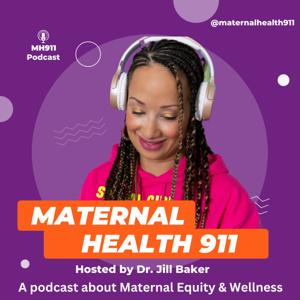
Maternal Health 911

Maternal Health 911

By Maternal Health 911Health & FitnessMental Health
Download on the App Store

Maternal Health 911 episodes

  • 22. Perinatal and Neonatal Birth Inequities and The Experiences Of Families Who Have Preemie Babies with Dr. Jess Daigle

    In this episode, we delve into the often overlooked and critical issue of perinatal and neonatal birth inequities, shining a spotlight on the experiences of families who navigate the challenging journey of having preemie babies. A maternal health 911 emergency is declared as we unveil the startling statistic that 1 in 10 babies (10.5% of live births) is born preterm in the United States. However, the disparities are even more glaring when we examine the rates by ethnicity, with black infants facing the highest risk at 14.2%, followed by American Indian/Alaska Natives at 11.6%.


    To guide us through this complex landscape, we are joined by the brilliant and compassionate Dr. Jess Daigle, a gamechanger in the field of maternal health. Dr. Daigle brings her expertise to the table as we explore the underlying reasons behind these disparities, unpacking why certain communities are disproportionately affected. Together, we strive to uncover tangible solutions and shed light on what can be done to address this critical issue.


    Join us for a conversation that goes beyond statistics, as we aim to raise awareness, foster understanding, and ignite actionable change in the realm of perinatal and neonatal care. It's time to empower families, support mothers, and champion the well-being of our tiniest fighters.

    1 hr 15 min
  • 20. Maternal Death Grief and Loss with Dr Angela Clack, Real Hamilton Romeo and Dr. Jill Baker
    In this episode, we address the often silent struggles of maternal grief in the face of infertility and loss. Join our compassionate hosts as we engage in a heartfelt conversation with experts and individuals who have experienced the unique challenges of maternal grief in the context of infertility and death.
    Our guests share personal stories and professional insights to shed light on the emotional toll of infertility and the heartbreaking reality of losing a child. We explore the complex journey of navigating motherhood when faced with the challenges of conception and the profound impact it has on individuals and couples.
    Tune in as we discuss coping strategies, support systems, and the importance of breaking the stigma surrounding these sensitive topics. Whether you're on your own journey or looking to support a loved one, this episode aims to provide understanding, empathy, and a sense of community for those navigating the intricate landscape of maternal grief in infertility and loss.
    Join us for a conversation that seeks to offer comfort, dispel isolation, and foster a deeper understanding of the silent struggles many face on the path to motherhood. You are not alone, and your story matters.
    1 hr 2 min
  • 21. Disparities of Fibroids and The Effects On Fertility Outcomes of BIPOC Women with Dr. Candace Robertson-James

    In this inspiring episode, our host engages in a heartfelt conversation with the incredible Dr. Candace Robertson-James. Join us as Dr. Robertson-James shares her personal journey, navigating the challenges of living with fibroids and the transformative steps she took to realize her dream of starting a family.


    Our special guest opens up about her experiences, shedding light on the impact fibroids had on her life and fertility. Dr. Robertson-James discusses the emotional and physical toll of dealing with fibroids, providing a candid look at the hurdles she faced.


    As we delve into the steps she took to overcome these challenges, listeners will gain valuable insights into the resilience of the human spirit. Dr. Robertson-James shares the empowering story of how she navigated the complexities of fertility treatments, highlighting the importance of advocacy, self-care, and perseverance on the path to parenthood.


    Join us for an episode filled with hope, resilience, and practical advice for those facing similar challenges. Whether you are on your own fertility journey or seeking to support someone you care about, this conversation with Dr. Candace Robertson-James is sure to inspire and uplift.

    1 hr 2 min
  • 19. Infertility Disparities: Unpacking Racialized Perspectives with Swetha Armruthur Khan
    In this episode, we delve into the complex realm of infertility and its disparities, particularly focusing on the racialized lens through which it is often viewed. Join us as we explore the research, statistics, and perspectives that shed light on the impact of ethnicity on fertility outcomes.
    Infertility is a prevalent issue affecting 10% of women aged 15-44 in the U.S. (CDC, 2019).
    Approximately 7.4 million women and their partners grapple with fertility-related challenges in the U.S.
    Dr. Meera Shah, a double board-certified OB GYN and reproductive endocrinologist, joins us to discuss the significance of ovarian reserve, measured by AMH (anti-Mullerian hormone).
    A study conducted at UCSF in 2013 examined AMH levels across different ethnic groups, revealing notable differences.
    Striking variations in IVF outcomes were observed among Black, Hispanic, Asian, and white women.
    Studies comparing Caucasians and East Asians adjusted for key factors, yet East Asian women exhibited significantly lower live birth rates.
    Dr. Sandra Bärnreuther's research highlights how South/Asian-ness is framed as an independent risk factor in infertility and IVF practice (Social Science & Medicine, 2021).
    Narratives such as Indian women experiencing a rapid decline in ovarian reserve contribute to a racialized reproductive panic.
    The Hindustan Times' 2015 article amplifies the urgency around ovarian aging in India, although it relies on non-scientific data.
    Dr. Bärnreuther emphasizes the need to broaden perspectives on infertility, moving beyond biomedical and racial/ethnic lenses to address and explain disparities.
    As we conclude this episode, we reflect on the importance of dismantling racialized perspectives in infertility research and practice. Understanding the broader context and embracing a more inclusive approach is crucial for addressing and rectifying disparities in fertility outcomes. Stay tuned for more discussions on health, science, and society in future episodes.
    58 min
  • 18. Misconceptions About Twins with Gavin & Jemma


    In this episode, Gavin and Jemma shed light on some common misconceptions about twins that people often have. Here are some key points they discussed:

    • Twins are not always identical: While identical twins share the same DNA and physical appearance, fraternal twins come from two different eggs and can look very different from each other. It's a common misconception that all twins are identical.
    • Twins do not have telepathic abilities: Many people believe that twins have some sort of telepathic connection and can communicate with each other without speaking. However, there is no scientific evidence to support this claim.
    • Twins can have different personalities: Another misconception is that twins have the same personality. While twins may share some traits and interests, they are still individuals with their own unique personalities.
    • Twins do not always have a special bond: While some twins may have a close relationship, others may not get along or have any special connection. It's important not to make assumptions about the relationship between twins based on their status as twins.
    • Overall, it's important to remember that twins are individuals and should be treated as such. Just because they share a birthday and may look alike, it doesn't mean they are the same in every way.

      7 min
    • 16. Maternal Vaccines and Disparities with Vaccines Among Pregnant Women with Dr. Annette Regan

      As the statistics show, maternal health in the United States continues to be a concern, with significant disparities based on race and ethnicity. However, there are steps that can be taken to improve outcomes for pregnant women and reduce the risks associated with childbirth.


      One promising approach is the use of maternal vaccines, which can help protect both the mother and the infant from preventable illnesses. Vaccines can be administered during pregnancy to protect against diseases such as influenza, pertussis, and tetanus.

      Here are some key points to consider regarding maternal vaccines:

      • Vaccines are safe and effective for pregnant women: According to the Centers for Disease Control and Prevention (CDC), vaccines are safe and effective for pregnant women. In fact, getting vaccinated during pregnancy can help protect both the mother and the baby from serious illnesses.
      • Vaccines can reduce the risk of preterm birth: As the data shows, women of color are at a higher risk of preterm birth. However, studies have found that getting vaccinated during pregnancy can help reduce the risk of preterm birth and other complications.
      • Access to vaccines is crucial: In order to address disparities in maternal health outcomes, it is important to ensure that all pregnant women have access to vaccines. This includes addressing barriers such as cost, transportation, and language barriers.
      • Providers play a key role in promoting vaccination: Healthcare providers can play a key role in promoting vaccination among pregnant women. This includes providing education about the safety and effectiveness of vaccines, as well as addressing any concerns or questions that patients may have.

      • Overall, maternal vaccines have the potential to improve outcomes for pregnant women and reduce the risks associated with childbirth. By addressing disparities in access to vaccines and promoting vaccination among pregnant women, we can take important steps towards improving maternal health in the United States.

        1 hr 2 min
      • 15. A Discussion on Black Fatherhood and Adoption with Jason Wiley


        In this episode, Jason Wiley and our host discussed various topics related to maternal health, adoption, and Black fatherhood, including:

        • Why maternal health is a crisis in the United States
        • Common myths about fertility for Black & BIPOC couples
        • The adoption process, including key aspects and challenges faced by Jason and his daughter
        • The need for additional resources to support couples who are considering adoption
        • Advice for listeners who may be in a similar situation
        • Positive experiences during the adoption process and effective advocacy for BIPOC couples

        • Discussion on fatherhood:

          • Highlights and challenges of being a father, particularly for Black fathers
          • Myths about Black fathers, and how to challenge these misconceptions
          • Why fathers are often overlooked in parenting discussions

          • Finally, they also touched on the progress being made in addressing maternal and infertility disparities for Black and BIPOC couples, and what gives Jason hope for the future.

            1 hr 8 min
          • 14. Body Led Eating As a Pregnant Mom and Teaching Cultural Habits to Your Kids To Develop Healthy Relationship with Food with QTBIPOC Wellness Coach and Dietician, Dalia Kinsey

            During our conversation with Dalia Kinsey, we explored the concept of wellness and how it relates to our daily lives as mothers. Dalia emphasized the importance of building positive relationships with food and incorporating them into family activities. She believes that wellness is not just about physical health, but also about mental and emotional well-being.


            Read more: https://maternalhealth911.com/podcast/daliakinsey

            1 hr 6 min
          • 13. Part 2/2: When You Need To Choose You In The Midst of Infertility: Depression, Mental Health and Healing with Dr. Vanessa Goodbar


            Insights from Dr. Vanessa Goodar on Maternal Health and Fertility Treatment
In a two-part episode with Dr. Vanessa Goodar, she provided valuable insight on why maternal health is an emergency in America, as well as her personal fertility journey. She also spoke about the role that race plays in fertility treatment. It's understandable that experiencing infertility can have a profound psychological impact on women. It's common to feel isolated and alone during this time, which is why it's important to seek out supportive communities. Organizations such as Fertility for Colored Girls offer a safe space for women to share their stories and connect with others who can relate to their struggles.


            When it comes to advocating for yourself during pregnancy, it's crucial to strike a balance between listening to medical professionals and asserting your own needs. One way to achieve this is to educate yourself about your options and communicate your preferences clearly. Remember, you are the expert on your own body and should feel empowered to make informed decisions about your care.


            If you've experienced a hysterectomy or struggled with infertility, it's essential to remember that you are not alone. There are many resources available to help you navigate this challenging time, and there's no shame in seeking help when you need it. Take care of yourself and prioritize your well-being throughout your journey.


            Read More: https://maternalhealth911.com/podcast/vanessagoodar-ynwnj

            37 min

          About Maternal Health 911

          From the publisher's feed

          Maternal Health 911 is an innovative podcast hosted by community health researcher and fertility coach- Dr. Jill Baker who suffered from her own infertility in silence. To support those who need it,…