
Sign up to save your podcasts
Or

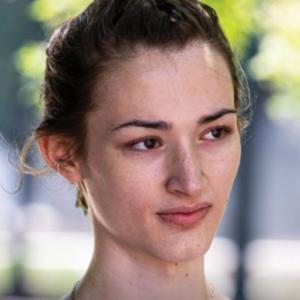


In this episode, we dive into the mind-expanding and slightly existential world of Dr. Katie Mack, the inaugural Hawking Chair in Cosmology and Science Communication at the Perimeter Institute for Theoretical Physics.
Famously known as the "Chronicler of the End," Mack spends her days calculating the stability of the cosmic vacuum and decoding the behavior of dark matter.
But she is also a rare anomaly in the academic world: an artistic force who serves on film juries for the Sundance Film Festival, a licensed pilot who flies vintage planes, and someone who once accidentally ended up acting in the movie Legally Blonde during her undergraduate years at Caltech.
We explore her widely acclaimed book, The End of Everything, which sparked a massive eight-publisher bidding war and even inspired a track on Irish musician Hozier's 2019 album.
We look at her unique approach to science communication, which she calls the "politics of wonder", a philosophy that respects the intelligence of her audience and refuses to dumb down complex theoretical physics.
Finally, we discuss her status as a viral social media icon, famous for deploying masterful, brilliant "smackdowns" against internet trolls and climate change deniers, proving that the future of frontier science depends on communication just as much as calculation.
In this episode, we explore the extraordinary life, high-pressure childhood, and deliberate choices of Ruth Lawrence, one of the most famous mathematical child prodigies of the late twentieth century.
Possessing an IQ estimated above 170, Ruth zipped through academia at a breakneck pace, earning her Oxford PhD at seventeen and landing a prestigious fellowship at Harvard University by nineteen.
Yet, at the absolute height of her fame, she made a choice that stunned the media: she walked completely away from the spotlight.
We pull back the curtain on her highly unorthodox upbringing, directed by her father, Harry Lawrence, who famously rejected traditional childhood play in favor of hyper-focused academic development.
We trace her journey to the Middle East, where she transitioned into a quieter, deeply fulfilling life as a full professor at the Hebrew University of Jerusalem.
Diving into her complex field of pure mathematics, from quantum topology and knot theory to differential graded Lie algebras, we look at how she chose to trade the explosive, fleeting expectations of a media darling for a lasting, natural legacy as a mother, educator, and foundational researcher
In this episode, we journey into the life and mind of Sir Konstantin Novoselov.
We trace his path from a childhood spent in the industrial heart of the Ural Mountains to the hallowed halls of the University of Manchester.
It was here, fueled by the "Friday Night Experiment" philosophy, a culture that encouraged "foolish" ideas and pure curiosity, that Novoselov and Andre Geim ignored scientific consensus to isolate a single atomic layer of carbon.This isn't just a story about physics; it’s a study of the "wisdom of the hands."
We explore how Novoselov’s reductionist approach to science mirrors his passion for traditional Chinese brush painting, proving that the soul of a discoverer and the eye of an artist are often the same.
We also delve into the high-stakes world of the "Graphene Gold Rush," explaining the bold decision to forgo a patent in favor of open scientific progress, and his courageous stance as a global citizen prioritizing humanitarian principles over nationalism.
In this episode, we step into the aggressively multidimensional world of Dr. Emily Riehl, a Professor of Mathematics at Johns Hopkins University.
To the academic establishment, she is a world-class visionary shaping fields like higher category theory and homotopy type theory, authoring advanced textbooks, and speaking at the prestigious International Congress of Mathematicians.
But away from her university blackboard, Riehl completely upends the traditional mathematician stereotype: she is an international footballer who captained the United States national team in Australian Rules Football, a classical violist, and the bass guitarist for the rock band Unstraight.
We follow her brilliant trajectory from a puzzle-obsessed childhood in Illinois to the famously intense lecture halls of Harvard’s "Math 55" introductory course.
We break down her mathematical specialty, category theory, the abstract "mathematics of mathematics itself", and explore how her work on infinity categories provides a solid, concrete foundation for understanding complex structural relationships.
Finally, we dive into her unique lifestyle strategies, discovering how she leverages purposeful procrastination, morning routines, and high-intensity sports to unlock creative scientific breakthroughs while building the syntactic language for the next century of human and machine collaboration.
In 1967, in a muddy field outside Cambridge, a telescope made of wood and wire was listening to the sky. It wasn't a gleaming dish, but a massive "agricultural frame" covering the space of 57 tennis courts, designed to hear the faint whispers of radio waves from the edges of creation. The person responsible for making sense of this noise was 24-year-old graduate student Jocelyn Bell Burnell. While scanning miles of paper tape, she noticed a "scruff" that didn't fit—a pulse so regular it seemed almost artificial.
In this episode of Mavericks of Science, we explore the story of the woman who discovered pulsars, survived the "Little Green Men" skepticism of the establishment, and used her experience as an outsider to open doors for a new generation of scientists.
"Our dark lady is leaving us next week." With those chilly words, written in a private letter in 1953, the race for the secret of life reached its bittersweet end. While Watson and Crick are household names for the discovery of the double helix, the woman whose data made it possible—Rosalind Franklin—was long relegated to a footnote, caricatured as a "difficult" obstacle in the path of progress.
In this episode of Mavericks of Science, we look beyond the myth of the "Dark Lady" to meet the real Rosalind. We trace her journey from an "alarmingly clever" child of the London elite to a fearless scientist who found her true voice in the vibrant, egalitarian labs of Paris.
In the summer of 2018, inside a small, hot room at Harvard University, an image began to form on a computer screen that would change our understanding of the cosmos.
It was a bright, fiery ring surrounding a dark central void—the first-ever image of a black hole. At the heart of this milestone was Katie Bouman, a computer scientist who helped translate petabytes of noisy, incomplete data from a global network of telescopes into a legible picture.
In this episode of Mavericks of Science, we explore the journey of a researcher who proves that sometimes, to see the impossible, you don't just need a bigger telescope—you need a better algorithm.
Before she was a professor investigating the hidden costs of algorithms, Kate Crawford was a central figure in Australia’s electronic music scene. Today, she is a Research Professor at USC and a Senior Principal Researcher at Microsoft Research, but she hasn't lost the artist's ability to see the "grain" of the machines we use. Her work reveals a startling truth: artificial intelligence is not "artificial" at all—it is a deeply physical, extractive, and political industry.
In this episode of Mavericks of Science, we look at the woman who mapped the "anatomy" of AI, proving that every smart device in our homes is connected to the very crust of our planet and the labor of a hidden human army.
In September 2020, during the quiet of a global lockdown, a phone call from California reached a flat in London with news that would stun any scientist: Martin Hairer had won the $3 million Breakthrough Prize in Mathematics.
While the world was struggling with the chaos of a pandemic, Hairer was being honored for his ability to find order within that very chaos. A British-Austrian mathematician who still personally answers customer support emails for his sound-editing software, Hairer has achieved what many thought impossible: taming the "nightmarish" equations that describe the random growth of jagged interfaces.
In this episode of Mavericks of Science, we trace the journey of a mathematician who moved from building a "Swiss Army knife" for sound to constructing a new mathematical language for the universe's noise.
In the sweltering summer of 2002, in a quiet office at the Indian Institute of Technology (IIT) Kanpur, three researchers sat staring at a whiteboard. They were hunting for something mathematicians had sought for over two thousand years: a fast, perfect, and universal way to test if a number is prime.
While the greatest minds in history—from the ancient Greeks to Gauss—had found only partial answers, Nitin Saxena, then a twenty-one-year-old student, helped find the final solution.
In this episode of Mavericks of Science, we explore the journey of a quiet boy from Prayagraj who ignored the "impossible" and redrew the map of mathematical complexity.
From the publisher's feed