
Sign up to save your podcasts
Or

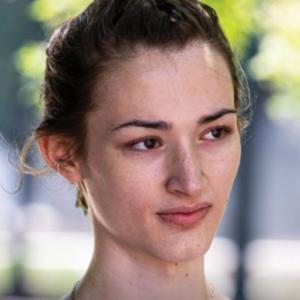


In the mid-1990s, sixteen-year-old Miranda Cheng was a high school dropout working in a record store in Taipei. A self-described "rebel girl," she had left home to pursue a career as a punk rock musician, convinced that formal education was "insufferable".
Twenty-five years later, Dr. Cheng is a world-renowned theoretical physicist and an associate professor at the University of Amsterdam.
In this episode of Mavericks of Science, we explore how a punk musician found "peaceful, quiet beauty" in mathematics and became a principal architect of a conjecture that connects the disparate continents of symmetry and number theory.
For decades, coding has been an unforgiving craft, demanding precise syntax where a single missing semicolon could crash an entire program. This high barrier meant that only specialized engineers could actually build the digital world.
Anton Osika, a physicist by training and a builder by necessity, believes this era of exclusivity is over. His latest creation, Lovable, is a piece of software that writes software, allowing anyone to turn an idea into a functioning application in seconds just by using plain English.
In this episode of Mavericks of Science, we explore the journey of the man behind one of Europe's fastest-growing startups, a company that now powers more than 10% of all new websites created globally.
In 2018, a massive, violent crack opened in the earth of south-western Kenya, stretching for kilometers and splitting homes in two. Dr. Lucía Pérez-Díaz was one of the first to crack the mystery.
As an Earth scientist and geodynamicist, she creates models that reveal the deep stories hidden beneath our feet, from local soil collapses to the 60-million-year-old movements that formed the Himalayas.
In this episode of Mavericks of Science, we explore the journey of a scientist who balances complex geological modeling with a passion for art, working to make the "ever-changing face" of our planet accessible to everyone.
For decades, the human brain has been the final frontier of science, a biological masterpiece so complex that we’ve only been able to study its parts in isolation. But what if we could build a functional, digital copy of it?
Martin Schrimpf, a researcher at EPFL, is moving away from the abstract debates of philosophy to the practical world of engineering, attempting to build a "digital twin" of the brain that can think, process language, and even help us heal.
In this episode of Mavericks of Science, we follow the journey of an entrepreneur turned scientist who is using AI to decode the most sophisticated computer in the universe.
In August 2018, the mathematical world converged on Rio de Janeiro for a moment many believed was not a question of if, but when. Standing on the stage was Peter Scholze, a 30-year-old explorer who became one of the youngest people ever to receive the Fields Medal.
Scholze doesn't just solve problems; he builds entire landscapes, new mathematical structures that allow us to see the deep, hidden connections between geometry and number theory.
In this episode of Mavericks of Science, we trace the ascent of a "quiet" genius who views mathematical truths not as human inventions, but as vast, undiscovered coastlines waiting to be mapped.
In December 2020, Dr. Timnit Gebru was on a vacation road trip when a colleague’s text delivered a shock: an internal Google email announced she had resigned. But Gebru hadn't resigned—she had been fired. This sudden severance from her role as the technical co-lead of Google’s Ethical Artificial Intelligence team became one of the most controversial moments in the history of Silicon Valley.
In this episode of Mavericks of Science, we explore the journey of the scientist who became the "conscience of AI". From her childhood as a political refugee to her groundbreaking research on algorithmic bias, Gebru's story is a powerful look at the tension between corporate power and scientific critique.
Imagine descending into absolute darkness, crushed by a mile of seawater, to a place that hasn’t seen the sun in four billion years. For Dr. Karen G. Lloyd, this wasn't just an adventure; it was a mission to find the "missing link" of life itself. In the mud of the deep seafloor, she discovered a world of "intraterrestrials"—ancient, slow-moving microbes that defy almost everything we thought we knew about biology.
In this episode of Mavericks of Science, we trace the journey of the girl who once knocked on a marine lab door at age 13 and grew up to rewrite the tree of life.
On August 1, 2018, in Rio de Janeiro, the world of mathematics celebrated its highest achievement by awarding the Fields Medal to Alessio Figalli. Known as an "optimizer" since childhood, Figalli mastered a problem that is both ancient and essential to modern life: finding the most efficient way to move something from point A to point B.
In this episode of Mavericks of Science, we follow the journey of a young man who entered university without knowing basic calculus and rose to become a master of "optimal transport," a theory that explains everything from city logistics to the shifting of clouds.
Late on a clear summer night in Ontario, a ten-year-old girl stepped out of her tent and froze, spellbound by the glittering expanse overhead. Sara Seager had never seen so many stars, and that moment of wonder sparked a lifelong quest to map hidden worlds. From a childhood marked by a dismissive household to becoming a pioneer of exoplanet discovery, Seager’s story is one of unyielding curiosity and the resilience to follow a bright spark into the unknown.
In this episode of Mavericks of Science, we chart her journey from the "highest monkey bars" in Toronto to the cutting edge of atmospheric spectroscopy at MIT and Harvard.
Imagine it is 1982, and a young physician is standing in a microbiology lab, staring at a Petri dish he nearly threw away. After more than 30 failed attempts to culture a mysterious bacterium, he is about to prove that a tiny microbe—not stress or spicy food—is the true cause of painful stomach ulcers.
In this episode of Mavericks of Science, we dive into the gut-wrenching story of Barry Marshall. Facing scoffing peers and billion-dollar drug companies that ignored his findings, Marshall did the unthinkable: he made his own body the laboratory by drinking a beaker full of infectious bacteria. It was a radical act of "personal science" that would eventually earn him the Nobel Prize and save millions of lives.
From the publisher's feed