
Sign up to save your podcasts
Or

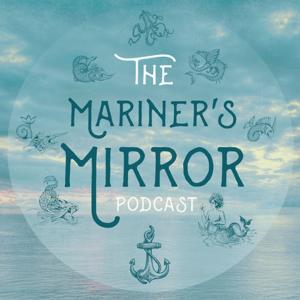

Folklore, myths and legends relating to the sea have existed for as long as humans have been travelling by sea. The alien nature of the marine environment, the almost inconceivable scale of the oceans, the power of the sea, and the extraordinary richness in the ocean’s biodiversity has led to the creation and development of the most fabulous legends.
And one of the most important of those legends concerns women and the sea – women in the form of mermaids and sirens – both subtly different creatures: the mermaid having the torso of a woman and the tail of fish; a siren being a creature that first appears in Greek mythology, who lured sailors to shipwreck and death with their enchanting voices. Their appearance was different and although written descriptions are few and far between, they are depicted in art as birds flying over the sea and ships, but with the heads of women.
Such a rich story is culturally rather complicated. To find out more Eirwen Abborley-Watton spoke with Cecilia Rose a PhD Student at the university of Exeter whose work focuses on mermaids and sirens as figures of indeterminate gender in the art and poetry of the late Victorian Era and how these figures may still be used as symbols for transgender and non-binary communities today.
Hosted on Acast. See acast.com/privacy for more information.
 View all episodes
 By The Society for Nautical Research and the Lloyds Register Foundation

4.8
7070 ratings
Folklore, myths and legends relating to the sea have existed for as long as humans have been travelling by sea. The alien nature of the marine environment, the almost inconceivable scale of the oceans, the power of the sea, and the extraordinary richness in the ocean’s biodiversity has led to the creation and development of the most fabulous legends.
And one of the most important of those legends concerns women and the sea – women in the form of mermaids and sirens – both subtly different creatures: the mermaid having the torso of a woman and the tail of fish; a siren being a creature that first appears in Greek mythology, who lured sailors to shipwreck and death with their enchanting voices. Their appearance was different and although written descriptions are few and far between, they are depicted in art as birds flying over the sea and ships, but with the heads of women.
Such a rich story is culturally rather complicated. To find out more Eirwen Abborley-Watton spoke with Cecilia Rose a PhD Student at the university of Exeter whose work focuses on mermaids and sirens as figures of indeterminate gender in the art and poetry of the late Victorian Era and how these figures may still be used as symbols for transgender and non-binary communities today.
Hosted on Acast. See acast.com/privacy for more information.

5,576 Listeners

3,196 Listeners

1,261 Listeners

4,791 Listeners

228 Listeners

469 Listeners

1,415 Listeners

186 Listeners
3,358 Listeners

15,506 Listeners

1,920 Listeners
2,060 Listeners

350 Listeners

2,552 Listeners

189 Listeners