
Sign up to save your podcasts
Or

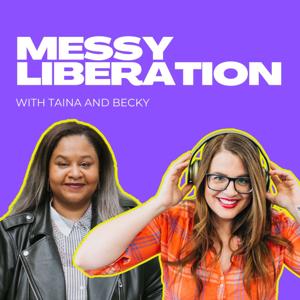


The news cycle feels relentless. The politics feel terrifying. And somehow we’re still expected to answer emails, pay bills, and live our lives.
In this episode, Becky Mollenkamp and Taina Brown talk about what it’s like living through Trumpism, rising authoritarianism, and the growing sense that fascism isn’t just a history lesson—it’s something people are trying to understand in real time.
They unpack the emotional impact of political overwhelm, news fatigue, and political anxiety, especially for people whose privilege once shielded them from the realities many marginalized communities have faced for generations.
This conversation explores how systems like white supremacy and authoritarian politics function almost like belief systems—or even cults—and why leaving those systems can feel disorienting, lonely, and scary.
Becky and Taina also talk about the role of education, privilege, media literacy, and social media in shaping how people understand politics today. Why do so many online conversations turn hostile instead of productive? What happens when people begin waking up to systems of power they were once part of?
Most importantly, they talk about how to cope with political burnout and overwhelm without shutting down completely. Research shows that action—whether activism, community care, or even small personal steps—can help restore a sense of agency when everything feels out of control.
If you’ve been feeling exhausted by politics, struggling with the constant bad news cycle, or wondering how to stay engaged without burning out, this episode is for you.
Because surviving times like these has never been an individual project. It has always been collective.
Topics Covered:
🎤 JOIN US IN THE FEMINIST PODCASTERS COLLECTIVE
Taina Brown and Becky Mollenkamp reflect on the recent State of the Union address, discussing its implications and the notable actions of representatives like Al Green. They delve into the pervasive issue of misogyny in society, exploring its manifestations and the cultural commentary surrounding media representations. The conversation also touches on personal anecdotes, humor, and the importance of diverse perspectives in storytelling, particularly in film and television.
Discussed in this episode:
• The State of the Union often lacks substance and engagement.
• Al Green's actions highlight the importance of making 'good trouble.'
• Misogyny is deeply ingrained in societal structures and needs to be addressed.
• Media representation matters; diverse voices lead to richer narratives.
• Personal anecdotes can provide humor and relatability in serious discussions.
• The impact of cultural commentary on societal perceptions is significant.
• Women directors bring unique perspectives to storytelling.
• The conversation around aging and women's health is often overlooked.
• Humor can be a coping mechanism in challenging times.
• Celebrating personal milestones can bring joy amidst societal issues.
Chapters
00:00 State of the Union Reflections
02:38 Misogyny and Its Manifestations
05:26 The Slippery Slope of Toxic Thinking
08:18 The Intersection of Racism and Misogyny
11:01 The Role of Women in Film
13:54 Anticipating New Cinematic Releases
21:14 Exploring New Narratives in Media
24:12 The Importance of Diverse Perspectives
28:36 Cultural Reflections in Modern Storytelling
33:49 Navigating Perimenopause and Aging
39:37 Humor and Relationships: A Personal Touch
🎤 JOIN US IN THE FEMINIST PODCASTERS COLLECTIVE
In this episode, we unpack a real-time messy situation that started with a classroom conversation about language, and quickly spiraled into social media backlash, reflection, and deeper questions about responsibility. We explore the difference between calling in and calling out, why language matters when teaching history, and what it looks like when people respond to feedback with humility. Along the way, we talk about parenting, educator accountability, online criticism, and the ongoing work of holding nuance in public conversations, plus a lighter detour into Olympic drama and what it reveals about pressure, humanity, and expectations.
Discussed in this episode:
🎤 JOIN US IN THE FEMINIST PODCASTERS COLLECTIVE
In this episode of Messy Liberation, Becky Mollenkamp and Taina Brown start with the cultural moment — unpacking the Bad Bunny halftime performance — and end up somewhere deeper: a conversation about care, creativity, and what it means to live inside systems that don’t value our humanity.
They explore revenge bedtime procrastination, why so many of us push the things we love to the edges of our day, and how capitalism teaches us to dismiss anything that doesn’t generate income. Becky shares a personal story about caring for her injured dog and the emotional labor that often goes unseen — especially in relationships — while Taina reflects on creative work, attention, and honoring what matters.
Together, they ask big questions:
• What if hobbies aren’t frivolous?
• What if care work is real work?
• What does it look like to honor our emotional lives instead of minimizing them?
• And how do we navigate relationships when we experience the world differently?
This conversation weaves culture, feminism, mental health, and lived experience into an honest exploration of being human in a productivity-obsessed world.
If you’ve ever stayed up too late chasing a moment of freedom… felt unseen in your care work… or wondered why rest feels so hard to claim — this one’s for you.
🎤 JOIN US IN THE FEMINIST PODCASTERS COLLECTIVE
This conversation is specifically for people who practice coaching or run coaching businesses (no certification required). Becky and Taina unpack how well-meaning coaches can unintentionally repeat patterns of harm rooted in capitalism, patriarchy, and white supremacy — even when they genuinely care about their clients.
They introduce a framework for building a liberatory coaching practice that centers identity, power, privilege, community, and care — not just goals, outcomes, or productivity. The episode also previews the interactive workshop happening February 25, where participants will begin building their own Liberatory Coaching Manifesto.
This isn’t about gatekeeping, hustle, or “fixing” clients. It’s about practicing coaching in a way that expands choice, agency, and humanity — for both coaches and the people they serve.
Build Your Liberatory Coaching Manifesto (free, live workshop)
Sign-up for free at messyliberation.com.
🎤 PROUD MEMBERS OF THE FEMINIST PODCASTERS COLLECTIVE: http://feministpodcastcollective.com/
From neighbors shoveling driveways to the quiet labor of holding community spaces, this episode explores how care becomes invisible, and how naming it can be radical. Becky shares a story about hosting invitation-only “secret salons” and grappling with the discomfort of being compensated for community-building work. Taina reflects on moments when emotional labor was unexpectedly acknowledged—and how powerful that recognition can be.
The conversation expands into privilege, power, and relationships: what it means when someone checks their privilege out loud, how that can change the nervous system in a room, and why pretending we’re “past” bias is far more dangerous than admitting it exists. They also talk about gendered entitlement, “support husbands,” emotional safety, and the exhausting reality of always wondering when contempt might surface.
Resource:
🎤 WE ARE PROUD MEMBERS OF THE FEMINIST PODCASTERS COLLECTIVE
Check out the Season 10 trailer for Here’s What I Learned with Jacki Hayes, a fellow member of the Feminist Podcasters Collective.
This season is built around real experiments. Jacki isn’t just talking about ideas. She’s inviting coaches and service providers to assign her an actual experiment from their area of expertise. She runs it in her business, then they come back together to break down what worked, what didn’t, and what the results actually show.
If you like practical insight, honest reflection, and learning from real-world tests instead of polished theories, this season is worth a listen.
Find the show wherever you listen to podcasts or visit https://www.jackihayes.co/podcast
NOTE: This episode was recorded before the murder of Alex Pretti in Minneapolis. Our hearts are with his family and we share your outrage about his murder. Abolish ICE.
In this episode of Messy Liberation, Becky and Taina sit inside two overlapping kinds of grief: personal loss and collective unraveling. Becky names the heavy, destabilizing grief of watching U.S. power erode on the global stage—and what it means to confront the loss of privilege, safety, and certainty in real time. Taina shares the complicated aftermath of her mother’s death, including the anger, relief, and dissonance that come from being told a story about someone that doesn’t match your lived experience.
Together, they explore grief as a political and embodied experience, the difference between healthy and harmful anger, and why being “aware” isn’t enough without guardrails, resourcing, and community. This episode is about naming the mess without rushing to fix it—and learning how to stay human when the world makes it very tempting not to.
🧠 Discussed in This Episode
• The grief of losing global privilege—and why it still matters even when privilege is complicated
• Why awareness without action (or guardrails) can keep us stuck
• Seasonal depression, political despair, and “who gives a shit” energy
• Resource mapping as a tool for emotional regulation and capacity
• Healthy anger vs. destructive anger—and why movements can’t survive on rage alone
• Parenting, power dynamics, and what under-resourcing does to relationships
• Complicated grief after the death of an abusive or estranged parent
• The dissonance of hearing glowing stories about someone who harmed you
• Relief as a valid response to death—and why that doesn’t mean you didn’t love them
• Dehumanization, polarization, and the cost of refusing to seek understanding
• Why systems benefit when we fight each other instead of looking up
🎤 WE ARE PROUD MEMBERS OF THE FEMINIST PODCASTERS COLLECTIVE: http://feministpodcastcollective.com/
In this episode of Messy Liberation, Becky Mollenkamp and Taina Brown dive into a layered, messy, and necessary conversation about storytelling, race, motherhood, power, and who gets centered when Hollywood tells “political” stories.
Using three recent releases as our jumping-off point — Sinners, One Battle After Another, and His and Hers — we unpack what happens when art claims to be subversive… and whether it actually is.
We talk about:
This is a spoiler-heavy episode that assumes you’ve either watched these films or are okay hearing the full critique. It’s also an honest conversation about discomfort, trigger warnings, and the exhaustion of watching your lived experience turned into “prestige art” for someone else’s enlightenment.
If you care about media literacy, liberatory storytelling, and calling bullshit when “art” punches down — this one’s for you.
🎤 WE'RE PROUD MEMBERS OF THE FEMINIST PODCASTERS COLLECTIVE
Becky Mollenkamp and Taina Brown dig into the U.S. military action in Venezuela, and why calling it “surprising” misses the point entirely. What’s happening in Venezuela isn’t new. What is new is how little the U.S. is pretending anymore.
Discussed in this episode:
RESOURCE: Original Sins: The (Mis)education of Black and Native Children and the Construction of American Racism by Eve L. Ewing
They also wrestle in real time with fear, grief, learning out loud, and the possibility that America’s increasing global isolation may be both terrifying and inevitable.
This conversation isn’t tidy. It’s not optimistic. But it is honest—and rooted in the belief that refusing empire starts with telling the truth about it.
Next episode preview: Becky and Taina shift gears (a little) to talk about Sinners and One Battle After Another during awards season—with opinions they already know won’t be universally loved.
🎤 WE'RE PROUD MEMBERS OF THE FEMINIST PODCASTERS COLLECTIVE
From the publisher's feed

6,448 Listeners