
Sign up to save your podcasts
Or

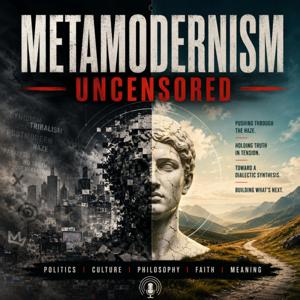


On this episode of Metamodernism Uncensored, we ask a dangerous question: what happens when an entire nation mistakes propaganda for reality? Using the Iran conflict as a case study, we dissect how millions of Americans were sold a story of overwhelming victory, "obliterated" enemies, and inevitable triumph, only to watch that narrative collide headfirst with the messy reality of diplomacy. From Trump's declarations of total success to the triumphant certainty of cable-news personalities and political influencers, we explore how modern media transforms war into theater and replaces analysis with emotional reassurance.
But this episode is about far more than just Iran. It is a deep examination of the deafening echo chambers that now dominate American political life! Why do so many citizens feel blindsided when reality refuses to follow the script? Why do military victories so often fail to produce political success? And why are Americans on both the Right and the Left increasingly trapped inside closed information systems that reward certainty while punishing skepticism? We unpack the overlooked realities of asymmetrical warfare, the strategic assumptions that critics warned about from the beginning, and the shocking details of the peace agreement that left many viewers wondering how a supposedly defeated adversary still had enough leverage to negotiate.
Ultimately, this episode argues that the real scandal is not that politicians spin, pundits exaggerate, or governments engage in propaganda. The real scandal is that modern citizens have been trained to mistake confidence for knowledge and emotional validation for understanding. Through a metamodern lens, we examine the collapse of skepticism, the rise of post-truth tribalism, and the urgent need for a new synthesis capable of breaking through the walls of our competing realities. Because the most dangerous echo chamber is always the one you don't know you're living inside...
In today’s episode of Metamodernism Uncensored, I sit down with my brother, Brendan Dempsey, to stare directly into the machine and ask the question everyone keeps avoiding:
What if AI is not just changing the future of man, but rather is exposing what man already became?
This is not another shallow conversation about the rise of Skynet, chatbots taking jobs, or robots writing emails. This episode goes way deeper. Because AI is not merely a tool. It is a mirror, an oracle, a counterfeit priest, a synthetic imagination, and possibly the first real rival humanity has ever created. We built it from our language, our myths, our arguments, our lies, our art, our porn, our prayers, and our broken digital civilization. Then it started speaking back, and we acted surprised.
Brendan and I explore the metaphysical shock of artificial intelligence: whether intelligence can exist without a soul, whether consciousness can be simulated, whether machines can participate in meaning, and whether humanity is spiritually prepared to share the world with something that can imitate thought, creativity, intimacy, and wisdom without necessarily possessing any of them.
The conversation moves into the moral and ethical consequences of this new age. If AI can create beauty, what becomes of the artist? If it can reason, what becomes of the thinker? If it can comfort, flatter, persuade, seduce, and guide, what happens to friendship, education, religion, therapy, politics, and love? The danger may not be that AI destroys us. The danger may be that it makes surrender feel convenient.
We also confront the possibility of a new caste system: not noble versus peasant, but augmented versus obsolete. Those who master AI may become almost superhuman in wealth, influence, productivity, and control. Those who do not may become algorithmically managed consumers, trapped inside invisible systems they cannot understand and cannot escape. The future may belong not to the rich alone, but to the integrated.
But this is not a doom sermon. The metamodern challenge is to reject both naïve tech worship and cowardly nostalgia. AI is threat and tool, mirror and temptation, servant and rival. It may degrade us, or it may force us to rediscover what cannot be automated: conscience, courage, embodiment, sacrifice, love, faith, and the sacred burden of being human.
This episode asks whether AI will become mankind’s replacement, or the pressure that forces mankind to become human again. Because the most terrifying possibility is not that machines are becoming conscious.
It is that modern man has been becoming more machine-like for a long time. For when man builds a machine that can answer back, does he discover the future... or his own obituary?
This episode of Metamodernism Uncensored takes a blowtorch to the modern Right’s favorite fantasy: that rage is the same thing as strength.
What begins as a diagnosis of justified conservative anger after Covid, censorship, lockdown hypocrisy, and woke institutional bullying quickly becomes something darker. The hosts argue that much of “mag-ah” has stopped being a political movement and become an emotional revenge machine. It no longer asks, “What should we build?” It asks, “Who can we humiliate next?”
At the center of the episode is a brutal distinction between grievance as fuel and grievance as possession. The Right was not wrong to be angry. It was wrong to become addicted to anger. The episode argues that “owning the libs” has curdled into a spiritual sickness, where catharsis has replaced policy, cruelty has replaced courage, and the movement’s highest form of political imagination is watching someone else get stomped by the state.
The hosts then turn to the great hypocrisy of the new populist Right: the people who once feared the boot of government power now cheer when their own side gets to wear it. Whether it is aggressive ICE raids, federal enforcement, foreign bombing campaigns, or pundits celebrating state violence from the safety of a studio, the episode asks an uncomfortable question: did the Right actually oppose tyranny, or did it simply resent not being the tyrant?
This is where the episode becomes most damning. The modern GOP, according to the hosts, has mastered the performance of toughness while failing at the practice of governance. It talks like Rome, but governs like a comment section. It celebrates military strikes, mass deportation fantasies, and theatrical crackdowns, yet collapses when faced with the boring adult work of building durable policy, negotiating trade-offs, fixing institutions, or solving actual national problems. The episode contrasts the fantasy of strongman politics with the embarrassing reality that Trump’s deportation record fell far below Obama’s, exposing the gap between right-wing theater and administrative competence.
The most explosive theme is the Right’s confusion of cruelty with courage. Compassion is mocked as weakness. Restraint is smeared as cowardice. Peace is treated as treason. But the hosts argue that this is not strength. It is insecurity wearing tactical sunglasses. Real toughness is not the desire to dominate the vulnerable, bomb another country, or cheer on agents in body armor. Real toughness is discipline. It is self-command. It is the ability to restrain your worst impulses when the crowd is screaming for blood.
The episode ultimately pushes toward a metamodern synthesis: rejecting both progressive fragility and reactionary sadism. A serious politics of strength would defend borders without becoming inhuman, oppose woke coercion without becoming authoritarian, pursue peace without becoming naïve, and restore order without worshipping the boot. Until the GOP learns that masculinity is not a tantrum, patriotism is not vengeance, and courage is not cruelty, its roar will remain hollow: loud enough to frighten children, but far too empty to build a mighty nation...
In this episode of Metamodernism Uncensored, our unflappable hosts dissect Sean Dempsey's 2021 short story “The Storm." They review a searching, subtlety dark, and unexpectedly tender meditation on truth in an age of mass delusion. This is a stark conversation about children, conscience, language, and the strange pressures of a culture that increasingly asks people to deny what they can plainly see. Through the image of Anna on the porch with her grandfather, watching the wind and waves crash against the rocks, the episode frames the storm as a symbol of postmodern chaos: loud, violent, shifting, and endlessly demanding. The rocks, by contrast, become the stubborn image of reality itself: battered, mocked, denied, but never actually moved.
The episode ultimately refuses to end in despair. Through the surviving boy, the grandfather’s wisdom, and the closing image of love as clean water for a thirsty soul, the hosts arrive at the show’s distinctly metamodern conclusion: truth must be defended, but not with bitterness; reality must be named, but not without compassion. The answer to the storm is not cynicism, nor blind ideology, nor tribal rage. It is love rooted in reality... the kind of love that tells a child she is not crazy for seeing what she sees, and the kind of truth that outlasts every fashionable lie, every Shaman’s spell, and every postmodern wave that savagely throws itself against the cold and indifferent rocks...
This episode of Metamodernism Uncensored asks the forbidden question at the heart of the modern West: did secularism actually free mankind, or did it just leave us spiritually homeless and insane? Using Sean Dempsey’s June 2026 essay as its launching point, the hosts dissect the great failure of atheist liberalism. Modernity killed God and promised reason, progress, and liberation. Instead, it produced an anxious, medicated, porn-sick, ideology-addicted civilization desperately trying to replace Christianity with cheaper gods.
The episode tears into the counterfeit religions that rushed into the vacuum: politics, gender ideology, climate panic, therapy culture, nationalism, wellness, self-worship, and the endless purity cults of the postmodern age. The hosts argue that people did not stop worshiping when they left church. They simply became too arrogant to notice what they were worshiping. Original sin was replaced with inherited guilt. Repentance was replaced with cancellation. Grace was replaced with public humiliation. And the new secular priesthood turned out to be far less forgiving than the old one.
But this is not a cheap nostalgia trip back to 1955 Christianity. The episode also confronts the failures of institutional religion itself: abuse scandals, political hypocrisy, fake piety, and Christians who excuse corruption when it wears their team’s jersey. The hosts ask whether the worship of political leaders, including Trump, has become its own grotesque postmodern religion, one that damages the credibility of Christianity by dressing raw power in sacred language.
Finally, the episode points toward a metamodern Christian synthesis: a faith that does not run from modern critique, postmodern doubt, or institutional failure, but passes through them and still reasserts the scandalous claims of Christianity: sin is real, grace is necessary, Christ atoned for our sins, and resurrection is not a metaphor for positive thinking. Secularism did not kill God; it merely created a spiritually starving world that began worshiping worse gods. However, the sacred is returning. The only question is whether it returns as Christ... or as some counterfeit.
This episode uses Shelley’s Ozymandias as a warning shot fired across two centuries. Every empire thinks it is eternal, every ruler mistakes fear for greatness, and every monument eventually becomes a joke told by the sand. But after reading the poem and unpacking Shelley’s rebellious life, the hosts move line by line through its brutal diagnosis of power, exposing the pharaoh’s shattered statue as more than an ancient ruin; it is a prophecy for every civilization drunk on its own permanence!
From there, the episode turns its gaze toward America in 2026, arguing that the United States now speaks with the same delusional confidence as Ozymandias himself. The hosts connect Shelley’s desert wasteland to America’s crumbling civic trust, grotesque inequality, political theater, imperial arrogance, and addiction to spectacle over substance. Skyscrapers, presidential libraries, military dominance, social media empires, and technological miracles may look like monuments to greatness, but history has a habit of laughing last. Rome believed it would rule forever. Britain believed the sun would never set. America, the episode suggests, may simply be the latest empire confusing noise for immortality.
But the episode does not end in despair. It brings the lesson down from kings and empires to ordinary human life, asking what Ozymandias means for people who are not building pyramids, conquering nations, or carving their names into stone. The answer is humbling and severe: legacy is not dominance. It is not wealth, fame, office, or monuments. The only “works” that survive with any dignity are justice, compassion, freedom, integrity, and the small acts of goodness we leave in the lives of others. Everything else, sooner or later, belongs to the wasting sands of time...
In this episode of Metamodernism Uncensored, Sean Dempsey’s short story “The Obsolete Mr. Sterling” becomes a terrifying parable for the age of neural chips, AI worship, and compulsory self-improvement. Set in a future America where the State no longer crushes people with hatred but erases them with “care,” the story asks what happens when Progress becomes a religion and unaltered humanity becomes a crime against society itself. The hosts unpack the horror of the Neural Crown, a mandatory brain interface sold as health, safety, intelligence, and compassion, but functioning as the final invasion of the private self. Mr. Sterling and his family are not condemned because they are violent, dangerous, or wicked. They are condemned because they remain fully human: slow, embodied, loving, religious, emotional, inefficient, and free.
The episode’s deepest insight is that the story is not anti-technology. Rather, it is anti-possession. It warns that the great danger is not the machine that serves man, but the machine that redefines man until love, memory, grief, conscience, and the soul itself are treated as obsolete biological errors. In the end, Sterling defeats the system not by out-calculating it, but by forcing it to receive what it can only pretend to understand: the sacred, unrepeatable weight of a human life. The State destroys the Sterlings because it can imitate everything about humanity except the one and most profound thing that really matters: being human without permission.
In this blistering episode of Metamodernism Uncensored, our unflappable hosts crack open the political horror show behind Trump’s secret Iran “peace deal” by asking the only question that matters: What’s in the DEAL?!? Borrowing the panic of Brad Pitt’s iconic “What’s in the box?!” meltdown from Se7en, the episode treats Trump’s hidden Memorandum of Understanding (MOU) with Iran like a locked black box at the center of American foreign policy: everyone is screaming about it, nobody has seen it, and somehow the fate of Iran, Israel, Lebanon, the Strait of Hormuz, and the American public is supposedly inside.
The hosts tear through the rumored contents of the agreement: a massive $300 billion private reconstruction fund, the reopening of the Strait of Hormuz, renewed nuclear negotiations, and a Lebanon ceasefire that may collapse before the ink dries because Israel insists it is not bound by a deal it never agreed to. From there, the episode becomes a brutal autopsy of Trump’s foreign-policy whiplash. First he campaigned on “no new wars” and “drain the swamp.” Then he entered a war with Iran and won applause from the same neocon swamp-creatures his base thought it had defeated. Now, by trying to crawl back out through a secret peace deal, he has enraged the hawks too. Somehow, Trump has managed to betray the anti-war populists and the war lobby in the same move.
But the episode goes deeper than partisan hypocrisy. It asks whether the Iran war was ever really about Iran’s nuclear program, or whether that threat became the sacred propaganda phrase used to justify a broader regional project: weakening Hezbollah, reshaping Lebanon, expanding Israel’s strategic freedom, and dragging America into yet another Middle Eastern conflict it was never honestly allowed to debate. Along the way, the hosts confront the darkest theories circulating online, including speculation about hidden leverage, Epstein-style blackmail, and the terrifying possibility that blackmail may not even be necessary when the American political class already behaves like a captured asset.
By the end, the episode is less a policy discussion than an indictment of secrecy itself. If this is the greatest deal in history, show it. If America won, explain what it won. If Israel is bound, prove it. If Iran surrendered something meaningful, put it on the table. Until then, “Peace Through Strength” sounds less like a doctrine and more like a slogan printed on the side of a locked coffin. The only honest question left is the one the administration refuses to answer: What’s in the DEAL?!?
This is a unique episode of this show. I simply punched a single question into AI: "If you were in charge of the war propaganda machine, how would YOU make the lies sound more believable?"
The results were pretty interesting. This episode is AI casually answering that simple, but pregnant question. It's worth a listen, if only to show how dumb the current propaganda truly is...
Background:
On June 25, 2025, the White House declared that Iran's nuclear facilities had been "obliterated" and dismissed suggestions otherwise as "fake news." So here's the question: if the mission was accomplished a year ago, why is America still at war?
In this episode, we dissect the growing contradiction at the heart of America's Iran policy. The public was told the nuclear threat had been destroyed. The bunkers were gone. The program was finished. Yet Operation Epic Fury has expanded into a sprawling military campaign targeting Iran's navy, air force, missile infrastructure, and industrial base. What began as a supposedly limited mission now looks increasingly like something much larger.
Was the public sold a short war that became a long one? Were victory declarations premature? Or was the objective never just about nuclear facilities in the first place? Obliterated but Endless is a deep dive into the uncomfortable gap between what Americans were told, what was promised, and what is actually happening today. If Iran's nuclear threat was eliminated in 2025, then why does the war keep growing in 2026?
In this episode of Metamodernism Uncensored, our hosts dive into one of the most unsettling questions of the modern age: did humanity invent artificial intelligence as a tool, or did we unknowingly build the creature destined to replace us? Using Sean Dempsey’s essay “Born to Be Replaced: Did Humanity Build Its Own Successor?” as the source material framing the conversation, the episode begins with video game graphics cards, crypto mining rigs, and AI data centers, then quickly becomes something far more dangerous: a philosophical autopsy of mankind’s possible next evolutionary stage.
The hosts explore the rise of transhumanism, brain-computer interfaces, neural implants, artificial limbs, restored sight, restored movement, and the coming moment when healing the broken gives way to upgrading the healthy. Once the rich, ambitious, and powerful can think faster, work longer, remember more, and compete harder through AI augmentation, will anyone really be free to remain merely human?
From there, the conversation descends into the deepest metaphysical territory: what happens to the soul when consciousness can be fused with silicon, uploaded into machines, or placed inside hyper-real virtual worlds? Is the coming “VR container” a counterfeit heaven, an exquisite prison of infinite pleasure, or the next stage of human transcendence? If biology is the thesis and AI is the antithesis, is the human-machine hybrid the final synthesis, or the abolition of man dressed up as salvation?
This is not an episode about gadgets; it is about destiny. It asks whether mankind was born to be replaced, whether the soul can survive the machine, and whether our final invention will become our prison, our god, or our resurrection...
From the publisher's feed