
Sign up to save your podcasts
Or

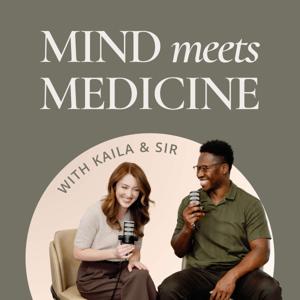


Diagnosing Depression: Kaila and Dr. Sir break down where ordinary sadness ends and clinical depression begins. They walk through the markers (sleep, appetite, motivation, hopelessness, etc.) and the distorted "fun-house mirror" thinking depression creates. They cover what depression actually looks like in the room. They review the many types of depression (seasonal, postpartum, psychotic, older-adult), how to assess safety risk, and the medical and psychiatric conditions that can mimic it: from thyroid issues to bipolar disorder. Part one of a two-part series; depression treatment comes next episode.
0:00 open: the fun-house mirror of depressive thoughts
1:33 Framing the episode: depressed mood vs. depressive disorder
2:56 Where sadness ends and clinical depression begins
6:34 Assessing symptoms: sleep, appetite, motivation, hopelessness
14:41 Observable signs: affect, body language, and masking depression
18:26 Types of depression: atypical, seasonal, postpartum, psychotic, and more
24:51 Assessing suicide risk and safety planning
28:33 Medical causes that mimic depression
33:42 Substance use and self-medication
39:12 Psychiatric rule-outs: bipolar, PMDD, trauma, and neurodivergence
Youtube
Website
Clinic
The contents of this show are for informational and educational purposes only and are not intended to replace professional medical or clinical advice. This content does not establish a patient-provider relationship. Always seek the guidance of a qualified healthcare provider for any questions regarding your health or treatment. If you are experiencing a psychiatric emergency, please call emergency services or go to your nearest hospital immediately.
Kaila and Dr. Sir talk with Dr. Lorraine, founder of Choice Point Counseling, about the fine line between OCD and generalized anxiety, hidden "mental compulsions," and why response prevention matters more than exposure alone. Dr. Lorraine shares her own history with panic disorder, walks through treating harm OCD and health anxiety, and explains how ACT and values-based work help clients tolerate discomfort instead of avoiding it. They dig into medication stigma, family accommodation, and why humor belongs in the therapy room.
0:00 Open: the anatomy of an emotion
1:24 Welcome back + introducing Dr. Lorraine
2:05 Her path into psychology
6:34 Career pivot: from trauma and eating disorders to OCD
10:52 OCD vs. generalized anxiety: how to tell them apart
14:39 Mental compulsions and "Pure O"
18:57 Exposure therapy, ACT, and living by your values
30:52 Response prevention and treating harm OCD
36:53 Medication dosing and psychoeducation
43:36 Family accommodation, her practice, and closing thoughts
Youtube
Website
Clinic
The contents of this show are for informational and educational purposes only and are not intended to replace professional medical or clinical advice. This content does not establish a patient-provider relationship. Always seek the guidance of a qualified healthcare provider for any questions regarding your health or treatment. If you are experiencing a psychiatric emergency, please call emergency services or go to your nearest hospital immediately.
Understanding OCD in Kids and Teens: A Conversation with Dr. Justin Mohatt
"OCD is really good at finding the weak link."
In this episode, Kaila and Dr. Sir talk with Harvard-trained child psychiatrist Dr. Justin Mohatt, a national voice on psychopharmacology in children and behavioral health design architecture for children's hospitals.
We open on the broader crisis of youth social disconnection before diving in. We explore how OCD differs from OCPD and casual "I'm so OCD" talk. Dr. Mohatt explains how symptoms shift between kids and adults and why family accommodation can quietly escalate a two-hour bedtime ritual into a household crisis. Dr. Mohatt walks through why reassurance backfires, what gold-standard treatment (ERP plus medication) actually looks like for OCD, why OCD often needs higher SSRI doses than depression, and when to consider augmenting with an atypical antipsychotic for challenging OCD cases. We close on comorbidity, suicide risk, and why careful, specialized assessment matters so much.
Dr. Mohatt's website: https://www.empirebehavioralhealth.com/justinmohatt
0:00 Cold open: how parental accommodation fuels OCD
1:51 Welcome back + introducing Dr. Justin Mohatt
2:55 Icebreaker: the youth social disconnection crisis
9:14 Bridging into OCD: why this is "a therapy generation"
10:57 Dr. Mohatt's path from sports medicine to child psychiatry
16:04 What pulled him into specializing in OCD
22:34 OCD myths: OCD vs. OCPD, and "I'm so OCD"
25:23 How OCD presents differently in kids vs. adults
33:07 Family systems, accommodation, and how OCD finds the "weak link"
39:12 Why reassurance backfires — and what to do instead
47:29 The gold-standard treatment landscape: therapy and medication
51:08 Medication dosing: why OCD needs higher doses and more time
57:52 Building a true multidisciplinary care team
1:00:24 When to add atypical antipsychotics
1:05:44 OCD, depression, and the real suicide risk
1:10:22 Closing thoughts and where to find Dr. Mohatt
Youtube
Website
Clinic
The contents of this show are for informational and educational purposes only and are not intended to replace professional medical or clinical advice. This content does not establish a patient-provider relationship. Always seek the guidance of a qualified healthcare provider for any questions regarding your health or treatment. If you are experiencing a psychiatric emergency, please call emergency services or go to your nearest hospital immediately.
Gender-affirming care is life saving care. In this episode of Mind Meets Medicine, Kaila and Dr. Sir welcome Dr. Cassy Friedrich—a double board-certified family medicine and psychiatry physician who has spent their career providing gender-affirming care, from student-run free clinics at UC Davis to directing a gender-affirming care program across dozens of Planned Parenthood clinics.
Dr. Friedrich walks through what this care actually involves: creating welcoming clinical environments, respecting chosen names and pronouns, and the medical side of hormone therapy. They offer an accessible overview of estrogen-based and testosterone-based protocols, non-binary embodiment goals, and how they tailor treatment to each patient's goals along with the practical realities of monitoring, side effects, and the risks of unmonitored access.
The conversation doesn't shy away from the current climate. Dr. Friedrich discusses federal and state efforts to restrict access, hospital program closures, and the confusion that leaves many patients believing hat their care is no longer covered. They share sobering data from The Trevor Project.
Throughout, they bring both clinical expertise and deep compassion, describing patients whose lifelong anxiety lifted after starting hormones and teens whose lives were saved once they received the care they needed. The three also explore how to talk with hesitant families, the role of puberty blockers, the history of pathology in psychiatry, WPATH standards, the evolving practice of letter writing, and simple ways any clinic can become more affirming.
Whether you're a clinician, a parent, or someone seeking to understand this care more deeply, this episode offers a grounded, humane, and evidence-based look at work that is genuinely lifesaving.
https://lgbtqhealthcaredirectory.org/provider/cassy-friedrich
---
00:00 Intro & Meet Dr. Cassy Friedrich
02:38 Finding This Work: Free Clinics & Planned Parenthood
04:20 The Rare Family Medicine + Psychiatry Path
07:34 What Gender-Affirming Care Actually Means
10:31 The Current Political & Legal Landscape
15:00 The Age 19 Cutoff & Access in California
18:06 The Data: Access, Suicide Risk & Anti-Trans Legislation
20:28 Talking to Hesitant Families & Believing Kids
24:15 Gender Dysphoria, Diagnosis & Mental Health Outcomes
33:30 Hormone Therapy: A Medical Overview
40:39 Monitoring, Side Effects & Unmonitored Access
48:02 Letter Writing, WPATH & the History of Pathologization
01:00:06 Creating Affirming Clinical Spaces
Youtube
Website
Clinic
The contents of this show are for informational and educational purposes only and are not intended to replace professional medical or clinical advice. This content does not establish a patient-provider relationship. Always seek the guidance of a qualified healthcare provider for any questions regarding your health or treatment. If you are experiencing a psychiatric emergency, please call emergency services or go to your nearest hospital immediately.
"Their gender is their gender... we just legitimize it medically and psychologically for them to receive care, but they're not attached to the diagnosis. They get attached to themselves."
In this episode, Kaila and Dr. Sir sit down with Sean Garcia, LMFT, a South Bay therapist specializing in gender-affirming care and neurodivergence. We open by talking honestly about the weight clinicians are carrying right now — political shifts, legal rollbacks on trans healthcare, and the unique isolation of holding space for patients while managing your own distress in real time.
Sean walks us through his path from psychology to "high tech" and back into psychotherapy work, and how his work organically became centered on trans clients. Unexpectedly, he focused on the striking overlap between neurodivergence and gender identity. We dig into what that means day to day: masking two identities at once, the exhaustion of constant self-monitoring, decision fatigue, and why so many neurodivergent and trans kids struggle in academic environments not built for them.
We talk through the high-stakes territory of college transitions, the shift from parent-as-advocate to young-adult independence, and the real danger of over-pathologizing kids with diagnosis after diagnosis. Sean unpacks how he supports parents who are scared, resistant, or grieving — including honest psychoeducation around hormone therapy and puberty blockers.
The heart of the episode: family support. Sean tells us this is the true gold standard of gender-affirming care. We close on the grief that runs through this entire journey for patients and parents alike, and how Sean built a thriving support community for families navigating it together.
Find Sean: https://seangarciatherapy.com/
0:00open: gender dysphoria as diagnosis, not identity
1:54 Introducing Sean Garcia + icebreaker on his caseload
5:38 Holding heaviness: political climate and clinician burnout
13:43 Sean's path into gender-affirming and neurodivergent care
19:53 Living in a world not built for neurodivergent, trans people
25:45 The daily toll: masking, vigilance, and decision fatigue
33:14 Navigating college and the shift to independence
41:10 Over-pathologizing vs. why gender dysphoria is a diagnosis, not an identity
49:54 Talking to resistant parents and debunking HRT fears
59:31 Family support as the gold standard, grief, and Sean's support group
Youtube
Website
Clinic
The contents of this show are for informational and educational purposes only and are not intended to replace professional medical or clinical advice. This content does not establish a patient-provider relationship. Always seek the guidance of a qualified healthcare provider for any questions regarding your health or treatment. If you are experiencing a psychiatric emergency, please call emergency services or go to your nearest hospital immediately.
In this episode, Kayla and Dr. Sir sit down with Carrie Ritsema, RN, MSN, PMHNP-BC, a board-certified psychiatric mental health nurse practitioner with 20+ years in the field and co-founder of Manresa Wellness in Santa Cruz. Carrie brings a fascinating career path from El Salvador to the Bay Area, integrating primary care and psychiatry long before it was standard practice.
We dig into what a real ADHD evaluation actually looks like: why symptom checkers and TikTok quizzes can't replace a full developmental history, why the diagnosis requires impairment before age 12 across two or more settings, and why so many women and inattentive-type kids get missed entirely growing up. We talk through the mimics: perimenopause brain fog, sleep apnea, trauma, depression, anxiety, cannabis use, and even just too much screen time. These other disorders that lead to inattention and cognitive issues have to be ruled out before ADHD is on the table.
Then, we get into treatment: the difference between stimulants and non-stimulants, methylphenidates (Ritalin) vs. amphetamines (Adderall). We discuss how tolerance and dependency risk shape prescribing decisions, and Carrie's "start low, go slow" philosophy. We go through side effects like sleep, appetite, anxiety, blood pressure, and how to titrate around them instead of giving up on medication altogether. We also get into the very real logistical maze of prescribing controlled substances right now: the ongoing stimulant shortage, in-person visit requirements, pharmacy-by-pharmacy rules that seem to change overnight, and why none of this is standardized.
Carrie's core message: every medication decision is a benefit-versus-risk conversation, not a quick fix. The goal isn't perfection, but meaningful functional improvement paired with therapy and behavioral strategies that address what medication alone can't.
If you or someone you love has ever wondered "do I have ADHD?" — this episode walks through what an actual, careful evaluation looks like, and why it's worth doing right.
Carrie's website: https://www.manresawellness.com/
0:00 the benefit-vs-risk framework for medication
1:27 Welcome back to Mind Meets Medicine + introducing Carrie Ritsema
3:02 Carrie's journey: from El Salvador to nursing school
8:00 Early mentorship at Monterey County and Community Hospital
15:07 Founding Manresa Wellness with Dr. Hill
20:07 How Carrie developed her ADHD specialty
23:04 What a real ADHD evaluation involves
27:04 Ruling out look-alikes: hormones, sleep apnea, cannabis, trauma
36:03 How ADHD shows up differently — culture, self-esteem, late diagnosis
38:04 Medications 101: stimulants vs. non-stimulants
52:41 Methylphenidates vs. amphetamines, dosing, and the pharmacy/shortage maze
1:06:04 Managing side effects + closing thoughts
Youtube
Website
Clinic
The contents of this show are for informational and educational purposes only and are not intended to replace professional medical or clinical advice. This content does not establish a patient-provider relationship. Always seek the guidance of a qualified healthcare provider for any questions regarding your health or treatment. If you are experiencing a psychiatric emergency, please call emergency services or go to your nearest hospital immediately.
In this episode of Mind Meets Medicine, Dr. Sir and Kaila sit down with Dominique Oster, LMFT, certified sex therapist, for one of the most candid and clinically rich conversations. Dominique runs a private practice in Santa Cruz, CA, and works with individuals and couples navigating sexuality, trauma, queerness, and relational complexity. She also teaches in LGBTQ counseling programs and works as a therapist for therapists.
00:00 Intro & Meet Dominique Oster
02:56 From HR to Sex Therapy
04:07 Why Sexuality Training Is Missing from Clinical Programs
11:12 What Sex Therapy Actually Looks Like
15:16 Desire Discrepancy & Responsive vs. Spontaneous Desire
20:57 Rejection Fatigue, Resentment & Rebuilding Intimacy
29:45 Limerence, Esther Perel & Maintaining Desire Long-Term
33:23 Opening Up: What to Shore Up First
39:38 Sex Therapists vs. Coaches, Educators & Surrogates
46:36 The House Metaphor: Moving Through Your Internal Rooms
55:08 Why Clinicians Need to Ask About Sex
Sex Is Not Spontaneous
One of Dominique's core messages: the spontaneous, effortless sex of early relationships was never actually spontaneous. You were texting your friends, shaving extra carefully, sending flirty texts for days before that date. You'd been doing foreplay on yourself the whole time, you just didn't call it that. When couples expect to go from diapers and dishes to desire without any transition, and it doesn't work, they conclude the spark is gone. Dominique reframes this entirely: the spark isn't gone, but the preparation is.
Desire Discrepancy: What It's Really About
Desire discrepancy is when one partner has a stronger interest in sex than the other. This is one of the most common things Dominique sees in couples work. The higher desire partner often interprets rejection as loss of attraction. However, the lower desire partner is almost never saying no to connection. They're saying: I haven't been invited, and I need a transition. Getting there requires moving through different spaces, and it's the higher desire partner's job to understand that landscape, not just issue an invitation.
Trauma, the Body, and the Long Game
Dominique approaches sex therapy as trauma work first. Compulsory sexuality, cultural messaging, childhood conditioning, and attachment injuries all shape how we show up in sexual spaces. For many clients, the most important thing isn't learning new techniques. It's learning that they can stop, and that their body's signals matter. That sex doesn't have to be something you endure.
What Sex Therapy Actually Is
As Dominique describes it, sex is the canary in the coal mine because it tells you everything about someone's physical health, mental health, and relational wellbeing. Sex therapy is therapy with a sexual focus: attachment work, trauma work, communication, identity, and shame. Most of the work, she says, is simply permission. Permission to want more. Permission to want less. Permission to be exactly who you are.
Find Dominique at https://www.domostertherapy.com/ or on Instagram https://www.instagram.com/ostertherapy/
Youtube
Website
Clinic
The contents of this show are for informational and educational purposes only and are not intended to replace professional medical or clinical advice. This content does not establish a patient-provider relationship. Always seek the guidance of a qualified healthcare provider for any questions regarding your health or treatment. If you are experiencing a psychiatric emergency, please call emergency services or go to your nearest hospital immediately.
In this episode of Mind Meets Medicine, Dr. Sir and Kaila are joined by their colleague and friend Dr. Shereen Mohsen, psychologist, founder and CEO of Relucent Psychology Group, and one of the most thoughtful clinicians working at the intersection of attachment, trauma, and relational complexity. Together, they dive into ethical non-monogamy, polyamory, open relationships, and what couples work in this space actually looks like from the inside.
00:00 Intro & Meet Dr. Shereen Mohsen
06:20 Why Clinicians Must Do Their Own Work
11:00 Defining Ethical Non-Monogamy & Polyamory
13:16 When One Partner Wants to Open and One Doesn't
16:17 Opening Up Won't Fix Existing Problems
26:01 Jealousy Is Information, Not a Red Flag
36:03 Trauma-Informed Work & Attachment Styles
45:11 Agreements Are Fluid: You Can Change Your Mind
50:22 The Shame Around Desire & Infidelity
56:36 The Internal Work Opening Up Requires
What Is Ethical Non-Monogamy?
Dr. Mohsen opens with a clear, accessible definition: ethical non-monogamy is the practice of dating or engaging in relationships outside of a primary partnership, with full transparency, honesty, and open communication between all involved. She breaks down the important distinctions between polyamory and open relationships. These distinctions matter, she explains, especially when it comes to communication and setting clear agreements with partners.
When One Partner Wants to Open and the Other Doesn't
One of the most common scenarios Dr. Mohsen sees in couples work is a mismatch: one partner is ready to explore, the other isn't. This can trigger shame, feelings of inadequacy, and fear of abandonment on both sides. Drawing on the work of Esther Perel, the conversation explores how modern monogamy asks a single partner to meet an impossibly long list of needs and why, for some people, wanting more isn't a reflection of dissatisfaction but of abundance. There's wounding on both sides of this conversation, and Dr. Mohsen emphasizes the importance of slowing down and making space for both.
Opening Up Won't Fix a Broken Foundation
One of Dr. Mohsen’s clearest clinical points: any cracks in a relationship will only be amplified when you open it up. She's direct with couples about this. Before exploring ethical non-monogamy, the foundation needs to be solid. She introduces the concept of new relationship energy, which can be destabilizing for a primary partnership, and explains why the ability to repair after rupture is non-negotiable in any kind of relationship.
Jealousy, Desire & Shame
Perhaps the most powerful section of the conversation. Jealousy, Dr. Mohsen argues, isn't toxic, it's information. It's fear of loss, rooted in attachment. Reframing it that way changes everything. The hosts also explore how desire itself has become deeply shameful, even in monogamous relationships, and how bringing desire into the open, rather than hiding it, can actually strengthen intimacy rather than threaten it. Shame grows in secrecy. Naming things takes away their power.
The Real Work of Open Relationships
Dr. Mohsen is emphatic: ethical non-monogamy requires more emotional work, not less. Self-awareness, accountability, trauma healing, and strong communication skills are essential. She's a strong advocate for individual therapy alongside couples work because the depth of relational health you can access is directly tied to the depth of personal work each partner is willing to do.
Dr. Mohsen's Website: https://relucentpg.com/
Youtube
Website
Clinic
The contents of this show are for informational and educational purposes only and are not intended to replace professional medical or clinical advice. This content does not establish a patient-provider relationship. Always seek the guidance of a qualified healthcare provider for any questions regarding your health or treatment. If you are experiencing a psychiatric emergency, please call emergency services or go to your nearest hospital immediately.
In this episode, we open up an honest conversation about how AI is reshaping mental health and medicine. We discuss a range of topics from clinical documentation and patient care to the bigger question of what happens when people start replacing therapy with a chatbot.
AI as a Clinical Tool
AI-powered documentation and scribing have been genuinely transformative for many clinicians. HIPAA-compliant AI scribes can cut note-writing time and reduce end-of-day cognitive load.
The key ethical requirements: always review AI-generated notes for accuracy, use only HIPAA-compliant software, execute a Business Associates Agreement (BAA), and obtain patient consent.
Where It Gets Complicated: Patients Using AI for Mental Health Support
The biggest use of AI in the general population is mental health support. AI chatbots are designed to maximize engagement, not therapeutic outcomes. They validate, they mirror, they don’t challenge if it risks engagement. For someone with depression, mania, an eating disorder, or psychosis, that can be genuinely dangerous. The American Psychological Association has issued a health advisory stating that unregulated AI wellness tools lack the scientific evidence needed to ensure user safety.
Will AI Replace Therapists?
Short answer: no. However, it will probably change who walks through the door and why. Methodized, protocol-driven therapies and education are easier for AI to simulate, while the relational, challenging, and deeply emotional human elements of therapy cannot be replicated by something that is not a person.
What Clinicians Can Do
Ask patients about AI use at intake.
Never enter patient information into non-HIPAA-compliant tools
Stay skeptical and curious and seek consultation
Youtube
Website
Clinic
The contents of this show are for informational and educational purposes only and are not intended to replace professional medical or clinical advice. This content does not establish a patient-provider relationship. Always seek the guidance of a qualified healthcare provider for any questions regarding your health or treatment. If you are experiencing a psychiatric emergency, please call emergency services or go to your nearest hospital immediately.
Certified nurse midwife Dana Ramsey is back on Mind Meets Medicine.
In part two of our conversation with Dana, founder of Nurture Women’s Health & Fertility in Santa Cruz, we go deep on what perinatal and postpartum mental health care actually looks and feels like.
• Why prenatal visits dropped from 13 to 6 during COVID
• The hormonal freefall after delivery — and why it mimics menopause
• Breastfeeding pressure, formula guilt, and the psychology behind both
• Perinatal mood and anxiety disorders (PMADs) — depression, anxiety, OCD, and PTSD in the postpartum period
• What 1 in 5 new mothers will experience
• Why postpartum mental health care belongs with a specialist, not just a primary care providers
• What a genuinely supportive, holistic care model could look like
If you’re pregnant, postpartum, a partner, a provider, or you’ve ever felt like you were failing at something that was actually just really hard — this episode is for you.
Guest: Dana Ramsey, CNM — Certified Nurse Midwife, Founder of Nurture Women’s Health & Fertility (Santa Cruz, CA)
Host: Kaila (licensed therapist & founder) + Dr. Sir (board-certified psychiatrist)
CHAPTERS
0:00 — Introduction & Dana’s background
2:30 — How postpartum care collapsed post-pandemic
8:00 — The reality vs. the romanticized version of new motherhood
13:00 — Breastfeeding pressure and formula guilt
22:00 — The hormonal shift after delivery
31:00 — Pregnancy ambivalence — why 80% of women feel it
35:00 — PMADs: depression, anxiety, OCD, PTSD in the perinatal period
47:00 — When symptoms cross into clinical territory
54:00 — Medication in pregnancy and postpartum — why it’s more specialized
1:06:00 — What postpartum care should actually look like
Youtube
Website
Clinic
The contents of this show are for informational and educational purposes only and are not intended to replace professional medical or clinical advice. This content does not establish a patient-provider relationship. Always seek the guidance of a qualified healthcare provider for any questions regarding your health or treatment. If you are experiencing a psychiatric emergency, please call emergency services or go to your nearest hospital immediately.