
Sign up to save your podcasts
Or



COVID-19 may no longer officially be a pandemic, but writers and artists will be working for years to come to create pieces that help us make sense of what we've been through.
The new picture book "The House We Sheltered In" is unique in a couple of ways: If you flip that same book around, you can read a different story, "The Masks We Wore." Here's the other unique bit: 14 different illustrators from across the country contributed to the pictures.
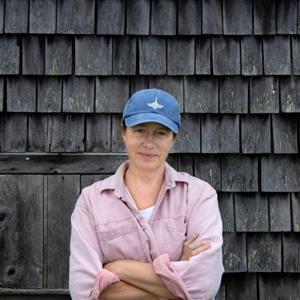
MPR News producer Emily Bright spoke with the four creators based in the Twin Cities metro area: Freeman Ng, Annie Kuhn, Alicia Schwab and Sara Nintzel.
Ng says the project started out in a mini picture book when he wrote the first poem and paired it with his own digital art. He uploaded it to a forum where readers could download the pdf and print it out and have the book at home.
He said he wanted to celebrate the joys of homebound life during uncertain times. That’s when he decided to write the second poem and decided that he wanted it illustrated.
But he couldn’t offer them any money up front, only a share of the royalties. He cold-called over 200 illustrators and said the ones that agreed to do the project did so because they believed in its message.
Annie Kuhn, Alicia Schwab and Sara Nintzel, each from the Twin Cities, answered the call.
Schwab said she sewed 500 cloth masks in the beginning of the pandemic and when she was approached by Ng with this project, she was ready to keep helping.
“I thought ‘wow, this is something I can contribute to.’ It was in my wheelhouse, it was a great way to help kids process this long-lasting traumatic event we’ve all been through,” she said.
Nintzel was pregnant when she got the call. She had two young boys. Her second child was born in 2020 and her third is on the way. She says she knew what it was like to look for literature for children to understand what was happening and how they could help.
Kuhn was living in upstate New York when the pandemic started and was a teacher who had to switch to online learning. She said her experience with the book helped her process the pandemic as an adult.
“The isolation factor was gigantic, adults needed help processing this too,” she said.
Use the audio player above to listen to the full conversation.
Subscribe to the Minnesota Now podcast on Apple Podcasts, Google Podcasts, Spotify or wherever you get your podcasts.
We attempt to make transcripts for Minnesota Now available the next business day after a broadcast. When ready they will appear here.
Minnesota Governor Tim Walz signed a bill Tuesday legalizing recreational use of marijuana — making Minnesota the 23rd state to do so.
Cannabis products should be in stores by 2025, but personal use, possession and home growing will be legal starting August first.
THC products are not new to the state. Edibles containing small amounts of hemp-derived THC were legalized last July, and an entire industry quickly popped up around that law.
The new legislation will broaden the industry. And it makes us wonder how hemp growers and producers plan to adapt to the new environment.
Host Cathy Wurzer talked with Ben Lipkin to hear his perspective. Lipkin is the co-founder of North Star Hemp, Carpe Diem CBD and You Betcha Cannabis Co, which calls itself a seed-to-shelf company.
More than six million people in the United States have Alzheimer’s disease, a brain wasting disease that has been notoriously difficult to treat.
Earlier this month, new research came out from the drugmaker Eli Lilly about a potential new Alzheimer's drug called Donanemab. It was shown to slow cognitive decline by more than 30 percent.
That hopeful news comes right before Alzheimer's and Brain Awareness Month, which occurs in June. With that in mind, we've asked Dr. Jay Sheree Allen from the Mayo Clinic to share warning signs and treatment for Alzheimer's disease.
Tuesday afternoon, Governor Walz signed into law a bill that'll legalize recreational use of marijuana. How will existing hemp businesses adapt? We'll find out.
There are some glimmers of good news for those worried about the effects of Alzheimer’s disease. We'll talk about the factors you have control over when it comes to that brain-wasting disease ... and a new drug that has some excited.
The artist behind the Sivertson Art Gallery in Grand Marais is being honored Wednesday for a life well-lived. Howard Sivertson died earlier this year. We'll talk to his daughter.
Use the audio player above to listen to the full conversation.
Subscribe to the Minnesota Now podcast on Apple Podcasts, Google Podcasts, Spotify or wherever you get your podcasts.
Friends, family and fans of Howard Sivertson will celebrate a live well lived on Wednesday, which would have been his 93rd birthday. Sivertson, a fixture in Grand Marais, died this past January. The artist published multiple collections that tell stories of Lake Superior through illustration, writing and quite a bit of research.
Sivertson was born into a Lake Superior commercial fishing family, but bouts of sea sickness meant fishing would not be in his future. He became an artist, known for the Sivertson Gallery in Grand Marais, which he co-founded with his daughter, Jan.
MPR News Host Cathy Wurzer talked with Jan about her father's memory.
Democrats are celebrating the passage of bills like paid family and medical leave while Republicans say they're spending too much money with too little input from the public. With just a few days left in the session, Governor Walz joined MPR news host Cathy Wurzer to talk about education spending, taxes, and more.
The founders of a Chisago City brewery won an award for people who started their businesses after age 50. MPR News senior economics contributor Chris Farrell takes us there in our series on small businesses around the state.
Minnesota is still under a white sky caused by wildfire smoke. Paul Huttner has the details on air quality and weather.
MPR News host Cathy Wurzer spoke to a new Minnesota Aurora defender who is about to play in a continental championship for women under 20.
Minnesota Aurora, a pre-professional women’s soccer team based in Eagan, is gearing up for their second season after their stunning opening season. Nearly two-thirds of the inaugural team will be back this year, along with some new players on the roster.
We wanted to talk with one of those new players who has a very busy start to the season. Paola Then is a defender who also plays for Iowa Lakes Community College. As Aurora kicks off their first game, Then will be in her home country, the Dominican Republic, preparing to play Mexico in the women’s under-20 continental championship. That’s a qualifying tournament for the under-20 FIFA world cup.
MPR News Host Cathy Wurzer got Then on the line to talk about it.
The Minnesota Legislature is getting closer to adjournment with final votes on some big bills left to be taken before next week.
You may have noticed the words “transformative” and “historic” being used a lot by DFL lawmakers and leaders when describing the amounts of money being spent, on items like education or on new programs like a paid family and medical leave effort.
Republicans, on the other hand, say Democrats are passing extremely liberal measures without adequate input from them or the public.
Gov. Tim Walz joined Cathy Wurzer with a view on what to expect in the final stretch of the session and beyond.
The following is a transcript of the interview, edited for clarity. Listen to the full conversation with the audio player above.
I think it gets awful close. We're certainly proud of it. I know we've made this whole session about making Minnesota the best place for children and family. Whether it's making sure they have meals to eat, whether it's making sure those families get a little more money back in their pocket to take care of these kids.
I think this ensures that Minnesota schools — as they've always been — remained some of the best in the country. It provides some certainty for the administration's going forward. And for those communities to not be so dependent on these, these bonding referendums, which create the haves and have-nots.
And then there's transformative work in here around literacy. There's transformative work around making sure we're hiring a diverse teaching force. We're going to need them first and foremost. But we know the research shows that if students see folks that look like themselves and have their shared experiences, they do better. So I'm excited about it. I'm excited as a parent of a public school high school student, I'm excited as a teacher of what it can do.
They say it was a political gimmick last year when they didn't want to do anything.
They were. And I think Minnesotans … look, a family of four can get up to $1,300. But I think coupled with a billion dollars of property tax reduction in here, there's a lot of renter's credit that goes into there. So there's going to be $6.6 billion worth of tax cuts in there aim mostly clearly at the middle class and the working class folks.
So yeah, this was one way to get it out there. There's a lot of other ways we're going to see reductions in property tax I said across the state. They added in child dependents for that. I think I would want it a little more. But this is about give and take.
The bottom line is that we're going to see life become a little more affordable for folks; we're going to see targeting on what we know is reducing child poverty. The child tax credit that's in here, is not just nascent leading, it's global leading of what it will do.
It is going to draw the attention of countries around the world because of the impact that the research shows it's going to have on childhood poverty. And if you want to talk about long-term savings, that is long-term savings in less interventions that we need better achievement in education, less interventions into the criminal justice system, it's all coupled together.
Yesterday, we did lead lines, which we know will improve the health of Minnesotans. These are just really good investments to make Minnesota safer, healthier, more productive and a place where people want to live.
Yeah, we need to make sure that that's a profession we value and I'm glad earlier in the year with personal care attendants, we finally got them a wage of $20. I think the investments we made, we had a 10 percent increase in reimbursements across the board, put in hundreds of millions of dollars.
But we still need to make the case that if we're going to ask people to work in these professions, they certainly didn't expect to get rich doing it but they can't take an oath of poverty. We think the things we've done around childcare make that more affordable for folks. We think some of these rebates coming back to folks — the child tax credit — a lot of these folks are women coming from communities of color. And this is aimed at that. So we get people off the sideline.
The number one issue amongst businesses is of course long-term workforce needs and shortages on that. We need to make sure that we're getting everyone we can off the sidelines which Minnesota has very few. We have the second-highest labor participation rate in the country. But we're making ourselves a destination for folks to come. So there's a lot in here and of course, there's going to be a significant reduction of Social Security tax. 80 percent of folks will see nothing and 93 percent will see a significant reduction.
I'm on board with whatever it takes to get this funding. And I think they need to make sure there are exemptions, I'm very clear, for medicines for … formula coming to you that folks. But look, these are trucks that are driving on our roads.
Again, I stress this statistic until I hope every Minnesota knows it: We have the fourth highest amount of road miles in the country, California, Texas, Illinois and us. Look at the per capita of what it costs on this, this modern transportation system makes us the most one of the most diverse economies and one of the most productive economies. But it takes upkeep and we've had a frozen gas tax. I tried that route. It wasn't there.
Folks who came before us pay for these roads, they paid for these bridges. And this one-time money doesn't look into the 25-year planning phase that MnDOT’s talking about to upkeep the roads and to build out. So I did not agree with that method of doing it, but I certainly support it if that's what the Legislature agrees to.
Because in the long term, we have got to make these investments. And I think most people, when they pay their taxes, they want to make sure they're fair, and they want to make sure they're getting the best bang for their buck. They want to see what it does. And I can tell you there's nothing that makes people happier than seeing the potholes fixed in front of her house, seeing traffic congestion be reduced.
This is just a way to make it happen. It's courageous. I mean, you can't be the Republicans and say, “Well, we're not going to do anything and go home,” while their constituents don't have a water treatment plant, don't have the new bridge don't have the new roads, because you got to figure out how to pay for it. And this one is very specific. It's targeted money.
No, no. Last night they, once again, the demands were that checks be sent back to every single Minnesotan, meaning that the very richest Minnesotans needed to get a check. Or they wouldn’t agree to do a bonding bill that is unanimously … I mean, almost … what it passed a supermajority.
I applaud the Republicans in the House who said, “Look, these are our tax dollars, it makes sense to do this.” Our bond ratings and the future of Minnesota depends on us upkeeping our infrastructure, they voted for it in the supermajority that was needed. And Senate Republicans who walked away last May from a deal thinking they were going to win an election and do it their way, are now playing games with this.
But here's the good news: I'll take the heat by voting for it and doing the spending that's necessary to build the water treatment plant to make sure that either Mankato or wherever it's at, get what they need to get done, because that's what good governance does. So very, very disappointing to me. This has always been bipartisan, this has always been highly bought into Republicans in the House were fantastic in helping lead this. They understood this smart policy. It's fiscally conservative, and you have politics being played in the Senate again.
So no, they sent it over last night. I haven't got a chance, I guess maybe they can hear it on here. But we're not giving tax cuts to a billionaire. So that we can do something that all of us agree needs to get done.
Look, politics does this. Our nurses were absolutely critical in the care that they gave both during COVID and after. They're one of the most valued and beloved professions. And they're telling us that they're in crisis, I believe them.
I also worked hand in hand and it was those hospital administrators and the professionals who helped make Minnesota one of the safest states during COVID, making sure we didn't go on their system. So it's not an us versus them.
One of the issues is how you do staffing, the acuity systems that Mayo uses is there. I do think that there's possibilities for us to reach a compromise where we take into consideration the nurses’ concerns about overstaffing about what they feel are dangerous situations, using what we already have.
What I've said about Mayo is and I represented the area of Rochester for 12 years in Congress, I'm very familiar with Mayo, they do things a little bit differently. And I'm not saying that as a pejorative or as positive rated very highly, but their clientele is a little bit different.
With that being said, we're out allows the nurses to feel safe and secure and feel like they're having a say in this but listening to the administrator so I think the discussion is a good one. I hope though that the public, this is not and we can't set this up that this is nurses versus hospitals because we're all in it together and they both have done incredible work over very challenging for years.
They're fluid. And we're gonna finish on time. I think you know, it's graduation season. So I think we might have to take a little break Saturday. It's important for folks to be with their family. I had that wonderful experience last Saturday.
But we'll get done on Monday. So I know deep negotiations last night, I left the Capitol around midnight, and they were still discussing. I do think there's something that needs to be done to get there. And I take very seriously as they said, both sides on this and very valid points.
Listen to the full conversation with the audio player above.
The forecast has been mostly sunny this week, but the skies are looking pretty grey in some of the state. Why? Smoke! MPR News host Cathy Wurzer checked in with MPR's chief meteorologist Paul Huttner to hear about that and other weather news for the week.
Here on Minnesota Now we like to highlight small businesses, and we have been checking in with MPR's senior economics contributor Chris Farrell about the latest business news in Minnesota. This week, we're going to Chisago City. Earlier this month, the National Small Business Week awards ceremony for Minnesota was held at the Landmark Center in downtown St. Paul. And a special award, the Encore Entrepreneur Award, went to the owners of Uncommon Loon Brewing Company in Chisago City. That award celebrates founders who stated a business after the age of 50. Chris Farrell visited the Brewery to speak to it's founders John Cariveau, Bradley Klatt and Mark Skoglund. He joined MPR News host Cathy Wurzer to talk about it.
From the publisher's feed
25,772 Listeners

14,514 Listeners

3,996 Listeners

217 Listeners
4,708 Listeners

87,110 Listeners

111,814 Listeners

56,393 Listeners

12,871 Listeners

2,394 Listeners

5,204 Listeners
16,310 Listeners

5,744 Listeners

6,360 Listeners
6,158 Listeners