
Sign up to save your podcasts
Or

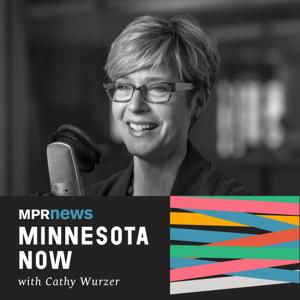


A record number of school board members have resigned across the state, citing chaos, bullying and abuse in their districts. Host Cathy Wurzer talks with Beth Hawkins, who reported extensively on the great resignation of Minnesota school district leaders over the past year.
Host Cathy Wurzer finds out what’s behind the resignation of a record number of school board members across Minnesota.
The Wild are out of the play-offs just as the Lynx get on a losing streak — what’s going on with Minnesota sports? Wally Langfellow and Eric Nelson share their takes.
And in honor of the pledge drive, we revisit one of Cathy's favorite interviews with state girls wrestling champ Nari Miller. She’s got big dreams!
Nari Miller is a senior at Edison High School in Minneapolis and she became the first champion of the girl’s 152-pound title. She was also awarded the prestigious "Athena Award" as her school's top senior girl athlete. She competes in three sports: wrestling, football and track and field.
Host Cathy Wurzer looked back at her interview with Nari from last month.
The Wild are out of the playoffs just as the Lynx get on a losing streak — what’s going on with Minnesota sports? Host Cathy Wurzer finds out with dynamic duo Wally Langfellow and Eric Nelson from Ten Thousand Takes Sports.
The latest on long-haul COVID, severe weather and a touching story about an impactful teacher.
You probably had a teacher in your life who made a strong impression on you. For journalist Lee Hawkins, his special teacher was Harold Bridgeman in Maplewood, Minnesota. He joined host Cathy Wurzer to talk about his recent reunion with Mr. Bridgeman.
Spring weather has finally arrived and this year that means hot temperatures for much of the state and severe weather several days this week. Host Cathy Wurzer checks in with MPR’s Chief Meteorologist Paul Huttner.
More than 1.4 million people have contracted COVID-19, and doctors say about 10% of them will have long-haul COVID. Several healthcare centers around the country are setting up long-haul COVID clinics to research the condition and help patients. Host Cathy Wurzer speaks with Dr. Greg Vanichkachorn, medical director at the Mayo Clinic’s effort, CARP (Covid Activity Rehabilitation Program).
Cathy Wurzer caught up with Duluth’s Daniel Durant, co-star of the best picture winning film, “CODA.” She revisited the conversation on Minnesota Now.
Below is a transcript of their conversation. It has been lightly edited for length and clarity.
Cathy Wurzer: What must it be like to have a day in your honor in your hometown? Not many people have experienced that feeling. But last week, the city of Duluth declared April 5 as Daniel Durant Day. Daniel grew up in Duluth, but his acting career shot him to stardom far beyond the Twin Ports. He just returned to Minnesota after his recent film called “CODA” won the Oscar for Best Picture. The title “CODA” is an acronym for child of deaf adults. In the movie, Daniel plays Leo, one of two young adult children of deaf parents, those actors like their characters are deaf. “CODA” is the first Best Picture nominee and winner with deaf actors as the main characters. I spoke with Daniel Friday about the film, we spoke over Zoom with the help of sign language interpreter Gabriel Gomez, and I started by welcoming him to Minnesota Now.
Daniel Durant: Hello, I'm happy to be here.
Cathy: Oh, we're so happy. And congratulations.
Daniel: Thank you again, it means so much.
Cathy: I am betting that your life has changed in a number of ways since filming wrapped up on “CODA,” all the attention surrounding the film the Oscar obviously, how would you describe what's happening in your life right now?
Daniel: Really, what's been happening so far with “CODA,” I'm just, I'm so excited. And I'm so happy and thankful. After the awards were finished, I was just overwhelmed. Coming back to Duluth, it's just so many things are happening, my world is changing, like you said, and at the same time, I'm really thankful. And I'm happy because you know, Troy is the second deaf person to ever be nominated and he won the Oscar as well. So finally, a deaf man has won the Oscar. And it's a huge honor. And again, our movie “CODA” has open captions on the screen on every movie, when you watch it, it's captioned. So that's accessible for everyone. So there's so many things happening in history right now, because of this movie. And it's just brilliant. It's changing history. And it's changing perspectives about Deaf culture. Growing up myself in Duluth. I mean, I'm excited to get more scripts now and doors are opening, and I'm not used to that feeling. So I used to get, you know, one script a year. And now I'm getting so many. So it's an honor. And again, I'm happy because “CODA” helped me open doors for myself, but also open doors for other actors. And at the same time, and myself, Daniel, I still feel like who I am. I love being an actor, and I'm excited to work with new people, and just traveled through this journey. You know, this is just the beginning for me. I can't believe I won the Oscar my first feature.
Cathy: When you were first looking over the script for the film, what made you feel like the Deaf community was going to be represented correctly?
Daniel: Really, there were so many things! And that's good question. There's one scene that I love. When Frank is signing and assigning one of his dirty signs, you know, and it's so visual. And I can see some things in the script that I had never seen before in any other script. Our director, Sian, she did her homework, you know, she really knew what the Deaf community went through. And she understood Deaf culture. So it was in the script, and I read the script. And I was very impressed from the start. And again, like you said, we had three deaf main characters, and it wasn't like they were signing pretty, no, it was strong. It was showing our culture raw the way it is. And at the time, I already knew who Marlee and Troy were and seeing the script, it was so easy to envision them, destroying those characters and making them their own. Because they're both brilliant actors. It's one of the best scripts I've ever seen.
Cathy: Well, speaking of roles, you brought so much enthusiasm and life to Leo, how much of Leo is really Daniel?
Daniel: A lot! Again, Daniel, I'm from a small town, Duluth, and there's not many deaf people here. And I've always felt, I don't know, I've never felt like I belonged. I never felt not equal or anything. And I feel like I'm deaf and that's OK. I can still play sports, I can still do whatever, I can be involved in anything really. I was involved in a soccer team, I was acting, I've done so many things. I'm so enthusiastic about everything. And also I'm so deep and strong in deaf culture. I love getting around with other deaf adults, even as a child and I love conversating in my language, it's just a strong way to speak. And Leo is from a deaf family. So when I grew up, I wasn't a little you would say little D or capital D for deaf, right? And I'm a capital D Deaf guy. You know, I support the community. I don't use my voice, and Leo is the same. He cares about his business. He cares about the family. And there's two parallels there with Leo and Daniel, for sure. And I do use Tinder, Daniel uses Tinder like Leo.
Cathy: What is the preparation that actors need to do on their own for a role? And what should you leave room for to discover in the moment of the scene? And I asked that because there was such an emotional scene that you had the fight with Ruby where you signed we are not helpless. How did you prepare for that scene?
Daniel: Before the big scene, the beach scene, I had already discussed with Sian and with our SL masters and Tomasetti, we talked about what kind of emotions we wanted to feel and how Leo felt. And Leo was the older brother in the family. And before Ruby was born, he knew that life existed, you know, they did stuff without Ruby around. And once she was born, they depend on her for everything, interpreting the business. And they were ignoring Leo's idea. So Leo was very frustrated. And when he got to the beach scene, it was the right time, Ruby found Leo and Leo really just let her know how he feels, because he loves his sister, and he always wants what's best for his sister. And it was her time to graduate from high school, she lost her childhood, she should have been out having fun with friends and doing things with the girls. But instead, she was responsible for the fishing business and the family. And Leo saw that his whole life and he knew Ruby needed to do something better. She deserved to be happy on her own. And she had a gift she can see. So it's really a huge, just heart opening scene. And it was my favorite part of it. Because I loved saying that we definitely weren't helpless. Don't pity us. I could throw that emotion out there. And that emotion came from Daniel growing up in that small town and people putting giving me pity and it's like, why? So yes, Daniel definitely was in there with Leo.
Cathy: You mentioned music. Now, I know music plays a big role in the plot of the movie, but I also understand that you love music. I'm curious about how you weave music into your life?
Daniel: That's a great question. I love music. You know, just like the scene where you see Frank and his wife arrive to pick up Ruby from school, and they're listening to music and it's vulgar, but we can, they can feel the bass and they enjoy it. That's how deaf people feel. We turn it up because we can't hear the words. We don't really care what the music is about. But if you can feel that bass going to a rhythm, it feels great. And it makes us want to dance just like hearing people. So I love feeling that. You know, deaf people have a lot of different ranges of deaf, some deaf people can hear, some deaf people can hear out of one ear, some people can hear a lot of different levels. So a lot of people love music.
Cathy: Now, is it true that as a youngster, you were jamming to National Public Radio? I heard that story. And it sounded very funny.
Daniel: When I was young, again, I'm from Duluth, and I would play club soccer. So my mom and I, she was always willing to drive me around to different states or all around Minnesota. And we drive and I'd always asked my mom, can you turn up the music, make it louder, turn it all the way to so I can feel the music, and my mom would turn it all the way up. But it was hard for her ears. She was like, OK, I'm gonna buy a better sound system. So she installed a nice sound system in the car with a subwoofer. And sure enough, I could feel the bass and I wasn't bothering my mom and the windows were shaking. And it felt good. So one day, we went to a store and we parked and I wasn't interested in going in the store. So I stayed in the car, and my mom went on into the store. And I was bored. And I realized we just got this new sound system. So I turned it on and I turned it up and I turned it louder, and I was having a blast. It felt so good. I was dancing. And then a stranger pulled up next to me. And it was a mess. And he rolled down the window. And he looked at me really weird, you know, and I just thought he must be impressed. He must be thinking I have a great sound system in the car. And it's a great song. And I was just like, yes, like dance to this man. And then another a woman came up same thing rolled down her window and stared at me. And I was dancing, having a blast it felt so good. And I wondered what is the song? And when my mother came out of the store, she looked at me and started laughing. And she sat down next to me and I was like, “what is the music I'm listening to?” She said, “you're listening to NPR.”
Cathy: That is a great story. Oh, I'm sure she laughed and laughed. That is a great story. And we thank you for jamming to National Public Radio. So now that you've gotten back and had the Duluth day, how are you relaxing? In the midst of the swirl of the excitement? Have you had a chance to just decompress?
Daniel: Yeah, I mean, I'm just staying warm and staying inside, you know, trying to catch up on movies and video games. And I've gone back to work at school with a deaf student. In second grade. I’m his Deaf mentor kind of and it's my side job. It's fun to support the Deaf community and teach.
Cathy: You know what, I wish you all the best Daniel, we are so proud. And I'm just so curious as to what you're going to do in the future.
Daniel: I just want to keep acting. I want to keep opening doors. And I would love to keep working with deaf children too. And my downtime, because really myself I became successful because my mom's when they adopted me right away started learning sign language. And I can communicate with my mother. And sometimes my friends would come and they think my mom's deaf because she's so good at signing. But no, the communication is so important. And I just want you to know that 70 percent of deaf children have parents that don't learn sign language and it impacts their future. It impacts their education, their social lives, everything. So again, I realize now I'm so lucky and it's very important for parents to be involved with their deaf children as much as they can.
Cathy: You're quite a role model Daniel, I thank you for the conversation and Gabriel thank you too, for signing.
Daniel: No problem. Thank you guys.
Cathy: That was actor Daniel Durant one of the leading actors in the film “CODA,” which won the Best Picture award at the Oscars. We also thank his sign language interpreter Gabriel Gomez.
Use the audio player above to listen to the full conversation. Subscribe to the Minnesota Now podcast on Apple Podcasts, Google Podcasts, Spotify or wherever you get your podcasts.
You’d be forgiven if you were worried that Spring would never arrive. It’s here! In fact, given the forecast it looks as if we’re going to jump right into summer. The trees, grass, birds and wild critters are catching up with the changing seasons. Keeping track of all of it is retired mail carrier and full-time phenologist John Latimer. John observes the seasonal changes in nature from his home in Grand Rapids, Minn.
From the publisher's feed

25,784 Listeners
14,494 Listeners

3,992 Listeners

215 Listeners

4,695 Listeners

87,221 Listeners

111,734 Listeners

56,384 Listeners
12,882 Listeners

2,399 Listeners

5,209 Listeners

16,307 Listeners

5,715 Listeners

6,339 Listeners

6,147 Listeners