
Sign up to save your podcasts
Or

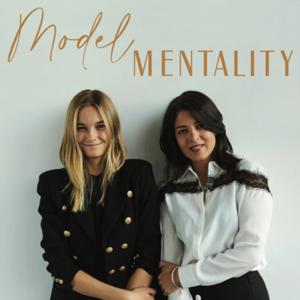


Catch this bonus follow-up interview with Bridget Malcolm about where she is today in terms of her mental health, PMDD and her sobriety.
Bridget Malcolm is an international fashion model whose career has spanned from campaigns with Ralph Lauren to Maybelline to V Magazine to Victoria’s Secret and Harper's Bazaar.
This episode was recorded in August of 2020 as a follow-up to our original interview in August of 2019 entitled ‘Bridget Malcolm on Recovery, PMDD and a Renewed Perspective.’
Please note that the contents of Model Mentality are for informational purposes only. The content is not intended to be a substitute for professional advice, diagnosis, or treatment. Always seek the advice of your mental health professional or other qualified health provider with any questions you may have regarding your condition. Never disregard professional advice or delay in seeking it because of something you have heard on Model Mentality.
As always, if you are in crisis or you think you may have an emergency, call your doctor or 911 immediately. If you’re having suicidal thoughts, call 1-800-273-TALK (8255) to talk to a skilled, trained counselor at a crisis center in your area at any time (National Suicide Prevention Lifeline). If you are located outside the United States, call your local emergency line immediately.
The views and opinions expressed by guests of the podcast are those of each individual guest and do not reflect the views and opinions of Mind Studios or Dr. Allie Sharma and do not constitute an endorsement of such views and opinions.
Links:
Website https://www.bridgetmalcolm.com.au/
Instagram https://www.instagram.com/bridgetmalcolm/?hl=en
References:
DSM 5. Diagnostic and Statistical Manual of Mental Disorders.
SAMHSA: https://www.samhsa.gov/find-help/recovery
Bridget Malcolm is an international fashion model whose career has spanned from campaigns with Ralph Lauren to Maybelline to V Magazine to Victoria’s Secret and Harper's Bazaar.
Listen to Dr. Allie in conversation with Bridget Malcolm as they speak on Recovery, Pre-Menstrual Dysphoric Disorder (PMDD) and a Renewed Perspective on her mental health.
Bridget Malcolm grew up in South Fremantle, a little beach town just south of Perth, spending most of her days at the beach and ballet class. She was surrounded by music—her dad plays flamenco guitar and her mother the piano – so it was little surprise when on a whim she took up the oboe and fell in love with it. After just six months, she was performing with the local university’s octet and toured Europe with her high school orchestra.
At age 14, she was scouted by her first modeling agency, Vivien’s, “but we had to wait a year or so for me to outgrow my terrible haircut, braces, and general awkwardness.” Her first job was for Harper’s Bazaar Australia, with photographer Nicole Bentley, the woman she credits with teaching her how to model. At 16, she was signed to an international agency, and before she knew it, was juggling high school and modeling work. Upon graduation, she was accepted into the Sydney Conservatorium of Music and WAAPA, but instead decided to move to New York City to pursue modeling fulltime.
Throughout her modeling career Bridget suffered from a wide variety of mental health struggles, including an eating disorder and anxiety, which interfered with her ability to work. She began blogging about her experiences and was humbled by the level of connectivity and overwhelming positive reaction from people around the world. She realized that even though the pressures she faced – working in an image-based industry where the inside often gets ignored – were specific to the modeling and fashion industry, the resulting mental health issues were universal.
Bridget currently lives in New York City. She continues to model and advocate for mental health in the fashion industry and has formed a peer support group for models, while also focusing on “post-modelism” life including working towards a bachelor’s degree with the intention to study public health and writing her memoir. Bridget is also a classically trained oboist and musician.
“My motto is progress over perfection” – Bridget Malcolm
This episode was recorded in August of 2019.
Please note that the contents of Model Mentality are for informational purposes only. The content is not intended to be a substitute for professional advice, diagnosis, or treatment. Always seek the advice of your mental health professional or other qualified health provider with any questions you may have regarding your condition. Never disregard professional advice or delay in seeking it because of something you have heard on Model Mentality.
As always, if you are in crisis or you think you may have an emergency, call your doctor or 911 immediately. If you’re having suicidal thoughts, call 1-800-273-TALK (8255) to talk to a skilled, trained counselor at a crisis center in your area at any time (National Suicide Prevention Lifeline). If you are located outside the United States, call your local emergency line immediately.
The views and opinions expressed by guests of the podcast are those of each individual guest and do not reflect the views and opinions of Mind Studios or Dr. Allie Sharma and do not constitute an endorsement of such views and opinions.
Links:
Website https://www.bridgetmalcolm.com.au/
Instagram https://www.instagram.com/bridgetmalcolm/?hl=en
References:
DSM 5. Diagnostic and Statistical Manual of Mental Disorders.
Tune into this episode with Rachel Hilbert speaking about her recent diagnosis of bipolar disorder, why she decided to disclose now and about stigma.
This interview was recorded on August 3, 2020 as a follow-up to our original interview on October 24, 2019. Both part 1 and part 2 can be found in full version of Episode 4.
Rachel Hilbert is a fashion model who began to model at the age of 15 and thereafter her career took off quickly and intensely. Her work ranges from magazines such as Elle to brands such as Urban Outfitters and Macy’s but she is probably best known for being the face of Victoria’s Secret Pink for four years.
Please note that the contents of Model Mentality are for informational purposes only. The content is not intended to be a substitute for professional advice, diagnosis, or treatment. Always seek the advice of your mental health professional or other qualified health provider with any questions you may have regarding your condition. Never disregard professional advice or delay in seeking it because of something you have heard on Model Mentality.
As always, if you are in crisis or you think you may have an emergency, call your doctor or 911 immediately. If you’re having suicidal thoughts, call 1-800-273-TALK (8255) to talk to a skilled, trained counselor at a crisis center in your area at any time (National Suicide Prevention Lifeline). If you are located outside the United States, call your local emergency line immediately.
The views and opinions expressed by guests of the podcast are those of each individual guest and do not reflect the views and opinions of Mind Studios or Dr. Allie Sharma and do not constitute an endorsement of such views and opinions.
Thank you for listening to Model Mentality. Model Mentality is brought to you by Mind Studios.
Links:
Follow Rachel Hilbert on Instagram @rachelhilbert and @Letstalkaboutithowareyoureally
References for the 'Let's Get Clinical' segment:
American Psychiatric Association. (2013). Diagnostic and Statistical Manual of Mental Disorders (5th ed.). Washington, DC
Harvard Medical School, 2007. National Comorbidity Survey (NSC). (2017, August 21). Retrieved from https://www.hcp.med.harvard.edu/ncs/index.php. Data Table 2: 12-month prevalence DSM-IV/WMH-CIDI disorders by sex and cohort.
Moore SE, Norman RE, Suetani S, Thomas HJ, Sly PD, Scott JG. Consequences of bullying victimization in childhood and adolescence: A systematic review and meta-analysis. World J Psychiatry. 2017;7(1):60-76. Published 2017 Mar 22.
National Center for Education Statistics: https://nces.ed.gov/fastfacts/display.asp?id=719
National Institute of Mental Health: https://www.nimh.nih.gov/health/topics/bipolar-disorder/index.shtml
Rachel Hilbert is a fashion model who began to model at the age of 15 and thereafter her career took off quickly and intensely. Her work ranges from magazines such as Elle to brands such as Urban Outfitters and Macy’s but she is probably best known for being the face of Victoria’s Secret Pink for four years.
Listen to Dr. Allie Sharma and Bridget Malcolm in conversation with Rachel Hilbert as they speak on her mental health journey from childhood to present and her experience with bullying, anxiety, depression, physical injury and the recent disclosure of her bipolar disorder diagnosis.
Two years ago, Rachel went through three separate physical traumas that made it impossible for her to work as a model. She broke her foot, then both her arms at the same time, and later ruptured a tendon in her thumb.
In today’s podcast we explore her mental health story, the effect of these accidents on her emotional and professional life, and her journey back to physical and mental wellbeing.
Part 1 of this episode was recorded on October 24, 2019 and Part 2 was recorded on August 3, 2020.
Please note that the contents of Model Mentality are for informational purposes only. The content is not intended to be a substitute for professional advice, diagnosis, or treatment. Always seek the advice of your mental health professional or other qualified health provider with any questions you may have regarding your condition. Never disregard professional advice or delay in seeking it because of something you have heard on Model Mentality.
As always, if you are in crisis or you think you may have an emergency, call your doctor or 911 immediately. If you’re having suicidal thoughts, call 1-800-273-TALK (8255) to talk to a skilled, trained counselor at a crisis center in your area at any time (National Suicide Prevention Lifeline). If you are located outside the United States, call your local emergency line immediately.
The views and opinions expressed by guests of the podcast are those of each individual guest and do not reflect the views and opinions of Mind Studios or Dr. Allie Sharma and do not constitute an endorsement of such views and opinions.
Thank you for listening to Model Mentality. Model Mentality is brought to you by Mind Studios.
Links:
Follow Rachel Hilbert on Instagram @rachelhilbert and @Letstalkaboutithowareyoureally
References for the 'Let's Get Clinical' segment:
American Psychiatric Association. (2013). Diagnostic and Statistical Manual of Mental Disorders (5th ed.). Washington, DC
Harvard Medical School, 2007. National Comorbidity Survey (NSC). (2017, August 21). Retrieved from https://www.hcp.med.harvard.edu/ncs/index.php. Data Table 2: 12-month prevalence DSM-IV/WMH-CIDI disorders by sex and cohort.
Moore SE, Norman RE, Suetani S, Thomas HJ, Sly PD, Scott JG. Consequences of bullying victimization in childhood and adolescence: A systematic review and meta-analysis. World J Psychiatry. 2017;7(1):60-76. Published 2017 Mar 22.
National Center for Education Statistics: https://nces.ed.gov/fastfacts/display.asp?id=719
National Institute of Mental Health: https://www.nimh.nih.gov/health/topics/bipolar-disorder/index.shtml
Mia Kang is a model of Korean and British descent who launched her career in Hong Kong at the age of 13 and has since travelled the world working with the industry’s top photographers, brands and magazines.
Listen to Dr. Allie Sharma and Bridget Malcolm in conversation with Mia Kang as they speak on her mental health journey with eating disorders, her suspected COVID-19 case and coping through quarantine.
Having grown up bullied and overweight, Mia has struggled with eating disorder symptoms since her early teens and more recently through the incorporation of the sport of Muay Thai in her daily life, she has found a way to cope and gain control over her struggles. Now, healthy and happy, her true passion is to help other women who struggle with similar issues by acting as an advocate for healthy body image, anti-bullying, fitness and female empowerment.
Mia holds a Master’s Degree in Finance and Financial Law from the University of London and when Mia isn’t in front of a camera she can be found perfecting her sport as a Muay Thai fighter with some of the worlds top trainers. It is her mission to prove that it is not about size, but rather about strength, intelligence and confidence.
Mia is the host of Bravo’s Spy Games, and the author of Knockout (expected release in October 2020). Mia is based in New York City.
This interview was recorded on March 22, 2020 during the COVID-19 pandemic via Anchor remotely.
Please note that the contents of Model Mentality are for informational purposes only. The content is not intended to be a substitute for professional advice, diagnosis, or treatment. Always seek the advice of your mental health professional or other qualified health provider with any questions you may have regarding your condition. Never disregard professional advice or delay in seeking it because of something you have heard on Model Mentality.
As always, if you are in crisis or you think you may have an emergency, call your doctor or 911 immediately. If you’re having suicidal thoughts, call 1-800-273-TALK (8255) to talk to a skilled, trained counselor at a crisis center in your area at any time (National Suicide Prevention Lifeline). If you are located outside the United States, call your local emergency line immediately.
Thank you for listening to Model Mentality.
The views expressed by guests of Model Mentality are their own and their appearance on the podcast does not imply an endorsement of them or any entity they represent.
Sources:
National Institutes on Mental Health (NIMH): https://www.nimh.nih.gov/health/topics/eating-disorders/index.shtml
National Eating Disorders Association (NEDA) in the U.S: https://www.nationaleatingdisorders.org/help-support/covid-19-resources-page and HELPLINE: (800) 931-2237
Melodie Monrose is a 28 year old Model who is a native of Martinique and lives in New York City for the last ten years.
Listen to Dr. Allie Sharma and Bridget Malcolm in conversation with Melodie Monrose as they speak on her experience of Racial Tension and Sexual Harassment in the Workplace.
Melodie Monrose' career has brought her to the runway for Miu Miu and Yves Saint Laurent, as well as in the pages of Vogue Italia, V magazine and US Harpers Bazaar. She is spokesperson for a breast cancer awareness association called Amazones Martinique and the ambassador for the Committee of Tourism in Martinique.
Instagram: @MelodieMonrose
This interview was recorded on March 20, 2020.
Please note that the contents of Model Mentality are for informational purposes only. The content is not intended to be a substitute for professional advice, diagnosis, or treatment. Always seek the advice of your mental health professional or other qualified health provider with any questions you may have regarding your condition. Never disregard professional advice or delay in seeking it because of something you have heard on Model Mentality.
As always, if you are in crisis or you think you may have an emergency, call your doctor or 911 immediately. If you’re having suicidal thoughts, call 1-800-273-TALK (8255) to talk to a skilled, trained counselor at a crisis center in your area at any time (National Suicide Prevention Lifeline). If you are located outside the United States, call your local emergency line immediately.
The views and opinions expressed by guests of the podcast are those of each individual guest and do not reflect the views and opinions of Mind Studios or Dr. Allie Sharma and do not constitute an endorsement of such views and opinions.
Thank you for listening to Model Mentality. Model Mentality is brought to you by Mind Studios.
References for Let's Get Clinical:
1. World Health Organization (WHO). Global and regional estimates of violence against women: prevalence and health effects of intimate partner violence and non-partner sexual violence. Geneva: World Health Organization, 2013.
2. Basile KC, D'Inverno AS, Wang J. National Prevalence of Sexual Violence by a Workplace-Related Perpetrator. Am J Prev Med. 2020;58(2):216-223. https://www.ajpmonline.org/article/S0749-3797(19)30418-0/pdf. (2010–2012 data from the National Intimate Partner and Sexual Violence Survey of 22,590 women and 18,584 men)
3. On mental health effects of sexual harassment: Nielsen M, Einarsen S. Prospective relationships between workplace sexual harassment and psychological distress. Occup Med 2012; 62: 226–28.
4. Lancet Editorial: O'Neil A, Sojo V, Fileborn B, Scovelle AJ, Milner A. The #MeToo movement: an opportunity in public health?. Lancet. 2018;391(10140):2587-2589. doi:10.1016/S0140-6736(18)30991-7
5. According to an article in Reuters, https://www.reuters.com/article/us-health-workplace-sexual-violence/almost-10-million-in-u-s-have-faced-sexual-violence-at-work-idUSKBN1YU188, "the term “sexual violence” is defined as unwanted penetration through the use of force, alcohol or drug facilitation; pressured or coerced sex; unwanted sexual contact, such as groping; unwanted experiences, such as exposure of sexual body parts and sexual remarks."
Teddy Quinlivan came out in 2017 as a transgender woman, and today she is the first ever transgender model to be the face of Chanel Beauty.
Listen to Dr. Allie Sharma and Bridget Malcolm in conversation with Teddy Quinlivan as they speak on her story as it relates to her gender identity, from childhood to present, including the bullying she experienced and the intense psychological process she experienced leading up to her public disclosure within the fashion industry.
Teddy has been modeling since the age of 17 and was discovered to model by Louis Vuitton’s creative director Nicholas Ghesquiere. She is a regular on the runway for brands like Versace, Marc Jacobs and Dior, and has been on the covers of L’Officiel and ID Magazine.
This interview was recorded on Thursday, November 14, 2019.
Please note that the contents of Model Mentality are for informational purposes only. The content is not intended to be a substitute for professional advice, diagnosis, or treatment. Always seek the advice of your mental health professional or other qualified health provider with any questions you may have regarding your condition. Never disregard professional advice or delay in seeking it because of something you have heard on Model Mentality.
As always, if you are in crisis or you think you may have an emergency, call your doctor or 911 immediately. If you’re having suicidal thoughts, call 1-800-273-TALK (8255) to talk to a skilled, trained counselor at a crisis center in your area at any time (National Suicide Prevention Lifeline). If you are located outside the United States, call your local emergency line immediately.
The views and opinions expressed by guests of the podcast are those of each individual guest and do not reflect the views and opinions of Mind Studios or Dr. Allie Sharma and do not constitute an endorsement of such views and opinions.
Thank you for listening to Model Mentality. Model Mentality is brought to you by Mind Studios.
References:
1) American Academy of Child and Adolescent Psychiatry: https://www.aacap.org/
2) 2015 U.S. Trans Survey: http://www.ustranssurvey.org/reports
3) American Psychological Association: https://www.apa.org/topics/lgbt/orientation:
4) Almeida J, Johnson RM, Corliss HL, Molnar BE, Azrael D. Emotional distress among LGBT youth: the influence of perceived discrimination based on sexual orientation. J Youth Adolesc. 2009;38(7):1001–1014
5) Ensuring Comprehensive Care and Support for Transgender and Gender-Diverse Children and Adolescents. Jason Rafferty, Committee On Psychosocial Aspects of Child And Family Health, Committee on Adolescence, Section on Lesbian, Gay, Bisexual, And Transgender Health and Wellness. Pediatrics Oct 2018, 142 (4). Accessed at https://pediatrics.aappublications.org/content/pediatrics/early/2018/09/13/peds.2018-2162.full.pdf
6) American Psychiatric Association: Diagnostic and Statistical Manual of Mental Disorders: Diagnostic and Statistical Manual of Mental Disorders, Fifth Edition. Arlington, VA: American Psychiatric Association, 2013.
Welcome to the Model Mentality Podcast!
DISCLAIMER: Please note that the contents of Model Mentality are for informational purposes only. The content is not intended to be a substitute for professional advice, diagnosis, or treatment. Always seek the advice of your mental health professional or other qualified health provider with any questions you may have regarding your condition. Never disregard professional advice or delay in seeking it because of something you have heard on Model Mentality.
From the publisher's feed