
Sign up to save your podcasts
Or

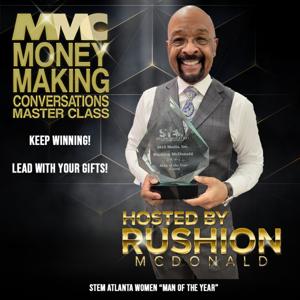


Listen and subscribe to Money Making Conversations on iHeartRadio, Apple Podcasts, Spotify, www.moneymakingconversations.com/subscribe/ or wherever you listen to podcasts. New Money Making Conversations episodes drop daily. I want to alert you, so you don’t miss out on expert analysis and insider perspectives from my guests who provide tips that can help you uplift the community, improve your financial planning, motivation, or advice on how to be a successful entrepreneur. Keep winning!
Two-time Emmy and Three-time NAACP Image Award-winning, television Executive Producer Rushion McDonald interviewed Dr. Joaquin Wallace.
🎯 Purpose of the Interview
To explore Dr. Wallace’s groundbreaking work in financial literacy, particularly his concept of the “financial genetic code”, and to promote his book Generational Wealth Begins with Generational Knowledge. The interview aims to empower marginalized communities with tools for financial healing, literacy, and long-term wealth building.
🗝️ Key Takeaways 1. Background & Recognition
2. Seven-Stage Generational Wealth Model
Outlined in his book, the model includes:
“Without financial well-being, there is no generational wealth.”
3. Financial Genetic Code
4. Credit & Financial Literacy
5. Barriers to Financial Growth
6. Role of Financial Professionals
Dr. Wallace identifies five key roles:
He emphasizes matching individuals with the right professional based on their needs and emotional readiness.
7. Book Insights
💬 Notable Quotes
📌 Final Thoughts
Dr. Joaquin Wallace offers a transformative framework for understanding and improving financial behavior, especially in underserved communities. His concept of the financial genetic code bridges psychology, education, and economics, making financial wellness more accessible and actionable.
#SHMS #STRAW #BEST
Money Making Conversations Master Class with Rushion McDonald is America's premier entrepreneurship, business leadership, financial literacy, and wealth-building podcast featuring successful entrepreneurs, executives, founders, celebrities, and industry experts sharing actionable insights for professional and financial success.
Business Podcast
Entrepreneurship
Small Business
Business Growth
Financial Literacy
Wealth Building
Black Entrepreneurs
Minority Business
Leadership
Executive Leadership
Business Funding
Marketing Strategies
Personal Development
Startup Advice
Sales Training
CEO Interviews
Founder Stories
Professional Development
Economic Empowerment
Business Success
Networking
Brand Building
Innovation
How to start a business
Small business funding
Entrepreneur success stories
Business leadership podcast
Wealth building strategies
Black entrepreneur podcast
Minority business development
Marketing for small businesses
Business growth strategies
Startup funding opportunities
Executive leadership training
Financial literacy education
Success mindset podcast
See omnystudio.com/listener for privacy information.
Listen and subscribe to Money Making Conversations on iHeartRadio, Apple Podcasts, Spotify, www.moneymakingconversations.com/subscribe/ or wherever you listen to podcasts. New Money Making Conversations episodes drop daily. I want to alert you, so you don’t miss out on expert analysis and insider perspectives from my guests who provide tips that can help you uplift the community, improve your financial planning, motivation, or advice on how to be a successful entrepreneur. Keep winning!
Two-time Emmy and Three-time NAACP Image Award-winning, television Executive Producer Rushion McDonald interviewed LaVaisha Davis.
Founder of Ell Wess Advisors (boutique family office and wealth management firm)
The interview focuses on helping first-generation wealth builders and entrepreneurs understand that wealth creation is about more than investments. Davis explains how families can organize, protect, grow, and transfer wealth across generations by treating their family finances as a structured enterprise rather than simply accumulating money.
A central theme is that many successful individuals earn substantial incomes but lack a blueprint for preserving and transferring wealth. Davis advocates for intentional planning, legal structures, family involvement, and asset protection to create lasting legacies.
Key Takeaways 1. Wealth Requires a Blueprint
Davis explains that creating a legacy does not happen automatically. Families need a deliberate plan, legal structures, and defined roles if they want wealth to survive beyond one generation.
Takeaway: Making money and building wealth are not the same. Wealth requires systems and succession planning.
2. Family Should Be Treated as an Asset
One of Davis's strongest messages is that family members can play meaningful roles in wealth-building efforts.
She argues that when people think about legacy, they often overlook the importance of human relationships and family participation. Wealth-transfer strategies frequently require successors, trustees, managers, and beneficiaries. Many of those roles can be filled by family members.
Takeaway: Family can be a strategic asset when properly organized and aligned.
3. Not Every Family Member Contributes Equally
Davis acknowledges that some family members may behave more like liabilities than assets.
Using a balance-sheet analogy, she explains that every family includes both contributors and individuals who may create financial burdens. The key is identifying those dynamics without allowing them to derail long-term wealth planning.
Takeaway: Successful family wealth planning requires honest assessment of family dynamics.
4. Wealth Management Is More Than Investments
Davis differentiates her firm's approach from traditional investment-focused advisory services.
Her firm begins with:
Investments are addressed after these foundational elements are in place.
Takeaway: Investments should support a broader wealth strategy, not drive it.
5. "Your Family Is a Business"
One of Davis's most memorable concepts is that families should think of themselves as enterprises.
She advises clients to separate their “wealth business” from their personal household and to create structures that can survive beyond their lifetime.
Takeaway: Families should operate with the same intentionality that successful businesses use.
6. First-Generation Wealth Creates Unique Challenges
Davis specializes in serving people who are the first high earners or successful entrepreneurs within their families.
She notes that these individuals often face challenges that previous generations never had to navigate, including:
Takeaway: New wealth requires new skills and specialized guidance.
7. There Are Four Forms of Capital
Davis identifies four sources of capital:
She argues that most families focus only on financial capital while neglecting the others. [
Takeaway: Wealth is broader than money.
8. Asset Protection Is Essential
Davis warns that unprotected assets can disappear quickly due to lawsuits, business failures, creditor claims, or debt obligations.
She emphasizes the importance of proper ownership structures, legal entities, and asset protection strategies.
Takeaway: Wealth must be protected as carefully as it is created.
9. Different Advisors Serve Different Stages of Wealth
When McDonald asks how people should evaluate their current financial advisor, Davis provides a thoughtful perspective:
An advisor who helped someone build their first million dollars may not be the right advisor to help them grow to ten million dollars. Increased wealth often brings more complexity and a need for broader expertise.
Takeaway: Financial advisory needs evolve as wealth grows.
Notable Quotes On Family and Legacy
"Your family is your God-given team, not your liability." [
On Wealth Planning
"When you say that you want to build something that's long lasting or you want to create a legacy for children, there's a blueprint that needs to be followed."
On Family Dynamics
"Your family even has a balance sheet when it comes to assets and liabilities."
On Financial Complexity
"My particular mission is the first-generation families who want to make an exponential difference in their families."
On Her Approach
"We don't begin with investments. We begin by stabilizing and creating a way that you really want to operate your wealth business." [
On Family Wealth
"Your family and your finances are definitely a business." [
On Wealth Building
"Your family is in the business of growing the value of your last name. Period." [
On Capital
"The four sources of capital are human capital, intellectual capital, social capital, and financial capital."
On Asset Protection
"The wealth you build can be taken if it's not protected."
On Advisor Selection
"The advisor that may have gotten you to your first million... may not be the advisor that can get you to ten million."
Overall Message
Lavashia Davis's core message is that wealth is not simply about earning or investing money—it is about building systems, structures, and family alignment that allow wealth to endure across generations. By treating the family as an asset, activating multiple forms of capital, protecting assets legally, and planning intentionally, families can transform income into legacy.
#SHMS #BEST #STRAW
See omnystudio.com/listener for privacy information.
Listen and subscribe to Money Making Conversations on iHeartRadio, Apple Podcasts, Spotify, www.moneymakingconversations.com/subscribe/ or wherever you listen to podcasts. New Money Making Conversations episodes drop daily. I want to alert you, so you don’t miss out on expert analysis and insider perspectives from my guests who provide tips that can help you uplift the community, improve your financial planning, motivation, or advice on how to be a successful entrepreneur. Keep winning!
Two-time Emmy and Three-time NAACP Image Award-winning, television Executive Producer Rushion McDonald interviewed Damon Haley
Co‑founder of Glow and Flow Beauty, discussing his transition from entertainment and sports marketing into the beauty-supply industry, his mission to elevate service for Black and Brown communities, and the franchising model he is rolling out nationwide. Hosted by Rushion McDonald on Money Making Conversations Masterclass, the conversation highlights Haley’s business philosophy, community-driven approach, and long-term vision to create ownership opportunities through franchising.
🎯 Purpose of the Interview
The interview aims to:
1. Highlight Damon Haley’s entrepreneurial journey
How he moved from high-level event production and marketing (Nike, Pepsi, Coke) into beauty retail.
2. Explain why the beauty-supply industry needs Black ownership
Haley outlines the disconnect between Black consumer spending and the lack of Black-owned beauty-supply stores.
3. Promote Glow and Flow Beauty’s mission
A service-first retail model designed to uplift, educate, and serve Black and Brown consumers with dignity.
4. Introduce Glow and Flow’s franchising opportunity
Haley frames franchising as a path for individuals to enter business ownership with support and a proven model.
5. Inspire listeners to embrace change and pursue entrepreneurship
He shares personal experiences overcoming naysayers and trusting his instincts.
📌 Key Takeaways from the Interview 1. The Beauty Industry Is a Huge, Under-Owned Space for Black Entrepreneurs
2. Glow and Flow Beauty Focuses on Service, Experience, and Community
3. Franchising Eliminates the “Start From Zero” Problem
4. Hair Is the Cornerstone of the Business
5. Inventory & Capital Are Major Barriers to Entry
6. Data + Marketing Experience = Competitive Advantage
7. His Long-Term Vision: 40 Stores Nationwide
8. E-commerce and Community Outreach Expand Their Reach
💬 Notable Quotes (From the Transcript) On the power of beauty in the community
“When we look good, we feel good. When we feel good, we be good, we do good.”
On why Black beauty ownership matters
“We’re buyers… we’re consumers… we just don’t own.”
On moving into the beauty industry
“We’ve had the short end of the stick — not only from recycling our Black dollars, but the concept of service.”
On franchising
“You don’t start from zero with a franchise… you have a corporation behind you.”
On entrepreneurship and criticism
“There’s jealous, envy, and naysayers… but I’ve never been fearful of change.”
On customer service
“I try to give you other stuff… I give you a smile… if you cough, I’m gonna give you some water.”
On the importance of hair
“Hair is the cornerstone of our beauty industry.”
On long-term ambitions
“I would love to have maybe 40 Glow and Flows nationwide.”
#SHMS #BEST #STRAW
Money Making Conversations Master Class with Rushion McDonald is America's premier entrepreneurship, business leadership, financial literacy, and wealth-building podcast featuring successful entrepreneurs, executives, founders, celebrities, and industry experts sharing actionable insights for professional and financial success.
Business Podcast
Entrepreneurship
Small Business
Business Growth
Financial Literacy
Wealth Building
Black Entrepreneurs
Minority Business
Leadership
Executive Leadership
Business Funding
Marketing Strategies
Personal Development
Startup Advice
Sales Training
CEO Interviews
Founder Stories
Professional Development
Economic Empowerment
Business Success
Networking
Brand Building
Innovation
How to start a business
Small business funding
Entrepreneur success stories
Business leadership podcast
Wealth building strategies
Black entrepreneur podcast
Minority business development
Marketing for small businesses
Business growth strategies
Startup funding opportunities
Executive leadership training
Financial literacy education
Success mindset podcast
See omnystudio.com/listener for privacy information.
Listen and subscribe to Money Making Conversations on iHeartRadio, Apple Podcasts, Spotify, www.moneymakingconversations.com/subscribe/ or wherever you listen to podcasts. New Money Making Conversations episodes drop daily. I want to alert you, so you don’t miss out on expert analysis and insider perspectives from my guests who provide tips that can help you uplift the community, improve your financial planning, motivation, or advice on how to be a successful entrepreneur. Keep winning!
Two-time Emmy and Three-time NAACP Image Award-winning, television Executive Producer Rushion McDonald interviewed Ashley M. Fox.
Summary of the Interview
In this episode of Money Making Conversations Masterclass, Rushion McDonald interviews Ashley M. Fox—former Wall Street analyst, Howard University alum, financial educator, and founder/CEO of Emplify, a fintech platform focused on making wealth‑building accessible to everyday people.
Ashley shares her journey from working with ultra‑high‑net‑worth clients on Wall Street to becoming an entrepreneur determined to bring financial education and empowerment to communities traditionally excluded from wealth conversations. She discusses the creation of Amplify, her financial fall and recovery, her work in schools and prison systems, and how digital content has allowed her to scale her mission globally.
The discussion emphasizes mindset, self‑belief, access, and a practical path to wealth, even starting with as little as $20.
Purpose of the Interview
The interview aims to:
1. Inspire financial empowerment
Ashley explains how anyone—regardless of background or starting point—can begin building wealth and shift generational outcomes.
2. Demystify investing and wealth-building
She breaks down how simple investing can be, the power of small consistent contributions, and how wealth isn’t limited to entrepreneurs or high earners.
3. Highlight her fintech platform Emplify
She shares how Amplify democratizes financial education through online tools, community, and accessible investing classes.
4. Encourage a mindset shift
Ashley stresses the importance of eliminating fear, building confidence, and using logic instead of emotion when making financial decisions.
Key Takeaways 1. Wealth Begins with Belief and Mindset
Ashley learned on Wall Street that the biggest difference between wealthy and non-wealthy people is not education—it's self-belief. Many people don’t believe wealth is possible for them because they've never seen it.
2. You Don’t Need a Lot of Money to Start Investing
She urges people to start with $20, even buying fractional shares. It’s consistency—not starting amount—that builds wealth.
3. You Can Invest in Others’ Ideas—Not Just Your Own
Building wealth doesn’t require launching a business. Buying stock is one of the easiest ways to participate in wealth creation.
4. Ashley’s Own Journey Included Failure
After leaving Wall Street, she was evicted, slept on her parents’ couch for two years, and maxed out credit cards. Her purpose kept her going.
5. Financial Education Should Start Early
She developed financial education programs for schools, prison systems, and everyday families because adults often learn too late.
6. Emplify Scales Wealth Education
Her platform offers 300+ hours of videos and tools, helping members open 3,000+ investment accounts and invest $7.4M collectively.
7. Social Media Is Her Biggest Access Point
Ashley reaches millions by being authentic, relatable, and consistent—meeting people where they are.
8. You Must Pay Yourself First
Most people pay bills, companies, and creditors before investing in themselves. She emphasizes reversing that pattern.
9. Logic Over Emotion
Wealth requires logical decision‑making, especially in the market. Emotional reactions undermine long-term financial growth.
Notable Quotes (Taken From the Transcript) On Wealth Mindset
On Starting Small
On Investing
On Self-Reliance
On Purpose and Identity
#SHMS #STRAW #BEST
See omnystudio.com/listener for privacy information.
Listen and subscribe to Money Making Conversations on iHeartRadio, Apple Podcasts, Spotify, www.moneymakingconversations.com/subscribe/ or wherever you listen to podcasts. New Money Making Conversations episodes drop daily. I want to alert you, so you don’t miss out on expert analysis and insider perspectives from my guests who provide tips that can help you uplift the community, improve your financial planning, motivation, or advice on how to be a successful entrepreneur. Keep winning!
Two-time Emmy and Three-time NAACP Image Award-winning, television Executive Producer Rushion McDonald interviewed Paul Dashevsky.
A serial entrepreneur, real estate investor, and founder of Maxable. The discussion centers on the growing popularity of Accessory Dwelling Units (ADUs), commonly known as tiny homes, granny flats, or backyard homes.
What begins as a conversation about Amazon selling tiny homes for under $50,000 develops into a broader discussion about housing affordability, rental income opportunities, caring for aging parents, property value enhancement, and the importance of properly planning and permitting ADU projects.
Purpose of the Interview
The interview aims to:
Key Takeaways 1. ADUs Are Not Necessarily Tiny
Dashevsky explains that ADUs can range from very small structures around 150 square feet to homes as large as 1,200 square feet.
Many modern ADUs are between 600 and 800 square feet, making them practical living spaces for singles, couples, retirees, and small families.
2. Housing Costs Are Driving Demand
One of the main reasons ADUs are becoming popular is the rising cost of traditional housing.
Many cities and states have updated regulations to allow homeowners to build secondary housing units on their property as a way to increase affordable housing options.
3. ADUs Offer Multiple Uses
Dashevsky emphasizes the flexibility of ADUs, which can serve as:
4. ADUs Can Produce Rental Income
Many homeowners build ADUs specifically to generate revenue.
By renting out a backyard unit, owners can:
5. Buying an Amazon Tiny Home Is Not as Simple as It Seems
One of the biggest misconceptions discussed in the interview is that a tiny home purchased online is move-in ready.
Dashevsky points out that homeowners still need:
The advertised purchase price often excludes many of these costs.
6. Contractor Selection Is Critical
After renovating and building more than 350 homes, Dashevsky warns listeners that hiring the wrong contractor can be financially devastating.
He stresses the importance of:
7. Permits Matter
Dashevsky strongly advises homeowners not to build ADUs without proper approvals.
Legal construction provides:
8. ADUs Can Increase Property Value
According to Dashevsky, adding a second rentable dwelling generally increases a property's value because it creates an additional income-producing asset.
For many homeowners, an ADU becomes both a lifestyle improvement and an investment vehicle.
9. ADUs May Help Address Housing Challenges
The interview concludes with a discussion about homelessness and affordable housing.
Dashevsky highlights examples where local governments encourage ADU construction as a way to increase housing supply and create more affordable living options.
Memorable Quotes On Housing Affordability
"Housing's too expensive. We want options for all sorts of folks."
On the Appeal of ADUs
"The use cases are really significant and interesting."
On Rental Income
"I want to build a home in my backyard because I want some rental income."
On Contractor Selection
"You better do your homework."
On Avoiding Contractor Scams
"Don't trust that guy that just comes in your door and sweet talks you."
On Amazon Tiny Homes
"What you're buying is just a bunch of parts."
On Permitting
"Go down to your city's building department and ask them what they need from you so you can get it permitted correctly."
On Real Estate Wealth
"If you invest in real estate, if you have one rental unit, two rental units, that's a great way to build wealth."
On Property Value
"I think you add a tiny home or accessory dwelling unit to your property, you're only enhancing the value of that property."
Executive Summary
Paul Dashevsky's core message is that ADUs are far more than a housing trend. They are a versatile real estate tool that can generate income, provide housing for family members, increase property value, and expand affordable housing options. However, homeowners should approach ADU projects thoughtfully by researching regulations, working with qualified contractors, obtaining proper permits, and understanding the true costs involved before making a purchase.
#BEST
#STRAW
#SHMS
Money Making Conversations Master Class with Rushion McDonald is America's premier entrepreneurship, business leadership, financial literacy, and wealth-building podcast featuring successful entrepreneurs, executives, founders, celebrities, and industry experts sharing actionable insights for professional and financial success.
Business Podcast
Entrepreneurship
Small Business
Business Growth
Financial Literacy
Wealth Building
Black Entrepreneurs
Minority Business
Leadership
Executive Leadership
Business Funding
Marketing Strategies
Personal Development
Startup Advice
Sales Training
CEO Interviews
Founder Stories
Professional Development
Economic Empowerment
Business Success
Networking
Brand Building
Innovation
How to start a business
Small business funding
Entrepreneur success stories
Business leadership podcast
Wealth building strategies
Black entrepreneur podcast
Minority business development
Marketing for small businesses
Business growth strategies
Startup funding opportunities
Executive leadership training
Financial literacy education
Success mindset podcast
See omnystudio.com/listener for privacy information.
Listen and subscribe to Money Making Conversations on iHeartRadio, Apple Podcasts, Spotify, www.moneymakingconversations.com/subscribe/ or wherever you listen to podcasts. New Money Making Conversations episodes drop daily. I want to alert you, so you don’t miss out on expert analysis and insider perspectives from my guests who provide tips that can help you uplift the community, improve your financial planning, motivation, or advice on how to be a successful entrepreneur. Keep winning!
Two-time Emmy and Three-time NAACP Image Award-winning, television Executive Producer Rushion McDonald interviewed Michael Woodward.
Interview Overview
Guest: Michael Woodward
Host: Rushion McDonald
Show: Money Making Conversations Masterclass
Focus: Entrepreneurship, real estate, education, overcoming poverty, and building generational wealth
Company Featured: Woodward Property Group
Michael Woodward shares his journey from growing up in low‑income neighborhoods in Miami to becoming a successful real estate investor, contractor, and property management entrepreneur based in Atlanta. The conversation blends personal history, mindset lessons, and practical business guidance, especially for listeners from underserved communities.
Purpose of the Interview
The purpose of the interview is to:
Rushion McDonald consistently frames the discussion around helping the audience “stop reading other people’s success stories and start planning your own."
Key Themes & Takeaways 1. Poverty Is Relative — and Often Invisible
Woodward explains that many people grow up in poverty without realizing it because everyone around them shares the same conditions. He distinguishes between government definitions of poverty and lived experience.
Takeaway: Awareness is the first step to change; normal does not always mean acceptable.
2. Early Business Lessons Came from the Community
Woodward credits his grandmother—who ran an informal candy business in the housing projects—as his first exposure to entrepreneurship. Watching her manage inventory, customers, and cash taught him foundational business principles.
Takeaway: Entrepreneurship often begins long before formal education—especially in underserved communities.
3. Education as a Strategic Tool, Not Just a Degree
Initially planning to become a lawyer, Woodward changed direction after realizing law school would not provide the financial or social return he hoped for unless he reached elite status. A mentor guided him toward education as a pathway for impact.
He strongly recommends the Occupational Outlook Handbook as a practical guide for choosing careers based on income, longevity, and demand.
Takeaway: Choose education intentionally—based on outcomes, not prestige.
4. Service Before Profit: Two Decades in Education
Woodward spent over 20 years as a teacher and assistant principal, mentoring students, organizing college tours, and running summer STEM programs—often during his breaks.
Takeaway: Long‑term service builds perspective, discipline, and purpose that later pays dividends in business.
5. Turning a Side Hustle into Financial Freedom
While working in education, Woodward renovated homes at night and on weekends. Over time, rental income exceeded his school salary, allowing him to retire from education and focus on real estate full‑time.
Takeaway: Side hustles can become exit strategies when managed consistently and patiently.
6. Opportunity Comes from Relationships
A chance relationship with a Lowe’s executive changed Woodward’s business trajectory. When asked if he could do high‑end kitchens, he said yes—then partnered with the right experts to deliver. This led to contracts in seven Lowe’s stores across metro Atlanta.
Takeaway: You don’t have to know everything—just know who to call.
7. High‑End Thinking Changes Income Ceilings
Woodward explains the difference between standard and high‑end construction, describing six‑figure kitchens and appliances that cost more than many homes.
Takeaway: Understanding premium markets unlocks entirely different financial opportunities.
8. Two Core Business Rules: Persistence and Credit
When asked what advice he gives most often, Woodward gives two principles:
He shares how poor credit once forced him to reinvest profits just to buy tools, slowing growth. Managing credit later removed those barriers.
Takeaway: Credit is leverage. Without it, growth is harder and more expensive.
Notable Quotes
On poverty:
“A lot of people living in poverty don’t know that they’re impoverished because everybody around them looks just like them.”
On education choices:
“I wanted to make a difference… and education allowed me to do that.”
On opportunity and courage:
“You don’t have to know everything. Just get the people in your corner that do.”
On advice to entrepreneurs:
“Never give up. And protect your credit. Credit is everything.”
On consistency:
“My phone number has been the same for 23 years. I ain’t going nowhere.
Overall Impact
The interview positions Michael Woodward as a practical role model—someone who combines humility, preparation, faith, and execution. Rather than promoting quick wins, the conversation emphasizes long‑term discipline, community uplift, and strategic decision‑making.
Core message: Sustainable success is built step‑by‑step—through education, relationships, credit discipline, and the courage to say yes before you feel ready.
#SHMS #BEST #STRAW
Money Making Conversations Master Class with Rushion McDonald is America's premier entrepreneurship, business leadership, financial literacy, and wealth-building podcast featuring successful entrepreneurs, executives, founders, celebrities, and industry experts sharing actionable insights for professional and financial success.
Business Podcast
Entrepreneurship
Small Business
Business Growth
Financial Literacy
Wealth Building
Black Entrepreneurs
Minority Business
Leadership
Executive Leadership
Business Funding
Marketing Strategies
Personal Development
Startup Advice
Sales Training
CEO Interviews
Founder Stories
Professional Development
Economic Empowerment
Business Success
Networking
Brand Building
Innovation
How to start a business
Small business funding
Entrepreneur success stories
Business leadership podcast
Wealth building strategies
Black entrepreneur podcast
Minority business development
Marketing for small businesses
Business growth strategies
Startup funding opportunities
See omnystudio.com/listener for privacy information.
Listen and subscribe to Money Making Conversations on iHeartRadio, Apple Podcasts, Spotify, www.moneymakingconversations.com/subscribe/ or wherever you listen to podcasts. New Money Making Conversations episodes drop daily. I want to alert you, so you don’t miss out on expert analysis and insider perspectives from my guests who provide tips that can help you uplift the community, improve your financial planning, motivation, or advice on how to be a successful entrepreneur. Keep winning!
Two-time Emmy and Three-time NAACP Image Award-winning, television Executive Producer Rushion McDonald interviewed Dominique Leonard.
Founder of Jus' Free, a parole package provider. Here are some key highlights and themes from the conversation:
🔑 Key Themes & Takeaways 1. From Incarceration to Inspiration
2. Birth of “Jus' Free”
3. Faith, Family, and Redemption
4. Entrepreneurial Journey
5. Impact and Legacy
#SHMS #STRAW #BEST
Money Making Conversations Master Class with Rushion McDonald is America's premier entrepreneurship, business leadership, financial literacy, and wealth-building podcast featuring successful entrepreneurs, executives, founders, celebrities, and industry experts sharing actionable insights for professional and financial success.
Business Podcast
Entrepreneurship
Small Business
Business Growth
Financial Literacy
Wealth Building
Black Entrepreneurs
Minority Business
Leadership
Executive Leadership
Business Funding
Marketing Strategies
Personal Development
Startup Advice
Sales Training
CEO Interviews
Founder Stories
Professional Development
Economic Empowerment
Business Success
Networking
Brand Building
Innovation
How to start a business
Small business funding
Entrepreneur success stories
Business leadership podcast
Wealth building strategies
Black entrepreneur podcast
Minority business development
Marketing for small businesses
Business growth strategies
Startup funding opportunities
Executive leadership training
Financial literacy education
Success mindset podcast
See omnystudio.com/listener for privacy information.
Listen and subscribe to Money Making Conversations on iHeartRadio, Apple Podcasts, Spotify, www.moneymakingconversations.com/subscribe/ or wherever you listen to podcasts. New Money Making Conversations episodes drop daily. I want to alert you, so you don’t miss out on expert analysis and insider perspectives from my guests who provide tips that can help you uplift the community, improve your financial planning, motivation, or advice on how to be a successful entrepreneur. Keep winning!
Two-time Emmy and Three-time NAACP Image Award-winning, television Executive Producer Rushion McDonald interviewed Kurt Farquhar.
Television & Film Composer, Founder of Fall Crop Productions and True Music Pro
Notable Credits: The King of Queens, Girlfriends, The Parkers, Being Mary Jane, The Proud Family, The Neighborhood, Black Lightning
Awards: 10 BMI Awards
Tenure: 38+ years in television
Purpose of the Interview
The purpose of this interview is to educate and inspire creatives, entrepreneurs, and professionals about longevity, adaptability, and wealth-building behind the scenes. Kurt Farquhar’s journey highlights how sustainable success comes from mastery of craft, relationship-building, and treating creativity as a business—not chasing visibility or fame.
Rushion McDonald uses Kurt’s career as a blueprint for:
Core Themes Discussed
Key Takeaways 1. Staying In Is Harder Than Getting In
While many focus on breaking into the industry, Kurt emphasizes that lasting success requires constant reinvention.
“The continuing it for the 30-plus years has been way harder than the getting in in the first.”
Insight: Longevity requires discipline, humility, and evolution.
2. Behind-the-Scenes Roles Can Be More Sustainable
Kurt chose composing over performing, allowing him to age into his career rather than age out of it.
“In television and film… all I’ve got to say is John Williams is in his 90s and still composing.”
Insight: Choose lanes that allow long-term relevance and recurring income.
3. Residual Income Is Real Wealth
Rushion and Kurt discuss “mailbox money”—recurring payments from past work.
“If you just had the mailbox money for King of Queens, you’d be fine.”
Insight: True financial freedom comes from owning work that keeps paying.
4. Adaptability Is Non‑Negotiable
Kurt has survived massive industry shifts—from analog tape to digital production—by embracing change.
“Sustain that good idea, change it, polish it up, and mold it for the changing times.”
Insight: Talent without adaptability becomes obsolete.
5. Originality Comes From Listening, Not Forcing a Style
Kurt avoids creative stagnation by serving the story, not his ego.
“I don’t come in every day trying to force the singular style I’ve done for 38 years.”
Insight: Longevity depends on collaboration and humility.
6. Relationships Are Career Currency
Kurt credits long-term success to consistently showing up for people—before they’re powerful.
“If you only call someone once you read they’ve got something coming up, it’s already too late.”
Insight: Relationships built without agenda produce lasting opportunity.
7. Saying “Yes” Creates Opportunity
Kurt embraces what he calls the power of yes.
“I figure I can say yes more than you and end up making more and doing better.”
Insight: Opportunity favors those who remain open, prepared, and professional.
8. Ownership Multiplies Creativity Into Business
Kurt built True Music Pro, a licensing library used across major networks and streaming platforms.
“I realized companies were licensing more of my music than I was… so I built my own library.”
Insight: Ownership turns talent into scalable income.
Notable Quotes
Overall Impact of the Interview
This interview serves as a masterclass on creative longevity and wealth-building without celebrity dependency. Kurt Farquhar’s story reframes success as:
It is especially powerful for:
#SHMS #STRAW #BEST
Money Making Conversations Master Class with Rushion McDonald is America's premier entrepreneurship, business leadership, financial literacy, and wealth-building podcast featuring successful entrepreneurs, executives, founders, celebrities, and industry experts sharing actionable insights for professional and financial success.
Business Podcast
Entrepreneurship
Small Business
Business Growth
Financial Literacy
Wealth Building
Black Entrepreneurs
Minority Business
Leadership
Executive Leadership
Business Funding
Marketing Strategies
Personal Development
Startup Advice
Sales Training
CEO Interviews
Founder Stories
Professional Development
Economic Empowerment
Business Success
Networking
Brand Building
Innovation
How to start a business
Small business funding
Entrepreneur success stories
Business leadership podcast
Wealth building strategies
Black entrepreneur podcast
Minority business development
Marketing for small businesses
Business growth strategies
Startup funding opportunities
Executive leadership training
Financial literacy education
Success mindset podcast
See omnystudio.com/listener for privacy information.
Listen and subscribe to Money Making Conversations on iHeartRadio, Apple Podcasts, Spotify, www.moneymakingconversations.com/subscribe/ or wherever you listen to podcasts. New Money Making Conversations episodes drop daily. I want to alert you, so you don’t miss out on expert analysis and insider perspectives from my guests who provide tips that can help you uplift the community, improve your financial planning, motivation, or advice on how to be a successful entrepreneur. Keep winning!
Two-time Emmy and Three-time NAACP Image Award-winning, television Executive Producer Rushion McDonald interviewed Michael Uadiale.
🔷 Interview Summary
Michael Uadiale, a seasoned CPA and master tax advisor with 25+ years of experience, explains how entrepreneurs can achieve financial freedom in 5–7 years through strategic tax planning and wealth systems.
The discussion centers on:
The interview reframes taxes from a burden into a strategic advantage.
🎯 Purpose of the Interview 1. Demystify taxes
2. Shift mindset from avoidance → strategy
3. Teach wealth-building through tax efficiency
4. Promote proactive financial planning
5. Provide actionable strategies
🔑 Key Takeaways 1. Wealth cannot be delegated
2. The tax code is a system of incentives
3. The wealthy don’t break rules—they learn them
4. Most people overpay taxes due to ignorance
5. Tax preparers vs. tax advisors
6. Tax planning must be year-round
7. Taxes directly impact your time and income
8. Simple strategies can create big gains
Example:
9. Compounding + tax efficiency = wealth
10. Structure determines outcomes
11. The DECIDA Framework (his system)
A structured approach to wealth building:
12. Financial freedom is accelerated through taxes
💬 Notable Quotes On personal responsibility
“Wealth cannot be delegated.” [MICHAEL UA...ALE iheart | Txt]
On the tax code
“The tax code was not written for the little guys… but if you understand it, you can get the same benefits.” [MICHAEL UA...ALE iheart | Txt]
On mindset
“You’ve got to embrace tax… it’s an education.” [MICHAEL UA...ALE iheart | Txt]
On opportunity
“The tax code is one of your fastest ways of getting to financial freedom.” [MICHAEL UA...ALE iheart | Txt]
On behavior incentives
“The tax law is a set of incentives… to make us behave the way the government wants.” [MICHAEL UA...ALE iheart | Txt]
On overpaying taxes
“Close to 80% of small business owners overpay in taxes.” [MICHAEL UA...ALE iheart | Txt]
On poor habits
“People only think about taxes when April 15th is around the corner.” [MICHAEL UA...ALE iheart | Txt]
On time lost to taxes
“Three hours out of every eight hours you work goes to the tax man.” [MICHAEL UA...ALE iheart | Txt]
On advisors vs preparers
“Most people work with tax preparers, not tax advisors.” [MICHAEL UA...ALE iheart | Txt]
On simple strategies
“Hiring your kids… everybody should be doing that if you have a business.” [MICHAEL UA...ALE iheart | Txt]
On wealth formula
“Wealth really is compounding interest… less taxes.” [
🧭 Bottom Line
Michael Uadiale’s message reframes taxes as a power tool for wealth creation:
👉 His core philosophy:
Understanding and leveraging the tax code is one of the fastest, most overlooked paths to financial freedom.
#SHMS #BEST #STRAW #AMI
See omnystudio.com/listener for privacy information.
Listen and subscribe to Money Making Conversations on iHeartRadio, Apple Podcasts, Spotify, www.moneymakingconversations.com/subscribe/ or wherever you listen to podcasts. New Money Making Conversations episodes drop daily. I want to alert you, so you don’t miss out on expert analysis and insider perspectives from my guests who provide tips that can help you uplift the community, improve your financial planning, motivation, or advice on how to be a successful entrepreneur. Keep winning!
Two-time Emmy and Three-time NAACP Image Award-winning, television Executive Producer Rushion McDonald interviewed Marsha Evans.
A licensed mental health therapist, founder of Willow Tree Counseling & Educational Center, and creator of the FELT Experience and Marsha Listens wellness platform. The conversation centers on emotional health, nervous system education, sound therapy, community healing, and her evolution as a therapist and entrepreneur. Marsha shares her personal journey from being a competitive athlete to becoming a calming force for high‑functioning individuals dealing with burnout, stress, and emotional disconnection.
She explains the origins of her signature FELT Experience, a wellness model designed to help people reconnect with themselves through somatic movement, sound healing, intentional rest, and community. She also highlights the challenges and breakthroughs in mental health—particularly within the Black community—and reflects on 16+ years of therapeutic practice.
Purpose of the Interview
The interview aims to:
1. Introduce Marsha Evans’ holistic mental health approach
Rushion invites Marsha to explain how she blends psychology, somatics, and sound‑based healing to help people process stress differently.
2. Explain the FELT Experience and its healing framework
Marsha details her signature F.E.L.T. model—Free, Expand, Listen, Transform—and why embodied emotional experience is key to healing.
3. Share her personal journey
She discusses how sports, music, and modalities like breathwork and yoga helped her turn stress into purpose.
4. Encourage new perspectives on mental health in the Black community
She and Rushion address the stigma, evolution, and growing acceptance of mental health support.
5. Showcase community‑centered healing
Marsha emphasizes connection, shared experiences, and intentional spaces that allow vulnerability and transformation.
Key Takeaways 1. Healing Requires Intentionality
Marsha explains that activities like massage or yoga can be therapeutic—but only when approached with intentionality, presence, and consent to release emotional tension.
2. The Body Holds Stories (“The body keeps the score”)
She emphasizes that the body stores emotional experiences, and modalities like breathwork, sound healing, and somatic movement help release what the mind can’t articulate.
3. The FELT Framework
The FELT Experience moves participants through:
4. Safe Community Spaces Accelerate Healing
Marsha’s events often result in participants forming friendships, emotional breakthroughs, and even planning outings together—an indicator of her program’s power.
5. People Are Conditioned to Avoid Emotions
Growing up, she was taught to hide emotions in competitive sports—especially tears as a sign of weakness. Her therapeutic mission now is to help others unlearn similar conditioning.
6. Cultural Shifts Around Mental Health
Marsha highlights major strides in the Black community, especially post‑COVID, as more people (including athletes) publicly acknowledge mental health struggles.
7. Therapy Isn’t Just Talking
She incorporates nonverbal tools like:
8. Human Connection Still Matters—even in an AI World
Marsha is open to exploring AI in mental health but insists that physical presence, touch, and human empathy are irreplaceable.
Notable Quotes (from the transcript) On her calming presence
“I think laughter is good for the soul… just being able to find peace has been really big for me… It’s just a God‑given talent.”
On coping mechanisms
“As long as I had some type of music or some form of therapy… I could navigate any stressful environment.”
On cooking as therapy (reflecting Rushion’s habits)
“You’re creating new neural pathways… recalibrating your nervous system.”
On intentional healing
“Yoga and massages can be therapeutic, but you have to be intentional.”
On the purpose of the FELT Experience
“In order to release whatever your body is experiencing, you have to have a felt experience.”
On the challenge of transformation
“We are used to chaos… but we’re not used to healed environments.”
On the evolution of her practice
“I wanted to understand the whole person… and help them change the dial on their dashboard to fit their calling.”
On mental health in the Black community
“People perceive admission as a flaw… but healing is about understanding your story.”
On creating safe spaces
“By creating a space of safety and healing… people get to live the life they desired and not a life from survival.”
#SHMS #BEST #STRAW
See omnystudio.com/listener for privacy information.
From the publisher's feed
Money Making Conversations Master Class is more than a podcast. It's a front-row seat to the ideas, experiences, and breakthrough moments that inspire success. Hosted by Rushion McDonald, each episode features influential entrepreneurs, business leaders, celebrities, influencers, and nonprofit changemakers sharing the lessons, strategies, and mindset shifts that helped them turn ambition into achievement. The show empowers dreamers, doers, and leaders to think bigger, move smarter, and take action on their goals. As Rushion McDonald often says, "Stop reading other people's success stories and start planning your own."
Tune in, get inspired, and start writing your own success story, one conversation at a time.
https://www.moneymakingconversations.com
https://www.youtube.com/MoneyMakingConversations
https://www.facebook.com/MoneyMakingConversations/
https://twitter.com/moneymakingconv
https://www.instagram.com/moneymakingconversations/