
Sign up to save your podcasts
Or

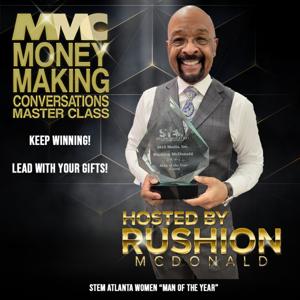


Listen and subscribe to Money Making Conversations on iHeartRadio, Apple Podcasts, Spotify, www.moneymakingconversations.com/subscribe/ or wherever you listen to podcasts. New Money Making Conversations episodes drop daily. I want to alert you, so you don’t miss out on expert analysis and insider perspectives from my guests who provide tips that can help you uplift the community, improve your financial planning, motivation, or advice on how to be a successful entrepreneur. Keep winning!
Two-time Emmy and Three-time NAACP Image Award-winning, television Executive Producer Rushion McDonald interviewed Dr. Joaquin Wallace.
🎯 Purpose of the Interview
To explore Dr. Wallace’s groundbreaking work in financial literacy, particularly his concept of the “financial genetic code”, and to promote his book Generational Wealth Begins with Generational Knowledge. The interview aims to empower marginalized communities with tools for financial healing, literacy, and long-term wealth building.
🗝️ Key Takeaways 1. Background & Recognition
2. Seven-Stage Generational Wealth Model
Outlined in his book, the model includes:
“Without financial well-being, there is no generational wealth.”
3. Financial Genetic Code
4. Credit & Financial Literacy
5. Barriers to Financial Growth
6. Role of Financial Professionals
Dr. Wallace identifies five key roles:
He emphasizes matching individuals with the right professional based on their needs and emotional readiness.
7. Book Insights
💬 Notable Quotes
📌 Final Thoughts
Dr. Joaquin Wallace offers a transformative framework for understanding and improving financial behavior, especially in underserved communities. His concept of the financial genetic code bridges psychology, education, and economics, making financial wellness more accessible and actionable.
#SHMS #STRAW #BEST
Money Making Conversations Master Class with Rushion McDonald is America's premier entrepreneurship, business leadership, financial literacy, and wealth-building podcast featuring successful entrepreneurs, executives, founders, celebrities, and industry experts sharing actionable insights for professional and financial success.
Business Podcast
Entrepreneurship
Small Business
Business Growth
Financial Literacy
Wealth Building
Black Entrepreneurs
Minority Business
Leadership
Executive Leadership
Business Funding
Marketing Strategies
Personal Development
Startup Advice
Sales Training
CEO Interviews
Founder Stories
Professional Development
Economic Empowerment
Business Success
Networking
Brand Building
Innovation
How to start a business
Small business funding
Entrepreneur success stories
Business leadership podcast
Wealth building strategies
Black entrepreneur podcast
Minority business development
Marketing for small businesses
Business growth strategies
Startup funding opportunities
Executive leadership training
Financial literacy education
Success mindset podcast
See omnystudio.com/listener for privacy information.
Listen and subscribe to Money Making Conversations on iHeartRadio, Apple Podcasts, Spotify, www.moneymakingconversations.com/subscribe/ or wherever you listen to podcasts. New Money Making Conversations episodes drop daily. I want to alert you, so you don’t miss out on expert analysis and insider perspectives from my guests who provide tips that can help you uplift the community, improve your financial planning, motivation, or advice on how to be a successful entrepreneur. Keep winning!
Two-time Emmy and Three-time NAACP Image Award-winning, television Executive Producer Rushion McDonald interviewed Ashley M. Fox.
Summary of the Interview
In this episode of Money Making Conversations Masterclass, Rushion McDonald interviews Ashley M. Fox—former Wall Street analyst, Howard University alum, financial educator, and founder/CEO of Emplify, a fintech platform focused on making wealth‑building accessible to everyday people.
Ashley shares her journey from working with ultra‑high‑net‑worth clients on Wall Street to becoming an entrepreneur determined to bring financial education and empowerment to communities traditionally excluded from wealth conversations. She discusses the creation of Amplify, her financial fall and recovery, her work in schools and prison systems, and how digital content has allowed her to scale her mission globally.
The discussion emphasizes mindset, self‑belief, access, and a practical path to wealth, even starting with as little as $20.
Purpose of the Interview
The interview aims to:
1. Inspire financial empowerment
Ashley explains how anyone—regardless of background or starting point—can begin building wealth and shift generational outcomes.
2. Demystify investing and wealth-building
She breaks down how simple investing can be, the power of small consistent contributions, and how wealth isn’t limited to entrepreneurs or high earners.
3. Highlight her fintech platform Emplify
She shares how Amplify democratizes financial education through online tools, community, and accessible investing classes.
4. Encourage a mindset shift
Ashley stresses the importance of eliminating fear, building confidence, and using logic instead of emotion when making financial decisions.
Key Takeaways 1. Wealth Begins with Belief and Mindset
Ashley learned on Wall Street that the biggest difference between wealthy and non-wealthy people is not education—it's self-belief. Many people don’t believe wealth is possible for them because they've never seen it.
2. You Don’t Need a Lot of Money to Start Investing
She urges people to start with $20, even buying fractional shares. It’s consistency—not starting amount—that builds wealth.
3. You Can Invest in Others’ Ideas—Not Just Your Own
Building wealth doesn’t require launching a business. Buying stock is one of the easiest ways to participate in wealth creation.
4. Ashley’s Own Journey Included Failure
After leaving Wall Street, she was evicted, slept on her parents’ couch for two years, and maxed out credit cards. Her purpose kept her going.
5. Financial Education Should Start Early
She developed financial education programs for schools, prison systems, and everyday families because adults often learn too late.
6. Emplify Scales Wealth Education
Her platform offers 300+ hours of videos and tools, helping members open 3,000+ investment accounts and invest $7.4M collectively.
7. Social Media Is Her Biggest Access Point
Ashley reaches millions by being authentic, relatable, and consistent—meeting people where they are.
8. You Must Pay Yourself First
Most people pay bills, companies, and creditors before investing in themselves. She emphasizes reversing that pattern.
9. Logic Over Emotion
Wealth requires logical decision‑making, especially in the market. Emotional reactions undermine long-term financial growth.
Notable Quotes (Taken From the Transcript) On Wealth Mindset
On Starting Small
On Investing
On Self-Reliance
On Purpose and Identity
#SHMS #STRAW #BEST
See omnystudio.com/listener for privacy information.
Listen and subscribe to Money Making Conversations on iHeartRadio, Apple Podcasts, Spotify, www.moneymakingconversations.com/subscribe/ or wherever you listen to podcasts. New Money Making Conversations episodes drop daily. I want to alert you, so you don’t miss out on expert analysis and insider perspectives from my guests who provide tips that can help you uplift the community, improve your financial planning, motivation, or advice on how to be a successful entrepreneur. Keep winning!
Two-time Emmy and Three-time NAACP Image Award-winning television Executive Producer Rushion McDonald interviews Jackson Dunbar.
Entrepreneur, author, and chronic pain advocate, joined Rushion McDonald to discuss his book Race Matters in Pain Medicine, his experience living with chronic pain following a serious car accident and failed back surgery, and the lessons he learned about resilience, health, and financial success. The conversation combines personal testimony, healthcare advocacy, and practical strategies for overcoming adversity.
Dunbar shared how chronic pain dramatically changed his life but ultimately pushed him to develop new approaches to physical health, financial stability, and personal growth. His story demonstrates how determination, self-education, and adaptability can help individuals thrive despite significant challenges.
Purpose of the Interview
The interview aimed to:
Key Takeaways 1. Resilience Is a Choice
Dunbar emphasizes that while people cannot always control what happens to them, they can control how they respond. Rather than focusing on what he lost, he concentrated on what he could still accomplish.
2. Create a New Normal
A central theme of the discussion is that recovery does not always mean returning to life exactly as it was before. Success often comes from adapting and building a sustainable new reality.
3. Race Matters in Healthcare
Dunbar highlights disparities in pain treatment and argues that race can influence how patients are treated, diagnosed, and prescribed medication. His book explores these inequities and their consequences.
4. Chronic Pain Affects Every Aspect of Life
Pain impacts more than physical health. It affects emotional well-being, family relationships, work performance, finances, and overall quality of life.
5. Self-Advocacy Is Essential
Patients must become informed participants in their own healthcare. Dunbar encourages people to ask questions, seek information, and actively engage in treatment decisions.
6. Financial Education Creates Opportunity
Dunbar believes financial literacy is a critical life skill. He encourages continuous learning about investing, wealth creation, and economic trends regardless of one's circumstances.
7. Health and Wealth Are Connected
His journey demonstrates that improving health and improving finances can occur simultaneously through discipline, education, and consistent effort.
8. Apply Business Thinking to Personal Challenges
Dunbar credits much of his success to using a solutions-focused, analytical approach to managing his health, finances, and personal goals.
Memorable Quotes
"If you're about to make a change in your life and you feel uncomfortable, that's the best feeling you can have because for the first time in your life, you'll make a decision that's going to be best for you."
"I made money, lost 90 pounds, and thrived in chronic pain."
"Race matters in pain medicine."
"A strong believer in self-help, Jackson Dunbar applied solutions-focused business logic to his own health."
Bottom Line
The interview is a powerful discussion about overcoming adversity through resilience, self-advocacy, financial literacy, and personal responsibility. Jackson Dunbar's message is that while chronic pain and life-changing setbacks may alter a person's path, they do not have to define their future. By creating a new normal, staying informed, and focusing on solutions, individuals can continue to grow, succeed, and make a positive impact on others.
#SHMS #BEST #STRAW
Money Making Conversations Master Class with Rushion McDonald is America's premier entrepreneurship, business leadership, financial literacy, and wealth-building podcast featuring successful entrepreneurs, executives, founders, celebrities, and industry experts sharing actionable insights for professional and financial success.
Business Podcast
Entrepreneurship
Small Business
Business Growth
Financial Literacy
Wealth Building
Black Entrepreneurs
Minority Business
Leadership
Executive Leadership
Business Funding
Marketing Strategies
Personal Development
Startup Advice
Sales Training
CEO Interviews
Founder Stories
Professional Development
Economic Empowerment
Business Success
Networking
Brand Building
Innovation
How to start a business
Small business funding
Entrepreneur success stories
Business leadership podcast
Wealth building strategies
Black entrepreneur podcast
Minority business development
Marketing for small businesses
Business growth strategies
Startup funding opportunities
Executive leadership training
Financial literacy education
Success mindset podcast
See omnystudio.com/listener for privacy information.
Listen and subscribe to Money Making Conversations on iHeartRadio, Apple Podcasts, Spotify, www.moneymakingconversations.com/subscribe/ or wherever you listen to podcasts. New Money Making Conversations episodes drop daily. I want to alert you, so you don’t miss out on expert analysis and insider perspectives from my guests who provide tips that can help you uplift the community, improve your financial planning, motivation, or advice on how to be a successful entrepreneur. Keep winning!
Two-time Emmy and Three-time NAACP Image Award-winning, television Executive Producer Rushion McDonald interviewed Damon Haley
Co‑founder of Glow and Flow Beauty, discussing his transition from entertainment and sports marketing into the beauty-supply industry, his mission to elevate service for Black and Brown communities, and the franchising model he is rolling out nationwide. Hosted by Rushion McDonald on Money Making Conversations Masterclass, the conversation highlights Haley’s business philosophy, community-driven approach, and long-term vision to create ownership opportunities through franchising.
🎯 Purpose of the Interview
The interview aims to:
1. Highlight Damon Haley’s entrepreneurial journey
How he moved from high-level event production and marketing (Nike, Pepsi, Coke) into beauty retail.
2. Explain why the beauty-supply industry needs Black ownership
Haley outlines the disconnect between Black consumer spending and the lack of Black-owned beauty-supply stores.
3. Promote Glow and Flow Beauty’s mission
A service-first retail model designed to uplift, educate, and serve Black and Brown consumers with dignity.
4. Introduce Glow and Flow’s franchising opportunity
Haley frames franchising as a path for individuals to enter business ownership with support and a proven model.
5. Inspire listeners to embrace change and pursue entrepreneurship
He shares personal experiences overcoming naysayers and trusting his instincts.
📌 Key Takeaways from the Interview 1. The Beauty Industry Is a Huge, Under-Owned Space for Black Entrepreneurs
2. Glow and Flow Beauty Focuses on Service, Experience, and Community
3. Franchising Eliminates the “Start From Zero” Problem
4. Hair Is the Cornerstone of the Business
5. Inventory & Capital Are Major Barriers to Entry
6. Data + Marketing Experience = Competitive Advantage
7. His Long-Term Vision: 40 Stores Nationwide
8. E-commerce and Community Outreach Expand Their Reach
💬 Notable Quotes (From the Transcript) On the power of beauty in the community
“When we look good, we feel good. When we feel good, we be good, we do good.”
On why Black beauty ownership matters
“We’re buyers… we’re consumers… we just don’t own.”
On moving into the beauty industry
“We’ve had the short end of the stick — not only from recycling our Black dollars, but the concept of service.”
On franchising
“You don’t start from zero with a franchise… you have a corporation behind you.”
On entrepreneurship and criticism
“There’s jealous, envy, and naysayers… but I’ve never been fearful of change.”
On customer service
“I try to give you other stuff… I give you a smile… if you cough, I’m gonna give you some water.”
On the importance of hair
“Hair is the cornerstone of our beauty industry.”
On long-term ambitions
“I would love to have maybe 40 Glow and Flows nationwide.”
#SHMS #BEST #STRAW
Money Making Conversations Master Class with Rushion McDonald is America's premier entrepreneurship, business leadership, financial literacy, and wealth-building podcast featuring successful entrepreneurs, executives, founders, celebrities, and industry experts sharing actionable insights for professional and financial success.
Business Podcast
Entrepreneurship
Small Business
Business Growth
Financial Literacy
Wealth Building
Black Entrepreneurs
Minority Business
Leadership
Executive Leadership
Business Funding
Marketing Strategies
Personal Development
Startup Advice
Sales Training
CEO Interviews
Founder Stories
Professional Development
Economic Empowerment
Business Success
Networking
Brand Building
Innovation
How to start a business
Small business funding
Entrepreneur success stories
Business leadership podcast
Wealth building strategies
Black entrepreneur podcast
Minority business development
Marketing for small businesses
Business growth strategies
Startup funding opportunities
Executive leadership training
Financial literacy education
Success mindset podcast
See omnystudio.com/listener for privacy information.
Listen and subscribe to Money Making Conversations on iHeartRadio, Apple Podcasts, Spotify, www.moneymakingconversations.com/subscribe/ or wherever you listen to podcasts. New Money Making Conversations episodes drop daily. I want to alert you, so you don’t miss out on expert analysis and insider perspectives from my guests who provide tips that can help you uplift the community, improve your financial planning, motivation, or advice on how to be a successful entrepreneur. Keep winning!
Two-time Emmy and Three-time NAACP Image Award-winning, television Executive Producer Rushion McDonald interviewed Dr. Willie Jolley.
SUMMARY OF THE INTERVIEW
In this energetic and motivational conversation, Hall of Fame speaker Dr. Willie Jolley joins Rushion McDonald on Money Making Conversations Masterclass to discuss his new book, “Rich Is Good, Wealthy Is Better.” The interview covers the difference between being rich and being wealthy, the mindsets required for long-term financial growth, and how individuals—no matter their background—can build generational wealth. Jolley also emphasizes discipline, humility, planning, multiple streams of income, overcoming setbacks, and the importance of insurance and protection of assets.
PURPOSE OF THE INTERVIEW
The interview aims to:
1. Introduce and promote Dr. Jolley’s new book
“Rich Is Good, Wealthy Is Better” and the teachings within it.
2. Educate listeners on the distinction between rich and wealthy
Jolley wants audiences to understand wealth in generational, not short-term, terms.
3. Motivate individuals to shift their financial mindset
From “working money” to “mailbox money.”
4. Empower entrepreneurs and families
To adopt discipline, drop pride, and create multigenerational financial systems.
5. Share Jolley’s personal setback‑to‑success story
To reinforce that anyone can grow wealth with the right principles.
KEY TAKEAWAYS 1. Rich vs. Wealthy
2. The Five Money Mindsets
Jolley explains five financial mindsets:
Jolley’s goal: move people up just one level at a time.
3. Five Types of Wealth
Jolley breaks wealth into five categories:
4. Discipline Is the Key
Wealth requires:
5. Pride Is an Enemy of Wealth
Pride leads people to overspend to keep up appearances.
Jolley argues that pride “kills wealth” and must be replaced with planning and humility.
6. The Three Legs of Wealth
To build sustainable wealth, you need:
7. Multiple Streams of Income
Jolley urges everyone to build at least two streams of income from:
8. Overcoming Setbacks
Jolley details his own journey from unemployed nightclub singer to globally recognized motivational speaker.
He reinforces that a setback is a setup for a comeback—the core message of his earlier bestselling book.
9. It’s Never Too Late to Start
He cites examples of:
NOTABLE QUOTES FROM THE INTERVIEW On Time & Opportunity
On Mindset
On Rich vs. Wealthy
On Pride
On Growth & Learning
On Starting Late
#SHMS #STRAW #BEST
Money Making Conversations Master Class with Rushion McDonald is America's premier entrepreneurship, business leadership, financial literacy, and wealth-building podcast featuring successful entrepreneurs, executives, founders, celebrities, and industry experts sharing actionable insights for professional and financial success.
Business Podcast
Entrepreneurship
Small Business
Business Growth
Financial Literacy
Wealth Building
Black Entrepreneurs
Minority Business
Leadership
Executive Leadership
Business Funding
Marketing Strategies
Personal Development
Startup Advice
Sales Training
CEO Interviews
Founder Stories
Professional Development
Economic Empowerment
Business Success
Networking
Brand Building
Innovation
How to start a business
Small business funding
Entrepreneur success stories
Business leadership podcast
Wealth building strategies
Black entrepreneur podcast
Minority business development
Marketing for small businesses
Business growth strategies
Startup funding opportunities
Executive leadership training
Financial literacy education
Success mindset podcast
See omnystudio.com/listener for privacy information.
Listen and subscribe to Money Making Conversations on iHeartRadio, Apple Podcasts, Spotify, www.moneymakingconversations.com/subscribe/ or wherever you listen to podcasts. New Money Making Conversations episodes drop daily. I want to alert you, so you don’t miss out on expert analysis and insider perspectives from my guests who provide tips that can help you uplift the community, improve your financial planning, motivation, or advice on how to be a successful entrepreneur. Keep winning!
Two-time Emmy and three-time NAACP Image Award-winning television Executive Producer Rushion McDonald interviewed Dr. Yolanda D. McElroy (aka “Dr. Yo-Yo”).
🎯 Purpose of the Interview
To spotlight Dr. McElroy’s work as a pharmacist, educator, and author of the children’s book It’s Not Candy, which promotes medication safety. The interview also highlights her consulting company, MediManage, and her mission to improve health outcomes through education and community engagement.
🧠 Key Takeaways 1. Professional Background
2. MediManage Consulting
3. Medication Safety Advocacy
4. Target Age Groups
5. Book: It’s Not Candy
6. Challenges in Pharmacy Profession
7. Book Creation Journey
💬 Notable Quotes
#SHMS #STRAW #BEST
See omnystudio.com/listener for privacy information.
Listen and subscribe to Money Making Conversations on iHeartRadio, Apple Podcasts, Spotify, www.moneymakingconversations.com/subscribe/ or wherever you listen to podcasts. New Money Making Conversations episodes drop daily. I want to alert you, so you don’t miss out on expert analysis and insider perspectives from my guests who provide tips that can help you uplift the community, improve your financial planning, motivation, or advice on how to be a successful entrepreneur. Keep winning!
Two-time Emmy and Three-time NAACP Image Award-winning, television Executive Producer Rushion McDonald interviewed Dr. Stephanie Wall.
Purpose of the Interview
Key Takeaways
Background and Roles
Unmuting Your Voice
Mindset and Fear
Boundaries and Time Management
Authenticity and Leadership
1 Million Lives Transform
Notable Quotes
#SHMS #STRAW #BEST
Money Making Conversations Master Class with Rushion McDonald is America's premier entrepreneurship, business leadership, financial literacy, and wealth-building podcast featuring successful entrepreneurs, executives, founders, celebrities, and industry experts sharing actionable insights for professional and financial success.
How to start a business
Small business funding
Entrepreneur success stories
Business leadership podcast
Wealth building strategies
Black entrepreneur podcast
Minority business development
Marketing for small businesses
Business growth strategies
Startup funding opportunities
Executive leadership training
Financial literacy education
Success mindset podcast
See omnystudio.com/listener for privacy information.
Listen and subscribe to Money Making Conversations on iHeartRadio, Apple Podcasts, Spotify, www.moneymakingconversations.com/subscribe/ or wherever you listen to podcasts. New Money Making Conversations episodes drop daily. I want to alert you, so you don’t miss out on expert analysis and insider perspectives from my guests who provide tips that can help you uplift the community, improve your financial planning, motivation, or advice on how to be a successful entrepreneur. Keep winning!
Two-time Emmy and Three-time NAACP Image Award-winning, television Executive Producer Rushion McDonald interviewed Leonard S. Graham.
Social Security disability advocate, Leonard S. Graham joined Rushion McDonald on Money Making Conversations Master Class to explain how Social Security Disability Insurance (SSDI) and Supplemental Security Income (SSI) really work, who qualifies, and how misconceptions prevent people—especially within the Black community—from receiving benefits they are legally entitled to. Graham has over 35 years of experience assisting clients nationwide with disability claims, appeals, and hearings.
The conversation sheds light on the disability process, eligibility, the appeals system, the role of advocates vs. attorneys, and the importance of education, honesty, and persistence in navigating Social Security.
🎯 Purpose of the Interview
The interview aims to:
🔑 Key Takeaways 1. Disability Isn’t Just for Seniors
Many mistakenly think Social Security disability is only for people over 65, but anyone with the required work credits can qualify, regardless of age—even individuals in their 20s or 30s.
2. Working Does NOT Automatically Disqualify You
Applicants can work while applying as long as they do not exceed the monthly substantial gainful activity (SGA) threshold of $1,690 per month.
3. Every Claim Is Unique—Don’t Compare Your Case to Others
Graham warns clients not to take advice from neighbors or relatives because each disability case depends on medical evidence, work history, age, and individual conditions.
4. SSDI Requires Work Credits; SSI Is Needs-Based
5. Medicare Comes After Approval
Medicare eligibility begins 24 months after being awarded SSDI benefits.
6. Appeals Are Normal—Most Initial Claims Are Denied
95% of initial applications are denied, and the real opportunity often comes during a hearing before an administrative law judge. Persistence is essential.
7. Honesty Prevents Fraud & Overpayments
Applicants should always disclose their financial situation truthfully to avoid fraud investigations and repayment demands.
8. Disability Benefits Can Provide Back Pay
Approved claimants often receive a Notice of Award detailing monthly benefits and any back pay owed. Representatives are only paid from back pay—not monthly benefits.
9. Stigma & Fear Prevent People from Applying
Graham emphasizes that pride, fear, and misinformation often stop people—especially in the Black community—from seeking help, even when disability support could save them financially.
🗣️ Notable Quotes ✔ On Who Needs Disability
“What if you get in a car accident… or have an illness and you can’t work? Those are reasons to file for disability.”
✔ On Misinformation
“Don’t talk to your neighbor or relatives about your claim… Each claim is its own individual claim.”
✔ On Work Limits
“You can still work and have an active claim as long as you don’t gross over $1,690 a month.”
✔ On Stigma
“Some people feel applying for benefits makes them look a certain way. But the system is there to help you when you are unable to work.”
✔ On Honesty
“Just tell the truth. If they catch you on the fraud side, you’ll have to pay the money back.”
✔ On Perseverance
“Getting a denial is nothing out of the norm… The key is to continue with the claim.”
#SHMS #STRAW #BEST
Small Business
Business Growth
Financial Literacy
Wealth Building
Black Entrepreneurs
Minority Business
Leadership
Executive Leadership
Business Funding
Marketing Strategies
Personal Development
Startup Advice
Sales Training
CEO Interviews
Founder Stories
Professional Development
Economic Empowerment
Business Success
Networking
Brand Building
Innovation
How to start a business
Small business funding
Entrepreneur success stories
Business leadership podcast
Wealth building strategies
Black entrepreneur podcast
Minority business development
Marketing for small businesses
Business growth strategies
Startup funding opportunities
Executive leadership training
Financial literacy education
Success mindset podcast
See omnystudio.com/listener for privacy information.
Listen and subscribe to Money Making Conversations on iHeartRadio, Apple Podcasts, Spotify, www.moneymakingconversations.com/subscribe/ or wherever you listen to podcasts. New Money Making Conversations episodes drop daily. I want to alert you, so you don’t miss out on expert analysis and insider perspectives from my guests who provide tips that can help you uplift the community, improve your financial planning, motivation, or advice on how to be a successful entrepreneur. Keep winning!
Two-time Emmy and Three-time NAACP Image Award-winning, television Executive Producer Rushion McDonald interviewed Mela Lovett.
A serial entrepreneur with multiple businesses including:
🌱 Entrepreneurial Journey
🧘 Mental Health & Meditation
🌿 Lawn Care Insights
💡 Business Advice
#SHMS #STRAW #BEST
Money Making Conversations Master Class with Rushion McDonald is America's premier entrepreneurship, business leadership, financial literacy, and wealth-building podcast featuring successful entrepreneurs, executives, founders, celebrities, and industry experts sharing actionable insights for professional and financial success.
Business Podcast
Entrepreneurship
Small Business
Business Growth
Financial Literacy
Wealth Building
Black Entrepreneurs
Minority Business
Leadership
Executive Leadership
Business Funding
Marketing Strategies
Personal Development
Startup Advice
Sales Training
CEO Interviews
Founder Stories
Professional Development
Economic Empowerment
Business Success
Networking
Brand Building
Innovation
How to start a business
Small business funding
Entrepreneur success stories
Business leadership podcast
Wealth building strategies
Black entrepreneur podcast
Minority business development
Marketing for small businesses
Business growth strategies
Startup funding opportunities
Executive leadership training
Financial literacy education
Success mindset podcast
See omnystudio.com/listener for privacy information.
Listen and subscribe to Money Making Conversations on iHeartRadio, Apple Podcasts, Spotify, www.moneymakingconversations.com/subscribe/ or wherever you listen to podcasts. New Money Making Conversations episodes drop daily. I want to alert you, so you don’t miss out on expert analysis and insider perspectives from my guests who provide tips that can help you uplift the community, improve your financial planning, motivation, or advice on how to be a successful entrepreneur. Keep winning!
Two-time Emmy and Three-time NAACP Image Award-winning, television Executive Producer Rushion McDonald interviewed Robert Fitzpatrick, a Navy veteran, business consultant, fraternity brother (ΩΨΦ), and now the owner reviving his family’s historic Texas barbecue legacy. The conversation dives deeply into Fitzpatrick’s upbringing, his father’s groundbreaking barbecue business in 1950s Texas, his educational and military journey, his corporate career, and his decision to launch Dewey’s Barbecue Market in Skokie, Illinois—honoring his father’s original recipes and values.
The interview blends entrepreneurship, legacy, cultural history, and personal transformation, while highlighting the courage of Fitzpatrick’s father and the humility and faith-driven foundation of his family.
Purpose of the Interview
The interview aims to:
1. Inspire entrepreneurship and legacy-building
Fitzpatrick’s story showcases how family heritage and values can shape a business vision across generations.
2. Highlight resilience, faith, and leadership
His upbringing in a household rooted in Christian humility, strong expectations, and boundary-breaking courage provides a blueprint for character-driven success.
3. Educate listeners on transitioning careers
Fitzpatrick exemplifies pivoting from engineering and corporate consulting to pursuing passion-driven entrepreneurship.
4. Promote Dewey’s Barbecue Market
The interview introduces the Chicago-area community—especially the Skokie region—to his upcoming restaurant built on a 70-year-old Texas barbecue tradition.
Key Takeaways 1. A powerful family legacy rooted in courage
2. Education was non-negotiable in the Fitzpatrick household
3. A bridge between technology and business
4. Military discipline shaped his personal and professional life
5. A calling to revive his father’s barbecue
6. Skokie, Illinois: the ideal launchpad
7. Dewey’s Barbecue Market offerings
8. A commitment to doing things the right way
Notable Quotes About his father and legacy
“He said anybody who wants to eat here can eat here.”
(His father defying segregation laws in the 1950s.)
“I can call an undertaker or an ambulance. Which one do you prefer?”
(Dewey enforcing respect from a belligerent white customer.)
“That was my barbecue.”
(On being raised around his father’s legendary pit.)
About family and humility
“We are firmly rooted in Christ. If you try to get too big, He has a way of humbling you.”
“Seven kids, all with degrees… that’s normal to you. But we know that’s not normal.”
(McDonald highlighting the family’s extraordinary achievement.)
About his calling
“If I didn’t think I was bringing the best product on the planet, I wouldn’t even do it.”
“My wife tasted the barbecue and said, ‘This is what you need to be doing.’”
About launching in Skokie
In his interview with Rushion McDonald, Robert Fitzpatrick shares his journey from Navy veteran and Fortune 500 consultant to entrepreneur reviving his family’s historic Texas barbecue. He describes growing up with a courageous father who defied segregation in 1951 by serving Black and white customers together, and a family culture steeped in education, discipline, and humility. Fitzpatrick’s passion for barbecue and encouragement from his wife led him to bring his father’s 70-year-old recipes to Skokie, Illinois through Dewey’s Barbecue Market. The interview emphasizes legacy, faith, courage, and the pursuit of purpose.
#SHMS #STRAW #BEST
Small Business
Business Growth
Financial Literacy
Wealth Building
Black Entrepreneurs
Minority Business
Leadership
Executive Leadership
Business Funding
Marketing Strategies
Personal Development
Startup Advice
Sales Training
CEO Interviews
Founder Stories
Professional Development
Economic Empowerment
Business Success
Networking
Brand Building
Innovation
How to start a business
Small business funding
Entrepreneur success stories
Business leadership podcast
Wealth building strategies
Black entrepreneur podcast
Minority business development
Marketing for small businesses
Business growth strategies
Startup funding opportunities
Executive leadership training
Financial literacy education
Success mindset podcast
See omnystudio.com/listener for privacy information.
From the publisher's feed
Money Making Conversations Master Class is more than a podcast. It's a front-row seat to the ideas, experiences, and breakthrough moments that inspire success. Hosted by Rushion McDonald, each episode features influential entrepreneurs, business leaders, celebrities, influencers, and nonprofit changemakers sharing the lessons, strategies, and mindset shifts that helped them turn ambition into achievement. The show empowers dreamers, doers, and leaders to think bigger, move smarter, and take action on their goals. As Rushion McDonald often says, "Stop reading other people's success stories and start planning your own."
Tune in, get inspired, and start writing your own success story, one conversation at a time.
https://www.moneymakingconversations.com
https://www.youtube.com/MoneyMakingConversations
https://www.facebook.com/MoneyMakingConversations/
https://twitter.com/moneymakingconv
https://www.instagram.com/moneymakingconversations/