
Sign up to save your podcasts
Or



Kenneth Chester
🧾 Overall Purpose of the Interview
The interview is designed to educate, inspire, and empower listeners—especially entrepreneurs and communities of color—around technology, entrepreneurship, and economic opportunity.
It serves three main purposes:
Chester’s role is that of a translator and motivator, turning complex topics into actionable insight while challenging limiting beliefs.
🎯 Key Themes & Takeaways 1. Mindset: “Evolve or Die”
👉 Takeaway:
Success comes from continuous learning and embracing change, especially in fast-moving fields like tech.
2. Entrepreneurship Requires Overcoming “But”
👉 Takeaways:
3. Technology as Opportunity (Not Threat) Focus areas:
Chester reframes technology as:
👉 Takeaways:
4. Information Access Gap in Black Communities
👉 Takeaways:
5. AI as a Transformational Equalizer
Chester strongly argues:
👉 Takeaways:
6. Simplifying Tech for the Masses
👉 Takeaway:
7. Structural & Environmental Awareness
The discussion expands into:
👉 Takeaway: Understanding tech and mobility helps people:
💬 Notable Quotes On resilience and adversity
On growth and adaptability
On entrepreneurship
On uniqueness and value creation
On AI opportunity
On fear vs action
🧠 Bottom-Line Insights
#SHMS #BEST #STRAW #AMI
See omnystudio.com/listener for privacy information.
Listen and subscribe to Money Making Conversations on iHeartRadio, Apple Podcasts, Spotify, www.moneymakingconversations.com/subscribe/ or wherever you listen to podcasts. New Money Making Conversations episodes drop daily. I want to alert you, so you don’t miss out on expert analysis and insider perspectives from my guests who provide tips that can help you uplift the community, improve your financial planning, motivation, or advice on how to be a successful entrepreneur. Keep winning!
Two-time Emmy and Three-time NAACP Image Award-winning, television Executive Producer Rushion McDonald interviewed Dr. Lynn Richardson.
🎙️ Interview Summary
Guest: Dr. Lynn Richardson (financial expert)
Host: Rushion McDonald
Show: Money Making Conversations Masterclass
Dr. Lynn Richardson delivers a practical, mindset-driven approach to financial literacy and wealth-building, emphasizing that financial success starts with honest conversations, education, and intentional planning—not just income.
🎯 Purpose of the Interview
The interview aims to:
“Money making conversations isn’t just a snazzy title of a show… I think it’s a movement… a lifestyle.” [Dr. Lynn R...green) (4) | Txt]
🔑 Key Takeaways 1. 💡 Mindset Over Money
“More money doesn’t solve a money problem.” [Dr. Lynn R...green) (4) | Txt]
“Rich people stay rich because they act poor and poor people stay poor because they act rich.” [Dr. Lynn R...green) (4) | Txt]
2. 🗣️ Talk About Money Openly
“The first adjustment… is to open our mouths, speak up, talk to someone.” [Dr. Lynn R...green) (4) | Txt]
3. 📊 Money Is Math and Requires Planning
“Money is a simple function of mathematics.” [Dr. Lynn R...green) (4) | Txt]
4. 👨👩👧 Use Family Strategically (Tax & Wealth Tools)
You can pay children “up to $13,200 tax free… and it’s a write-off in your business.” [Dr. Lynn R...green) (4) | Txt]
5. 🏢 Entrepreneurs Need Financial Education
Common mistakes:
“We may have the talent… but do we have the knowledge for the business?” [Dr. Lynn R...green) (4) | Txt]
6. 💼 Multiple Streams of Income Are Essential
“One stream of income is hazardous to your wealth.” [Dr. Lynn R...green) (4) | Txt]
7. 🧾 Estate Planning Is Critical (At Any Income Level)
“No matter how much money you have or don’t have, you have an estate.” [Dr. Lynn R...green) (4) | Txt]
8. 📅 Planning Is the Foundation of Wealth
🔥 Notable Quotes
Here are the most impactful quotes from the interview:
On Financial Mindset
On Behavior & Wealth
On Communication
On Income Strategy
On Planning
On Estate Planning
On Financial Culture
✅ Bottom Line
This interview positions financial success as a behavioral and strategic discipline—not just an income level.
Dr. Lynn Richardson’s core message:
👉 The ultimate goal:
Move from surviving financially to deliberately building generational wealth.
#SHMS #BEST #STRAW
See omnystudio.com/listener for privacy information.
Listen and subscribe to Money Making Conversations on iHeartRadio, Apple Podcasts, Spotify, www.moneymakingconversations.com/subscribe/ or wherever you listen to podcasts. New Money Making Conversations episodes drop daily. I want to alert you, so you don’t miss out on expert analysis and insider perspectives from my guests who provide tips that can help you uplift the community, improve your financial planning, motivation, or advice on how to be a successful entrepreneur. Keep winning!
Two-time Emmy and Three-time NAACP Image Award-winning, television Executive Producer Rushion McDonald interviewed Dr. Will Moreland.
🎙️ Interview Summary
Guest: Dr. Will Moreland (Leadership expert, executive coach, military veteran)
Host: Rushion McDonald
Show: Money Making Conversations Masterclass
Dr. Will Moreland shares how leadership, discipline, and human-centered culture drive business success. Drawing from military experience and executive coaching, he emphasizes that people—not just profits—are the foundation of sustainable growth.
🎯 Purpose of the Interview
The interview aims to:
🔑 Key Takeaways 1. 🧠 Leadership Starts with Self-Leadership
“You can’t lead anybody else until you learn how to lead yourself.” [Dr. Will M...green) (2) | Txt]
2. 🤝 Civility Drives Profitability
“People that are respected are more productive… and more productive means more profitable.” [Dr. Will M...green) (2) | Txt]
3. 👥 People Over Profits (Long-Term Strategy)
“Before we focus on profit, we got to focus on the people.” [Dr. Will M...green) (2) | Txt]
4. 🔍 Entrepreneurs Must Know Their “Genius Zone”
“What does your company pay you for?” [Dr. Will M...green) (2) | Txt]
5. ⚠️ Hiring Mistakes Hurt Growth
6. 🏢 Culture Must Be Intentional and Consistent
Dr. Moreland’s culture framework includes:
“You have to be clear… communicate… and be consistent.” [Dr. Will M...green) (2) | Txt]
7. 📊 Data Over Assumptions in Leadership
8. 😨 Fear Is a Knowledge Problem
“Fear is just information… people are afraid of the unknown.” [Dr. Will M...green) (2) | Txt]
9. 🤖 AI Should Be Embraced, Not Feared
“You’re not going to get replaced by AI… you’re going to get replaced by a person who has embraced AI.” [Dr. Will M...green) (2) | Txt]
10. 🧭 Decision-Making Framework (CORE)
Dr. Moreland’s CORE framework for evaluating opportunities:
11. 🎯 Discipline Is the Bridge to Success
“Discipline is the bridge… what you do every single day gets you to your goal.” [Dr. Will M...green) (2) | Txt]
12. 🎤 Personal Brand = Positioning + Advantage + Marketing
His**“Million-Dollar Speaker” framework (PAM):**
🔥 Notable Quotes On Leadership
On Culture & Profit
On Hiring & Teams
On Focus
On Fear
On AI
On Discipline
On Culture
✅ Bottom Line
This interview reframes success as a leadership and discipline problem—not just a business or financial problem.
Dr. Will Moreland’s core message:
👉 Ultimate takeaway:
Strong leadership + disciplined execution + people-centered culture = sustainable success and profitability.
#SHMS #BEST #STRAW
See omnystudio.com/listener for privacy information.
Listen and subscribe to Money Making Conversations on iHeartRadio, Apple Podcasts, Spotify, www.moneymakingconversations.com/subscribe/ or wherever you listen to podcasts. New Money Making Conversations episodes drop daily. I want to alert you, so you don’t miss out on expert analysis and insider perspectives from my guests who provide tips that can help you uplift the community, improve your financial planning, motivation, or advice on how to be a successful entrepreneur. Keep winning!
Two-time Emmy and Three-time NAACP Image Award-winning television Executive Producer Rushion McDonald interviews Bruce Marks.
CEO of NACA – America's Best Mortgage Program. The incredible NACA mortgage allows NACA Members to purchase their homes with the following:
Below is a structured summary of the Bruce Marks interview with Rushion McDonald on Money Making Conversations Masterclass, based entirely on the interview transcript you provided. All points and quotes are drawn from that source.
Interview SummaryBruce Marks, founder and CEO of NACA (Neighborhood Assistance Corporation of America), joins Rushion McDonald to discuss his four-decade mission to make affordable homeownership accessible to working families, particularly those historically excluded from the housing market. Marks explains how NACA fights predatory lending while simultaneously offering what he calls “the best mortgage in America”—characterized by no down payment, no closing costs, no fees, low fixed interest rates, and no reliance on credit scores.
The conversation highlights NACA’s innovative programs, including converting Section 8 housing vouchers into mortgage payments, the $1 Homeownership Program for vacant properties, and large-scale, community-based homebuying events that process thousands of families in days rather than months. Marks frames homeownership as a tool for wealth-building, community stability, crime reduction, and racial equity.
Purpose of the InterviewThe purpose of the interview is threefold:
Marks defines predatory lending as mortgages “structured to fail”, citing the 2008 housing crisis as a direct result of unaffordable loan structures that later doubled or tripled payments.
3. Section 8 as a Pathway to Ownership and WealthNACA enables families to apply their Section 8 Housing Choice Vouchers toward mortgage payments, allowing renters to build equity instead of enriching landlords. Over a 20‑year term, this can result in $200,000–$300,000 in personal wealth.
4. The $1 Homeownership Program Is a Game ChangerCities sell vacant homes or lots to buyers for $1, while NACA finances renovation or new modular construction—cutting costs by eliminating developers and enabling homes to be built for roughly $120,000 total.
5. Scale and Impact Matter“We have the best mortgage in the country.”.
“Predatory lending is a mortgage that is structured to fail.”.
“What you’re doing is the wealth is now going to the person with a Section 8, not to the landlord.”.
“We do character-based lending, never looking at someone’s credit score.”.
“Homeownership is a safety issue, it’s an anti-crime issue.”
Bottom LineThe interview positions Bruce Marks and NACA as disruptors of the traditional mortgage industry, proving that affordability, scale, and advocacy can coexist. The message is clear: homeownership should be a right earned through responsibility and support—not a privilege restricted by wealth, credit scores, or predatory systems..
#BEST #STRAW #SHMSSee omnystudio.com/listener for privacy information.
Listen and subscribe to Money Making Conversations on iHeartRadio, Apple Podcasts, Spotify, www.moneymakingconversations.com/subscribe/ or wherever you listen to podcasts. New Money Making Conversations episodes drop daily. I want to alert you, so you don’t miss out on expert analysis and insider perspectives from my guests who provide tips that can help you uplift the community, improve your financial planning, motivation, or advice on how to be a successful entrepreneur. Keep winning!
Two-time Emmy and Three-time NAACP Image Award-winning, television Executive Producer Rushion McDonald interviewed Dr. Margena Christian.
🎙️ Interview Summary: Dr. Margena Christian ✅ Purpose of the Interview
The conversation serves three primary purposes:
Highlight Dr. Christian’s career and influence
Promote her book
Preserve and correct Black cultural history
🔑 Key Takeaways 1. Legacy of Black media institutions (Ebony & Jet)
👉 Insight: Media institutions played a critical role in documenting Black excellence and building public recognition.
2. Professional discipline and navigating the entertainment industry
👉 Insight: Success in media requires boundaries, focus, and clarity about one’s purpose.
3. Investigative storytelling and historical recovery
👉 Insight: True storytelling requires verification, curiosity, and persistence, not just surface-level narratives.
4. Sylvia Moy’s overlooked impact on Motown
👉 Insight: Many foundational contributors—especially Black women—were historically under-credited or erased.
5. The importance of documenting history before it’s lost
👉 Insight: Preserving cultural history is both a responsibility and a form of protection.
6. The power of lived experience and “being in the room”
👉 Insight: Experience and proximity provide unique authority and storytelling depth.
💬 Notable Quotes On purpose and professionalism
On media influence and cultural validation
On Sylvia Moy and untold history
On storytelling and legacy
On purpose-driven work
🧭 Overall Message
This interview underscores a powerful theme:
Document the truth, honor overlooked contributors, and take ownership of your narrative—before someone else rewrites it.
It blends:
#SHMS #BEST #STRAW
See omnystudio.com/listener for privacy information.
Listen and subscribe to Money Making Conversations on iHeartRadio, Apple Podcasts, Spotify, www.moneymakingconversations.com/subscribe/ or wherever you listen to podcasts. New Money Making Conversations episodes drop daily. I want to alert you, so you don’t miss out on expert analysis and insider perspectives from my guests who provide tips that can help you uplift the community, improve your financial planning, motivation, or advice on how to be a successful entrepreneur. Keep winning!
Two-time Emmy and Three-time NAACP Image Award-winning, television Executive Producer Rushion McDonald interviewed Leonard S. Graham.
Social Security disability advocate, Leonard S. Graham joined Rushion McDonald on Money Making Conversations Master Class to explain how Social Security Disability Insurance (SSDI) and Supplemental Security Income (SSI) really work, who qualifies, and how misconceptions prevent people—especially within the Black community—from receiving benefits they are legally entitled to. Graham has over 35 years of experience assisting clients nationwide with disability claims, appeals, and hearings.
The conversation sheds light on the disability process, eligibility, the appeals system, the role of advocates vs. attorneys, and the importance of education, honesty, and persistence in navigating Social Security.
🎯 Purpose of the Interview
The interview aims to:
🔑 Key Takeaways 1. Disability Isn’t Just for Seniors
Many mistakenly think Social Security disability is only for people over 65, but anyone with the required work credits can qualify, regardless of age—even individuals in their 20s or 30s.
2. Working Does NOT Automatically Disqualify You
Applicants can work while applying as long as they do not exceed the monthly substantial gainful activity (SGA) threshold of $1,690 per month.
3. Every Claim Is Unique—Don’t Compare Your Case to Others
Graham warns clients not to take advice from neighbors or relatives because each disability case depends on medical evidence, work history, age, and individual conditions.
4. SSDI Requires Work Credits; SSI Is Needs-Based
5. Medicare Comes After Approval
Medicare eligibility begins 24 months after being awarded SSDI benefits.
6. Appeals Are Normal—Most Initial Claims Are Denied
95% of initial applications are denied, and the real opportunity often comes during a hearing before an administrative law judge. Persistence is essential.
7. Honesty Prevents Fraud & Overpayments
Applicants should always disclose their financial situation truthfully to avoid fraud investigations and repayment demands.
8. Disability Benefits Can Provide Back Pay
Approved claimants often receive a Notice of Award detailing monthly benefits and any back pay owed. Representatives are only paid from back pay—not monthly benefits.
9. Stigma & Fear Prevent People from Applying
Graham emphasizes that pride, fear, and misinformation often stop people—especially in the Black community—from seeking help, even when disability support could save them financially.
🗣️ Notable Quotes ✔ On Who Needs Disability
“What if you get in a car accident… or have an illness and you can’t work? Those are reasons to file for disability.”
✔ On Misinformation
“Don’t talk to your neighbor or relatives about your claim… Each claim is its own individual claim.”
✔ On Work Limits
“You can still work and have an active claim as long as you don’t gross over $1,690 a month.”
✔ On Stigma
“Some people feel applying for benefits makes them look a certain way. But the system is there to help you when you are unable to work.”
✔ On Honesty
“Just tell the truth. If they catch you on the fraud side, you’ll have to pay the money back.”
✔ On Perseverance
“Getting a denial is nothing out of the norm… The key is to continue with the claim.”
#SHMS #STRAW #BEST #AMI
See omnystudio.com/listener for privacy information.
Listen and subscribe to Money Making Conversations on iHeartRadio, Apple Podcasts, Spotify, www.moneymakingconversations.com/subscribe/ or wherever you listen to podcasts. New Money Making Conversations episodes drop daily. I want to alert you, so you don’t miss out on expert analysis and insider perspectives from my guests who provide tips that can help you uplift the community, improve your financial planning, motivation, or advice on how to be a successful entrepreneur. Keep winning!
Two-time Emmy and Three-time NAACP Image Award-winning, television Executive Producer Rushion McDonald interviewed Tonya Edmonds.
🎙️ Interview Summary
Guest: Tonya Edmonds (Founder, Smart Growth AI)
Host: Rushion McDonald
Show: Money Making Conversations Masterclass
Tonya Edmonds discusses how artificial intelligence (AI) can transform productivity, decision-making, and business growth for entrepreneurs and professionals. She frames AI as a **practical, accessible tool—not a technical barrier—**that can save time, enhance efficiency, and create new income opportunities.
Through her personal journey—from corporate work to entrepreneurship—she emphasizes learning, mentorship, and adaptability as keys to success in today’s digital economy.
🎯 Purpose of the Interview
🔑 Key Takeaways 1. AI Is a Practical Tool, Not Just a Buzzword
“It’s nothing like but a major database that can provide information very quickly.” [Tonya Edmo...dcast) (1) | Txt]
2. AI Can Save Time and Increase Capacity
“AI… handles repetitive tasks, streamlines workflows, sharpens decision making.” [Tonya Edmo...dcast) (1) | Txt]
3. The Biggest Barrier to AI Adoption Is People, Not Technology
“It’s not a technology problem—it’s a people problem.” [Tonya Edmo...dcast) (1) | Txt]
4. Continuous Learning Is Essential
“If they don’t adopt these tools… they will be left behind.” [Tonya Edmo...dcast) (1) | Txt]
5. Mentorship Accelerates Success
“I had no mentors… I was making this all up.” [Tonya Edmo...dcast) (1) | Txt]
6. Multiple Streams of Income Are Key to Stability
“Multiple streams of income… create the ability to have breathing room.” [Tonya Edmo...dcast) (1) | Txt]
7. Financial Literacy and Investing Matter—Especially for Women
“Even $100 a month… every little bit counts.” [Tonya Edmo...dcast) (1) | Txt]
8. AI Tools Have Different Strengths
9. Avoid Burnout While Using AI
10. Security and Data Privacy Are Critical
“Don’t put… credit cards, Social Security numbers, or personal data.” [Tonya Edmo...dcast) (1) | Txt]
💬 Notable Quotes On AI opportunity:
On adoption:
On mindset:
On wealth building:
On investing:
On learning AI:
✅ Bottom Line
Tonya Edmonds’ interview emphasizes that AI is a powerful equalizer for modern entrepreneurs. Those who embrace it—while combining **financial discipline, mentorship, and continuous learning—**can significantly increase productivity, build wealth, and stay competitive in a rapidly evolving economy.
#SHMS #STRAW #BEST
See omnystudio.com/listener for privacy information.
Listen and subscribe to Money Making Conversations on iHeartRadio, Apple Podcasts, Spotify, www.moneymakingconversations.com/subscribe/ or wherever you listen to podcasts. New Money Making Conversations episodes drop daily. I want to alert you, so you don’t miss out on expert analysis and insider perspectives from my guests who provide tips that can help you uplift the community, improve your financial planning, motivation, or advice on how to be a successful entrepreneur. Keep winning!
Two-time Emmy and Three-time NAACP Image Award-winning, television Executive Producer Rushion McDonald interviewed Whitney Knox Lee.
🎙️ Interview Summary
Guest: Attorney Whitney Knox Lee (Estate Planning Attorney)
Host: Rushion McDonald
Show: Money Making Conversations Masterclass
Whitney Knox Lee explains estate planning as a holistic “legacy strategy”—not just drafting wills, but protecting assets, ensuring financial continuity, and empowering families (especially Black and Brown communities) to retain and transfer wealth effectively.
She breaks down how tools like wills, trusts, life insurance, and powers of attorney work together to help individuals maintain control of their assets during life and after death, while avoiding unnecessary costs, taxes, and legal complications.
🎯 Purpose of the Interview
🔑 Key Takeaways 1. Estate Planning Is More Than a Will
“A will is part of an estate plan, but it is not the estate plan.” [Whitney Kn...dcast) (2) | Txt]
2. Probate Can Drain Wealth
“You can easily spend $800–$900 just getting the case in court.” [Whitney Kn...dcast) (2) | Txt]
3. Trusts Help Avoid Court and Preserve Control
“A trust allows families to bypass probate altogether.” [Whitney Kn...dcast) (2) | Txt]
4. Life Insurance Is a Critical Wealth Tool
“Life insurance is a huge part of estate planning…not only building your legacy but protecting it.” [Whitney Kn...dcast) (2) | Txt]
5. Planning Should Start Early (Even at 18)
“You can start when you’re 18.” [Whitney Kn...dcast) (2) | Txt]
6. Entrepreneurs Must Protect Income Streams
Critical tools include:
“If you can’t manage your business, somebody else can.” [Whitney Kn...dcast) (2) | Txt]
7. Communication Is Part of Legacy
“It’s not just about leaving the stuff, but communicating…what to do with it.” [Whitney Kn...dcast) (2) | Txt]
8. Special Considerations for Disability & Aging
9. Cultural & Social Mission
“I love working with Black women…they are the backbone of our society.” [Whitney Kn...dcast) (2) | Txt]
10. Estate Planning = Empowerment
“Estate planning is a wealth preservation and empowerment strategy.” [Whitney Kn...dcast) (2) | Txt]
💬 Notable Quotes On legacy and control:
On preparation:
On financial loss without planning:
On responsibility:
On purpose and mission:
✅ Bottom Line
This interview positions estate planning as a necessary, strategic, and empowering tool—not just for the wealthy, but for anyone who wants to protect their family, control their legacy, and build generational wealth.
#SHMS #STRAW #BEST
See omnystudio.com/listener for privacy information.
Listen and subscribe to Money Making Conversations on iHeartRadio, Apple Podcasts, Spotify, www.moneymakingconversations.com/subscribe/ or wherever you listen to podcasts. New Money Making Conversations episodes drop daily. I want to alert you, so you don’t miss out on expert analysis and insider perspectives from my guests who provide tips that can help you uplift the community, improve your financial planning, motivation, or advice on how to be a successful entrepreneur. Keep winning!
Two-time Emmy and Three-time NAACP Image Award-winning, television Executive Producer Rushion McDonald interviewed Sahra S. Halpern.
🎙️ Interview Summary
Guest: Sahra S. Halpern (President & CEO, Business Consortium Fund – BCF)
Host: Rushion McDonald
Show: Money Making Conversations Masterclass
Sahra Halpern explains the role of Community Development Financial Institutions (CDFIs) like BCF in helping small businesses—especially those underserved by traditional banks—access capital, grow sustainably, and participate in the broader economy.
The conversation highlights how BCF acts as a bridge between rejected borrowers and mainstream financial systems, offering loans, guidance, and long-term support to entrepreneurs navigating economic challenges.
🎯 Purpose of the Interview
🔑 Key Takeaways 1. CDFIs Fill the Gap Left by Traditional Banks
“We are here for the small business owner who walked into a bank… and got told no.” [Sahra S. H...dcast) (1) | Txt]
2. “Capital Ready” vs. “Capital Curious”
“They know they need capital… but they haven’t set themselves up yet to be capital ready.” [Sahra S. H...dcast) (1) | Txt]
3. BCF Takes a Holistic View of Entrepreneurs
“We’re looking at you as a full entity… what you’ve overcome.” [Sahra S. H...dcast) (1) | Txt]
4. BCF Acts as a Bridge to Traditional Financing
“We are the bridge between where the business is today and where the opportunity is.” [Sahra S. H...dcast) (1) | Txt]
5. Small Businesses Strengthen the Entire Economy
“When small businesses succeed… the entire economy benefits.” [Sahra S. H...dcast) (1) | Txt]
6. Predatory Lending Is a Major Risk
“You can get cash in three days… walk away from that person.” [Sahra S. H...dcast) (1) | Txt]
7. BCF Provides Solutions for Financial Distress
8. SBA vs. CDFI Differences
“The SBA changes depending on who is leading the government.” [Sahra S. H...dcast) (1) | Txt]
9. Entrepreneurs Must Compare Funding Options
“You need to be the chooser… make the best decision.” [Sahra S. H...dcast) (1) | Txt]
10. Relationships Matter in Business Financing
💬 Notable Quotes On mission:
On opportunity:
On lending philosophy:
On predatory loans:
On empowerment:
On impact:
✅ Bottom Line
This interview positions BCF and CDFIs as critical enablers of small business success, especially for underserved entrepreneurs. The key message: access to capital is not just about money—it’s about preparation, relationships, and choosing the right financial partners to build sustainable growth.
#BEST #SHMS #STRAW
See omnystudio.com/listener for privacy information.
Listen and subscribe to Money Making Conversations on iHeartRadio, Apple Podcasts, Spotify, www.moneymakingconversations.com/subscribe/ or wherever you listen to podcasts. New Money Making Conversations episodes drop daily. I want to alert you, so you don’t miss out on expert analysis and insider perspectives from my guests who provide tips that can help you uplift the community, improve your financial planning, motivation, or advice on how to be a successful entrepreneur. Keep winning!
Two-time Emmy and three-time NAACP Image Award-winning television Executive Producer Rushion McDonald interviewed Alaysia Miller.
A certified nurse practitioner, travel nurse practitioner, and founder of NP Luxe CPR, a Florida-based CPR training company.
Alaysia discusses her journey from nurse to travel nurse practitioner, how frontline burnout pushed her into entrepreneurship, and why she launched a CPR education business. She explains the financial and lifestyle advantages of travel nursing, the importance of mentorship, the realities of entrepreneurship, and the major CPR survival gap in Black and underserved communities.
Rushion and Alaysia also dive into leadership, negotiating contracts, building a lucrative CPR business, and empowering community health through education.
🎯 Purpose of the Interview
The interview aims to:
1. Showcase a path to financial freedom through nursing entrepreneurship
By highlighting travel nurse contracting and CPR instruction as viable wealth‑building vehicles.
2. Highlight the importance of CPR education in underserved communities
Especially addressing the survival gap in Black communities due to low CPR literacy.
3. Encourage aspiring entrepreneurs—especially women and healthcare workers
By sharing Alaysia’s experiences with mentorship, confidence building, and launching a service-based business.
4. Educate listeners on the realities of entrepreneurship
Including time demands, imposter syndrome, and the need for consistency and proper pricing.
🔑 Key Takeaways 1. Travel Nurse Practitioners Have High Earning Potential
As a staff NP she would earn $100k per year, but as a travel NP she earned $100k in six months while gaining time freedom and flexibility.
Travel NP work is paid via 1099, opening the door to tax write-offs, investment flexibility, and entrepreneurial benefits.
2. Burnout Was the Catalyst for Change
Working six days a week during COVID and the pressure of commercialized urgent-care systems led to burnout, weight gain, and loss of self. This pushed Alaysia toward traveling, where she worked half the time for double the pay.
3. CPR Survival Rates Are Lower in Black & Underserved Communities
Alaysia explains that lack of exposure, knowledge, and basic emergency training leads to significantly lower cardiac survival rates in communities of color.
She addresses this through her nonprofit We Push Health, which brings CPR and medical education to rural and urban communities.
4. You Don’t Need to Reinvent the Wheel—Mentorship Is Key
She learned about mentorship in 2024 and emphasizes that mentors help you avoid costly mistakes and speed up your path.
“Find someone who is the ideal image of what you want to be and mimic what they do.”.
5. CPR Businesses Are Lucrative and Accessible
Almost every industry requires CPR certification:
These make CPR instruction a strong side hustle or full-time business, especially for healthcare professionals who already understand the material.
6. Entrepreneurship Requires Real Work
Alaysia breaks down the less glamorous side of building a business:
“You only eat what you kill.”.
7. Communication and Adaptability Are Leadership Superpowers
Travel nursing requires walking into unfamiliar environments and leading without overpowering. She emphasizes:
“Adaptability is number one.”.
8. Negotiation Skills Changed Her Entire Career
She learned to stop undervaluing herself and start negotiating confidently:
“You miss 100% of the shots you never take.”.]
🗣️ Notable Quotes On Entrepreneurship
On Burnout
On Community Health
On Mentorship
On Negotiation
#SHMS #STRAW #BEST
See omnystudio.com/listener for privacy information.
From the publisher's feed
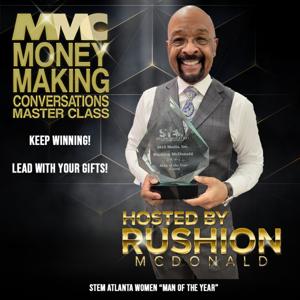
Money Making Conversations Master Class is more than a podcast. It's a front-row seat to the ideas, experiences, and breakthrough moments that inspire success. Hosted by Rushion McDonald, each episode features influential entrepreneurs, business leaders, celebrities, influencers, and nonprofit changemakers sharing the lessons, strategies, and mindset shifts that helped them turn ambition into achievement. The show empowers dreamers, doers, and leaders to think bigger, move smarter, and take action on their goals. As Rushion McDonald often says, "Stop reading other people's success stories and start planning your own."
Tune in, get inspired, and start writing your own success story, one conversation at a time.
https://www.moneymakingconversations.com
https://www.youtube.com/MoneyMakingConversations
https://www.facebook.com/MoneyMakingConversations/
https://twitter.com/moneymakingconv
https://www.instagram.com/moneymakingconversations/