
Sign up to save your podcasts
Or

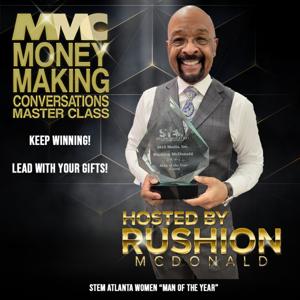


Listen and subscribe to Money Making Conversations on iHeartRadio, Apple Podcasts, Spotify, www.moneymakingconversations.com/subscribe/ or wherever you listen to podcasts. New Money Making Conversations episodes drop daily. I want to alert you, so you don’t miss out on expert analysis and insider perspectives from my guests who provide tips that can help you uplift the community, improve your financial planning, motivation, or advice on how to be a successful entrepreneur. Keep winning!
Two-time Emmy and Three-time NAACP Image Award-winning, television Executive Producer Rushion McDonald interviewed Adonis Lockett.
Titles: Private Capital Expert, Real Estate Investor, Educator
Background: Former engineer for NASA, Boeing, Lockheed Martin, Caterpillar
Host: Rushion McDonald
Podcast: Money Making Conversations Masterclass
Adonis Lockett details his transition from aerospace engineering into real estate and private capital, explaining how he built wealth not just by flipping houses—but by operating on “the money side of real estate.” The interview demystifies private lending, access to capital, and how everyday individuals can participate in wealth-building without owning property themselves.
Purpose of the Interview
The interview aims to:
Key Themes & Takeaways 1. Engineering Was a Backup—Entrepreneurship Was the Goal
Takeaway: A high-paying job can fund your exit, not define your destiny.
2. The Leap Into Real Estate—and the Reality Behind It
Key insight: Early wins can be misleading—longevity requires business mastery, not just intelligence.
3. Ego vs. Education
Takeaway: Hustle without instruction costs time and money.
4. “The Money Isn’t in Real Estate—The Money Is in the Money”
This is the core philosophy of the interview.
Key idea: Control the capital, and you control the transaction.
5. Understanding the Private Lending Model
Adonis explains how people make money without buying houses:
Example:
A $600,000 investment loan × 2% = $12,000 fee for facilitating the introduction.
6. Why Private Money Beats Banks
Banks require:
Private lenders often:
Takeaway: A bank’s “no” is often exactly why private lenders say “yes.”
7. The Smart Money Blueprint
Adonis created the Smart Money Blueprint to teach this system:
Core promise: Learn to be “the bank” without needing money.
8. Flipping Isn’t What It Looks Like on TV
Adonis breaks down common investor mistakes:
Lesson: Education protects profits.
9. Relationships Create Wealth—Not Transactions
Takeaway: Relationships are currency.
10. Flexible Path to Income
The private money model can be:
Key point: This is about leverage, not labor.
Notable Quotes
“The money isn’t in real estate—the money is in the money.”
“Most cash buyers aren’t cash buyers at all.”
“I was flat broke for years after quitting corporate—people don’t talk about that part.”
“A bank’s no is often the reason a private lender says yes.”
“Perseverance kept me alive—but mentorship would have saved me years.”
“You don’t need money to be the bank—you need knowledge.”
Overall Impact
This interview reframes real estate success away from property ownership and toward capital intelligence. Adonis Lockett offers listeners a nontraditional, scalable, and low-risk path to wealth—particularly powerful for:
Final message: If you understand money, you don’t need to chase property—property comes to you.
#SHMS #BEST #STRAW
See omnystudio.com/listener for privacy information.
Listen and subscribe to Money Making Conversations on iHeartRadio, Apple Podcasts, Spotify, www.moneymakingconversations.com/subscribe/ or wherever you listen to podcasts. New Money Making Conversations episodes drop daily. I want to alert you, so you don’t miss out on expert analysis and insider perspectives from my guests who provide tips that can help you uplift the community, improve your financial planning, motivation, or advice on how to be a successful entrepreneur. Keep winning!
Two-time Emmy and Three-time NAACP Image Award-winning, television Executive Producer Rushion McDonald interviewed Sonia Balfour Fears.
Purpose of the Interview
The interview aims to educate listeners on the mortgage industry, highlight the role and benefits of working with an independent mortgage broker, and provide practical advice on home financing options, credit challenges, and programs that support homeownership. It also shares Latrease’s entrepreneurial journey and lessons learned.
Key Takeaways
Background and Career Path
Role of an Independent Mortgage Broker
Home Financing Insights
Credit Challenges
Entrepreneurial Lessons
Notable Quotes
On independence:
“As a broker, you serve as that advocate for your borrower to make sure they’re getting the right loan product.”
On reverse mortgages:
“The beauty of it is there are no monthly payments going back to the institution. The debt is paid off when the home is sold or refinanced.”
On credit challenges:
“Programs go as low as 500 credit score, but those borrowers need 10–20% down.”
On entrepreneurial advice:
“Make sure you have strong capital and a solid pipeline before stepping out on faith.”
On perseverance:
“It’s all about follow-through. It’s all about your dream and whether you want to make it happen.”
#SHMS #STRAW #BEST
See omnystudio.com/listener for privacy information.
Listen and subscribe to Money Making Conversations on iHeartRadio, Apple Podcasts, Spotify, www.moneymakingconversations.com/subscribe/ or wherever you listen to podcasts. New Money Making Conversations episodes drop daily. I want to alert you, so you don’t miss out on expert analysis and insider perspectives from my guests who provide tips that can help you uplift the community, improve your financial planning, motivation, or advice on how to be a successful entrepreneur. Keep winning!
Two-time Emmy and Three-time NAACP Image Award-winning, television Executive Producer Rushion McDonald interviewed Latrease Price-Gistard.
Purpose of the Interview
The interview aims to educate listeners on the mortgage industry, highlight the role and benefits of working with an independent mortgage broker, and provide practical advice on home financing options, credit challenges, and programs that support homeownership. It also shares Latrease’s entrepreneurial journey and lessons learned.
Key Takeaways
Background and Career Path
Role of an Independent Mortgage Broker
Home Financing Insights
Credit Challenges
Entrepreneurial Lessons
Notable Quotes
On independence:
“As a broker, you serve as that advocate for your borrower to make sure they’re getting the right loan product.”
On reverse mortgages:
“The beauty of it is there are no monthly payments going back to the institution. The debt is paid off when the home is sold or refinanced.”
On credit challenges:
“Programs go as low as 500 credit score, but those borrowers need 10–20% down.”
On entrepreneurial advice:
“Make sure you have strong capital and a solid pipeline before stepping out on faith.”
On perseverance:
“It’s all about follow-through. It’s all about your dream and whether you want to make it happen.”
#SHMS #STRAW #BEST
See omnystudio.com/listener for privacy information.
Listen and subscribe to Money Making Conversations on iHeartRadio, Apple Podcasts, Spotify, www.moneymakingconversations.com/subscribe/ or wherever you listen to podcasts. New Money Making Conversations episodes drop daily. I want to alert you, so you don’t miss out on expert analysis and insider perspectives from my guests who provide tips that can help you uplift the community, improve your financial planning, motivation, or advice on how to be a successful entrepreneur. Keep winning!
Two-time Emmy and Three-time NAACP Image Award-winning, television Executive Producer Rushion McDonald interviewed Gregory Richardson.
A cybersecurity expert and AI consultant. The conversation explores cybersecurity best practices, the rise of AI, and how Gregory is helping churches and nonprofits leverage technology to spread the gospel.
🔐 Cybersecurity Insights 🔹 Gregory’s Background
🔹 Key Cybersecurity Takeaways
🔹 The Bigger Picture
🤖 Artificial Intelligence & Opportunity 🔹 AI as a Tool for Good
🔹 AI in Business
🔹 AI in Education
🙏 AI for Churches & Nonprofits
📚 Book Mentioned
🎙️ Closing Notes
#SHMS #STRAW #BEST
See omnystudio.com/listener for privacy information.
Listen and subscribe to Money Making Conversations on iHeartRadio, Apple Podcasts, Spotify, www.moneymakingconversations.com/subscribe/ or wherever you listen to podcasts. New Money Making Conversations episodes drop daily. I want to alert you, so you don’t miss out on expert analysis and insider perspectives from my guests who provide tips that can help you uplift the community, improve your financial planning, motivation, or advice on how to be a successful entrepreneur. Keep winning!
Two-time Emmy and Three-time NAACP Image Award-winning, television Executive Producer Rushion McDonald interviewed Jeremy Anderson.
SUMMARY OF THE INTERVIEW
The conversation between Rushion McDonald and Jeremy Anderson on Money Making Conversations Masterclass covers Jeremy’s personal transformation, his mission-driven approach to motivational speaking, the creation of Next Level Speakers Academy, the power of environment and mindset, and his philanthropic work in South Africa. The interview highlights values such as purpose over profit, taking ownership, perseverance, and maximizing one’s potential. [
PURPOSE OF THE INTERVIEW
The purpose of the episode is to:
1. Introduce Jeremy Anderson’s Work
Showcase Jeremy’s role as a premier motivational speaker, founder of Next Level Speakers Academy, and co‑founder of Next Level Living, which feeds a thousand children weekly in South Africa. [
2. Inspire Listeners Toward Purpose‑Driven Success
Encourage viewers to move from “wasted potential” to purposeful, impactful living by believing in themselves and pursuing their gifts.
3. Demonstrate How Jeremy’s Principles Apply Broadly
Rushion emphasizes that Jeremy’s business, branding, and mindset strategies apply not just to speakers, but to entrepreneurs, executives, and everyday people.
4. Promote Actionable Personal Growth
The interview seeks to motivate listeners to take ownership, adopt non‑negotiable success habits, and maximize opportunities.
KEY TAKEAWAYS 1. Wasted Potential is a Universal Struggle
Jeremy defines wasted potential as having greatness inside but failing to believe in it or pursue it. Many people don’t lack talent — they lack belief and action.
2. Purpose Over Profit
He warns new speakers not to chase “the bag.”
Impact first → income follows. If your heart is for people, success comes naturally.
3. Your Story Is Your Superpower
Every struggle someone has overcome is a testimony meant to help others. Keeping quiet keeps your gift hidden.
4. Maximize Every Opportunity
Whether you’re speaking, laying concrete, or running a small business, get every drop out of every engagement — testimonials, photos, referrals, and relationship‑building.
5. Environment and Mindset Matter
True growth starts by changing your internal environment.
Jeremy’s life changed when teachers chose to see the best in him, showing that belief from others can shift self-belief.
6. Non‑Negotiables Build Discipline
Success requires habits you don’t negotiate with: early rising, prayer, meditation, cold plunges, challenging discomfort, and consistent personal development.
7. Extreme Ownership Replaces Excuses
Greatness comes from responsibility, not excuses. Jeremy demands accountability from his teams and himself.
8. Brand Is Built on Transparency
Jeremy’s brand centers on perseverance, faith, and family—not perfection. He shares both triumphs and private struggles.
9. Giving Back Is Central to His Purpose
Next Level Living feeds 1,000 children weekly and sponsors students in South Africa through college. Impact must extend beyond business.
NOTABLE QUOTES FROM THE INTERVIEW On Purpose & Potential
On Mindset & Environment
On Discipline
On Value
On Legacy & Family
On Accountability
On Giving Back
#SHMS #STRAW #BEST
See omnystudio.com/listener for privacy information.
Listen and subscribe to Money Making Conversations on iHeartRadio, Apple Podcasts, Spotify, www.moneymakingconversations.com/subscribe/ or wherever you listen to podcasts. New Money Making Conversations episodes drop daily. I want to alert you, so you don’t miss out on expert analysis and insider perspectives from my guests who provide tips that can help you uplift the community, improve your financial planning, motivation, or advice on how to be a successful entrepreneur. Keep winning!
Two-time Emmy and three-time NAACP Image Award-winning television Executive Producer Rushion McDonald interviewed Alaysia Miller.
A certified nurse practitioner, travel nurse practitioner, and founder of NP Luxe CPR, a Florida-based CPR training company.
Alaysia discusses her journey from nurse to travel nurse practitioner, how frontline burnout pushed her into entrepreneurship, and why she launched a CPR education business. She explains the financial and lifestyle advantages of travel nursing, the importance of mentorship, the realities of entrepreneurship, and the major CPR survival gap in Black and underserved communities.
Rushion and Alaysia also dive into leadership, negotiating contracts, building a lucrative CPR business, and empowering community health through education.
🎯 Purpose of the Interview
The interview aims to:
1. Showcase a path to financial freedom through nursing entrepreneurship
By highlighting travel nurse contracting and CPR instruction as viable wealth‑building vehicles.
2. Highlight the importance of CPR education in underserved communities
Especially addressing the survival gap in Black communities due to low CPR literacy.
3. Encourage aspiring entrepreneurs—especially women and healthcare workers
By sharing Alaysia’s experiences with mentorship, confidence building, and launching a service-based business.
4. Educate listeners on the realities of entrepreneurship
Including time demands, imposter syndrome, and the need for consistency and proper pricing.
🔑 Key Takeaways 1. Travel Nurse Practitioners Have High Earning Potential
As a staff NP she would earn $100k per year, but as a travel NP she earned $100k in six months while gaining time freedom and flexibility.
Travel NP work is paid via 1099, opening the door to tax write-offs, investment flexibility, and entrepreneurial benefits.
2. Burnout Was the Catalyst for Change
Working six days a week during COVID and the pressure of commercialized urgent-care systems led to burnout, weight gain, and loss of self. This pushed Alaysia toward traveling, where she worked half the time for double the pay.
3. CPR Survival Rates Are Lower in Black & Underserved Communities
Alaysia explains that lack of exposure, knowledge, and basic emergency training leads to significantly lower cardiac survival rates in communities of color.
She addresses this through her nonprofit We Push Health, which brings CPR and medical education to rural and urban communities.
4. You Don’t Need to Reinvent the Wheel—Mentorship Is Key
She learned about mentorship in 2024 and emphasizes that mentors help you avoid costly mistakes and speed up your path.
“Find someone who is the ideal image of what you want to be and mimic what they do.”.
5. CPR Businesses Are Lucrative and Accessible
Almost every industry requires CPR certification:
These make CPR instruction a strong side hustle or full-time business, especially for healthcare professionals who already understand the material.
6. Entrepreneurship Requires Real Work
Alaysia breaks down the less glamorous side of building a business:
“You only eat what you kill.”.
7. Communication and Adaptability Are Leadership Superpowers
Travel nursing requires walking into unfamiliar environments and leading without overpowering. She emphasizes:
“Adaptability is number one.”.
8. Negotiation Skills Changed Her Entire Career
She learned to stop undervaluing herself and start negotiating confidently:
“You miss 100% of the shots you never take.”.]
🗣️ Notable Quotes On Entrepreneurship
On Burnout
On Community Health
On Mentorship
On Negotiation
#SHMS #STRAW #BEST
Money Making Conversations Master Class with Rushion McDonald is America's premier entrepreneurship, business leadership, financial literacy, and wealth-building podcast featuring successful entrepreneurs, executives, founders, celebrities, and industry experts sharing actionable insights for professional and financial success.
Business Podcast
Entrepreneurship
Small Business
Business Growth
Financial Literacy
Wealth Building
Black Entrepreneurs
Minority Business
Leadership
Executive Leadership
Business Funding
Marketing Strategies
Personal Development
Startup Advice
Sales Training
CEO Interviews
Founder Stories
Professional Development
Economic Empowerment
Business Success
Networking
Brand Building
Innovation
How to start a business
Small business funding
Entrepreneur success stories
Business leadership podcast
Wealth building strategies
Black entrepreneur podcast
Minority business development
Marketing for small businesses
Business growth strategies
Startup funding opportunities
Executive leadership training
Financial literacy education
Success mindset podcast
See omnystudio.com/listener for privacy information.
Listen and subscribe to Money Making Conversations on iHeartRadio, Apple Podcasts, Spotify, www.moneymakingconversations.com/subscribe/ or wherever you listen to podcasts. New Money Making Conversations episodes drop daily. I want to alert you, so you don’t miss out on expert analysis and insider perspectives from my guests who provide tips that can help you uplift the community, improve your financial planning, motivation, or advice on how to be a successful entrepreneur. Keep winning!
Two-time Emmy and Three-time NAACP Image Award-winning, television Executive Producer Rushion McDonald interviewed Miko Branch.
Here is a clear, structured summary of the Miko Branch interview with Rushion McDonald, along with its purpose, key takeaways, and notable quotes, drawn directly from the transcript you provided.
All information cites the uploaded file.
SUMMARY OF THE INTERVIEW
In this Money Making Conversations Masterclass episode, Rushion McDonald interviews Miko Branch, co‑founder and CEO of Miss Jessie’s, a pioneering hair‑care brand serving people with textured, curly, kinky, and wavy hair.
Miko recounts how she and her late sister, Titi Branch, built Miss Jessie’s from their kitchen table in their Brooklyn brownstone, developing products designed to genuinely work for people with textured hair. She highlights the brand’s deeply personal roots—named after their grandmother Jessie Mae Branch, the first “CEO” they ever observed in action.
Throughout the interview, Miko explains how Miss Jessie’s expanded from grassroots marketing, word‑of‑mouth, and early internet chat rooms to becoming a national brand found in Walgreens, CVS, Target, and more. She stresses the brand’s emphasis on education, authenticity, and providing solutions for all textured hair types.
Miko also discusses signature product lines (Curly Pudding, Pillow Soft Curls, Daily Soft Curls, sulfate‑free shampoo) and how Miss Jessie’s became a leader in the natural hair movement—well before it became a mainstream trend.
PURPOSE OF THE INTERVIEW 1. To showcase Miss Jessie’s origin story and entrepreneurial journey
McDonald highlights how Miko built a multimillion‑dollar brand from her kitchen table.
2. To inspire current and aspiring entrepreneurs
Miko demonstrates how authentic problem‑solving creates brand loyalty and long-term success.
3. To educate listeners about textured hair and the natural hair care industry
The interview reinforces that natural hair is not a trend—it's an identity and lifestyle.
4. To highlight the importance of cultural heritage and family influence
Miko shares how her grandmother, her sister, and her Brooklyn salon shaped Miss Jessie’s values and innovation.
KEY TAKEAWAYS 1. Miss Jessie’s was built on authenticity and real consumer needs
The brand emerged from real hairstyling challenges Miko and Titi solved for themselves and their salon clients..
2. Education is central to the brand’s success
Miss Jessie’s teaches customers how to understand and care for their curl types—wavy, curly, kinky, multicultural, or transitioning.
McDonald says the site offers more information than any hair‑care brand he has interviewed.
3. Family legacy guides the company
Their grandmother Jessie Mae’s leadership, work ethic, and kitchen‑table lessons inspired their business approach.
4. The natural hair movement is here to stay
People increasingly embrace their God‑given texture; straightening is no longer the dominant norm.
5. Social media amplified—did not create—their success
Word‑of‑mouth began long before social media; platforms today simply extend their reach.
6. Miss Jessie’s serves everyone with texture—not just Black women
Men, boys, Latinas, mixed‑race individuals—anyone with curls or waves—can find a solution.
7. Product innovation drove their growth
Curly Pudding, Pillow Soft Curls, Daily Soft Curls, and sulfate‑free shampoos transformed textured hair care.
8. Their Brooklyn salon doubled as R&D
It allowed the sisters to test products directly on customers and ensure real‑world performance.
NOTABLE QUOTES (from transcript) On the company’s beginnings
On the brand’s philosophy
On inclusivity
On natural hair
On social media and growth
On legacy
#SHMS #STRAW #BEST
See omnystudio.com/listener for privacy information.
Listen and subscribe to Money Making Conversations on iHeartRadio, Apple Podcasts, Spotify, www.moneymakingconversations.com/subscribe/ or wherever you listen to podcasts. New Money Making Conversations episodes drop daily. I want to alert you, so you don’t miss out on expert analysis and insider perspectives from my guests who provide tips that can help you uplift the community, improve your financial planning, motivation, or advice on how to be a successful entrepreneur. Keep winning!
Two-time Emmy and Three-time NAACP Image Award-winning, television Executive Producer Rushion McDonald interviewed T.M. Robinson-Mosley.
Founder of The Playbook, an award‑winning mental‑health‑performance sports‑tech company—joins Rushion McDonald to discuss how her platform is transforming athlete care, team culture, and performance measurement. The Playbook uses AI‑powered, gamified psychological assessments to measure stress, resilience, and overall mental well‑being across youth, collegiate, professional, and military sports environments.
Mosley explains how mental health—long treated as unmeasurable and stigmatized—is finally becoming trackable, private, and actionable. The Playbook provides real‑time alerts, data‑driven insights, and ecosystem‑wide tools for coaches, trainers, clinicians, and entire organizations.
She also shares her journey as a non‑coding tech founder, the scaling challenges brought on by the pandemic, and the broader impact The Playbook is poised to have across corporate, construction, military, and other high‑stress fields.
Purpose of the Interview 1. Introduce and explain The Playbook
To present The Playbook as a next‑generation mental health performance platform that quantifies mental well‑being, provides action plans, and enhances team culture.
2. Elevate the conversation around athlete mental health
Mosley breaks down stigma, highlights real athlete stories, and explains why mental analytics are as critical as physical analytics.
3. Show how the platform uses technology to prevent crises
The Playbook provides early detection, privacy protection, and immediate care support—catching problems before they become crises.
4. Highlight the expansion beyond sports
Although built in sports, the platform is already being requested by industries like construction, healthcare, first responders, and more. ]
5. Demonstrate the business model
As a SaaS B2B platform, The Playbook sells licensed subscriptions to organizations, teams, and associations.
Key Takeaways 1. Mental health can be measured—and must be
The Playbook converts psychological assessments into quantifiable metrics similar to heart rate or step count.
Athletes receive resilience, stress, and well‑being scores—like a “mental batting average.”
2. The platform offers real-time alerts
If an athlete’s score enters the “red zone,” coaches/clinicians receive immediate alerts with steps to take within 24 hours.
3. Privacy is paramount
The Playbook is HIPAA‑compliant, mobile, secure, and built to protect athlete data from misuse (e.g., contract negotiations).
4. Mental analytics are the next frontier of sports
Teams already use physical analytics. Now they can use mental analytics to track performance, prevent burnout, and reduce crises.
5. Built for the entire ecosystem—not just athletes
Coaches, front offices, sports medicine staff, and military leadership also use the platform—promoting culture-wide mental health.
6. The Playbook is expanding beyond sports
Industries with high stress—construction, medicine, law, emergency responders, veterinarians—are already approaching Mosley to adapt the system.
7. A critical solution for underserved communities
The platform makes mental health care accessible, private, digital, and stigma‑free—especially for youth and communities of color.
8. Performance is universal
Whether you’re an athlete, military member, parent, or worker—your mental state impacts how you perform. Performance is “agnostic.” [
9. Mosley’s journey shows innovation can come from anywhere
She is a non‑coding tech founder, originally trained as a psychologist working across the NBA, NFL, NCAA, and Olympic sports. [T.M. ROBINSON MOSLEY | Txt]
Notable Quotes On what The Playbook does
“We measure mental health metrics like resilience, stress and overall well‑being using gamified psych assessments.”
“Mental health becomes measurable—like a batting average.” [
On why athletes need this
On the power of technology
On privacy
On team culture
On mental and physical health
On the future outside sports
On purpose
In One Sentence
The interview reveals how Dr. T.M. Robinson-Mosley’s Playbook uses AI‑driven mental health metrics to revolutionize athlete care, provide real‑time performance insights, and expand mental wellness tools far beyond sports into everyday life.
#SHMS #STRAW #BEST
See omnystudio.com/listener for privacy information.
Listen and subscribe to Money Making Conversations on iHeartRadio, Apple Podcasts, Spotify, www.moneymakingconversations.com/subscribe/ or wherever you listen to podcasts. New Money Making Conversations episodes drop daily. I want to alert you, so you don’t miss out on expert analysis and insider perspectives from my guests who provide tips that can help you uplift the community, improve your financial planning, motivation, or advice on how to be a successful entrepreneur. Keep winning!
Two-time Emmy and Three-time NAACP Image Award-winning, television Executive Producer Rushion McDonald interviewed Monty Garside.
A full-time attorney turned baker and founder of Confectionist Bakery.
Here are some key highlights from the episode:
🎙️ Guest Background
🍰 Bakery Journey
🧁 Products & Flavors
🚚 Shipping & Operations
💡 Business Insights
📈 Advice for Entrepreneurs
#SHMS #STRAW #BEST
See omnystudio.com/listener for privacy information.
Listen and subscribe to Money Making Conversations on iHeartRadio, Apple Podcasts, Spotify, www.moneymakingconversations.com/subscribe/ or wherever you listen to podcasts. New Money Making Conversations episodes drop daily. I want to alert you, so you don’t miss out on expert analysis and insider perspectives from my guests who provide tips that can help you uplift the community, improve your financial planning, motivation, or advice on how to be a successful entrepreneur. Keep winning!
Two-time Emmy and Three-time NAACP Image Award-winning, television Executive Producer Rushion McDonald interviewed Dr. Tiffany Bussey
Title: Director, Morehouse Innovation and Entrepreneurship Center (MIEC)
Dr. Tiffany Bussey discusses how the Morehouse Innovation and Entrepreneurship Center works to scale Black- and Brown-owned businesses, close the racial wealth gap, and intentionally connect entrepreneurs and workers to capital, contracts, and emerging industries, particularly in sustainability.
Purpose of the Interview
The interview serves to:
Key Themes & Takeaways 1. Entrepreneurship as a Tool for Closing the Wealth Gap
Key insight: The problem isn’t a lack of capable Black businesses—it’s visibility, access, and opportunity.
2. “Access to Opportunity” Matters as Much as Capital
Takeaway: Capital without revenue and customers won’t sustain a business.
3. The Three C’s of Business Growth
Dr. Bussey outlines MIEC’s core framework:
She stresses that connections only matter if relationships are mutual—it’s not enough to “know someone” unless they also understand your value.
4. Breaking Stereotypes About Black-Owned Businesses
Key idea: Preparation plus access dismantles bias.
5. Sustainability = One of the Largest Economic Opportunities
Dr. Bussey reframes sustainability as an economic opportunity, not just an environmental issue:
She urges listeners to stop defaulting to oversaturated businesses (e.g., nightclubs) and instead pursue industries that are expanding rapidly and globally.
6. Workforce Development + Business Development Must Align
Takeaway: Economic equity requires aligned systems, not isolated programs.
7. Entrepreneurship Is Rewarding—but Not Romantic
Dr. Bussey demystifies entrepreneurship:
Key message: Entrepreneurship is powerful, but it must be supported intentionally.
Notable Quotes
“Entrepreneurship and small businesses are one of the pathways to closing the racial income inequality gap.”
“We don’t just provide technical assistance for technical assistance’s sake—this is about creating real opportunity.”
“Capital dominates the conversation, but contracts are equally important.”
“People don’t buy products or services. They buy solutions.”
“We have to stop thinking only about what we feel we have access to.”
“Sustainability is not one industry—it’s multiple trillion-dollar opportunities.”
“Entrepreneurship is the most rewarding and the most fatiguing thing you’ll ever do.”
Overall Impact
The interview functions as both a masterclass and a call to action:
Dr. Tiffany Bussey presents a practical, data-backed roadmap for inclusive economic development—centered on ownership, access, and readiness.
#STRAW #SHMS #BEST #AMI
See omnystudio.com/listener for privacy information.
From the publisher's feed
Money Making Conversations Master Class is more than a podcast. It's a front-row seat to the ideas, experiences, and breakthrough moments that inspire success. Hosted by Rushion McDonald, each episode features influential entrepreneurs, business leaders, celebrities, influencers, and nonprofit changemakers sharing the lessons, strategies, and mindset shifts that helped them turn ambition into achievement. The show empowers dreamers, doers, and leaders to think bigger, move smarter, and take action on their goals. As Rushion McDonald often says, "Stop reading other people's success stories and start planning your own."
Tune in, get inspired, and start writing your own success story, one conversation at a time.
https://www.moneymakingconversations.com
https://www.youtube.com/MoneyMakingConversations
https://www.facebook.com/MoneyMakingConversations/
https://twitter.com/moneymakingconv
https://www.instagram.com/moneymakingconversations/