
Sign up to save your podcasts
Or

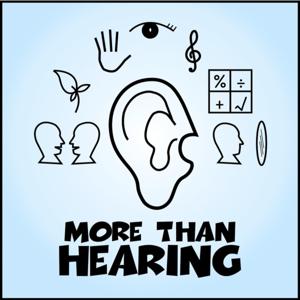


Welcome! Two of the three passages for this Sunday’s lectionary are head scratchers, and they likely make people – read: preachers – rush for something else to construct a sermon around. How many of us will be preaching from Philippians this week? Although, a careful reading of Paul’s letter and its context may also lead to some hesitation, as well. In Exodus, God seems to be melting down, which puts Moses in a tight spot. In Matthew, Jesus tells a parable about a king, who we always interpret as God, enraged by disloyalty burning and killing people. Wait, isn’t that what we just read in Exodus? Where is Moses to stop this guy? And in Philippians, we hear Paul rhapsodizing about the love he has for the believers there, and the whole passage is bright and shiny and you can almost hear the music swelling. If you were to make each of these stories into a person and put them in a room, Exodus and Matthew would be raging out of control while Philippians sings and dances. What do we do with these, then? Let’s take Paul’s advice and pray and then use Multiple Intelligence Theory to uncover some gems in this dark mine of confusion.
My first question for this passage is “Why is Moses back up on the mountain?” The passage begins with Moses absent from the people, and the people are getting restive. We begin with WORD smart and suggest that the major decision Moses makes to confront God’s wrath and side with the people is familiar in literature. We then move on to EYE smart and suggest using Reader’s Theater to present this passage, being sure to make the distance between God and Moses and the people and Aaron part of the story. For BODY smart, we think about how Aaron fashioned the golden idol and how making things with our own hands can be wonderfully creative and hold something of our own being in them. The entire passage sounds to us like great fodder for a blues lament, a country song, or an aria so if you have any MUSIC smart people, this could be in interesting project! And finally for SELF smart, imagine being the one to remind God of God’s commitment to creation. Hmm, come to think of it, maybe we all should do this on a regular basis.
Paul is wrapping up his letter to the Philippians in this selection. He loves these people, and we receive the benefit of his great affection for them. This passage has been referred to as “Pollyanna”-ish, but I think the shining love expressed here comes from a deep well of gratitude within Paul. His language is effusive, and his love and desire for the believers in Philippi spills over onto receptive readers. For MATH smart, we use comparative volume to illustrate Paul’s example in verse 12 about plenty and want. The two women mentioned by name have had some interpretive malpractice committed on them because the original Greek term suggests Euodia and Syntyche are co-athletes in Paul’s race. Using BODY smart, we present some sports, both ancient and modern to press the point. We stay with the idea of rehabilitating the two womens’ role in MUSIC smart, and in NATURE smart we look to the heavens to illustrate Paul’s exhortation to rejoice. In PEOPLE smart, we have an idea to demonstrate Paul’s “true yokefellow.”
Jesus’ parables are often confusing but they don’t usually evoke revulsion. The violence exhibited by the king in the parable of the Wedding Feast is extremely difficult to read much less find something on which to preach Good News. But we’re gonna try and we have MANY ideas that may help you find a way into the carnage. We begin in MATH smart with some interpretations from three commentaries that may help re-arrange the story and present some internal logic. Is Jesus being ironic? Is the ugly behavior used as a way to push listeners to reconsider our understanding of God? Or, perhaps, difficult parables are not to be interpreted so much as they are to interpret us. However you decide to deal with the logic of this story, the links below are some good places to start. You could introduce the problem by using a puzzle with some missing pieces, which works for EYE smart, too. For BODY smart, we concentrated on the missing wedding attire with references to clothes in the New Testament, some TV tropes, a 1977 interview with Dolly Parton, paper dolls, and a clip from The Mary Tyler Moore Show. For MUSIC smart, we have three links to musical performances that deal with being clothed and the wedding feast is supposed to be a celebration, so there should be Dancing in the Street. In PEOPLE smart, we dig a little deeper into the historical context of the parable and wonder how these dynamics might still be at work in modern times.
Image Credit: Copyright: butsaya / 123RF Stock Photo. Used by permission.
Hey, welcome back! We have a couple good friends – neither of whom live anywhere near us anymore – who really like movies. We used to rely pretty heavily on one of them to decide whether we would carve out the time and money to go see a movie when our kids were young. We decided that if Don recommended a movie, we’d go see it. If he was not enthusiastic about it, we would not. Our friend Barry filled that role in later years and keeps up with us via social media with his recommendations. They have wide ranging tastes, but both of them like a good explosion in an action movie. If Michael Bay were to direct the visual effects at the end of the Exodus passage, there would be lots of rumbling and fire and smoke and – well, it’s Michael Bay – BOOM! The parable in the Matthew passage where tenants rise up and overthrow the representatives of their landlord shows them blowing up their security for short term gain, however hard they worked for the harvest. Writing to the Philippians to show them how much value a life in Jesus has, Paul explodes his own past achievements to demonstrate how even intangible things like reputation have little value next to a saving relationship with Christ. In each passage, someone’s world is blown up; the Hebrews understanding of the God of their ancestors, Paul’s assessment of his past success, and the life of self-centered, too-snug-for-their-own-good religious leaders. Let’s explore how using multiple intelligences can shake us out of our own complacency. BOOM!
This passage begins as God speaks words to the Hebrews at Mt. Sinai. It ends with them cowering in fear as the words explode the world around them. These powerful words become the foundation for a written covenant that we know as the Ten Commandments. In WORD smart illustration, think about what other foundational stories you know. For a special effect, ask the congregation to make a list of words they associate with God and compare them with their neighbors as the story is read. For MUSIC smart, we have a list of songs, both sacred and secular, about freedom. Why freedom? Because the first words God speaks remind the Hebrews that they are free – and God is the one who broke their chains. We tend to gloss over that in our rush to get to the list. Another element we don’t often pay much attention to is what happens as the words are spoken, and how the Hebrews react to it. In NATURE smart, we have a movie clip for a special effect and links to studies showing the connection between immersion in the natural world and our mental health. SELF smart has some links to psychological studies that center around the word “don’t” that might explain why Jesus later re-interprets some of the commandments positively.
*This smart is not used in the podcast but the link(s) are provided.
This selection begins with Paul extolling his accomplishments. He has a lot, and there is much to recommend him if you were a first century head hunter looking for the “best” candidate for leading the people of Israel. Paul seems to agree with that assessment until we get to the middle of verse eight where the English translators use the word “rubbish.“ Paul actually uses a much more common word. In a way, he blows up his curricula vitae in this verse, because he knows that it doesn’t mean a thing next to what he has received from Jesus. In MATH smart, we use a story attributed to Fred Craddock to illustrate the sudden reassessment of what is valuable. For BODY smart, we suggest using a montage to illustrate Paul’s determination to finish what Jesus called him to do. We have some MUSIC illustrations that might be used with this idea. Use some jewelry for a PEOPLE smart special effect.
*This smart is not used in the podcast but the link(s) are provided.
The chief priests and Pharisees hear a parable that they eventually figure out is directed at them. In EYE smart, use your own worship space as a set piece for the vineyard. We have links to what a first century vineyard looked like to help you out. The tenant farmers in the parable act violently toward the landowner’s servants and son. In BODY smart, we have some suggestions as to why. For NATURE smart, we look at how fruit bearing plants are not just surviving to the next generation but are feeding surrounding animals, birds, and insects. We also have a suggestion to demonstrate the cornerstone. In SELF smart, the sinful attitude of the tenants comes from their greed and selfishness, which brings about a response from God not unlike that of a parent with a stubborn child. If you continue down this path, you will blow up your life!
*This smart is not used in the podcast but the link(s) are provided.
Image Credit: https://media.giphy.com/media/NwWuDzi8vvwPK/giphy.gif
Welcome back! The calendar in this part of the world says it is now autumn. Someone needs to inform the weather who doesn’t seem to know we’ve moved on from summer. We had a “yellow alert” day this week due to heat; that means people who have breathing issues, the very young, and the very old need to take care to protect themselves from high temperatures. While the vulnerable around here were told to take precautions, I am certain it was the vulnerable who were on the minds of the Israelites in the wilderness in the Exodus passage. Moses had led them to a land where water was scarce and fear for the vulnerable among them – and their own vulnerability – turned to anger, and they grumbled against Moses. Paul was not a stranger to grumblings, and so he encouraged the Philippians to guard against the discord brought on by grumbles by strengthening their bond in Christ, remembering his self emptying. In Matthew, the chief priests and elders grumbled because Jesus undermined their authority, so they challenged him on it and were challenged by Jesus in return. In each passage, someone is called to obey God at the cost of their own ego. Temperatures are high outside and in the Scripture for this Sunday. Let’s try to find some relief from the heat.
As we began working on this passage, David said, “Didn’t we do this not too long ago? I remember suggesting making a rock out of paper and hitting it with a stick.” He was right! We had this passage as the Old Testament lesson for Lent 3 Year A! We gave some thought to simply recycling that work and then looked at it again and managed to find new stuff! In EYE smart, we think you could illustrate the dryness of the wilderness climate by referring to all those movies, cartoons, and television shows where someone (the hero, usually) drags across a hot, barren landscape. Check out the worksheet for a list. For a special effect, get out a map to show where Rephidim is located in the Sinai Peninsula. Then have a map of your area available for people to mark a point of no return – the place where they realize they are not going back home. Our illustration and special effect for BODY smart is a repeat from Lent 3 Year A. For NATURE smart, we link to the clean water initiatives from Lent for special effects and for an illustration, we link to an episode from PRI’s Science Friday. In PEOPLE smart, we consider the issue of trust; when and how can we trust leaders and what must leaders do to earn it?
Union is a major theme in Paul’s writing to various Christians. Being and staying together is important for support and witness. Paul knows how difficult it is to manage this feat, and so he frequently exhorts fellow Christians to look to Jesus as an example of how to manage it to the best of their ability. In EYE smart, we have a special effect that visually demonstrates Jesus’ self giving in the Incarnation. Be certain to have good lighting for this effect, backlighting would be best so the color in the water is revealed. We have some math equations to illustrate Paul’s hymn to Jesus, especially verses 7 and 9. Being united may not be as difficult as we think; in BODY smart, we link to a study about synchronized brain activity. To demonstrate union, try a group lap sit! For MUSIC smart, if you don’t already have the soundtrack to Frozen memorized, here is a chance to get one of the songs into your head. The Vietnam War has been showing on PBS lately and one interview in particular struck us as a good PEOPLE smart illustration. Listen to the podcast to hear it. In SELF smart, we have a question about emptying oneself.
Jesus had come to Jerusalem, and now that he was in their territory, the chief priests and elders decided to have it out with him. Using the direct approach, they challenged him about the authority he claimed to do “these things.” Rather than mount a defense about “these things,” Jesus countered their question by asking about the authority his cousin John used for baptism. Rock, meet Hard Place. To illustrate the difficult situation in which the chief priests and elders found themselves using WORD smart, you could try some trick questions. To demonstrate competing ideas of authority, hand out the multipart definition and ask your congregation to identify which one is operating in this story. For EYE smart, we have some clips to help illustrate this scene as well as some pictures of the temple in Jerusalem through artists’ eyes. We have a song for MUSIC smart, and in PEOPLE smart, we have some illustrations about how to deal with interruptions, both in the classroom and in worship. We have an idea for a group discussion about trust for PEOPLE smart, and a question or two for personal reflection in SELF smart.
Image Credit: Copyright: idspopd / 123RF Stock Photo. Used by permission.
Greetings!! We’re publishing this with minimum show notes for now so we can get the file out. Notes are forthcoming.
And here they are!! The three passages for this Sunday involve a question of identity in Exodus (what is it?), destiny in Philippians (where do we go to serve Christ best?), and purpose in Matthew (why is following Jesus valuable?). Questions of identity, destiny, purpose follow us all though our lives so it is comforting to know that Scripture has guidance to answer them. Let’s go see what we can find.
One morning, after complaining to Moses about their hunger, the Israelites wake up and find something all over the ground. “What is it?” they ask and Moses answers that it is bread from heaven. The Hebrew word “man-nu” has morphed into “manna” and provides not only the asked question but deeper meaning for those who hunger for God’s presence and righteousness. In EYE smart, we link to just two paintings of the Hebrews gathering the manna; I know there is much more artwork out there! Their hunger is what drives them to complain to Moses and that reminded us of a series of commercials for Snickers which we talk about in BODY smart. Physical hunger is a massive driving force in our lives; what are some other things that hunger might lead people to do? Much ink has been spilled attempting to identify what the manna actually was; we have a link that suggests some possibilities. But like David pointed out in the show, it’s not really necessary to pinpoint what it was – the important part of manna covering the ground is that God heard the people’s complaint and responded to their need with exactly what they needed.
Everyone wants to avoid suffering. Sometimes, that is not possible and Paul writes to the believers in Philippi that when suffering comes, how one copes depends on how much one loves and trusts Jesus. For him, suffering is part of his ministry and how he emulates Christ who gave up eternity to come live as a human – who suffered. Paul does not discount suffering or call it meaningless; he understands the hardship very well but he does not shirk from it nor does he want the Philippians to flee from it. Suffering for the sake of the Gospel is a lived out, fully fleshed witness to one’s faith. In MATH smart, we consider the counter-intuitive nature of this advice and have some other mathematical examples in the links. In BODY smart, we wonder if being seasoned by suffering allows disciples to live more fully “in the zone”. In SELF smart, how does one’s dedication to serving Jesus make one look at one’s life in its entirety? For Paul, the answer is living or dying, we belong to Christ.
In previous chapters, Jesus has been instructing disciples about the discipline of living together as brothers and sisters. Forgiveness and reconciliation have been themes for those in the fellowship. Now, Jesus pushes the idea of forgiveness and reconciliation outside the boundaries of the gathering and presents disciples with the challenge of allowing grace to flourish with strangers and latecomers. This parable of the vineyard workers is difficult for a culture that prizes self-sufficiency and fair wages. What is the landowner doing here, anyway? We have some links to how we think the first hour workers may have responded to their pay. This parable needs some sound effects, we think, so we have some links and suggestions for using them as the story is presented. We have some intriguing quotes from commentary linked below. In essence, God is going to give out forgiveness and grace as God will give out forgiveness and grace. We choose how to respond to that.
Image Credit: Question Mark from clipart.me. Used by permission.
Welcome back! Do you know what your Myers-Briggs personality type is? I am an ENFP. I know there is a smorgasbord of information about these personality types out there, including what kind of cat, Harry Potter character, and superpower your type indicates. Whatever. What I am interested in is the fact that people who are “N” types have a tendency to connect information received with overarching meaning and interpretation. As I read these three passages for this Sunday, I see a bigger picture of God’s presence, concern, and love. In Exodus, God moves between Israel and Egypt and takes decisive, scary action to save the people. In Romans, Paul acknowledges different practices but does not think they divide believers as much as others think they do, because we are all one in Jesus. In Matthew, Jesus demonstrates the overwhelming character of forgiveness with some advice and a parable. In all three passages, the big picture is that God is present, God is concerned with our faithfulness, and God forgives us. Always.
This passage starts out with the angel of God moving around, which connects with EYE smart. To illustrate this movement, we talk about chess, football, and war. The angel “lit up the night” like those incredibly bright lights road crews use to work at night. For a special effect, we have several links to movies that portray the parting of the sea. In the next chapter, Moses’ sister Miriam will take up her tambourine and sing praise to God, and we are jumping in ahead of her with a suggestion from John Michael Talbot in MUSIC smart. For NATURE smart, the “strong east wind” makes an appearance, and we have a book review for an illustration and a video for a special effect. For SELF smart, we have a few questions in special effects that would work well as a devotional.
One commentary I read for this passage suggested that the ongoing argument between Paul and Peter and James about Paul’s ministry to the Gentiles bleeds over into this advice to the Romans. Paul addresses that issue obliquely with his advice about eating meat and marking festival days. We thought a Venn diagram would work well to demonstrate Paul’s underlying premise in MATH smart. For MUSIC smart, we wrote an extra verse for the song “They Will Know We are Christians by Our Love.” Keeping with Paul’s idea of identifying categories of believers, we thought using taxonomic ranking would work well as a NATURE smart illustration. We illustrate Peter’s and James’ objections in PEOPLE smart and have a suggestion for your next potluck dinner as a special effect. Finally, for a SELF smart special effect, study the Venn diagram and consider where you draw divisions and how they may need to be reconsidered.
In the middle of the parable Jesus tells, the other slaves witness the hypocritical behavior of the forgiven slave. They go and “report to their lord,” which I thought could be illustrated in WORD smart as whistleblowers and eye witness testimony. In EYE smart, we have links to a documentary and movie about forgiveness and starting over as illustrations, and we have a fun suggestion for a special effect! When this Gospel selection rotated up three years ago, we wrote a skit for our youth to use in worship that pays special attention to the number 490 (7×70), so we included it in MATH smart. (If you choose to use it, you will need to adapt the location specific references we used to your own landmarks.) For MUSIC smart, we have a long list of hymns that illustrate forgiveness. In PEOPLE smart, we looked to the Truth and Reconciliation Commission of South Africa and a scene from the 2005 movie The Interpreter as illustrations. For a special effect, you might adapt some of the group discussion questions written for a youth group as a special effect. And finally, the slave seems to have a real problem learning his lesson, which we illustrate using Baby Groot.
Image credit: Copyright: hkeita / 123RF Stock Photo. Also, NASA/ESA Hubble Space Telescope photo of galaxy NGC 2683. Used by permission.
Greetings!! We are just starting another academic year here in the US. Many public districts in our area have been open since the last week of August while a few held out for the traditional post-Labor Day start time. Either way, the result is increased traffic on our roads, and I can now mark time by when school buses pass by the house. The three passages assigned for this Sunday each have an element of “schooling” in of them. In Exodus, Yahweh instructs the people to cook and consume one last meal in their homes in Egypt; be ready, something is about to happen! In Romans, Paul continues to instruct Roman Christians to love as selflessly and fully as Jesus did. In Matthew, Jesus teaches disciples how to deal with inevitable conflict in a way that builds up the body and leads to reconciliation and wholeness. Each lesson is as basic as A-B-C, and as vital as 1-2-3. Let’s go see how using multiple intelligence theory can aid our learning.
As with many of the selections in Genesis, this passage is part of a much larger story. These verses instruct the Israelites to begin marking time from this particular point so we wondered what other significant events have had a similar influence on people throughout history. Where is that point of no return where everything was different on the other side? Right now, there are millions of people who are marking time before and after Hurricane Irma, for example. For a special effect, bring in a cookbook or some other type of instruction manual. Lamb’s blood on the door posts and lintels set aside particular houses for protection, and we have a couple links (below) that connect this to other culture’s practices. The Passover story (like the story of Jesus’ last supper) are seminal events that echo in time to the present day. It’s like a gong struck thousands of years ago that is still reverberating (bonus illustration!). Celebrating these events around a dinner table is to cement them into our lives and to nourish each generation with the promised Presence. To that end, the food itself is symbolic; bitter herbs, flat bread, and fire roasted lamb all eaten while wearing your traveling clothes. For a special effect, wear your hiking boots or track shoes for this service! People will make the connection for sure! Finally, we have some questions about days of remembrance for you, personally.
The first verse in the passage can be twisted around to suggest Paul is advocating a Lone Ranger lifestyle – a rugged individual who needs no assistance from anyone. This misreading has not only damaged many lives by needlessly erecting barriers but totally misunderstands the culture in which Paul lived. Kyle Fever, writing at Working Preacher, reminds us that people in Paul’s era lived with obligations to everyone. Yet, Paul – that radical – is telling Roman Christians to owe nothing but love. (Check out Fever’s commentary linked below for a fuller exposition.) To that end, try rearranging the furniture in your worship space in order to demonstrate the new mind set Paul advocates. Also, give some of the math a try! For BODY smart, we have some ideas about waking up and putting on our Christ-like nature. (If you still have your Big Shirt, bring it back into worship!) Paul actively encourages believers to love one another, putting our lives into it. This made me think of plants growing fruit; they dedicate their entire lives to producing seeds for the next season. It’s late summer here, and the apples and peaches are delicious, so bring some in and share them as a special effect.
Since churches are full of people, there will be conflict. That’s just the truth, and there’s nothing to do about it, except be adults and deal with it in healthy ways, which Jesus lays out in these verses in Matthew. We began in WORD smart by defining some Greek terms for “sin” and “listen” that give a deeper understanding to the type of conflict Jesus may be addressing. In MUSIC smart, we have a list of popular songs about reconciliation and forgiveness, topics that are rich for exploration in the arts. The goal of reconciliation is growth, and so in NATURE smart we have some ideas to illustrate this using compost. Finally, in PEOPLE smart, we address the final step in the process – making the offender like a Gentile or tax collector. Bill Loader (link below) had some good insight about this. We remember the basic discipline policy advocated by a youth ministry program we have been part of for many years (see GenOn Ministries).
Image Credit: Source: Back to School Chalkboard Vector Free from clipart.me. Used by permission.
Greetings!! We’re back home after some time away out West. We feel like we’ve been practicing the ballet move renverse (see the link below in Matthew) as we are a bit dizzy from all the movement. We flew to Denver where my mother picked us up and took us to her home near Estes Park. The next day we drove 150 miles to Torrington, WY, to witness the total solar eclipse on August 21. We did and it was spectacular! Then we joined an estimated 500K (or more, seriously) people on Wyoming’s highways trying to get back to Colorado. That took over ten hours. Then after spending Tuesday around Mom’s house, we jumped back into a car and went to the western slope where we rode a jet boat, bought tree-ripe peaches, and took lots of pictures celebrating Mom’s birthday. The last day, we did laundry, ate the tree-ripe peaches, and went to movie night in Mom’s neighborhood. Then we drove over 1800 miles over three days back home. It’s been an eventful week! We feel a bit discombobulated, much like Moses and Peter and the Roman Christians addressed by Paul in this week’s passages. A lot happens in each of them, too, so let’s explore how Multiple Intelligence Theory can be applied to these passages in order to give us some balance and perspective.
Being among the Top Ten stories of our faith, I wonder how many people instantly transport back in time to Sunday School when they hear this passage read? I always see Mrs. Fenn and felt board figurines in my mind’s eye. Is anyone ever tempted to yell, “No, Moses! Don’t go over there – your life will never be the same!!!” Probably not and thankfully, curiosity got the better of him as he wondered how fire did not consume the bush, and he went to go see this strange thing. We spend some time with EYE smart considering what it is that makes ground hallowed and how you could go about making your own burning bush. For BODY smart, we suggest inviting everyone to take off their shoes and to feel in their own bodies Moses’ keen interest in that odd sight. God seems to have lured Moses over in much the same way a venus fly trap or an angler fish entices prey in NATURE smart. Of course, God’s intention for luring Moses is not gustatory, but instead, God tickles Moses’ sense of wonder and invites him to do something God wants done. Moses’ questions in response are our questions when we hear a call to participate in God’s purposes – see SELF smart.
This passage is great advice for living out one’s faith in Jesus. In WORD smart, we suggest making an acrostic, that is rewrite it in such a way that the first letters of each line spell a word or message. Taking this idea to a more public scale using EYE smart, make inspirational posters and display them. We listened to many podcasts while driving across Nebraska and Iowa, and one of them linked below gave us an idea for a MATH smart illustration. For a special effect, stick with the acrostic idea, and include puzzles or matching games. Paul addresses anger and enmity in these verses so for BODY smart, we have some links to what hate and love feel like physiologically. If you are feeling particularly creative, exercise some MUSIC smart muscles and write the passage as a hymn! This passage is full of PEOPLE smart contacts, and we have three illustrations you could use to show how Paul expects us to live with people we don’t like very much. For a special effect, break the verses into three parts and invite your congregation to discuss how this advice could be lived out. If you decide to use posters, set aside some time for SELF smart exploration.
Jesus asks some pointed and paradoxical questions about exchange rates in this passage, so we start in MATH smart with links to currency exchange and other paradoxes. The title for this week’s podcast was inspired by an article in The Christian Century (link below) written by Amy Ziettlow. What better way to include BODY smart than through dance? See our worksheet for a great quote from the article. Jesus’ insistence that he must die made us think of salmon spawning, which is a good NATURE smart illustration. For PEOPLE smart, think of a time when you attempted to “correct” a friend’s behavior – how did that go? Try presenting this passage as a Reader’s Theater (which includes PEOPLE, EYE, and BODY smart elements). Finally, for SELF smart, make a list of things “of God” and “of the world” that we spend time thinking about. How do those lists compare? What can be moved around?
Image credit: Copyright: vladimirdelic / 123RF Stock Photo. Used by permission.
Hey all! Since we are away from our equipment while out of town, we are leaving a list of links that we regularly use to prepare our own sermons and this podcast. We’ll be back with a show soon, so stay subscribed and be smart!!
And two websites that I have visited for years are:
Image credit: Copyright: damedeeso / 123RF Stock Photo. Used by permission.
Greetings!! We are on vacation this week and the next but couldn’t resist the Gospel passage for Sunday. It is a treasure trove! We found material for all eight intelligences and had to work hard to limit our findings to the usual half hour show. We missed that goal a bit, but hope that you will be forgiving as you come with us into the story and see what we found. If you find something we overlooked, please let us know in the comments, at our Twitter feed, at our Facebook page, or email us. We really would love to hear from you.
See this link for our comments [01:59] regarding the violence in Charlottesville, Virginia, over the past weekend. Holy Lord, it just seems to get worse.
One of the most salient features of Scripture is the themes that run throughout it. Chief among them being God’s love for creation and our response to that love. As we worked on this story, we noticed the persistence of the Canaanite woman reflected the persistence of the widow in Luke 18:1-8 and Jacob’s persistence wrestling on the Jabbok from a couple weeks ago. Martin Luther King Jr. once said, “The arc of history is long but it bends towards justice” and he may have had these Biblical characters in mind as he and others persisted in pursuit of equality. Sometimes, we have to call on God persistently, trusting that our pleas for mercy will be answered.
We begin in WORD Smart, seeing familiar themes running from the beginning of Matthew’s Gospel into this story. The kneeling Gentile woman parallels the kneeling Gentile Magi; the Messianic title she uses to address Jesus mirrors the disciples’ confession of his identity just days before. Print out this passage and mark it up with symbols and colors to reveal the themes. Post it where your congregation can see it (engaging EYE Smart), or as we suggest as a special effect, use sound effects as the story is read to highlight the themes. If you choose this route, you will also be engaging MUSIC Smart!
In EYE Smart, we consider the space of this story. Not only the space on earth, but actual space! The region of Tyre and Sidon is where Elijah saved a widow and her son (hey! another connection to the rest of Scripture geographically and theologically!) and Jesus may have been hoping to withdraw after Pharisees confronted him about cleanliness (verses 10-20). But a woman begins orbiting Jesus like Cassini orbits Saturn and eventually crashes into him with her unshakeable plea. Take a look at the worksheet to see how we suggest demonstrating orbits as a special effect. Plus, break out the maps! A visual reminder of the “space” is always helpful for context.
MATH Smart does not contain any numbers (unless you read on to the feeding of the four thousand Gentiles), but does have some logical twists. The woman “wins” her case not only through her persistent refusal to give up, but also through agreeing with Jesus’ interpretation of her and her people. Most of us would hear the derogatory allusion to canines in Jesus’ words and immediately get up and leave, but this woman’s primary objective to heal her daughter was too important for that. She allows the insult to come at her and then takes it and throws it back at Jesus. He was likely not expecting that and had to scramble to catch it! OR he got hit with it and was stunned into recognizing her need. Either way, she got through to him, and her daughter received what she hoped for. To illustrate this encounter, we have links (see below) to articles in Psychology Today and lifehacker.com. As a special effect, find people who have debate experience or trial lawyers and ask them about how they argue a point.
Going with the thought of the woman and Jesus playing “catch”, you could actually play catch with someone as a BODY Smart special effect. In the show we paid more attention to the woman kneeling before Jesus, which did two things: 1) showed that she was determined to have an audience, because you usually kneel in front of royalty and sovereign rulers, and 2) impeded his forward progress. She was a rock in a stream blocking his flow downriver (Hey! NATURE Smart!). We have some examples of kneeling for illustrations and suggest practicing balasana for a special effect.
Here, where the woman is kneeling in front of Jesus and throwing his words back at him, seems to me to be a turning point in a musical or opera. It is definitely a turning point for Jesus’ own ministry to the lost sheep. It seems he recognizes that all of his father’s flock is in need of shepherding, and he opens the scope of his ministry after this. We have many options for MUSIC Smart illustrations and special effects, including a variety of “Kyrie Eleison” offerings. It is my sincere desire to hear this passage as a song sometime before I die.
In NATURE Smart, we have a few links about dogs you can use as illustrations. We found information about their history and taxonomy, and more specifically, their place in human society in the first century. My mother grew up on a farm in western South Dakota, and her relationship with the dogs on the farm was not the warm, indulgent connection most of us have but much closer to the historic utilitarian partnership where dogs worked for their keep. In parts of the world today, there are loose packs of dogs with no particular human attachment roaming streets and roads. These are most likely the kind of dog Jesus referenced. As a special effect, we suggest bringing in a dog! Do you have anyone in or around your congregation who is a dog trainer or handler? Invite them to come talk about working with canines.
In PEOPLE Smart, we have links to two movies that may illustrate both the mother’s desperation and what happens when established boundaries are intentionally crossed. We have other illustrations that consider sexism in the story and quick thinking. (Plus, a little Monty Python, ‘cuz it’s us.) For a special effect, we ask you and your congregation to be honest with Jesus’ initial response to the woman – it is not kind or compassionate. He brushes her off at best and insults her at worst. It is not a picture we prefer to have of our Lord. But, like the less than honorable Jacob and imperfect David and reluctant Moses, Jesus reveals our humanity and in his reaction to this woman, shows us how to respond to challenges as fuller human beings. Also, consider how your congregation may assist desperate parents in your own community and around the world.
Finally in SELF Smart, we see how this woman has broken all manner of conventions that would deem her unclean to a first century Jew (see verses 10-20), yet at the end of the passage, Jesus proclaims that she has great faith. She embodies a pure heart, and what comes forth from her changes the mission and mind of God incarnate. This is a boomerang moment and to illustrate this, we suggest using the censure of Senator Elizabeth Warren this past February. Persistence may be its own reward!
Image credit: http://commons.wikimedia.org/wiki/File:Ilyas_Basim_Khuri_Bazzi_Rahib_-_Jesus_and_the_Canaanite_Woman_-_Walters_W59243A_-_Full_Page.jpg
Naskh is the caligraphic style for writing in the Arabic alphabet that the biblical text is written in for this manuscript. The artist, Ilyas Basim Khuri Bazzi Rahib, was most likely a Coptic monk in the late 17th century in Egypt.
Copyright Permission: This file is licensed under the Creative Commons Attribution Noncommercial ShareAlike 3.0 License. In short: you are free to use and to share the file for non-commercial purposes under the conditions that you appropriately attribute it, and that you distribute it only under a license compatible with this one. For uses other than the above, contact the Divinity Library at [email protected].
Welcome back! Sometimes we face challenges and know it; the pressure surrounds us and threatens to overwhelm us, and we seem to have no good options. Other times, we walk into bad situations that in retrospect we should have seen coming. In the passages for today’s Lectionary, Paul is hard pressed to bring two groups together in union with Christ, and the disciples in Matthew are working hard to keep their boat upright in a wind storm. In Genesis, Joseph walks right into the hornet’s nest of his older brothers’ resentment. In all three situations, the proverbial rock and hard place, while not specifically mentioned, are strong supporting players in the drama. Paul understands their presence and attempts to draw the tension away with a third pathway. The disciples are offered a mind-blowing way out when Jesus walks up to them on the water. Poor Joseph will not find a way out for a few more chapters but as he looks back over his life, he does see how God charted his course for him. As you decide how to present these passages to your congregations this week, name the rocks and hard places you and your people encounter, and be bold to proclaim that we have not been left to be crushed or swallowed up by them.
(This week’s note on the sound quality: I think I got last week’s noise out, but this week we had the windows open because it was a beautiful, cool, summer evening, so you might here the “peepers” from outside.)
For this Lectionary cycle, we only have two stories from the Joseph saga in Genesis; the beginning and the end. Today we witness the beginning where the teenaged Joseph is sent by his father to check on his brothers out tending the sheep. While this story can stand on its own, it is part of the larger story of Israel’s history, and the subtext is always present. In EYE smart, we have some suggestions to illustrate how a small piece fits into a larger one. For special effects, we encourage use of our trusty maps and have links to pictures of what Dothan looks like in our era. We also have an idea that can translate into BODY smart if you don’t have any Tinker Toys or Legos. Speaking of BODY smart, David found an interesting experiment illustrating how carrying around resentment is like carrying around extra weight. We did not list MUSIC smart as one of the intelligences we explicitly explore, but we can’t zip past without mentioning Andrew Lloyd Weber’s Joseph and the Amazing Technicolor Dreamcoat. The first three songs cover this episode, so if you can work them in somehow, that would be great for your Music smart people! Dysfunction is the word of the day – or decades – for this family; we have three links in PEOPLE smart to illustrate how messy it can really get. In SELF smart, we have a link to how resentment can effect one’s body.
The context of Paul’s letter to the Romans cannot be ignored in this chapter. Due to Claudius’ expulsion of Jews from Rome, the Christian sect that had been growing there morphed into a group that consisted mostly of Gentiles who were not entirely happy with Paul’s reticence about cutting ties with his old identity as a Jew. On the other side, Jewish Christians were not happy that Paul was allowing these non-kosher believers into fellowship. He needed a third way solution in order to keep the Gospel moving. His rhetoric in this passage reminded David of the old proverb “For want of a nail,” which we use in MATH smart. For a special effect in MATH smart, we have a link to a Gauss gun that demonstrates the increasing effect testimony can have. In MUSIC smart, we follow Paul’s lead as he remixes Scripture into a song of praise about Jesus and discuss how if one’s heart is not engaged by what you are singing, it’s pretty obvious in the offering. In NATURE smart, we consider planet Earth’s place in our solar system as a way to illustrate Paul’s larger understanding of God’s salvation. In SELF smart, we have some questions for individuals to ponder about what their hearts believe and their lips proclaim about Jesus.
What new can be said about this story? I think D. Mark Davis has an intriguing interpretation that you can find at his site linked below. I found it quite compelling, which is ironic because in WORD smart, Jesus compels – or even forces – the disciples into a boat after the feast of bread and fish. Paying careful attention to the WORDS of a story can open up some truly fascinating interpretations. Go check it out. We did not mention EYE smart in the podcast, but like Jacob wrestling the man by the Jabbok last week, this story is a favorite for artists, and we have just a wee sample in the links. Jesus’ dual nature of God and human gets center stage in this story, and we have an illustration in MATH smart using the particle/wave duality of light. We also look at the physics of walking on water – or Oobleck. We usually focus on Peter in this story, but what about Jesus and his reaction to what Peter is doing? In BODY smart we have two links to movies that might help you illustrate Jesus’ response to what his most impulsive disciple is doing. Two gospel songs can preach your sermon for you in MUSIC smart. And in NATURE smart, we ponder the immense power of water and wind unleashed from their usual boundaries and how eerily calm Jesus is in the midst of it all. See the links below for some examples of what the Sea of Galilee might look like when it’s storm tossed.
Image credit: Copyright: albund / 123RF Stock Photo. Used by permission.
From the publisher's feed