
Sign up to save your podcasts
Or

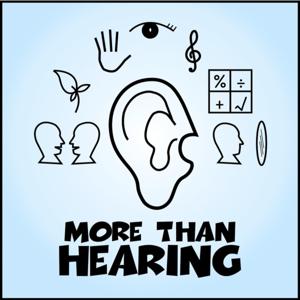


Greetings!! We’re back for another episode of intelligences, insights, and illustrations! This week, the theme seems to be a bit – sweaty. In Genesis, Jacob is preparing himself to meet his brother Esau for the first time in about twenty years and finds himself wrestling with his conscience – or is it God? The text is not entirely clear. In Romans, Paul grapples with deep grief because his people have rejected the claim that Jesus of Nazareth is the long awaited Messiah. In Matthew, Jesus wants to grieve the violent death of his cousin, John, but the crowds who follow him have a different idea. His disciples must struggle with Jesus’ command to feed the crowd rather than send them away. There is much wrangling in this week’s passages, and you could work up a good sweat with any one of them. So, let’s get some water, pump up some tunes, check our heart rate, and get into it! Ready?
(By the way, if you search on “wrassling” this comes up. Have fun!)
(Also, there’s some audio distortion in the final mix. Not sure where it came from. Sorry about it.)
As I said, Jacob is wrestling with the news he is about to see his twin brother again. You will remember, they did not part on the best of terms; in fact, Esau wanted to kill him. Has twenty years changed his mind or has he simply bided his time? Jacob hopes for the former but prepares for the latter and while he contemplates this fate, a stranger approaches and engages him in a wrestling match that lasts all night. If you are familiar with Hebrew, you will hear a play on words – Jacob, wrestle, and Jabbok all share the same root consonants and sound very much alike. You could play with other words as you tell this story and even turn this into a poem or song. We have one of each as illustrations! For a WORD smart special effect, find a source that gives the meaning of names and share with your congregation what their names mean. The wrasslin’ match on the riverbank has inspired not only poetry and song, but art. We have links to two websites that have gathered paintings and sculptures about this story in EYE smart. For a special effect, break out the maps!! In BODY smart, we consider how strenuous an all night wrestling match must have been. It is a testament to both Jacob’s strength and tenacity that he holds on until day break even after he has been seriously injured. How bad was it? Click the links below about hip dislocations, and if you have the stomach for it, use them as a special effect! As the match came to an end at daybreak, the stranger blessed Jacob by giving him a new name, Israel. For SELF smart, consider the new name God has given us as baptized members of the Body of Christ.
Paul is not rolling in the dust with an unknown opponent in this passage, but his struggle is no less intense. He has come to the halfway point in this letter to the Romans and scholars have wondered why he didn’t just stop at the end of chapter eight with the ringing confidence he expresses. Instead, he abruptly shifts gears and begins to mourn the apparent rejection of Jesus by his own people. He wrestles with his place in both worlds and offers to rescind his own salvation on their behalf. It is truly a heart breaking passage. His grief is genuine, and his desire for his people to receive Jesus as Messiah is consuming. Maybe it is this depth of feeling that has led scholars and preachers through history to misunderstand the later part of Romans as a rejection of the Jews. Unfortunately, this misunderstanding has lead to a warped view of God’s chosen people. This passage does not reject the people who have rejected the Messiah. In fact, Paul’s heart expands for them in his grief, and he longs for them to see what he sees and change their minds. He understands this is out of his control and so leaves his people in God’s hands. In MATH smart, we illustrate Paul’s desire for his people with a quote from J. Christiaan Beker’s Paul the Apostle, which also leads to Roy Scheider in Jaws, Heather Locklear in an old shampoo commercial, exponential equations, baking a cake, and having more than one child. Go take a look, it really does make sense! In MUSIC smart, go listen to (or better yet, read) the lyrics for Prince’s song I Would Die 4 U. We have an interesting musical special effect, too! For NATURE smart, consider plants that share a root system to illustrate the intertwined relationship of Jews and Christians. And finally, in SELF smart, we have illustrations from Star Trek the original series, a “heroic sacrifice” trope, and a Vietnam era medic who was honored for his service in battle.
Hearts are broken in this passage, too. Jesus has just heard the news that his cousin John has been executed by Herod. He has been facing a lot of opposition and resistance to his ministry, and this may be the straw that breaks the camel’s back. He goes out to a lonely place perhaps hoping to weep and rest. He ends up spending his alone time healing and bestowing compassion on a very large crowd who followed him. The disciples seem to go with it until it is time for food. They wish for Jesus to send the crowd away, but he tells them to feed the crowd themselves. I really wish I could be present at the time Jesus says things like this; I would love to see the expressions on their faces and maybe even learn some first century expressions of disbelief and frustration that I am certain must have made it into this conversation, even if Matthew edited it out for sensitive ears later. Yet, they obey him, and a miracle happens! In MATH smart, we consider the scope of this miracle with the numbers recorded by Matthew. 5000+ people is a very large crowd, even in our modern world, so how much food would it take to feed all of them? As a starting point, look up the bread illustration for MATH smart we used last week! In BODY smart, we consider the food itself, and some how what happened – while miraculous – may also have been offensive to those who care about who touches their food. It isn’t just questions of gluten free or responsibly sourced sea food, but have people washed their hands before passing bread around? We have another illustration for MUSIC smart, this time from Johnny Cash. Go listen to “No Earthly Good” and pay special attention to verse three! Finally, in PEOPLE smart, consider the role the disciples played in this story – they were not just bystanders! So we have illustrations and a special effect that encourages you and your congregation to be actively involved in serving others, even if you aren’t sure you have enough resources or energy. God provides, always!
Image credit: Copyright: ostill / 123RF Stock Photo. Used by permission.
Hey everyone! We apologize for our tardiness getting the show out this week. Real life has been pulling us away from our laptops, which is a very good thing for our real world relationships, but not so great for our productivity. The clash between what we hope to do and what is actually happening is a bit like Jacob in the Genesis passage for this week, except we don’t wake up to discover we have married someone else. In Romans, Paul’s declaration that nothing – including deadlines – will separate us from the love of God gives us peace. Jesus gives us five parables recorded in Matthew’s gospel extolling the abundant growth and exceeding value of the kingdom of heaven. Our wee podcast may be like a mustard seed; small and seemingly insignificant, but with the nourishment of the Spirit, it may grow to provide blessings for many. We pray it will, anyway!
As with the stories that precede this one, the passage for today is WORD smart wealthy. The drama of being with the “wrong” person fuels many soap operas and romance novels. (We could not find any written by the Russian romance novelist Nikolai Riptzercorzetzov, though.) [;-)] Passion, betrayal, confrontation – we have everything needed to get the heart racing. So we wonder where people might feel this story in BODY smart. We also wonder in PEOPLE smart who folks might find themselves identifying with as the story unfolds. Would it be Jacob, the trickster who is tricked? Maybe it is Laban, the smooth player who orchestrates the trick, or Rachel, the bride who is wanted and left standing on the sidelines, or Leah, the bride who is offered and rejected. In isolation, this story is full of human intrigue but not much hope or grace. To find those elements, you may need to step back from this scene and include the larger backdrop of the entire covenant cycle and God’s faithfulness to the promise in spite of human folly.
Paul encourages believers to pray consistently, even if they do not know what to pray for. We have an eternal translator working to make our hearts known to God, sort of a celestial translator. In WORD smart, you might illustrate this translator using the examples we provide. While there is a lot of good theological meat on the bones of this passage, it is rather long. David wrote a choral reading for this passage which may help people hear the WORDs with new ears. We were taken with the idea of being transformed into the image of Christ and found a fun program that morphs faces for you to try out in EYE smart (see the link below). The illustrations and special effects we offer for MATH smart have a strong EYE smart element in them, but there is a logic to them as well. Living into the image of Christ may be like children trying on their parents’ clothes which we suggest as an illustration for PEOPLE smart. We also have an idea to demonstrate nothing keeping us from Jesus’ love.
The parables are WORD smart wealthy, so we looked at some of the details for material for the other intelligences. In MATH smart, we looked at the amount of flour the woman used to make bread. It turns out to be enough to feed far more than merely herself and her household. (Follow the link below “The Bread Monk”.) For NATURE smart, find a recipe for bread, and make it while you preach. Then offer it to the congregation. And in SELF smart, we have a mini-devotion that you and members of your flock can use.
Image credit: Copyright: maxborovkov / 123RF Stock Photo. Used by permission.
Hello! There is a saying that reads: “A woman is like a teabag – you find out how strong she is when she’s in hot water.” (Eleanor Roosevelt is usually credited with this quote but there is not strong evidence it belongs to her.) All three passages assigned for this Sunday deal with someone in hot water. In Genesis, it is Jacob the Grasper-and-Getter-of-His-Twin’s-Birthright-and-Blessing-Which-Made-Said-Twin-Murderously-Angry-So-He-Scarpered-to-Haran-to-“Get-a-Wife”-(Read: Save-His-Skin). In Romans, Paul speaks of believers and all of creation enduring suffering like that of a woman in labor. Jesus tells a parable in Matthew about a landowner whose wheat field is sabotaged by an enemy, and while one would think it is he who is under pressure in this story, it is his servants who are reacting poorly. Whether it is someone who is running from the consequences of his actions, the faithful who are struggling to find hope, or people who want to root out evil when they find it, God is present with them all in the midst of adversity.
The imagery of Jacob’s dream has been the subject of art, poetry, and music. We take time to acknowledge this but also point out that Jacob’s vision may have been possible because he was in a thin place. The first three links below discuss what a thin place is, especially in Celtic theology. Since Jacob was on the move, retracing the route of the servant who went to fetch his mother for his father, we suggest getting out the maps and looking at his journey. Plus, if you find Beth-el on a map, you will see it is a bit higher than the surrounding landscape, which gives the thin place idea some validity. We have some MUSIC ideas that center around God’s promise to be with Jacob as he moves into his new future. This promise can also be illustrated with a clip from the movie Jurassic Park (see below). Jacob is so impressed with what he has experienced that he consecrates the place and vows to return.
Paul continues to encourage the faithful in Rome that, in spite of their struggles as disciples, there is reason to hope. Hope is revealed in Jesus, and in EYE smart, we think you could illustrate this revelation using diagrams or schematics. Part of what Paul hopes for is the redemption of our bodies, so in BODY smart, we have some links about regeneration. Paul is also excited about being co-heirs with Christ in this new life, so in PEOPLE smart we have some links that take a humorous look at reading wills.
Jesus’ parables are a lot like parabolas and not just because you use most of the same letters to spell them. This carefully crafted story is shaped by a point Jesus wanted to make without coming right out and making it. Even though he did not explicitly say so either in the parable or in his explanation of the parable, we think Jesus’ point was the problem of evil in the life of a disciple. He was telling these parables after encountering a lot of resistance to his ministry, so evil was probably on his mind. Nevertheless, it seemed to be important to Jesus that hearers engage their imaginations and intellects as they listened to him. We look at this connection in MATH smart. Parables are stories and chock full of WORD smart, and we have a link to a quote from The Gulag Archipelago that addresses the issue of co-joined good and evil. In NATURE smart, we look at what may have been the weed sowed among the wheat and a story about getting rid of a field full of thistles. And in SELF smart, we return to the conflict between good and evil.
Image credit: Copyright: jen7 / 123RF Stock Photo. Used by permission.
Welcome back! I spent a couple weeks lately playing Batman: Arkham City. I’m not a huge fan of the Batverse, but two of the passages for this week brought a character from this world to mind for me – Harvey Dent, aka Two Face. In the complex world of Batman, Harvey Dent did not begin his time as a villain. He originally was a district attorney who turned to crime after he was attacked with an acid that gave him disfiguring burns on one side of his body. He did not handle this new reality well and descended into madness which expresses itself as an obsessive pursuit of duality. This Good Guy/Bad Guy occupying the same space is a classic literary theme. Despicable Me 3 raises the question of whether a character is good or bad or a little of both and in his review of Marcus Borg’s Days of Awe and Wonder, Tom Long points out Borg’s own binary path to faith. In the Lectionary selections for this Sunday, twins wrestling for dominance in Genesis and the apostle Paul’s dual options for obedience echo this two faced struggle. I’m still not entirely certain how this theme expresses itself in the Gospel, except that one can either hear and reject Jesus’ message, or hear and understand it and bear bountiful fruit. Let’s go take a look.
(We bought some new sound equipment that we aren’t used to yet, so please excuse some rough spots in the audio quality this week. The learning curve isn’t too steep, so it should be better from here on. Thanks for your patience.)
While we tend to shy away from WORD smart in favor of bringing out the other intelligences, the origin stories of Genesis are difficult to bypass. By the time they were written down, they had likely been told as oral history for generations. Any good story teller will select generously from the palette of literary techniques, as we illustrate with Aesop the Fableist and the folk tales surrounding Paul Bunyan. In BODY smart, we consider infertility and multiple births, as well as suggest making and serving lentil stew. The timing of this meal could be crucial! Was hunting in Esau’s day much different than in ours? We have some links in NATURE smart. Finally, was Jacob a good guy who had to game the system in order to survive or a not so good guy who took advantage of his family to come out on top? We have some questions to consider in PEOPLE smart.
Binary options run through this passage from Romans. Paul is getting deeper and deeper into his thesis in these verses – that thesis is this: as a disciple of Christ, you have a choice. Set your mind to live in the Spirit or set your mind to live in the flesh. Whichever choice you make, there are consequences, and Paul’s descriptions of them are vivid. He is working hard to make a sale for the first option, and in EYE smart, we have some illustrations for comparative advertising. In MATH smart, we wonder if Paul is laying a foundation or a capstone with this passage. A little of both maybe! We have some NATURE illustrations that may help people understand the ongoing reality of living into this faith. While Paul is writing to a fellowship of believers, each person must learn to discipline their lives as forgiven people. We have some ideas in SELF smart that could be very powerful learning options.
At first glance, this parable of the Sower does not seem to lend itself to the dual theme apparent in Romans and Genesis. But wait! Jesus tells this parable because he has been facing some fierce opposition to his ministry. As he ends the story, he even says, “Let anyone with ears, listen!” In other words, make a decision. In WORD smart, we look at the literary use of parable and allegory and offer some examples to illustrate it. We have a unique challenge for a special effect, too! Stories are rich soil for musical settings, so we have some options in MUSIC smart. Again, another challenge – write your own song! We are back to the idea of hearing in order to understand in PEOPLE smart and in SELF smart we have questions for you, the preacher and disciple.
Image credit: Copyright: stocking / 123RF Stock Photo. Used by permission.
Hey everyone! Have you ever needed to make a long trip with an uncertain outcome at the end of it? Have you ever struggled to break a bad habit? Have you ever given up in weariness and frustration? Have we got a show for you! In Genesis, Abraham’s servant makes a long distance trip back to Abraham’s hometown to find a wife for Isaac. By the time he reaches his destination, he has a plan but it will only work if God is faithful. In Romans, Paul touches on the universal struggle to do the right thing even though our reflexes and impulses have the upper hand. The only way to break through the hopelessness of failure is to rely on God’s faithful deliverance through Jesus. And in Matthew, Jesus, frustrated with misunderstandings and mistrust, reveals himself to be faithful and the one to lighten burdens and partner up with us in our living. The only thing we need to do is trust him. So, drop what you’re doing and call now! This is not a limited one time offer and no special rates apply.
David and I despaired about whether there was anything to mine in this straightforward narrative for illustrations and special effects. It turns out, there is a more than we initially thought. For example, the entire text is rich in WORD smart; you could tell this story as a reader’s theater or even as a family history. Gather your readers/actors and present the story as a drama or gather your young’uns around you up front and tell the story as if you were sitting around a fireplace. The reader’s theater doubles as EYE smart, and if you choose not to do it, don’t fear! You could break out the maps and show the distance the servant travelled or show a painting of Isaac praying in the field as the servant returns with his bride, Rebekah. BODY smart also has some overtones of NATURE and PEOPLE smart, since the well in the city is an important place to gather, get water, and is where the servant makes plans with God to see the mission through to its successful conclusion. Plus, how strong must Rebekah have been to water all those camels with just a water jar? Impressive.
We are still traveling through Paul’s letter to the Romans as he argues the case for Jesus Christ. This week, he continues to correct misunderstandings about the nature of sin and grace. Here, he addresses the pervasive and invasive nature of sin as something that we might say is at a molecular level in all of humanity. It seems to be connected to the subconscious reflexive part of the brain (See SELF smart) and makes us act in ways we think we did not intend to (unless you are Captain Kirk and then you meant to do that.) (See MATH smart) How might you present this dilemma to your congregation? Would you believe you could use a commercial for IBS? No? Take a look at EYE smart, then!
Previously in Matthew, Jesus has sent the twelve out in his name to heal and proclaim. Here in chapter 11, we are beginning to see the clear effect of this ministry. People are confused and not willing to trust what they see. *(Jesus responds to that mistrust in the section the Lectionary leaves out, but we have some ideas if you choose to keep it in. See the bottom of the notes for several ideas.) Even though there is some good PEOPLE smart material in this mistrust, we decided to look at it in terms of MUSIC smart. This is not so unusual considering some of the biggest fights in churches happen over music preferences. Be careful not to re-open old wounds if you choose to use this intelligence! Jesus’ promise of an easy yoke that fits prompted a lot of ideas for BODY smart, and we have some truly intriguing thoughts from Taizé to ponder in SELF smart.
*Notes on non-lectionary section of this reading:
If you choose to preach on the “woe” passage, we had a thought or two about how you might use the intelligences in those verses. The Jewish cities of Corazin, Bethdsaida, and Capernaum should have recognized Jesus’ ministry and identity as Messiah but they did not. It could have been they did not trust him; who could blame them when he did not fit their ideal of what Messiah would look like or do? The people who could not or would not trust Jesus became infected with a poison that permeated everything and rippled outward to affect the lives of others in the cities who might have been able to trust if they had been given the chance. Jesus gives three Gentile, hedonistic cities known to the audience of his day a kinder, gentler word than these three Jewish cities.
Hedonism and living for the day have their own harmful effects but they may be focused simply on the person indulging in them; mistrust seeps outward and infects the atmosphere, poisoning everyone. So, you could illustrate and / or demonstrate this idea in the following ways:
Logic Smart – recognize the social and psychological effects of extreme division; illustrate it with recent political campaigns (also EYE smart – show slogans, signs, and video. Be careful to set it up as an illustration, not an endorsement.)
Body Smart – recognize the effect of toxic doubt/mistrust in your own body as it relates to stress, anger, resentment, and other harmful behaviors. Bring in charts to illustrate how long term exposure to stress, etc., affects the body’s systems and overall health. Interview a medical professional. Have tips on how to reduce this stress, emphasizing prayer/meditation.
Nature Smart – the effects of dumping toxins in the air, soil, and water are illustrations from the natural world. Know anyone who works for the Environmental Protection Agency or has done clean up work at spill sites? Invite them to share their insights.
People Smart – the effects of being around cynical/toxic people can be harmful to you. Break into groups and discuss how negativity makes you feel and how it affects the Body of Christ. Is the Body ill because of this toxin? How would you go about healing the Body?
Self Smart – recognizing that an inability to trust hurts more than just you. Make a list of people you find difficult to trust and why. Imagine taking this yoke of mistrust to Jesus. What does he do with it as he is fitting you with a new yoke?
Image credit: Eruption of Old Faithful geyser at Yellowstone National Park, Wyoming, USA.
Copyright: lorcel / 123RF Stock Photo. Used by permission.
Hello! Welcome back! As usual, we have choices to make about sermons and worship for this week. We must admit that two of the three passages proved to be hard work for us. The Genesis passage is the story of Abraham’s near sacrifice of Isaac. Much ink has been spilled about this story and while we attempted to find grace in it, the tale is dark and complicated. We think it is important to keep that in mind and be honest about it whatever path you choose for your preaching. The Romans passage continues Paul’s argument about the total change in living after one is baptized into Christ. We are freed from the deathly effects of sin, but still have choices about how that freedom will be manifest in our lives. And Jesus’ brief words of encouragement to his disciples proved to be a bit too short for us to get hold of it until we looked at some commentary and the Greek. In essence, how we choose to welcome and be welcomed is important for proclamation of the Gospel. You have options for your preaching this week. You need to choose which passage to preach, how to connect them (if it is possible), and if you will use any of our illustrations and special effects! We certainly hope you choose to do so!
This is a difficult passage to interpret. Part of the difficulty is the straightforward nature of the story; there is not much ambiguity. And that’s another part of the challenge; we want ambiguity because of the story’s nature. How do we preach this passage? In WORD smart, we looked at Soren Kierkegaard’s book, Fear and Trembling for some answers. Maybe, like Abraham, we are too focused on one part of the story and are unable to see more because of tunnel vision which we mention in EYE smart. The choice Abraham must make to obey God is gut wrenching, much like William Styron’s book Sophie’s Choice which we talk about in MATH smart. For BODY smart, we wonder what it takes to destroy the promise you hold in your hands. Bob Dylan and Leonard Cohen wrote songs about this story; check out our links in MUSIC smart. For NATURE smart, we suggest a special effect that could double with EYE and BODY smart. We have a discussion idea for PEOPLE smart and in SELF smart, we encourage individuals to consider Calvin’s commentary about having three days to think about big decisions.
We’ve been baptized into Christ’s death and resurrection, so Paul has some advice about what that means for daily living. In BODY smart, we we suggest using a toolbox to illustrate and demonstrate Paul’s argument. Bob Dylan makes another appearance in MUSIC smart and we also have a very short poem written by a soldier. The incredibly abundant nature of God’s goodness and mercy, which Bill Loader talks about in his commentary on the passage, made me think about perennial plants so we use that as an illustration for NATURE smart. To what will we be freely obedient? We have some video clips for a PEOPLE smart illustration and some thoughts to spark discussion among your congregation.
This selection concludes Jesus’ instructions to his disciples as he sends them out to do the ministry he himself has been doing. He ends his teaching by talking about welcomes – a bit backwards, but then Jesus is always doing things to upset expectations! We have a quote about Clinical Pastoral Education to start off EYE smart. Jesus surprises us with a triple, which we have looked at before, and so we suggest getting out the three legged stool from Trinity Sunday for MATH smart to explore his comment. Pass out a cool drink for NATURE smart and discuss how hospitality and mission connect in your congregation for PEOPLE smart.
Image Credit: Copyright: studiostoks / 123RF Stock Photo. Used by permission.
Hello, and welcome to this week’s show notes!
The phrase “the Other Side” is surprisingly evocative, and a little slippery, as it can refer to so many things. It might mean a physical location away from yourself – the other side of the room or of the road, for example. It’s where the grass is greener, and it’s why chickens cross roads. It can mean an opposing team in sports or the opposing party in politics. Sometimes we’re referring to a later time after an event, as in “We’ll meet you on the other side of the holidays when things settle down.” Sometimes we’re referring to death, or perhaps the spiritual realm beyond death – “She has passed to the other side.” Our texts for this week hold many of those flavors. In the story of Sarah and Hagar, the two rivals (sides?) finally find a conclusion to their struggles with each other, although it means one undergoes an ordeal. With God’s help, she makes out the other side. In the epistle to the Romans, Paul insists that those who have been baptized have crossed to the Other Side, through death into a new life. In the Gospel lesson, Jesus continues his instructions to the apostles on how to deal with adversaries to their ministry and the divisions they can expect because people will have to choose one side or the other. Perhaps these are just the sort of texts we should be working on in a world that seems desperately divided. It’s been said that whenever people draw a dividing line, Jesus is on the other side.
After last week’s joyful laughter at the birth of Isaac, the abrupt change of tone in this week’s passage may make us duck and cover. Sarah has weaned little Isaac and seeing him in company with Ishmael awakens fear for her son’s future. He is Abraham’s second son, and she is worried about primogeniture. Since he is the child through whom the covenant will be fulfilled, Sarah demands that Ishmael and his mother be cast out of Abraham’s protection. In MUSIC smart, we wonder if the passage could be written as poetry or set to music, as it has some poetic undertones to start with. In EYE smart, we determine how far Hagar went to get away from Ishmael’s cries. Is Sarah fulfilling the role of the Evil Stepmother? We look at that trope and other family drama in PEOPLE smart. And in SELF smart, how would you answer the question in verse seventeen if God were to ask you?
The Romans passage is all about baptism. Well, and sin. And new life! And death. And resurrection. And everything that is new about being part of Christ. Being baptized into Jesus means a new perspective and understanding of oneself for having gone through it, which means no turning back. In WORD smart, we illustrate this new outlook with George R. R. Martin’s saga Game of Thrones. We have several ideas for illustrations in MATH smart to demonstrate our congruence with Christ. The new life in Jesus stretches out over a lifetime, not unlike some self-care habits, which we illustrate in BODY smart. Baptism is much like crossing a boundary, and in NATURE smart, we illustrate this boundary crossing with mountain passes and bridges.
This week, Jesus has a lot of instruction for the disciples. Nothing will ever be kept secret and in EYE smart, we give some ideas of things that can be uncovered. IN BODY smart, we look at the connection between the body and the soul. Sparrows show up in MUSIC smart and in PEOPLE smart, we have a movie and television show as illustrations for complicated family relationships and loyalties.
Image Credit: Copyright: backyardproduction / 123RF Stock Photo. Used by permission.
Greetings!!
Our son is living with us this summer as his future unfolds and every once in a while, he decides he will make dinner. (YAY!) He will hunt down a recipe on the internet, scope what’s on hand, and make something that is not too fancy; it’s “just pretty basic.” We appreciate that he takes this task on, and his “just pretty basic” meals have been quite tasty! Sometimes, pretty basic is pretty wonderful. It can be just what we need just when we need it. In the passages for today’s lectionary readings, we see some pretty basic stuff; God re-iterates the promise of a child through whom the covenant would come to fruition. That this child will be born to people in their very late years is brushed aside by God who says, “Is nothing too wonderful?” In Romans, Paul gives the basic foundation for living a justified life; that it builds from suffering is just part of the plan, according to him (and his own experience). In Matthew, Jesus sees his own people living harassed lives and is moved with compassion for them. He gives them the basics and then calls his disciples to go and do the very same. Peace, hope, endurance, grace, mercy, compassion, wholeness – just the basics for a life of faith. Combined in the right quantities at the right time, the result can be astounding!
It’s a hot day, and an old man is sitting in the entrance of his home when he looks up and suddenly sees three men standing in front of him. Great start to a story, right? It is, but the story has been going on for a while now. Twenty five years, actually. Still, we wonder with the old man, “who are these guys?“ As the passage continues, we all discover that they are messengers from God – and one of them may even BE God – or they all THREE may be God – coming by to visit Abraham and Sarah and to give word that the long-awaited promise is going to be fulfilled. In one year’s time, Sarah will have a son. Sarah is skeptical and later amazed. Her astonishment might be like people who wonder how a magician did a trick, which we explore in EYE smart. We do not for a minute believe that God worked magic to make Sarah a mother, and we look at this collision of reason and God’s capacity to create in MATH smart. Three guys dropping by for a meal signaled a massive change in the couple’s lives, and we think about how Abraham’s actions and Sarah’s laughter are important parts of the story in PEOPLE smart.
Paul has already written about why Jesus is so important to a new way of living in the first four chapters of his letter to the Romans. Now, he begins the turn into why this makes a difference in the lives of those who trust Jesus. He begins by speaking of being justified by faith in Jesus. Usually, when we hear the word “justified” we are really thinking of the word “vindicated” as in we have been proven to be right in our actions or words. This is not justification as Paul understands it. For him, justification is like being set back to the starting point; everything that has come before is now gone, and the chance to start over is bright and shining new. We consider this “set back” to be like a board game and have some ideas how to illustrate and demonstrate this idea in MATH smart. For BODY smart, we look at the Greek word we translate as “access” (which we also discuss in MATH smart) as less a pass code than being physically brought into the presence of God. Which made me think of ushers and how we walk differently when being shown to a seat or just going and sitting down on our own. We stick with this idea of justification in SELF smart with a quote from William Loader.
At the end of chapter nine, Matthew shows us Jesus going about the countryside meeting the needs of his people. This made us think of our own political leaders going out to see the devastation left behind after storms and natural disasters in EYE smart. Jesus sees just how much need there is and so calls disciples to pray for workers for the harvest. The surprise twist is that those workers are they themselves! We look at how basic ministry can be done by ordinary disciples in MATH smart. Jesus calls for these harvest workers and commissions the disciples to do this work because he is greatly concerned about the harassed and helpless state of the people, which we explore in BODY smart. Matthew uses an analogy of sheep to describe the people’s condition. We have some video of lost sheep for NATURE smart. We also wonder about the sort of harvest Jesus expects and the sort we plan for in churches. Are we going after the same crops or is one of us talking about weeds?
Image Credit: Just a word in a jpeg.
Greetings!! Here in the United States, we are just beginning to ease into the summer months which include the end of the academic year in schools, the beginning of summer travel, and Trinity Sunday. (I remember that was the day we always sang “Holy, Holy, Holy” in worship when I was a kid – most likely because the Trinity is explicitly mentioned in this hymn.) I know that when it comes to the Doctrine of the Trinity, most of us feel like we need to stretch and warm up our theological muscles a bit in order to take this truly complex idea about God and make it intelligible and palatable for our congregations. I’ve gone enthusiastically into the deep thick field of theological language and quotes from early thinkers and have not only watched eyes glaze and brows furrow but have found myself whacking a desperate path back out of the tall grass in order to end my sermon. We have some other ideas for presenting the Three in One nature of God this Sunday. I think the hula hoop is the best one! Listen to the podcast to find out why!
This passage is a smorgasbord for multiple intelligence; like a playground, a festival, simply chock full of opportunities to jump in and swim around. We have just skimmed the surface with what we have to offer. The entire passage is an exercise in WORD smart and we suggest finding ways of dividing the reading into interesting segments. You could use posters or your media equipment to show pictures of each day of creation for EYE smart; both visual and spatial elements are present in this story. You could have your congregation use sign language or interpretive movement for each day of creation using BODY smart. For MUSIC smart, try re-writing the story in rhyming couplets that then could be set to music – a favorite hymn or popular tune, for example. Bring in examples of each day of creation using NATURE smart (see the worksheet for some details about this!). For MATH smart, compare the sequence of creation presented in this poem with the cosmic calendar – there are points of contact! For PEOPLE smart, consider the internal conversation God has with Godself in verse 26 about the decision to create human beings and how. And in SELF smart, how does that creativity God has given us find expression in your life?
When I first read this passage – all three verses of Paul saying goodbye to the Corinthians – I was highly skeptical we would be able to find anything of use in it. Oh, silly me! Paul’s advice to the faithful to “put things in order” popped out at both of us; I found application for it in PEOPLE smart in literally putting things in order and David went down the MATH smart aisle and found a three legged stool which demonstrates the relationship of the Trinity in an unusual and compelling way. He also found that this illustration has a home in EYE, BODY, and NATURE smarts, as well. In each of them, the interconnected nature of the Trinity is at work. In EYE, we have a video clip of three guys negotiating directions in a popular movie from a few years ago. In BODY smart, we suggest using a rope or a hoola hoop to demonstrate the way the Trinity might move about with intention and cooperation. Our NATURE smart illustration doesn’t actually exist, but it is a fun way of exploring constraints. And in SELF smart, what would it be like to have all the saints greet you?
Again, we had only a few verses provided for fodder in the Gospel passage, and again, by poking around a bit we found some fun stuff! We both picked up on a translation issue we address in WORD smart, to wit; how does one properly translate the Greek word hoy in verse 17? In EYE smart, we both thought about the movement of making disciples. David started globally and moved to the local church while I went the opposite direction. Either way, you could really connect your congregation to their efforts at disciple making with this smart. I got to thinking about Jesus’ promise of constant presence and found some principles regarding constants in MATH smart. I also thought about a song I learned almost 20 years ago written by Jeff Pearson called “I Am With You Always”. You can find it in New Song: Musical Expressions for Youth Ministry. We had different parts of the passage pop out at us for PEOPLE smart. David was intrigued by Jesus’ statement about authority and I wondered about the location for meeting in Galilee. Finally, in SELF smart, we consider what it means to act in the Name of the Father, Son, and Holy Spirit.
Image Credit: http://clipart-library.com/clipart/498741.htm. Used by permission.
Hey everyone, welcome back! This coming Sunday is a big day for the life of the church according to the liturgical calendar and tradition – it’s our birthday! We cannot help but be drawn by the display and the sound of Pentecost, much like the residents and pilgrims in Jerusalem that day. Luke’s version of the Spirit’s descent is the standard by which all other experiences are measured. This is a bit unfortunate, because, really, how can anything stand against tongues of flame, speaking in tongues, and a sermon by Peter that converts 3,000 people on the spot? It’s tough to hold our own stories up to this one without feeling a little inadequate. Yet, there are two other stories about the Spirit bestowed on individuals to explore with today’s readings. In John, the coming of the Spirit is decidedly understated; Jesus simply breathes on the disciples, and there you go. In Numbers, the Spirit that is usually bestowed on Moses is divvied up and goes to 70 elders, who immediately prophesy. Is it possible that the Acts version of Pentecost is the Hollywood blockbuster and the other stories show the Spirit’s arrival happening in low budget projects or even everyday life? Let’s go see how the Spirit blows into our study and worship preparation.
Starting out with BODY smart, we wonder what it might feel like to have the Spirit rest on you like it did the elders in the wilderness (or the disciples at Pentecost). We have some suggestions for you to illustrate and demonstrate this thought. After Eldad and Medad were turned in for unauthorized prophesying, Moses seemed to actually want others to join in so in MUSIC smart, we have an illustration of how old musicals often had more and more people join in a song. The gathering of elders got David to thinking about the 1948 Declaration of Human Rights, which we use in PEOPLE smart. We also wonder if maybe the Spirit was parceled out to the elders to allow as many people as possible to hear directly from God at a given time. In SELF smart, we wonder if Moses was actually delighted to share the responsibility and burden? I suspect he was!
Luke takes the time to include a long, tongue-twisty list of the nations represented in Jerusalem at the time of this particular Pentecost feast. We suggest getting maps (or clicking on the ones we’ve linked to below) as an EYE smart illustration to show where all these folk came from. The profusion of languages amazed and puzzled the people in Jerusalem and some of those present accuse the disciples of being drunk. Peter steps up, proclaiming they are not drunk and then launches into his famous sermon. Using his defense of his fellows, we provide a movie clip in BODY smart and a link to a list of non-alcoholic possibilities for drunken behavior. The sound of wind is the attention getter in this story and in NATURE smart, we have a link to a wind “generator” that could produce a similar sound! Or just annoy your house mates – your pick. Peter and the other disciples undergo a remarkable and quick transformation when the Spirit comes on them which we think could be illustrated in PEOPLE smart with a clip from the movie The Mask. Also, Peter’s change from a Galilean fisherman to a man who goes into the home of gentiles has the hallmarks of the epic hero journey!
This selection from John’s account of the resurrection ends with Jesus declaring that the disciples, having received the Spirit, now have the authority to forgive sins. Whoa, Nelly! For observant Jews, this would have been big news! In MATH smart, we have a Venn diagram that shows just how monumental this declaration is – and does it apply to us as well? Scholars suggest that this scene where Jesus breathes on the gathered group and tells them to “receive the Spirit” is John’s version of Pentecost. It’s a lot less flashy and noisy, isn’t it? In BODY smart, we think it could be equated to spiritual CPR. The idea of being breathed into made me think of a popular song from some years back that we link to in MUSIC smart. And for PEOPLE smart, we quote a couple theologians who grapple with the idea of what peace and forgiving sins might look like for those disciples and for us.
Image credit: Copyright: arcoss / 123RF Stock Photo. Used by permission.
From the publisher's feed