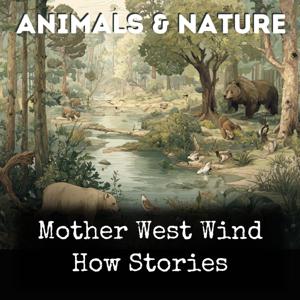
Mother West Wind How Stories

Mother West Wind How Stories

By Grant AllenScienceArtsBooksHistory
Download on the App Store

Mother West Wind How Stories episodes

  • 015 - Dodder and Broomrape
    Originally published in the St. Jamess Gazette, these essays aim to bridge the gap between the intricate world of biology and the everyday reader. With a heartfelt thanks to the Editor for allowing this republication, I set out to demystify the principles and methods of evolution for those who may not have a scientific background. While biologists often focus on the intricate details of anatomy, such as the flexor pollicis longus or the hippocampus major—terms that can be daunting to the uninitiated—ordinary people are more curious about the beauty of natures forms. They want to know why birds are adorned with feathers and what gives bright flowers their allure, rather than the technicalities of their anatomy. In this series, I explore common natural objects like strawberries, snail-shells, tadpoles, and wayside flowers, aiming to provide simple yet enlightening explanations rooted in evolutionary principles. My hope is that, while I may not dive deeply into the science, I can spark interest and curiosity about the natural world in an accessible way.

    This episode includes AI-generated content.

    11 min
  • 014 - Speckled Trout
    Originally published in the St. Jamess Gazette, these essays aim to bridge the gap between the intricate world of biology and the everyday reader. With a heartfelt thanks to the Editor for allowing this republication, I set out to demystify the principles and methods of evolution for those who may not have a scientific background. While biologists often focus on the intricate details of anatomy, such as the flexor pollicis longus or the hippocampus major—terms that can be daunting to the uninitiated—ordinary people are more curious about the beauty of natures forms. They want to know why birds are adorned with feathers and what gives bright flowers their allure, rather than the technicalities of their anatomy. In this series, I explore common natural objects like strawberries, snail-shells, tadpoles, and wayside flowers, aiming to provide simple yet enlightening explanations rooted in evolutionary principles. My hope is that, while I may not dive deeply into the science, I can spark interest and curiosity about the natural world in an accessible way.

    This episode includes AI-generated content.
    12 min
  • 013 - Among the Heather
    Originally published in the St. Jamess Gazette, these essays aim to bridge the gap between the intricate world of biology and the everyday reader. With a heartfelt thanks to the Editor for allowing this republication, I set out to demystify the principles and methods of evolution for those who may not have a scientific background. While biologists often focus on the intricate details of anatomy, such as the flexor pollicis longus or the hippocampus major—terms that can be daunting to the uninitiated—ordinary people are more curious about the beauty of natures forms. They want to know why birds are adorned with feathers and what gives bright flowers their allure, rather than the technicalities of their anatomy. In this series, I explore common natural objects like strawberries, snail-shells, tadpoles, and wayside flowers, aiming to provide simple yet enlightening explanations rooted in evolutionary principles. My hope is that, while I may not dive deeply into the science, I can spark interest and curiosity about the natural world in an accessible way.

    This episode includes AI-generated content.
    13 min
  • 012 - Distant Relations
    Originally published in the St. Jamess Gazette, these essays aim to bridge the gap between the intricate world of biology and the everyday reader. With a heartfelt thanks to the Editor for allowing this republication, I set out to demystify the principles and methods of evolution for those who may not have a scientific background. While biologists often focus on the intricate details of anatomy, such as the flexor pollicis longus or the hippocampus major—terms that can be daunting to the uninitiated—ordinary people are more curious about the beauty of natures forms. They want to know why birds are adorned with feathers and what gives bright flowers their allure, rather than the technicalities of their anatomy. In this series, I explore common natural objects like strawberries, snail-shells, tadpoles, and wayside flowers, aiming to provide simple yet enlightening explanations rooted in evolutionary principles. My hope is that, while I may not dive deeply into the science, I can spark interest and curiosity about the natural world in an accessible way.

    This episode includes AI-generated content.

    9 min
  • 011 - Berries and Berries
    Originally published in the St. Jamess Gazette, these essays aim to bridge the gap between the intricate world of biology and the everyday reader. With a heartfelt thanks to the Editor for allowing this republication, I set out to demystify the principles and methods of evolution for those who may not have a scientific background. While biologists often focus on the intricate details of anatomy, such as the flexor pollicis longus or the hippocampus major—terms that can be daunting to the uninitiated—ordinary people are more curious about the beauty of natures forms. They want to know why birds are adorned with feathers and what gives bright flowers their allure, rather than the technicalities of their anatomy. In this series, I explore common natural objects like strawberries, snail-shells, tadpoles, and wayside flowers, aiming to provide simple yet enlightening explanations rooted in evolutionary principles. My hope is that, while I may not dive deeply into the science, I can spark interest and curiosity about the natural world in an accessible way.

    This episode includes AI-generated content.

    9 min
  • 010 - Cuckoo-Pint
    Originally published in the St. Jamess Gazette, these essays aim to bridge the gap between the intricate world of biology and the everyday reader. With a heartfelt thanks to the Editor for allowing this republication, I set out to demystify the principles and methods of evolution for those who may not have a scientific background. While biologists often focus on the intricate details of anatomy, such as the flexor pollicis longus or the hippocampus major—terms that can be daunting to the uninitiated—ordinary people are more curious about the beauty of natures forms. They want to know why birds are adorned with feathers and what gives bright flowers their allure, rather than the technicalities of their anatomy. In this series, I explore common natural objects like strawberries, snail-shells, tadpoles, and wayside flowers, aiming to provide simple yet enlightening explanations rooted in evolutionary principles. My hope is that, while I may not dive deeply into the science, I can spark interest and curiosity about the natural world in an accessible way.

    This episode includes AI-generated content.
    10 min
  • 009 - Blue Mud
    Originally published in the St. Jamess Gazette, these essays aim to bridge the gap between the intricate world of biology and the everyday reader. With a heartfelt thanks to the Editor for allowing this republication, I set out to demystify the principles and methods of evolution for those who may not have a scientific background. While biologists often focus on the intricate details of anatomy, such as the flexor pollicis longus or the hippocampus major—terms that can be daunting to the uninitiated—ordinary people are more curious about the beauty of natures forms. They want to know why birds are adorned with feathers and what gives bright flowers their allure, rather than the technicalities of their anatomy. In this series, I explore common natural objects like strawberries, snail-shells, tadpoles, and wayside flowers, aiming to provide simple yet enlightening explanations rooted in evolutionary principles. My hope is that, while I may not dive deeply into the science, I can spark interest and curiosity about the natural world in an accessible way.

    This episode includes AI-generated content.
    10 min
  • 008 - A Study of Bones
    Originally published in the St. Jamess Gazette, these essays aim to bridge the gap between the intricate world of biology and the everyday reader. With a heartfelt thanks to the Editor for allowing this republication, I set out to demystify the principles and methods of evolution for those who may not have a scientific background. While biologists often focus on the intricate details of anatomy, such as the flexor pollicis longus or the hippocampus major—terms that can be daunting to the uninitiated—ordinary people are more curious about the beauty of natures forms. They want to know why birds are adorned with feathers and what gives bright flowers their allure, rather than the technicalities of their anatomy. In this series, I explore common natural objects like strawberries, snail-shells, tadpoles, and wayside flowers, aiming to provide simple yet enlightening explanations rooted in evolutionary principles. My hope is that, while I may not dive deeply into the science, I can spark interest and curiosity about the natural world in an accessible way.

    This episode includes AI-generated content.
    10 min
  • 007 - Slugs and Snails
    Originally published in the St. Jamess Gazette, these essays aim to bridge the gap between the intricate world of biology and the everyday reader. With a heartfelt thanks to the Editor for allowing this republication, I set out to demystify the principles and methods of evolution for those who may not have a scientific background. While biologists often focus on the intricate details of anatomy, such as the flexor pollicis longus or the hippocampus major—terms that can be daunting to the uninitiated—ordinary people are more curious about the beauty of natures forms. They want to know why birds are adorned with feathers and what gives bright flowers their allure, rather than the technicalities of their anatomy. In this series, I explore common natural objects like strawberries, snail-shells, tadpoles, and wayside flowers, aiming to provide simple yet enlightening explanations rooted in evolutionary principles. My hope is that, while I may not dive deeply into the science, I can spark interest and curiosity about the natural world in an accessible way.

    This episode includes AI-generated content.
    13 min
  • 006 - A Sprig of Water Crowfoot
    Originally published in the St. Jamess Gazette, these essays aim to bridge the gap between the intricate world of biology and the everyday reader. With a heartfelt thanks to the Editor for allowing this republication, I set out to demystify the principles and methods of evolution for those who may not have a scientific background. While biologists often focus on the intricate details of anatomy, such as the flexor pollicis longus or the hippocampus major—terms that can be daunting to the uninitiated—ordinary people are more curious about the beauty of natures forms. They want to know why birds are adorned with feathers and what gives bright flowers their allure, rather than the technicalities of their anatomy. In this series, I explore common natural objects like strawberries, snail-shells, tadpoles, and wayside flowers, aiming to provide simple yet enlightening explanations rooted in evolutionary principles. My hope is that, while I may not dive deeply into the science, I can spark interest and curiosity about the natural world in an accessible way.

    This episode includes AI-generated content.
    14 min

About Mother West Wind How Stories

From the publisher's feed

Originally published in the St. Jamess Gazette, these essays aim to bridge the gap between the intricate world of biology and the everyday reader. With a heartfelt thanks to the Editor for allowing…