
Sign up to save your podcasts
Or



Porsche is the latest company to cancel plans to take much of its line-up
electric by the end of the decade. At a recent Annual General Meeting with
investors the German sports car maker said, “it would be a significantly
longer transition phase globally, on the journey to electric mobility.” The
slower than expected transition putting pressure on the company’s bottom
line. According to Porsche CEO, Dr. Oliver Blume, “the world has changed
– we are experiencing a fierce storm, in challenging times we are
continuing to develop Porsche with a precise focus.” Previously
announcing that most of its models would join its Macan SUV with electric
powertrains Porsche is now making major changes. But the change of plan
will come at a cost, the company confirming it will cut around 3,900 jobs by
2029 in order to save money in the long term.
See omnystudio.com/listener for privacy information.
While the Chinese car industry has enjoyed significant growth GWM’s
Chairman Wei Jianjun has warned the industry is in an unhealthy state due
to incessant price cuts. In an interview with Chinese publication Sina
Finance the GWM Chairman suggested if it continues like this the Chinese
auto industry will be seriously threatened. Not specifically referring to any
Chinese car maker he warned the excessive and prolonged price war
between rival Chinese brands, especially those selling electric vehicles,
risks cutting corners on safety and reliability. Discounts have ranged up
from Aud.$22,000. Following Mr. Wei comments shares in BYD, Leapmotor,
Nio, and Geely fell by up to 9.5 percent. BYD recently announced subsidies
and incentives in China – the entry Seagull EV Hatch reduced by
Aud.$12,000 while Geely followed suit with similar incentives for its
Chinese buyers.
See omnystudio.com/listener for privacy information.
Driving Subaru’s Outback Sport Touring XT AWD – a special edition high
riding wagon that sits at the top of the Outback range at $57,490 plus on-
road costs. Distinguished with special Geyser Blue exterior paint and black
18-inch alloy wheels, also highly equipped. Power source the traditional
2.5-litre horizontally opposed four-cylinder turbocharged driving all four
wheels through a continuously variable automatic. As has always been the
case with this mainstay Subaru, the drive experience most reassuring. It’s
not an SUV but a high riding wagon with a go-anywhere ability and it just
gets better year on year. Yes, it’s been around for a while in its current
guise and varied little over the years – just more refined and better
equipped, a firm family favourite, practical with good rear seat room and
load space and importantly a five-star ANCAP safety rating. The
turbocharged engine perhaps showing its age a little in that it uses more
petrol, and it does require higher grand 95 octane petrol – I achieved
11.1L/100 with mainly urban driving - but it is a permanent all-wheel drive
and the tractability in the recent rain was confidence inspiring. It does have
a full-size spare, peace of mind for those that venture off road. Warranty
five-years/unlimited km.
See omnystudio.com/listener for privacy information.
Subaru’s Outback has been a firm family favourite for over 25 years. I’m
driving the Outback Sport Touring XT, a special edition turbocharged
model that sits at the top of the Outback’s model range priced at $57,490
plus on-road costs. The Outback best described as a high-riding wagon
and the Sport Touring XT identifies with dark 18-inch alloy wheels and
special Geyser Blue exterior paint. Inside, premium features such as Nappa
leather seat inserts, power front seats, heated and ventilated seats, nine
speaker Harman Kardon sound and a power sunroof and tailgate. The 2.5-
litre horizontally opposed turbo four-cylinder features 350Nm of torque and
links to a continuously variable automatic transmission. A very well sorted
interior with large central touchscreen and nice instrumentation but a lack
of buttons for aircon a disappointment. Both seat rows offer good room
and are well equipped with USB ports and aircon outlets. The Subaru
Outback has varied little over the years – and why should it - it’s a practical
design that gets customers coming back for more – its gained more
equipment over the years and more features and more refinement – a
practical family wagon with a go anywhere ability – the Sport Touring XT
special edition offering that little bit more.
See omnystudio.com/listener for privacy information.
There’s now only one diesel powered medium sized SUV on the market
and fortunately it will be here for a while – the 2025 Kia Sportage remains
the last medium SUV with diesel power proving the most popular
powertrain in the Sportage SUV line-up. Diesel power currently represents
36 per cent of Sportage sales growing from 30 per cent for most of last
year. And despite the New Vehicle Efficiency Standard penalties coming
into effect on July 1 Kia suggests the diesel option will remain for some
time, the company able to offset penalties by achieving credits from its
popular EV3 and EV5 models as well as a growing number of hybrids. The
current 2.0-litre turbo diesel remains popular with its 416Nm of torque
giving it a very relaxed performance - well suited to the four-wheel drive
only diesel range.
See omnystudio.com/listener for privacy information.
The Korean brand name SsangYong has disappeared this month in
Australia with the local distributor now adopting the KGM branding of its
parent company. The KGM Group acquired SsangYong two years ago
changing its name globally, at which time it was known here as KGM
SsangYong. The naming move is significant given the arrival of new
product – the recent KGM Torres mid-size SUV and the soon to be
launched Actyon coupe SUV in two grades, the nameplate returning after a
14-year hiatus. The Actyon credited with starting the sloped roof trend that
is now so prevalent with many SUVs. Two versions of the Actyon will be
available, the K50 at $47,990 drive-away and the K60 for another $3,000.
The Torres and Actyon models join the long-standing and highly regarded
Musso dual cab ute.
See omnystudio.com/listener for privacy information.
Driving Jaguar’s potent F-Pace SVR 575 Ultimate Edition SUV – one of just
60 as the last of the line Jaguar V8’s – Jaguar will navigate a new future
from January 1, all electric and reconfigured into an upper luxury range,
the Jaguar leaper badge gone, a whole new beginning after 90 years which
the company admits will lose up to 85 percent of its current customer base.
The 5-litre supercharged F-Pace SVR 575 Ultimate Edition a stunning SUV
and one that will become a collector’s item in time – super powerful, super
luxurious and the test car I’m driving in Sorrento yellow, super special –
hard to fault in performance, features, comfort, dynamics and price -
$182,000 far cheaper than a Range Rover Sport P530 and far more exciting
– the 5.0-litre V8 with 700Nm of torque and 8-speed automatic with steering
wheel shift paddles inspiring. A full gamut of active driver assist systems,
not intrusive, although the speed limit alert can become an annoyance. But
fabulous brakes which you need when you have a 2133kg steed with 0 to
100km/hour acceleration of just 4 seconds. This Jaguar F-Pace SVR 575
Ultimate Edition the final act in what has been a wonderful 90 years of
Jaguar grace and pace. I’m David Berthon
See omnystudio.com/listener for privacy information.
Jaguar will cease production of its last internal combustion cars at the end
of the year, becoming an electric only manufacturer, also moving further
upmarket. Ending 90 years of the celebrated Jaguar brand as it navigates a
new future. According to Jaguar’s chief creative officer Gerry McGovern
“the new electric model is the result of brave, unconstrained creative
thinking and unwavering determination – the foundation stone for a new
family of Jaguars that will look unlike anything you’ve seen before.” For
many aficionados it’s a sad day, 90-years of history and heritage lost, even
the Jaguar leaper badging will disappear with the company only expecting
to retain around 10-15 percent of its existing customers. This week I’ve
been driving the Jaguar F-Pace SVR 575 Ultimate Edition SUV, in bright
yellow no less, the last ever V8 from the British brand and what an engine –
just 60 examples of this Ultimate Edition will be available and bound to
become collectors’ items. Sitting on 22-inch wheels this SVR looks
menacing even before you fire its 5-litre supercharged V8 – an all-wheel
drive upper luxury SUV at $182,000, and as a limited edition and the last of
the line, likely to retain its value well. Drive details next. I’m David Berthon
See omnystudio.com/listener for privacy information.
Honda has joined a growing number of major car makers changing
direction away from battery electric vehicle development in response to
slowing BEV sales. At a recent briefing in Tokyo Honda’s President
Toshihiro Mibe confirmed the company was re-evaluating its BEV
development plan up to 2030 by trimming 3 trillion yen from its previously
allocated EV budget of 10 trillion yen. It cited falling BEV sales behind the
move “necessitating a re-alignment of its automotive strategy that places
more emphasis on new generation, lower cost and more efficient hybrid
technology along with a greater focus on the North American, Japanese
and Chinese markets.” Honda targeting greater battery efficiency as well as
a 50 per cent reduction in manufacturing costs, suggesting the company’s
new e-HEV systems will be lighter with more parts commonality amongst
models. Its target 2.2 million sales by 2030. I’m David Berthon
See omnystudio.com/listener for privacy information.
Nissan Motor Corporation is making huge changes as it struggles with
disappointing financial results, slashing 11,000 jobs and closing seven
production facilities. New CEO Ivan Espinosa says he wants to make total
cost savings of around 500 million yen or $5.39 billion Australian dollars.
Nissan has been hit by slow sales in China and the U.S., has ended talks of
a merger with Honda and replaced its Chief Executive. Sales of 3.3 million
vehicles last year were down 42 per cent compared to 2017, the company
believed to be looking at closing production plants in South Africa, India
and Argentina and reducing the number of its factories in Mexico. The
company’s Chief Financial Officer said he has estimated the company’s
operating loss in the first quarter of the current financial year at around
$2.16 billion Australian dollars. I’m David Berthon
See omnystudio.com/listener for privacy information.
From the publisher's feed
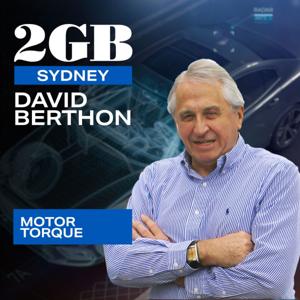
A weekly show with all the latest information and news in the motoring industry. Hosted by 2GB's very own motoring corespondent David Berthon.
For more engaging content visit the 2GB website, or listen live to 2GB 873.
9 Listeners

19 Listeners
2 Listeners

16 Listeners
5 Listeners

10 Listeners
0 Listeners

1 Listeners

2 Listeners

3 Listeners
8 Listeners

8 Listeners

0 Listeners
3 Listeners

2 Listeners
0 Listeners

0 Listeners

0 Listeners