
Sign up to save your podcasts
Or

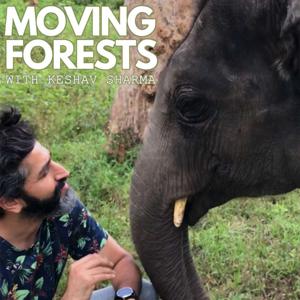


What does it really mean to live with nature, not just visit it, photograph it or admire it, but truly understand our place in it?Wildlife filmmaker Nikhil Virdi takes us deep into India's forests, sharing extraordinary encounters with leopards, black panthers, tigers, elephants, king cobras and other fascinating inhabitants of the wild.But this conversation goes far beyond wildlife encounters.We explore what it takes to tell meaningful stories about nature, the realities of wildlife filmmaking, the challenges facing conservation, and how our relationship with the natural world is changing.From the forests of Ranthambore to conversations about climate change, plastic pollution and artificial intelligence, Nikhil offers a perspective on why storytelling matters and why humans need to reconnect with nature.In this episode, we explore:• Wildlife filmmaking and storytelling in India• Incredible encounters with leopards and black panthers• Experiences from the forests of Ranthambore• Understanding tiger behaviour and other wildlife• The realities and challenges of wildlife conservation• Human-wildlife coexistence• Nature, mental health and our connection with the natural world• Climate change and plastic pollution• How AI could shape the future of wildlife storytellingWhether you're a wildlife photographer, filmmaker, conservationist or simply someone fascinated by the natural world, this conversation offers plenty to think about.
If you like what you hear/see, pls leave us a rating and let me know what I can do to make the show better.
Wildlife filmmaker Nikhil Virdi takes us into India's forests, sharing extraordinary encounters with leopards, tigers, gibbons, elephants and more.A conversation about wildlife, filmmaking, conservation and our fading connection with the natural world.Watch the full episode dropping tomorrow at 4 P.M.Also, please subscribe to the channel, so you don't miss it when it drops and share it with someone who will find value.
An important note before you watch the episode:
This conversation was recorded in May 2026.
Since then, Esha has shared publicly that she has been diagnosed with breast cancer. She has spoken about it with remarkable openness, saying that she is ready to face what life has placed in front of her.
She is a dear friend and we are sharing this episode with her permission and with our warmest wishes for her journey ahead.
Most people see a feather and walk away. Esha, picked it up, and asked: “What bird did this come from?”
After spending more than 13 years working as an architect, Esha left her career and began building India’s first Feather Library, a collection of bird feathers and scientific specimens created to support research, education and conservation.
In this episode, Esha takes us into the fascinating world of bird feathers and explains why something as ordinary as a feather can hold an extraordinary amount of information.
We talk about:
Why bird feathers matter to science
How dead birds and specimens can contribute to future research
What feathers can tell us about birds
Why India needs stronger natural history and research collections
How Esha’s background in architecture shaped the way she built the Feather Library
The connection between curiosity, science and conservation
The challenges of building a unique research collection in India
Why paying attention to small things in nature can completely change the way we see the world
Esha’s story is also a reminder that conservation doesn’t always begin in a forest.
If you like what you see, please subscribe to the channel and share it with someone who will find value.
What can a single feather tell us about a bird?For Esha, that simple question led her from a 13-year career in architecture to building India’s first Feather Library, a collection of bird feathers and scientific specimens created for research, education and conservation.In this episode, Esha talks about bird feathers, dead birds, scientific collections, conservation, and the curiosity that can change the way we see the natural world.If you love birds, wildlife, science and conservation, this conversation is for you. Subscribe if you haven't already, full episode is dropping tomorrow.
For most people, bats are scary. They attack humans. They spread diseases. They live in dark caves.
But how much of what we believe about bats is actually true?
In this episode, I speak with renowned bat researcher Dr. Rohit Chakrabarty about the fascinating and often misunderstood world of bats. After years of studying bats across caves, forests, mountains and cities, Rohit shares what these remarkable animals can teach us about nature, evolution and conservation.
Today, we explore:
• Why bats are so important to ecosystems
• How bats help farmers by eating agricultural pests
• How bats contribute to forest regeneration
• What COVID-19 changed about the way we think about bat conservation
• What it actually takes to discover a new species
• What life is like inside caves and remote mountains
• The challenges of studying bats in the wild
• How scientific research can help protect wildlife
• Why our fear of bats is often based on misunderstanding.
This is a conversation about bats, but also about how science can change the way we see the natural world.
If you like what you see, please subscribe, write a review, help me improve and share it with someone who will find value,. Thank you:)
We’re taught to be afraid of bats.But what if almost everything we believe about them is wrong?In this episode of Moving Forests, I speak with renowned bat researcher Dr. Rohit Chakrabarty about the secret lives of bats, their importance to forests and farms, and what years of studying them in the wild have taught him.The full conversation is coming tomorrow. If you like what you see, please subscribe to the channel and share it with someone who will find value.
As a teenager, Noori started rescuing injured and helpless birds using her own money.
What began as one young girl's decision to help eventually grew into something much bigger.Today, at just 24 years old, Noori has rescued more than 2,000 birds and registered Chahak Charitable Trust, a bird rescue and rehabilitation initiative that she runs from her own home.
If you feel like contributing to her cause, pls find the details below;
Bank Name: SBI, Nand Nagri (Delhi)
Account Name: Chehek Charitable Trust
Account Number: 4426 4323 150IFSC: SBIN0004714
UPI: 9643693795@sbi
In this episode of Moving Forests, Noori talks about how it all began, the challenges of rescuing birds while managing her studies and tuition classes, the dangers birds face today, the realities of running a rescue operation, and her dream of creating one of India's best bird rehabilitation centres.
But more than anything, this is a story about what one person can do when they simply refuse to look away.
You don't always need a huge organisation, a big team or a lot of money to make a difference.Sometimes, you just need to stop and help.
Watch the full episode and meet the incredible young woman behind 2,000+ bird rescues.
If Noori's story inspires you, share this episode with someone who loves birds, wildlife or conservation.
What would you do if you saw an injured bird on the road? Most people walk away.Noori didn't. She started rescuing birds with her own money when she was just a teenager. Today, at only 24, she has rescued more than 2,000 birds and registered her own charitable trust, Chahak Charitable Trust, which operates from her home.When I first heard about Noori and the work she was doing, I couldn't help but feel that her story needed to be shared and I feel great to be able to do that today...Noori shares her first-hand journey, how she started rescuing birds with almost nothing, the challenges of balancing studies and tuition classes with bird rescue, the biggest threats facing birds today, and her dream of creating one of India's best bird rehabilitation centres.This isn't just a story about birds.It's a story about what happens when one person decides to care and keeps caring.If you love birds, wildlife, conservation, or inspiring real-life stories, this episode is for you. Full episode dropping tomorrow, stay tuned.
Most of us think saving forests means planting more trees.But after more than 40 years working across India’s forests, former Principal Chief Conservator of Forests Mudit Kumar Singh has a very different perspective.In this episode, Mr. Singh takes us beyond tree planting and into the much more complicated reality of forest conservation in India; where communities, livelihoods, mining, development, cities and governance all intersect.After decades in the Indian Forest Service, he shares what he has learned about why forests disappear, how communities can become powerful custodians of forests, what mining can change forever, and why urban India urgently needs city forests.This conversation is about people, leadership, development, resilience, public service and the kind of future we want to build for India.In this episode:• Why protecting forests is far more complex than planting trees• The difficult balance between forest conservation, development and mining• How communities can protect and restore degraded forests• Why India’s cities urgently need city forests• Lessons from more than four decades in the Indian Forest Service• Why forests disappear and what can be done differently• The role of communities in forest management and conservation• The future of forest conservation in India• Leadership, resilience and public serviceI would like to know from all of you, what do you think is the biggest challenge facing India’s forests today?If you like what you see, please subscribe to the channel and share it with someone who will find value. Thank you :)
Most of us think saving forests means planting more trees.But after more than 40 years working across India’s forests, former Principal Chief Conservator of Forests Mudit Kumar Singh has a very different perspective.In this episode of Moving Forests, Mudit Kumar Singh takes us beyond tree planting and into the much more complicated reality of forest conservation; where communities, livelihoods, mining, development, cities and governance all intersect.He shares what decades in the Indian Forest Service taught him about why forests disappear, how communities can become powerful custodians of forests, what mining can change forever, and why urban India urgently needs its own forests.This is a conversation about forests, but also about people, leadership, development and the kind of future we want to build for India.If you care about nature, wildlife, climate, or India’s future, this conversation may change the way you think about conservation.
Full Episode Dropping today..
From the publisher's feed