
Sign up to save your podcasts
Or



Send us Fan Mail
The journey from slavery to freedom marks the most transformative period in African American history. Dr. Harry Singleton masterfully guides us through this pivotal moment, revealing how the Emancipation Proclamation launched an unprecedented era of Black advancement during Reconstruction.
Lincoln's path to signing the proclamation wasn't straightforward. Despite being remembered as the Great Emancipator, Lincoln was "forced into glory" by mounting abolitionist pressure, international criticism, and the practical challenges of western expansion. The 1860 election became a referendum on slavery, with Lincoln's victory triggering southern secession and the Civil War.
What makes this episode exceptional is Dr. Singleton's illumination of the extraordinary progress achieved during Reconstruction's brief twelve years. Black education skyrocketed—with 37 HBCUs founded and student numbers increasing five-fold. Political representation surged as Black Americans gained majorities in every southern state legislature by 1875. The constitutional amendments secured during this period—abolishing slavery, guaranteeing citizenship, and protecting voting rights—fundamentally reshaped American democracy.
The episode offers deeper context to institutions that continue shaping Black communities today. The tradition of Watch Night services began as enslaved people gathered on December 31, 1862, awaiting freedom's dawn. The Freedmen's Bureau provided critical support for newly emancipated individuals. And the HBCUs established during this period—from Howard to Morehouse to Claflin—created educational foundations that would nurture generations of Black leadership.
Dr. Singleton concludes with a powerful reminder that while holidays and observances may face political challenges, the essence of Black history remains indelible: "They can never take Black history away from our hearts, from our souls, from our minds, and from our historical DNA." Because ultimately, Black history is American history—essential for understanding our shared past and building a more just future.
Support the show
https://www.buzzsprout.com/2442306/support
http://www.youtube.com/@savannahgrovebaptistchurch5899
https://www.facebook.com/SavannahGroveBaptistChurch
https://www.instagram.com/sgbc_effingham
https://www.tiktok.com/@sgbc_effingham
Send us Fan Mail
The contradictions of American freedom stand starkly revealed in this fascinating exploration of how slavery's opponents fought relentlessly against the institution through rebellion, escape, and the written word. When the founding fathers chose to maintain Black enslavement after winning independence from Britain, they created a moral hypocrisy that would haunt the nation for decades to come.
Three remarkable uprisings stand as testament to the courage of those who refused bondage. The Mende people aboard the Amistad in 1839 executed the first recorded takeover of a slave ship, eventually winning their freedom through a landmark Supreme Court case argued by former president John Quincy Adams. Harriet Tubman's Underground Railroad operations from 1849-1860 demonstrated extraordinary strategic genius, guiding over 200 enslaved people to freedom without losing a single soul—even after the Fugitive Slave Act enlisted federal resources against escapees. And white abolitionist minister John Brown's 1859 raid on Harper's Ferry represented a dramatic, if unsuccessful, armed confrontation with slavery that would cost him his life but ignite national conscience.
Equally powerful were the publications that systematically dismantled slavery's moral legitimacy. David Walker's fiery "Appeal" (1830) provided a comprehensive historical condemnation of racism. William Lloyd Garrison's "The Liberator" (1831) demanded immediate rather than gradual emancipation. Frederick Douglass's autobiography (1845) offered the first widely-read firsthand account of slavery's horrors by a former slave. And Harriet Beecher Stowe's "Uncle Tom's Cabin" (1852) became the century's bestselling book after the Bible, arguing that Christian love was fundamentally incompatible with human bondage.
Together, these acts of resistance forced America to confront its fundamental hypocrisy. By the 1860 presidential election, the nation could no longer avoid addressing slavery, leading to Southern secession and ultimately the Civil War that would bring about emancipation. This is the story of how rebellion—physical and intellectual—became the catalyst for freedom.
Support the show
https://www.buzzsprout.com/2442306/support
http://www.youtube.com/@savannahgrovebaptistchurch5899
https://www.facebook.com/SavannahGroveBaptistChurch
https://www.instagram.com/sgbc_effingham
https://www.tiktok.com/@sgbc_effingham
Send us Fan Mail
A revolutionary theological upheaval took place in early 19th century America that fundamentally challenged how Christianity interpreted freedom. When Anglican Bishop George Berkeley crafted his 1727 letter to plantation owners, he created a theological framework that would dominate American Christianity for generations: the dangerous notion that "Christian freedom" was strictly inward—freedom from sin and Satan—rather than outward freedom from physical bondage. This convenient interpretation allowed slaveholders to Christianize enslaved people without granting them physical freedom.
But as enslaved people gained literacy and began reading the Bible for themselves, a radical new understanding emerged. Three revolutionary ministers—Gabriel Prosser (1800), Denmark Vesey (1822), and Nat Turner (1831)—became what scholar Gayraud Wilmore calls "generals in the Lord's army." Each interpreted Scripture not as justification for slavery but as a mandate for liberation. Prosser identified with Samson, Vesey with Joshua at Jericho, and Turner reinterpreted "Seek ye first the kingdom of God" as a call for Black liberation as the fulfillment of God's kingdom on earth.
What united these three ministers was their profound reinterpretation of Christianity itself. While white clergy used the Bible to maintain slavery, these men transformed Christian theology into a powerful tool for liberation rather than oppression. They understood their ministerial calling as fighting for abolition, marking the first public declaration of Black liberation theology that encompassed both spiritual and physical freedom. Their theological revolution laid the groundwork for the abolitionist movement and influenced generations of religious leaders from Frederick Douglass to Harriet Tubman.
Explore how these revolutionary preachers permanently challenged the notion that Christianity could coexist with human bondage, throwing down a theological gauntlet that continues to challenge churches today to confront systemic injustice rather than merely focusing on personal salvation.
Support the show
https://www.buzzsprout.com/2442306/support
http://www.youtube.com/@savannahgrovebaptistchurch5899
https://www.facebook.com/SavannahGroveBaptistChurch
https://www.instagram.com/sgbc_effingham
https://www.tiktok.com/@sgbc_effingham
Send us Fan Mail
This episode examines the complex relationship between Christianity and the institution of slavery, exploring how theological concepts shaped perceptions and experiences of Black individuals throughout history. We discuss the intersections of faith, identity, and the often-inverted narrative presented by pro-slavery ideologies.
- Historical context of African slavery impacting religious perspectives
- Christianity’s role in justifying dehumanization
- Presuppositions of pro-slavery Christian theology analyzed
- Exploration of biblical themes and their interpretations
- Emergence of anti-slavery theology and its historical significance
- Voices of the Black prophetic radical tradition
- The enduring fight for justice through faith
- Reflections on faith as a vehicle for liberation
- Call for ongoing discussions on faith and social justice
Support the show
https://www.buzzsprout.com/2442306/support
http://www.youtube.com/@savannahgrovebaptistchurch5899
https://www.facebook.com/SavannahGroveBaptistChurch
https://www.instagram.com/sgbc_effingham
https://www.tiktok.com/@sgbc_effingham
Send us Fan Mail
Discover the brutal truths of the transatlantic slave trade and the enduring scars it left on generations with our esteemed guest, Dr. Harry Singleton. Through gripping narratives, we examine how slaveholders strategically dismantled family bonds and social cohesion to suppress unity among enslaved people. From the bustling auction blocks of Charleston and New Orleans to the oppressive grip of slave codes, each story is a haunting reminder of the systemic dehumanization faced by African slaves.
We also delve into the harrowing practice of flogging, rooted in misinterpreted biblical scriptures, and the relentless sexual exploitation and labor demands imposed on enslaved women. These narratives highlight the grim realities of life under slavery, where resistance could mean brutal punishment, and submission was a path to survival. The oppressive systems designed to capture runaway slaves further emphasize the harsh environment in which African Americans struggled for freedom.
But amidst this darkness, a narrative of hope emerges. Listen as we celebrate the power of education as a tool for liberation, with figures like Frederick Douglass and Harriet Jacobs leading the charge. Dr. Singleton also casts light on how Africans redefined Christianity, creating empowering theologies that inspired resilience and hope. Join us as we navigate these complex histories, shedding light on the legacy of slavery and the ongoing pursuit of justice and equality.
Support the show
https://www.buzzsprout.com/2442306/support
http://www.youtube.com/@savannahgrovebaptistchurch5899
https://www.facebook.com/SavannahGroveBaptistChurch
https://www.instagram.com/sgbc_effingham
https://www.tiktok.com/@sgbc_effingham
Send us Fan Mail
Could Africa's rich history have been overshadowed by misconceptions? Join us as Dr. Harry Singleton from the University of South Carolina challenges the outdated myth of Africa as a "Dark Continent" and sheds light on its remarkable civilizations in regions like Libya, Mali, and present-day Ghana. Discover the truth behind the transatlantic slave trade and learn why West Africans were not the first choice for enslavement by European traders. This episode also tackles another historical misconception: the so-called "discovery" of America by Christopher Columbus, when indigenous peoples had already established their presence long before. Through examining these narratives, we aim to provide a deeper understanding of the complex forces that have shaped our world.
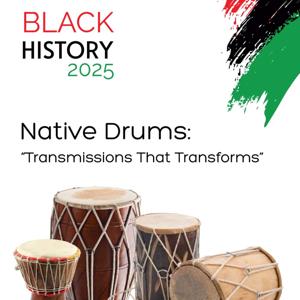
In "Native Drums," Dr. Singleton skillfully unravels the brutal realities of the Atlantic Slave Trade, emphasizing the harrowing conditions endured by enslaved Africans during their forced journey across the ocean. Explore the reasons why West Africans were targeted, from their immunity to certain diseases to the exploitation of their artisanal skills by European planters. Unearth the struggles faced by European colonists in enslaving Native Caribbeans and Native Americans, and understand the cultural and physical barriers that made these groups less suitable for enslavement. The episode paints a vivid picture of the past, aiming to redefine the narrative and expose the economic motivations that fueled such inhumane practices.
Support the show
https://www.buzzsprout.com/2442306/support
http://www.youtube.com/@savannahgrovebaptistchurch5899
https://www.facebook.com/SavannahGroveBaptistChurch
https://www.instagram.com/sgbc_effingham
https://www.tiktok.com/@sgbc_effingham
Send us Fan Mail
What if the stories you’ve been told have only scratched the surface of history? Join us on a journey with Dr. Henry H. Singleton III, a distinguished scholar in African-American history, as he uncovers the layers of struggle and triumph that have shaped the African American experience. Raised in a household that championed education and activism, Dr. Singleton brings unparalleled insight and passion to the conversation. Together, we emphasize the vital role of understanding our history to create a future of empowerment and unity.
Explore the powerful symbolism of drums in African American culture, once tools of communication and resistance during the darkest times of slavery. We confront the lingering shadows of economic exploitation and the pervasive influence of media and religion in controlling black narratives. Let’s reexamine the role of the black church and its mission to fight systemic injustices, urging a return to prophetic ministries that prioritize humanity and community over material wealth. This podcast episode is not just a reflection of the past but a call to action for the future, urging us to build a more just and liberated world.
Support the show
https://www.buzzsprout.com/2442306/support
http://www.youtube.com/@savannahgrovebaptistchurch5899
https://www.facebook.com/SavannahGroveBaptistChurch
https://www.instagram.com/sgbc_effingham
https://www.tiktok.com/@sgbc_effingham
From the publisher's feed
Explore the powerful symbolism of drums in African American culture, once tools of communication and resistance during the darkest times of slavery. We confront the lingering shadows of economic…