
Sign up to save your podcasts
Or



Send us Fan Mail
🎧 Episode 9 Description
Is a stripe the same as a border?
(No. Definitely no.)
In Episode 9 of Nihongo to English, comedians Michelle MaliZaki and Michael Allen CPA tumble into classic Japanese–English confusion while debating stripes, borders, and why English sounds so confident even when it’s wrong. Along the way, they snack on zebra popcorn, wander into euphemisms, sake cups, gift-giving customs, and — eventually — make their way back to studying Japanese.
This episode loosely follows Genki Book 1, Chapter 1, Pages 49-51, but as always, digressions are encouraged. Whether you’re learning Japanese, brushing up on English, or just here for the chaos, you’re in the right place.
Episodes drop on the 2nd, 12th, and 22nd of every month.
Listen, laugh, and accidentally learn something.
🎵 Theme Jingle by Michelle MaliZaki
Support the show
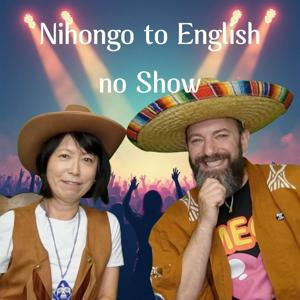
🎙️ Nihongo to English — a bilingual comedy podcast by Michelle MaliZaki and Michael Allen (GoatVsFish).
No homework. Just bilingual chaos—and somehow you learn.
💌 Got a language or culture question? Email us at [email protected]
🔴 Watch us live on Twitch: twitch.tv/nihongotoenglish
🎧 Available on Spotify, Apple Podcasts, Amazon Music
📱 Follow the show on Instagram @NihongoToEnglishPodcast for new episodes on the 2nd, 12th, and 22nd of each month.
👥 Follow the hosts: Michael Allen CPA @michaelallencpa and Michelle MaliZaki @MichelleMaliZaki
Send us Fan Mail
In this episode of Nihongo to English (No Show), Michelle and Michael learn Japanese the way adults actually do — through real conversation, mistakes, and a little sake.
We dive into Genki textbook Japanese (pages 46–48), including school years (〜年生), age counters (〜歳), and the confusing but essential grammar pattern 〜ようになる (“to become able to do”). Along the way, we untangle passive vs ability forms like taberareru and nommeru, and why they trip up English speakers.
Cultural detours include Japanese drinking age vs America, the image of the drunk salaryman, why “leftovers” (残り物) sound strangely negative in Japanese, and how Minecraft, Black Friday shopping, and adult learning habits somehow all connect.
If you’re learning Japanese, brushing up after years away, or just curious how Japanese is actually spoken outside the classroom, this episode is for you.
Theme Jingle by Michelle MaliZaki
Support the show
🎙️ Nihongo to English — a bilingual comedy podcast by Michelle MaliZaki and Michael Allen (GoatVsFish).
No homework. Just bilingual chaos—and somehow you learn.
💌 Got a language or culture question? Email us at [email protected]
🔴 Watch us live on Twitch: twitch.tv/nihongotoenglish
🎧 Available on Spotify, Apple Podcasts, Amazon Music
📱 Follow the show on Instagram @NihongoToEnglishPodcast for new episodes on the 2nd, 12th, and 22nd of each month.
👥 Follow the hosts: Michael Allen CPA @michaelallencpa and Michelle MaliZaki @MichelleMaliZaki
Send us Fan Mail
In Episode 7 of Nihongo to English (No Show), Michelle and Michael dig into one of the most surprisingly fun language differences: animal sounds in Japanese vs. English.
Why does a dog say wan wan instead of woof woof? Why do cats go nyan nyan? And what happens when you translate sounds instead of meanings? This episode uses onomatopoeia as a gateway into how Japanese actually thinks about sound, rhythm, and expression—and why literal translation often misses the point.
From pets and farm animals to everyday sound words, we explore how these expressions show up in conversation, children’s books, manga, and daily speech. Along the way, we talk about why Japanese learners remember sound words so easily, how these phrases build intuition, and what they reveal about culture, cuteness, and communication.
It’s a playful episode with real learning underneath—perfect for beginners, culture lovers, and anyone who’s ever wondered why languages don’t “hear” the world the same way.
Highlights
Keywords
Learn Japanese, Japanese animal sounds, onomatopoeia in Japanese, Japanese vs English, Japanese culture, bilingual podcast, language learning through culture, Japanese conversation
Email: [email protected]
Original Theme Jingle by Michelle MaliZaki
Support the show
🎙️ Nihongo to English — a bilingual comedy podcast by Michelle MaliZaki and Michael Allen (GoatVsFish).
No homework. Just bilingual chaos—and somehow you learn.
💌 Got a language or culture question? Email us at [email protected]
🔴 Watch us live on Twitch: twitch.tv/nihongotoenglish
🎧 Available on Spotify, Apple Podcasts, Amazon Music
📱 Follow the show on Instagram @NihongoToEnglishPodcast for new episodes on the 2nd, 12th, and 22nd of each month.
👥 Follow the hosts: Michael Allen CPA @michaelallencpa and Michelle MaliZaki @MichelleMaliZaki
Send us Fan Mail
In Episode 6 of Nihongo to English (No Show), Michelle and Michael talk about New York through a Japanese cultural lens—and stumble into a surprisingly deep conversation about boundaries, politeness, and the power of saying no.
What starts as travel talk turns into a lesson on how everyday experiences shift when language and culture collide. From New York energy and sensory overload to small misunderstandings like “bread ears,” we explore how Japanese learners navigate unfamiliar expressions—and how meaning can get lost, softened, or completely reinvented in translation.
Along the way, we compare Japanese indirectness with American and British communication styles, unpack why “no” often comes wrapped in politeness in Japanese, and share the small, practical phrases that help you sound natural without feeling rude. It’s less about perfect grammar and more about reading the room, choosing tone, and knowing when silence says enough.
This episode is about language as social navigation—how to listen between the words, protect your energy, and communicate clearly across cultures.
Highlights
Keywords
Learn Japanese, Japanese culture, Japanese vs American communication, saying no in Japanese, New York culture, bilingual podcast, language and identity, cross-cultural humor
Email: [email protected]
Original Theme Jingle by Michelle MaliZaki
Support the show
🎙️ Nihongo to English — a bilingual comedy podcast by Michelle MaliZaki and Michael Allen (GoatVsFish).
No homework. Just bilingual chaos—and somehow you learn.
💌 Got a language or culture question? Email us at [email protected]
🔴 Watch us live on Twitch: twitch.tv/nihongotoenglish
🎧 Available on Spotify, Apple Podcasts, Amazon Music
📱 Follow the show on Instagram @NihongoToEnglishPodcast for new episodes on the 2nd, 12th, and 22nd of each month.
👥 Follow the hosts: Michael Allen CPA @michaelallencpa and Michelle MaliZaki @MichelleMaliZaki
Send us Fan Mail
In Episode 5 of Nihongo to English (No Show), Michelle and Michael talk about Thanksgiving through a Japanese lens—and discover how food, gratitude, and cultural assumptions don’t always translate cleanly.
The conversation starts with Thanksgiving basics and quickly veers into Japanese food culture, including inari sushi, leftovers, and what it actually means to share a meal. Along the way, we unpack how Japanese expresses gratitude differently, why certain foods feel “special” in one culture but ordinary in another, and how meaning shifts when traditions cross borders.
As always, language sneaks in naturally: everyday food words, casual phrasing, and the kinds of expressions textbooks skip but real conversations demand. We also reflect on family gatherings, expectations, and the quiet cultural rules that shape how (and when) you say thank you.
It’s a relaxed, conversational episode about Japanese vs. American culture, food as language, and learning how to talk about familiar holidays in an unfamiliar tongue—without overthinking it.
Highlights
Keywords
Learn Japanese, Japanese food culture, Thanksgiving in Japan, inari sushi, Japanese vs American culture, bilingual podcast, Japanese conversation practice, language learning through culture
Email: [email protected]
Original Theme Jingle by Michelle MaliZaki
Support the show
🎙️ Nihongo to English — a bilingual comedy podcast by Michelle MaliZaki and Michael Allen (GoatVsFish).
No homework. Just bilingual chaos—and somehow you learn.
💌 Got a language or culture question? Email us at [email protected]
🔴 Watch us live on Twitch: twitch.tv/nihongotoenglish
🎧 Available on Spotify, Apple Podcasts, Amazon Music
📱 Follow the show on Instagram @NihongoToEnglishPodcast for new episodes on the 2nd, 12th, and 22nd of each month.
👥 Follow the hosts: Michael Allen CPA @michaelallencpa and Michelle MaliZaki @MichelleMaliZaki
Send us Fan Mail
Just in time for October, Nihongo to English (No Show) gets a little spooky. In Episode 4, Michelle and Michael explore Halloween in Japan and the fine line between kawaii (cute) and kowai (scary)—two words that sound similar but live in very different worlds.
Along the way, we unpack haunted houses (obake yashiki), folk spirits (yokai), and Japan’s deep-rooted obsession with cleanliness, politeness, and the unseen. A big discovery in this episode is the power of the polite “o-” prefix, and how it can make words feel sweeter, stranger, or even slightly sinister—like o-kane (“honorable money”) and other phrases born from playful word logic.
Between ghost stories and laughs, we practice formal Japanese greetings like hajimemashite, compare British “how do you do” with American “howdy,” and even pitch a horror movie called “The Curse of the Chewing Gum.” Because in Japan, everything might have a spirit… even gum stuck to the floor.
It’s a mix of Japanese language tips, cultural comedy, and haunted grammar, where every word seems to come with a backstory.
Highlights
Keywords
Learn Japanese, Japanese culture, Halloween in Japan, yokai, kawaii vs kowai, Japanese honorifics, Japanese greetings, bilingual comedy podcast, language learning through culture
Email: [email protected]
Original Theme Jingle by Michelle MaliZaki
Support the show
🎙️ Nihongo to English — a bilingual comedy podcast by Michelle MaliZaki and Michael Allen (GoatVsFish).
No homework. Just bilingual chaos—and somehow you learn.
💌 Got a language or culture question? Email us at [email protected]
🔴 Watch us live on Twitch: twitch.tv/nihongotoenglish
🎧 Available on Spotify, Apple Podcasts, Amazon Music
📱 Follow the show on Instagram @NihongoToEnglishPodcast for new episodes on the 2nd, 12th, and 22nd of each month.
👥 Follow the hosts: Michael Allen CPA @michaelallencpa and Michelle MaliZaki @MichelleMaliZaki
Send us Fan Mail
In Episode 3 of Nihongo to English (No Show), Michelle and Michael chase the kind of everyday Japanese that textbooks forget—like how to talk about paying utilities (コーネツヒ)—and somehow end up building a whole philosophy around ice cream, idols, and enlightenment.
We look back at the early days of learning Japanese before Google Translate, when tiny paper dictionaries were basically pocket-sized lifelines (and accidental fashion accessories). From there, the conversation swerves into money and language: exchange rates (為替レート), Niigata senbei that “age like whiskey,” and the oddly specific mystery of 十八年もの (aged 18 years).
Then we hit peak chaos: the viral アイスクリーム (aisukurīmu) idol song—and a surprisingly helpful mini-lesson on comparisons like より vs. よりも / よりも. Finally, we zoom out into “Japanese-style” humility and what enlightenment might sound like if Buddha had to answer a compliment in Japan (“いやいや…そんなことないです…”).
It’s bilingual banter, cultural comedy, and practical language discovery—served with sprinkles of self-awareness.
Japanese words featured
Listener homework
What’s your favorite ice cream flavor—and what would your “idol self” say when fans shout 何が好き!? (nani ga suki!?) 🍨
Email: [email protected]
Original Theme Jingle by Michelle MaliZaki
Support the show
🎙️ Nihongo to English — a bilingual comedy podcast by Michelle MaliZaki and Michael Allen (GoatVsFish).
No homework. Just bilingual chaos—and somehow you learn.
💌 Got a language or culture question? Email us at [email protected]
🔴 Watch us live on Twitch: twitch.tv/nihongotoenglish
🎧 Available on Spotify, Apple Podcasts, Amazon Music
📱 Follow the show on Instagram @NihongoToEnglishPodcast for new episodes on the 2nd, 12th, and 22nd of each month.
👥 Follow the hosts: Michael Allen CPA @michaelallencpa and Michelle MaliZaki @MichelleMaliZaki
Send us Fan Mail
Counting to ten quickly turns into a comedy class as Michelle and Michael warm back up to Japanese and discover how easily being “rusty” becomes part of the lesson. From the art of 謙遜 (kenson, humble deflection) to why shi sometimes becomes yon, we explore how numbers, politeness, and social instinct collide in everyday conversation.
Along the way, we riff on Niigata senbei, “shrimp media,” and a fairy tale where Yuki-hime literally melts from too much politeness—a surprisingly accurate metaphor for what happens when you hesitate too long in Japanese. The episode balances laughs with practical takeaways, landing on phrases you can actually use without sounding stiff, awkward, or out of practice.
What you’ll learn (and laugh about)
Try these phrases
Have a question or a moment you want us to unpack?
Email the show at [email protected]
— we may feature it in a future episode.
Theme Jingle by Michelle MaliZaki
Support the show
🎙️ Nihongo to English — a bilingual comedy podcast by Michelle MaliZaki and Michael Allen (GoatVsFish).
No homework. Just bilingual chaos—and somehow you learn.
💌 Got a language or culture question? Email us at [email protected]
🔴 Watch us live on Twitch: twitch.tv/nihongotoenglish
🎧 Available on Spotify, Apple Podcasts, Amazon Music
📱 Follow the show on Instagram @NihongoToEnglishPodcast for new episodes on the 2nd, 12th, and 22nd of each month.
👥 Follow the hosts: Michael Allen CPA @michaelallencpa and Michelle MaliZaki @MichelleMaliZaki
Send us Fan Mail
Ever tried to learn a language by watching TV shows or listening to the news—and felt totally overwhelmed? This show is for you.
In the first episode of Nihongo to English (No Show), two comedians kick things off by talking about nothing in Japanese—and discovering why that’s often the best way to learn. We introduce ourselves, swap Niigata snow stories, and dig into the small phrases textbooks skip but real life depends on: timing, fillers like nanka, and everyday greetings that bookend the day, from ittekimasu to okaerinasai.
The conversation naturally turns to identity and language. Which “I” do you use today—watashi, boku, or ore—and what does that choice signal about age, mood, and social context? We unpack how pronouns, region, and register quietly shape meaning, then lean into playful memory tricks (“Costco salmon” for gochisousama, anyone?) as scaffolding, not shortcuts—tools to get you speaking sooner and refining later.
Along the way, food becomes a classroom (karaage vs. karikari), and life in Niigata shows why small towns can turbocharge fluency: fewer English escapes, more real stakes, and constant reps at the neighborhood izakaya. We also share practical habits you can steal—scene-based Anki decks, fixed exchanges you can record and reuse, and a running list of words life demands but books ignore (futsukayoi included).
This is a show about nothing that ends up being about what matters most in language learning: attention, courage, and the joy of being understood. If you’re studying Japanese, brushing up after years away, or just here for the laughs, hit follow—and tell us which phrase you’re claiming next.
Support the show
🎙️ Nihongo to English — a bilingual comedy podcast by Michelle MaliZaki and Michael Allen (GoatVsFish).
No homework. Just bilingual chaos—and somehow you learn.
💌 Got a language or culture question? Email us at [email protected]
🔴 Watch us live on Twitch: twitch.tv/nihongotoenglish
🎧 Available on Spotify, Apple Podcasts, Amazon Music
📱 Follow the show on Instagram @NihongoToEnglishPodcast for new episodes on the 2nd, 12th, and 22nd of each month.
👥 Follow the hosts: Michael Allen CPA @michaelallencpa and Michelle MaliZaki @MichelleMaliZaki
From the publisher's feed
Nihongo To English blends language learning and stand-up humor as comedians Michelle MaliZaki and Michael Allen CPA (also known as GoatVsFish) explore the quirks of…
You’ll learn phrases, hear authentic conversation, and laugh about everything from Japanese idols and snacks to Ken-son humility and mistranslated signs.
Perfect for fans of Japanese culture, bilingual comedy, or learning Japanese the fun way.