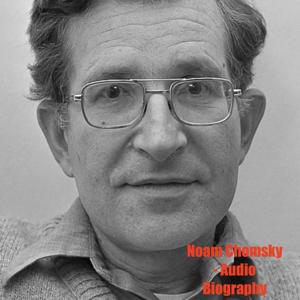
Noam Chomsky - Audio Biography

Noam Chomsky - Audio Biography

Download on the App Store

Noam Chomsky - Audio Biography episodes

  • Biography Flash: Noam Chomsky at 95 - Health Battle Updates and Global Tributes Pour In
    Noam Chomsky Biography Flash a weekly Biography.
    Noam Chomsky, at age 95, has remained an influential force yet has been mostly absent from the public eye due to health issues that have drawn both concern and widespread tribute across the globe. According to Media Lens and the Associated Press, it was confirmed that Chomsky suffered a significant medical event last year, widely reported to be a stroke, leading to his hospitalization in Brazil, his wife Valeria’s home country. After specialist treatment in Sao Paulo, his recovery saw him moved out of intensive care and into a regular room, but close family and longtime assistant Bev Stohl have shared on Reddit and in multiple press updates that he has not made significant progress and is unlikely to return to public appearances, interviews, or his prolific writing cycle.
    Chomsky remains cognitively aware, with reports noting he continues to follow global events—particularly those involving the ongoing war in Gaza. His emotional response has been described as one of lament and anger, visible even through limited physical expression, such as raising his left arm when confronted with atrocities in the news. Despite his constraints, a neurologist, speech therapist, and lung specialist visit him daily as he battles speech difficulties and weakness on his right side. Time Magazine, the Independent, and other major outlets have picked up the story, underscoring the extraordinary impact of his absence from international debate at such a momentous historical juncture.
    Recent tributes to Chomsky from figures including Aaron Maté of The Grayzone, Mehdi Hasan, and investigative journalist Peter Cronau have flooded social media and news platforms, echoing the deep public appreciation for his decades of activism, groundbreaking linguistics, and incisive political analysis. These reflections emphasize how Chomsky’s work—such as “Manufacturing Consent” and “The Washington Connection and Third World Fascism”—continues to guide journalists and policymakers, even as he remains physically sidelined. No credible, direct social media posts from Chomsky himself have surfaced in the past days; instead, most news circulates via updates from family and dedicated admirers.
    While scheduled webinars and student events sometimes appear in promotional calendars, none have been credibly fulfilled or featured Chomsky in direct participation this week, reflecting his ongoing health battle. No new controversies or revelations about his prior associations have emerged with concrete evidence in the last 24 hours, and prior years' headlines—such as those concerning Epstein emails—have not resurfaced as major news recently.
    As the world continues to grapple with existential challenges, Chomsky’s quiet, courageous endurance has inspired renewed reflection on his legacy. His absence from active commentary has only amplified public recognition of his role as an intellectual guide. Thank you for listening; don’t forget to subscribe so
    This content was created in partnership and with the help of Artificial Intelligence AI.
    4 min
  • Biography Flash: Noam Chomsky Recovery Update - Health Struggles and Epstein Files Surface
    Noam Chomsky Biography Flash a weekly Biography.
    In the last several days, Noam Chomsky has remained one of the most discussed and revered intellectuals globally, despite his absence from the public stage due to ongoing health challenges. The most pressing update, as reported by Associated Press and highlighted across major media including Time and The Independent, is that Chomsky, now 96, continues his recovery after suffering a serious stroke in June 2023. His wife Valeria confirmed to the Brazilian newspaper Folha de S.Paulo that he is receiving specialist neurological treatment in a Sao Paulo hospital and is no longer in intensive care, though he has significant difficulty speaking and the right side of his body is affected. Daily visits from a neurologist and lung specialist are part of his care routine, yet according to longtime assistant Bev Stohl, his ability to communicate remains very limited, and a return to public engagement is described as unlikely. He reportedly still follows world events and reacts especially with visible distress to news about the war in Gaza.
    Chomsky’s silence has drawn a groundswell of tributes and reflections from across the intellectual and activist community. Notably, outlets like Media Lens and prominent journalists such as Mehdi Hasan and Aaron Maté have circulated messages of support, emphasizing the enormous impact of his work and the gap left in global discourse due to his absence. The overwhelming sentiment is that Chomsky’s decades of writings and lectures remain foundational, especially amid crises that echo his core concerns: the perils of unchecked power, imperialism, and threats to democracy.
    Amid this, Chomsky’s name again surfaced in headline news with the November 12th release of files related to Jeffrey Epstein. According to Inside Higher Ed and NDTV, Chomsky’s email correspondence with Epstein, spanning from 2009 to 2019, appears in at least 50 documents. The content revolved around academic and political discussions and, as stressed by both outlets, does not implicate Chomsky in any crimes. However, these associations have reignited scrutiny of the complex networks Epstein maintained.
    On the business and professional front, Chomsky’s only recent institutional appearance has been at the University of Arizona, where his name remains prominent as Laureate Professor, though he has not participated in new public or academic events for at least a year. Likewise, his official website and affiliated organizations such as International Peace Bureau continue acknowledging his legacy and previously scheduled honors, but there have been no new public engagements or interviews. Social media continues to circulate both legitimate tributes and speculative rumors, but a strong consensus—the only confirmed narrative—is that Chomsky, the father of modern linguistics and an unwavering critic of power, is now in a period of private reflection and convalescence.
    Thank you for joining me for this special upda
    This content was created in partnership and with the help of Artificial Intelligence AI.
    4 min
  • Biography Flash: Noam Chomsky Wins Peace Prize as Health Concerns Mount and Legacy Deepens
    Noam Chomsky Biography Flash a weekly Biography.
    Noam Chomsky remains one of the world’s most significant living intellectuals, but recent months and especially the past few days have been characterized by reflection on his legacy more than by new direct appearances or public interventions. As reported by the International Peace Bureau, Chomsky was honored with the Seán MacBride Peace Prize, recognizing his lifetime commitment to peace and his consistent critiques of US foreign policy and imperialism—a distinction that reinforces his place as a hero for global anti-capitalist and anti-imperialist movements. This award comes as scholars and activists continue to assess his decades-long influence on thought and action worldwide, particularly through his analyses of war, power, and freedom.
    In the freshest wave of biographical focus, Nathan Robinson—editor of Current Affairs and Chomsky’s recent co-author—delivered a lecture this week at the University of Oregon centered on their new book, The Myth of American Idealism: How U.S. Foreign Policy Endangers the World. Robinson described the project as a distillation of Chomsky’s major recurring themes, notably the disjunction between US leaders’ rhetoric and the country’s actions in global conflicts. While Chomsky himself hasn’t been active in promoting this release, Robinson aimed to make his critiques accessible to a new generation of students discovering Chomsky’s work for the first time.
    Amid this scholarly attention, several reports continue to reflect on Chomsky’s recent past activity, such as his participation on the Laura Flanders Show in September where he discussed the stakes of the US election, the dangers of climate change and nuclear weapons, and the ongoing necessity of activism and civic engagement. While promoting his upcoming collection “Universalizing Resistance,” Chomsky underscored that these are the most dangerous moments in human history, a refrain that has only grown more urgent in his late career.
    However, speculation about Chomsky’s health persists on some platforms. Multiple commenters on The Orcasonian political blog noted that Chomsky reportedly suffered a stroke last year and is seldom seen in public or in new interviews, fueling uncertainty over whether certain online statements attributed to him are genuine. As of today, there have been no verified public appearances, speeches, or new writings by Chomsky in the past twenty-four hours or major breaking headlines directly concerning him in leading global outlets. Unverified or AI-generated content purporting to be Chomsky continues to circulate, but experts and longtime followers routinely caution listeners to differentiate authentic Chomsky content from imitations.
    Social media continues to buzz with Chomsky’s famous quotes, often on free speech and democracy, but most name-checks reference his past statements rather than offering new remarks. For example, his memorable assertion, “If you don’t believe in free speech f
    This content was created in partnership and with the help of Artificial Intelligence AI.
    5 min
  • Biography Flash: Noam Chomsky's Final Book and Health Update Stir Global Tributes for Peace Icon
    Noam Chomsky Biography Flash a weekly Biography.
    Noam Chomsky’s life and legacy have been particularly prominent in the news over the past few days due to two major biographical developments and a significant new book that’s drawing attention to his decades of activism. First, there is the release of “The Myth of American Idealism: How U.S. Foreign Policy Endangers The World,” co-authored with Nathan Robinson, editor of Current Affairs. According to wholecommunity.news and Robinson’s recent public appearances, this book represents a definitive distillation of Chomsky’s critique of American foreign policy across 50 years, from the Vietnam War era up to the present. Robinson revealed they sifted through Chomsky’s corpus, with Chomsky directly involved in selecting material and updating content — until a major health setback. Robinson shared that Chomsky suffered a severe stroke late in the book’s production, which has unfortunately ended Chomsky’s ability to write and make public appearances. Robinson expressed deep pride in honoring Chomsky’s legacy with what he believes is likely to be Chomsky’s final major book.
    This news about the stroke, though reported last year, has taken on renewed relevance as Robinson’s promotional tour and lectures—like the packed University of Oregon Global Justice Program event—have highlighted both the gravity of Chomsky’s condition and the enduring impact of his ideas. Audiences have responded with emotional tributes, and there’s an unmistakable sense that a generational torch is being passed; Robinson himself has spoken of Chomsky’s “genuine people’s hero” status and his unmatched response to activism and correspondence throughout his life.
    Social media mentions regarding Chomsky have surged, as users reflect on his incapacity following the stroke, the influence of his warnings about international conflict, and the book’s warnings about catastrophic outcomes—especially in the context of Middle East developments. Discussion in forums and publication commentaries, such as those responding to Robinson’s interviews, have praised Chomsky’s contributions but also lamented that we may never see another public talk from him.
    On the awards front, the International Peace Bureau is publicly recognizing Chomsky’s lifetime of peace activism with the Seán MacBride Peace Prize for his critiques of US foreign policy and inspirational leadership in global anti-capitalist and anti-imperialist movements. This honor underscores the long-term significance of his career at a moment when public accessibility is no longer possible.
    No recent direct business activity has emerged, and while there are general event tributes and retrospectives, such as university webinars and peace forums, these center on Chomsky’s legacy rather than new work or personal statements. In sum, the past few days have marked an emotional point in Chomsky’s biography: his final major publication, confirmation—via Robinson—of his inability to appear or write due
    This content was created in partnership and with the help of Artificial Intelligence AI.
    4 min
  • Biography Flash: Noam Chomsky's Final Book Released as Health Crisis Marks End of Public Life
    Noam Chomsky Biography Flash a weekly Biography.
    Noam Chomsky has remained in headlines this past week primarily due to the major public reaction surrounding the release of his latest and possibly final book, The Myth of American Idealism, co-authored with Nathan Robinson, editor of Current Affairs. Several major outlets like The Nation call this work a definitive distillation of Chomsky’s multi-decade critique of U.S. foreign policy, describing it as a “condemnation” of the notion that the U.S. is genuinely committed to democracy and human rights. Robinson has been conducting interviews about their collaboration, revealing on KEPW radio that, due to Chomsky’s major stroke towards the end of the book’s production, Robinson finished the project by assembling and editing key late-stage sections—making this volume perhaps the last new material sanctioned by Chomsky himself.
    Chomsky has not made any new public appearances since his stroke earlier this year, and by all reliable accounts, he is currently unable to participate in interviews, talks, or writing. This health news, relayed candidly by his collaborators, marks a significant turning point in his biography and has spurred an outpouring of public appreciation for his legacy. In Robinson’s words, scholars, activists, and everyday readers have been sharing stories on social media—especially on X and TikTok—about how personal interactions with Chomsky or pivotal moments with his books had shaped their political outlooks and activism. The book’s warnings about Israel-Palestine, and Chomsky’s decades-long insistence that catastrophe was looming due to policies from both Israel and the United States, have gained fresh attention amid the ongoing Gaza conflict, with many commentators noting the prescience and relevance of his analyses.
    Politically, his earlier interviews and video appearances keep surfacing in the news. Last week, Democracy Now! and Novara Media rebroadcast previous discussions where Chomsky sharply critiques the collapse of American imperial power and links the current global crisis points—including climate, nuclear risk, and Middle Eastern instability—to chronic policy failures he has warned about for decades. Social media references also remain lively: recent essays, such as in Psychology Today, continue to circulate Chomsky’s early criticisms of social media as a corrosive force on civic discourse, fueling discussion among digital media scholars and activists.
    There are currently no reports of business activity, formal public events, or new academic appointments for Chomsky. His last official connection remains with the University of Arizona, though no recent classroom or webinar participation has been verified.
    No major headlines have emerged in the last 24 hours about Chomsky himself, but the ongoing public acknowledgment of his health and the impact of his final book are dominating mentions and retrospectives across news sites and social platforms.
    Thanks for tuning in to
    This content was created in partnership and with the help of Artificial Intelligence AI.
    4 min
  • Biography Flash: Noam Chomsky at 96 - His Final Book, Health Struggles, and Enduring Impact on Global Politics
    Noam Chomsky Biography Flash a weekly Biography.
    Noam Chomsky, now 96 and long revered as the world’s most cited living intellectual, remains a figure of immense gravity in both politics and academia, despite major changes in his public activity of late. According to Nathan Robinson, his recent co-author, Chomsky suffered a major stroke towards the end of their work together, which has profoundly restricted his ability to participate in public talks or produce new writing. For listeners wondering about Chomsky’s striking absence this past year—especially amid the deepening conflict in Gaza—this is, according to his longtime MIT assistant Bev Stohl via Reddit, directly linked to ongoing health challenges that have sapped much of his time and energy. He is reportedly still with us, following world events with his characteristic intensity, but has not been granting interviews or corresponding as he once did.
    Despite this turn, Chomsky’s influence and relevance feel as fresh as ever, especially following the release of “The Myth of American Idealism,” co-authored with Nathan Robinson and widely acknowledged as likely to be his last major original work. The Nation describes this volume as a potent summary of his decades-long crusade against US imperial designs and the self-serving myth that America is motivated by human rights abroad. Robinson recently gave poignant interviews about piecing together Chomsky’s last thoughts and updating key arguments on the cataclysmic trajectory he long predicted for Israeli-Palestinian relations—in ways that, tragically, seem more prescient by the day.
    On the intellectual front, Chomsky’s classic critiques of media manipulation and the peril of algorithmic echo chambers have gained renewed attention. Philosopheasy and Open Culture recently explored his media literacy paradigm, warning of digital algorithms acting as today's invisible censors, deepening polarization, and hollowing out critical public discourse. Especially timely is his MasterClass on independent thinking, recorded before his health issues, where he minces no words about the existential threat posed by unchecked media systems and the urgency of reclaiming democratic dialogue from both old and new forms of ideological control.
    Chomsky’s name continues to circulate vigorously on social media and podcasts, including recent episodes on Dratsi Pod and ongoing references in platforms like Reddit. Many activists and students cite brief, life-changing communications with him in years past, and his intellectual legacy is more visible than ever in contemporary debates—often cited by emerging leaders and left-wing commentators drawing direct inspiration from him.
    As for public appearances, there have been no verified recent ones, a reflection of his current convalescence. Speculation sometimes swirls online about a possible return if his health improves, but none of this has been confirmed by close family or reliable channels.
    That wraps up the latest in th
    This content was created in partnership and with the help of Artificial Intelligence AI.
    5 min
  • Biography Flash: Noam Chomsky Silent After Stroke - Latest Updates from Brazil Recovery
    Noam Chomsky Biography Flash a weekly Biography.
    Noam Chomsky, at age 96, remains a towering intellectual figure, although his voice has been largely absent from public life over the past year. According to Media Lens and directly echoed in the Associated Press, Chomsky suffered a significant medical event—a stroke—in June of last year. Updates from his longtime MIT assistant Bev Stohl, made public on Reddit and picked up by Time and The Independent, confirm that he is recovering in Brazil, where his wife Valeria is from. Chomsky is no longer able to communicate much if at all, with his speech affected and his right side weakened; he is under daily care from specialists in a Sao Paulo hospital, but thankfully, as reported by Folha de S.Paulo, he has left the ICU and now resides in a regular hospital room.
    His absence has been deeply felt within the global intellectual and activist communities, with reflections and expressions of gratitude flooding social media. Aaron Maté of The Grayzone and Matt Kennard of Declassified UK have recently praised Chomsky on X and other platforms for his powerful lifelong critique of American empire and his immeasurable contributions to the cause of justice and peace. Public recognition of his achievements, ranging from the Seán MacBride Peace Prize to being celebrated as “the most famous critic of US empire in the world,” permeates both activist and scholarly circles, as The Nation recently highlighted in a feature reviewing his latest, and likely final, book coauthored with Nathan Robinson.
    While some ticket sites like Vivid Seats are still listing Chomsky among top public speakers for 2025, these appear to be out-of-date listings with no forthcoming appearances. There have been no verified business ventures, events, or interviews featuring Chomsky since June 2023, when his last major public conversation was recorded with Piers Morgan. Boston Review, often a venue for Chomsky’s ideas, lists him among past speakers but not for anything scheduled recently.
    On social media, fans continue to post tributes and reminisce about his pivotal writings and lectures, particularly with the Israeli-Palestinian conflict dominating headlines—an issue on which his current silence feels especially poignant given his decades-long voice for peace. According to Valeria, when shown news coverage of Gaza, he responds with silent gestures of grief and frustration, a heartbreaking final commentary from a man who spent his life making sense of power, propaganda, and resistance.
    As the podcast wraps, thank you for joining today’s rapid update on Noam Chomsky. Please subscribe right now to never miss an update on the life of Noam Chomsky, and if you’re eager for more extraordinary life stories, just search the term Biography Flash for more great Biographies.
    And that is it for today. Make sure you hit the subscribe button and never miss an update on Noam Chomsky. Thanks for listening. This has been a Quiet Please production."
    Get th
    This content was created in partnership and with the help of Artificial Intelligence AI.

    4 min
  • Biography Flash: Noam Chomsky Health Update and Legacy at 95 - October 2024
    Noam Chomsky Biography Flash a weekly Biography.
    In the past few days, there has been surprisingly little new activity from the legendary linguist and political activist himself, but there is important context to understand about where Noam Chomsky stands right now. According to Media Lens, Chomsky, who is now 95 years old, suffered a significant medical event in June of last year and has not been writing, corresponding, or conducting interviews for approximately one year. His longtime assistant Bev Stohl provided updates on Reddit explaining that Chomsky's health situation has consumed most of his time and energy, though he remains alive and continues to follow current events, apparently not pleased with what he is observing in the world.
    However, there are some recent developments worth noting. Just this past week, on October 23rd, Nathan Robinson, who co-authored a book with Chomsky, spoke at the University of Oregon about the life and legacy of the intellectual giant. Robinson highlighted how Chomsky has spent fifty years of public life exposing what he calls the mythologies of U.S. benevolence and the reality of American violence and aggression around the world. Robinson emphasized that Chomsky meticulously documents his arguments through granular detail, examining statements from press secretaries, heads of state, and members of Congress to reveal how they obscure American foreign policy realities.
    Meanwhile, Chomsky's official website continues to feature some of his most impactful recent work, including a September 2024 interview with Matt Kennard on Novara Media about the collapse of the American Empire. His body of work remains remarkably relevant, with his decades-long critiques of U.S. foreign policy, nuclear weapons dangers, and climate change continuing to influence contemporary discourse.
    It's worth noting that a speech titled "How Much Time Is Left Until the End of Trump" circulating online has been questioned as potentially AI-generated, as it does not appear on Chomsky's official website, which has not posted new original material from him in nearly a year.
    Thank you for listening to this update on Noam Chomsky. Please subscribe to never miss an update on Noam Chomsky and search the term "Biography Flash" for more great biographies.
    And that is it for today. Make sure you hit the subscribe button and never miss an update on Noam Chomsky. Thanks for listening. This has been a Quiet Please production."
    Get the best deals https://amzn.to/3ODvOta
    This content was created in partnership and with the help of Artificial Intelligence AI.
    3 min
  • Biography Flash: Noam Chomsky Silent After Stroke - World Reacts to Legendary Dissident's Health Crisis at 96
    Noam Chomsky Biography Flash a weekly Biography.
    In the past few days, Noam Chomsky's name has circulated prominently in the press and on social media, with most attention fixed not on new works or public statements, but on intensely personal news about his health and enduring influence. Following a major stroke in 2023, which left him with serious difficulty speaking and partial paralysis, confirmed updates highlight that at age 96, Chomsky remains in delicate condition. Associated Press confirms he continues rehabilitation in Brazil, his wife Valeria’s homeland, where he receives daily visits from neurologists and therapists. Valeria revealed to the Brazilian paper Folha de S.Paulo that, despite significant improvements that allowed him to leave the intensive care unit, Chomsky does not communicate much if at all but is still responsive—raising his arm in visible distress when shown news about the war in Gaza. Media Lens, drawing on statements by Chomsky’s longtime MIT assistant Bev Stohl, further cautions listeners not to expect a return to public appearances or writing, noting his absence from media and email since last year.
    This context makes Chomsky’s public silence all the more notable, given his status as the world’s most famous dissident intellectual. Social media, especially platforms like Reddit and X, erupt with tributes, reflections, and speculation about his health whenever a new update emerges, and fans and fellow thinkers alike are sharing memories and expressing gratitude. AOL News remarks that the outpouring of tribute posts and rumors about Chomsky’s status are themselves the latest “stories,” with appreciation for his legacy reaching fever pitch as the world digests his absence.
    Meanwhile, Chomsky’s recent co-authored book with Nathan Robinson, “The Myth of American Idealism,” continues to prompt academic discussion, with Robinson now actively touring, speaking about Chomsky's lifelong effort to puncture U.S. myths and support anti-imperialist causes. Just last night, Robinson gave a lecture at the University of Oregon that doubled as an homage and a crash course in Chomsky’s combative legacy, directly acknowledging that Chomsky can no longer participate in these forums himself.
    No verified reports have emerged of new business, social media posts, or personal appearances from Chomsky himself. Any podcast episodes or articles referencing him in the past days are recaps, tributes, or analyses—not fresh material or statements from Chomsky directly. His official website has been dormant for almost a year, reinforcing the somber reality that, while the world still turns to him for wisdom, new direct messages from Noam Chomsky are unlikely.
    Thank you for joining this update on Noam Chomsky—subscribe now to never miss an episode and search for "Biography Flash" to discover more powerful stories.
    And that is it for today. Make sure you hit the subscribe button and never miss an update on Noam Chomsky. Thanks for listening. This
    This content was created in partnership and with the help of Artificial Intelligence AI.
    4 min
  • Biography Flash: Noam Chomsky's Enduring Critique Finds New Resonance Amid Global Crises
    Noam Chomsky Biography Flash a weekly Biography.
    Last night at the University of Oregon, Nathan Robinson, co-author of Noam Chomsky’s latest book, *The Myth of Idealism*, took the stage to speak on Chomsky’s life and intellectual legacy, drawing a packed crowd eager to hear about the insights that drove Chomsky’s critique of U.S. foreign policy for more than half a century. Robinson, who met Chomsky while founding *Current Affairs* magazine, underscored that the book distills Chomsky’s most enduring themes—particularly the recurring gap between the noble rhetoric of policymakers and the grim realities of violence and domination abroad. Robinson shared personal details, illustrating how Chomsky’s granular analysis impacted his own political awakening. While Chomsky himself did not appear in person due to his advanced age, Robinson’s account emphasized Chomsky’s influence on new generations who are encountering his ideas for the first time and how the latest volume strives to form a definitive statement of Chomsky’s worldview.
    Over the past 48 hours, Chomsky’s name surfaced in major international news when the advocacy group Jews Demand Action issued an open letter, signed by prominent Jewish academics and public figures, condemning Israeli policies in Gaza and the West Bank. The group placed Chomsky—long known for his critical analysis of Israeli government actions and strong advocacy for Palestinian rights—at the center of renewed controversy and debate, especially as the humanitarian crisis persists. Although Chomsky himself has not released a direct public statement within the last day, his decades-old warnings about media saturation and spectacle replacing substance have been cited in commentary, such as a potent essay by Michael Dugeri in The Cable, who invoked Chomsky’s caution that “modern power no longer depends on censorship but on saturation,” linking it to the digital trivialization of crises in places like Nigeria.
    Recent posts on social platforms, particularly Bluesky and academic forums, continue to reference Chomsky’s enduring critiques of mainstream media and political institutions, with users recalling his famous contention that the press acts not as a watchdog but as a manufacturer of consent. These echoes have found new relevance amid current instability in the Middle East and political unrest in the United States, with writers in Global Policy and other journals debating his depiction of the Republican Party as “the most dangerous party in the world”—a claim he made repeatedly and which remains provocative.
    While there have been no reports of fresh public appearances, and no indication of direct social media activity by Chomsky in the last 24 hours, his intellectual shadow looms large. Discussions about U.S. military budgeting, Middle East policy, and the role of distraction in social media often reference his work on “intellectual self-defense.” Businesswise, there is no sign of new projects or ventures, but the spin-off e
    This content was created in partnership and with the help of Artificial Intelligence AI.

    5 min

About Noam Chomsky - Audio Biography

From the publisher's feed

Noam Chomsky Early Life and Education Avram Noam Chomsky was born on December 7, 1928, in Philadelphia, Pennsylvania. His parents, William Chomsky and Elsie Simonofsky, were Jewish immigrants from Eastern Europe. Chomsky's father was a Hebrew scholar, and his mother was a teacher. This academic environment fostered Chomsky's early interest in learning, particularly in linguistics and politics.Chomsky attended an experimental elementary school where he was encouraged to develop his own ideas and interests. He later attended Central High School in Philadelphia, known for its rigorous academic standards. In 1945, Chomsky entered the University of Pennsylvania, where he initially studied philosophy and logic. His interest in linguistics was sparked by meeting Zellig Harris, a leading linguist, who became his mentor.Academic Career and Contributions to Linguistics Chomsky's academic career began in earnest at the Massachusetts Institute of Technology (MIT), where he started teaching in 1955 and remained for the majority of his career. His groundbreaking work, "Syntactic Structures" (1957), revolutionized the field of linguistics by introducing the theory of transformational-generative grammar. This theory proposed that the ability to generate and understand sentences in a language is rooted in an innate, universal grammar shared by all humans. Chomsky's theories challenged the prevailing behaviorist views of language acquisition, which posited that language learning was based on habit formation and environmental stimuli. Instead, Chomsky argued that humans are born with an inherent ability to understand the structure of language, a concept he termed the "language acquisition device." His subsequent work, including "Aspects of the Theory of Syntax" (1965) and "The Minimalist Program" (1995), further developed his ideas on universal grammar and syntax. Chomsky's contributions to linguistics have had a profound impact on the field, influencing not only linguistics but also cognitive science, psychology, and philosophy. Political Activism and Criticism In addition to his work in linguistics, Chomsky is renowned for his political activism and criticism of U.S. foreign policy. His political engagement began in earnest during the Vietnam War, when he became a vocal critic of U.S. involvement. His 1967 essay, "The Responsibility of Intellectuals," argued that intellectuals had a moral duty to speak out against government actions that they believed to be wrong. Chomsky's critiques extend beyond specific policies to a broader critique of power structures and propaganda. In "Manufacturing Consent: The Political Economy of the Mass Media" (1988), co-authored with Edward S. Herman, Chomsky developed the propaganda model of media, arguing that media serves the interests of elite groups in society. Throughout his career, Chomsky has written extensively on issues such as imperialism, capitalism, and human rights. His books, lectures, and interviews have made him one

More shows like Noam Chomsky - Audio Biography

Andrew Huberman - Biography Flash by Inception Point AI

Andrew Huberman - Biography Flash

62 Listeners

Caravaggio - Audio Biography by Inception Point AI

Caravaggio - Audio Biography

1 Listeners

Norman Lear Audio Biography by Inception Point AI

Norman Lear Audio Biography

2 Listeners

Pope Francis - Audio Biography by Inception Point AI

Pope Francis - Audio Biography

5 Listeners

Margot Robbie - Audio Biography by Inception Point AI

Margot Robbie - Audio Biography

0 Listeners

Jim Harbaugh by Inception Point AI

Jim Harbaugh

4 Listeners

Richard Simmons - Audio Biography by Inception Point AI

Richard Simmons - Audio Biography

0 Listeners

Kim Kardashian - Biography Flash by Inception Point AI

Kim Kardashian - Biography Flash

3 Listeners

Pablo Picasso - Audio Biography by Inception Point AI

Pablo Picasso - Audio Biography

2 Listeners

Cleopatra - Audio Biography by Inception Point AI

Cleopatra - Audio Biography

0 Listeners

Chris Pine - Biography Flash by Inception Point Ai

Chris Pine - Biography Flash

0 Listeners

Vincent Price - Audio Biography by Inception Point AI

Vincent Price - Audio Biography

0 Listeners

Gérard Depardieu - Audio Biography by Inception Point AI

Gérard Depardieu - Audio Biography

0 Listeners

Steffi Graf - Audio Biography by Inception Point AI

Steffi Graf - Audio Biography

0 Listeners

Babe Ruth - Audio Biography by Inception Point AI

Babe Ruth - Audio Biography

1 Listeners

Eric Roberts - Audio Biography by Inception Point AI

Eric Roberts - Audio Biography

0 Listeners

Tom Cruise - Biography Flash by Inception Point AI

Tom Cruise - Biography Flash

0 Listeners