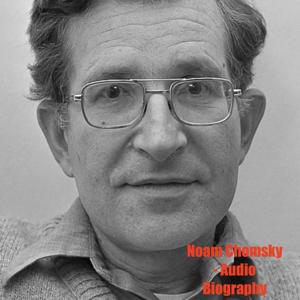
Noam Chomsky - Audio Biography

Noam Chomsky - Audio Biography

Download on the App Store

Noam Chomsky - Audio Biography episodes

  • Noam Chomsky: Legacy of a Brilliant Mind | Biography Flash
    Noam Chomsky Biography Flash a weekly Biography.
    Noam Chomsky, once a relentless voice for reason in global politics and linguistics, has been the subject of significant public attention in the past few days—although, notably, not for any active public appearances or direct commentary. According to AOL News, Chomsky, now 95, has been out of the public eye for about a year due to a serious medical event last June. His former assistant, Bev Stohl, has regularly updated a concerned public via Reddit, confirming that Chomsky remains out of commission, largely unable to communicate, not ambulatory, and that his ability to speak is “complicated by factors I can’t yet disclose.” The family maintains strong privacy, with no further details forthcoming, and neither Chomsky nor his wife and correspondence manager Valeria have commented directly. What we do know is that tribute posts and threads have flourished—Media Lens’s update on Facebook spurred an avalanche of remembrances and stories, reflecting just how deeply Chomsky’s intellectual activism impacted followers worldwide.
    The hype generated by Chomsky’s health decline has led many to assess his biographical legacy, with Nathan Robinson, editor of Current Affairs and Chomsky’s co-author on a forthcoming book, sharing that Chomsky treated everyone as an equal and devoted his life to attacking cruelty and injustice. Influencers like Mehdi Hasan and Jon Schwarz have described Chomsky as “an intellectual giant in an age of confusion, misinformation and soundbites.” Conversely, critics seized the moment to revisit old controversies, including his positions on the Cambodian genocide and Bosnia.
    On social media, X (formerly Twitter) and Threads have been ablaze with both heartfelt tributes and heated debate. A viral Threads post recently joked about “starting to lob Chomsky books at people’s heads again,” sparking discussion about the relevance—and sometimes, the divisiveness—of his work in the current media environment. Clips of Chomsky’s old lectures on the Israel-Palestine conflict have also resurfaced across platforms, with The Business Standard highlighting how his nuanced perspectives—delivered years ago—remain vital as debates on Middle East politics intensify.
    Meanwhile, Chomsky’s established phrases and critiques, such as “manufacturing consent,” are invoked in commentary dissecting the very nature of information warfare and elite manipulation. The Standard recently argued that Chomskyism as a political framework “expired around 2012,” yet mainstream and independent scholars continue to mine his legacy for antidotes to today’s perceived chaos.
    There have been no new business activities or recent public appearances from Chomsky; any updates are strictly secondhand or based on old material, and any suggestion of a recovery or return to public life remains speculative and unconfirmed.
    As we reflect on Chomsky’s enduring influence and the swirl of recent updates, thank you, dear listener, for join
    This content was created in partnership and with the help of Artificial Intelligence AI.
    4 min
  • Biography Flash: Noam Chomsky's Enduring Influence Amidst Rumors, Quotes, and Activism in 2025
    Noam Chomsky Biography Flash a weekly Biography.
    It has been an eventful few days in the world of Noam Chomsky, giving biographers and fans alike plenty to reflect on. Just this week, social media was buzzing with confusion after unverified rumors of Chomsky’s death swept across platforms. The situation was quickly clarified when Valeria Wasserman Chomsky, his wife, stepped forward to publicly confirm that reports of Noam Chomsky’s passing were untrue, a correction picked up by major outlets including AOL. This incident briefly reignited public discourse about how misinformation spreads around prominent intellectual figures and the ongoing fascination with Chomsky’s enduring relevance.
    Meanwhile, Chomsky’s legendary quotes continue to circulate online. In one widely shared Threads post, users quoted his famous maxim, “If you don’t believe in freedom of speech for people you disagree with, you don’t believe in it at all,” a clear sign that his thoughts on free expression remain points of debate and inspiration, even in the dynamic social currents of 2025.
    In a notable media appearance highlighted by AllSides and also mentioned by Daily Kos, a clip of Chomsky surfaced in a podcast conversation about self-censorship and ideological conformity in the media. Here, Chomsky delivered one of his signature, incisive critiques: “How can you know that you’re self-censoring? I’m sure you believe everything you’re saying. But if you believed something different, you wouldn’t be sitting where you’re sitting.” This remark—already widely quoted—resonated with critics of mainstream journalism and was quickly seized on by independent political commentators, reinforcing Chomsky’s role as an emblem of intellectual dissent.
    Discussion of Chomsky’s influence endures in surprising places. During a recent episode of Radio Open Source, historian Robin D.G. Kelley invoked Chomsky’s name alongside James Baldwin while asking where the great public intellectuals have gone in this so-called “autumn of 2025,” underscoring Chomsky’s ongoing symbolic importance in American cultural life.
    Even book recommendations reflect the professor’s reach. Frank Barat, writing for New Internationalist, credited reading Chomsky’s “Understanding Power” as formative in shaping his views on activism for Palestine, evidence that Chomsky’s writings continue to energize global causes and new generations of activists.
    As of now there are no verifiable reports of new business initiatives or direct Chomsky-led appearances, but his indirect influence and voice are unmistakably present in the news cycle and digital debate. This week serves as yet another reminder of just how vital Noam Chomsky remains to our conversations about democracy, power, and free speech.
    Thank you for listening. Subscribe to never miss an update on Noam Chomsky and search the term Biography Flash for more great Biographies.
    Get the best deals https://amzn.to/3ODvOta
    This content was created in partnership and with the help of Artificial Intelligence AI.
    5 min
  • Biography Flash: Chomsky at 97 - Debunking Death Rumors, Igniting Debates
    Noam Chomsky Biography Flash a weekly Biography.
    Noam Chomsky, now approaching his 97th birthday, continues to be a defining presence in global intellectual and activist communities. Over the past few days, social media and news spheres buzzed with confusion as false reports of Chomsky’s death circulated online. According to his wife Valeria Wasserman Chomsky, those rumors are completely unfounded. She confirmed to multiple outlets, including AOL News, that Noam is alive and well. This clarification became a widely shared correction and remains the most widely discussed Chomsky-related headline of the week.
    On the public stage, Chomsky’s analysis continues to spark debate and headline commentary on major issues, from global capitalism to the climate crisis and geopolitical conflict. Just this week, new essays and opinion pieces revisited his warnings about the “manufacture of consent” in the media, emphasizing his prediction that manipulation and distraction would only intensify alongside worsening inequalities and environmental risks, as recently discussed on the Pearls and Irritations site. The relevance of his earlier warnings about climate panic and existential threats to democracy and survival—such as the potential for nuclear war—echoes especially loudly in today’s turbulent climate.
    Politically, Chomsky’s critiques of US foreign policy and the ongoing reframing of "enemies" in international affairs were quoted and analyzed in the context of current US-China tensions, with Current Affairs reflecting on his longstanding assertion that much of American rhetoric about the “China threat” is grounded in a refusal to tolerate economic and political independence abroad. Even as the popular press revisits old interviews and lectures, his voice on Palestine and Gaza remains a touchstone for alternative analysis, with discussion in Press TV noting the growing attention to his decades-long advocacy for Palestinian rights.
    Though Chomsky himself has not made any verified public appearances or live statements in the last 24 hours, his intellectual impact remains vividly present in commentary and retrospectives circulating widely on both mainstream and alternative platforms. There is no credible report of any new business activities or fresh academic publications since early September.
    Finally, it is important to note an emotional moment in Pasadena, where the death of Nina Chomsky, a prominent local activist in the region, received touching tributes. Although she is not directly related to Noam, some confused the headlines—a reminder of Chomsky’s wide cultural footprint.
    Thank you for tuning in to Noam Chomsky Biography Flash. To never miss another update on this extraordinary life, please subscribe and search the term “Biography Flash” for more great biographies.
    Get the best deals https://amzn.to/3ODvOta
    This content was created in partnership and with the help of Artificial Intelligence AI.
    4 min
  • Noam Chomsky: Power, Dissent, and Democracy | Biography Flash
    Noam Chomsky Biography Flash a weekly Biography.
    Noam Chomsky has stayed firmly embedded in global discourse this past week. The media world buzzed with stories and commentaries connecting his decades-long warnings about manufactured consent, elite power, and global crisis to urgent contemporary headlines. In a widely discussed post on John Menadue’s blog, Chomsky’s critiques of how political and economic elites distract and suppress public anger are cited as highly relevant in light of ongoing wars, climate disaster, economic strife, and the intensifying US-China rivalry. Chomsky’s warning from early 2023 is echoing louder: unless the US and its adversaries cooperate and capitalism is radically reined in, humanity’s hopes for survival remain bleak.
    He was cited in The Jerusalem Post for his recent YouTube message sharply criticizing Israel, continuing a lifelong stance — sometimes controversial — on occupation and human rights in the Middle East. The paper points out that while his criticisms about power structures are lauded widely, his perspective on Israel divides fans and detractors with equal passion.
    On Democracy Now!, Chomsky featured several times in early September. The show highlighted his commentary on courage in dissent, with Chomsky emphasizing that genuine democracy is impossible without vibrant, informed criticism of power and relentless questioning of consensus. He remains a touchstone voice for activists and intellectuals, bridging generational divides.
    Social media chatter this week invoked Chomsky’s philosophies of consumerism and interdependence. The Direction of Intention blog borrowed a recent Chomsky quote on neoliberal democracy to foreground themes of community, shared labor, and accountability — values Chomsky’s followers know he cherishes. The conversation isn’t just academic; it’s about day-to-day social responsibility and ethical living.
    In books news, On Palestine saw a fresh wave of social media mentions and summary posts, with Chomsky’s analysis of shrinking middle class and rising economic inequality presented as a cause for rising unrest. This aligns with global headlines about austerity, protest, and systemic crisis, showing just how enduring and prescient his ideas are.
    Chomsky’s theories found resonance in The Pomonan, where scholars described his legacy as being part of intellectual resistance to genocide and hegemonic narratives — casting him alongside Fanon and Said as a guiding light for activism in dark times.
    There are no reports of major business activities, new publications, or public appearances from Chomsky himself in the past 24 hours, nor any news of health setbacks or major personal events. At the moment, speculation about upcoming appearances or statements remains unconfirmed.
    Thank you for tuning in to Noam Chomsky Biography Flash. If you want more timely biographical updates, subscribe now and search the term Biography Flash for great new episodes every week.
    Get the best deals https:
    This content was created in partnership and with the help of Artificial Intelligence AI.

    4 min
  • Noam Chomsky - Audio Biography
    Noam Chomsky Early Life and Education Avram Noam Chomsky was born on December 7, 1928, in Philadelphia, Pennsylvania. His parents, William Chomsky and Elsie Simonofsky, were Jewish immigrants from Eastern Europe. Chomsky's father was a Hebrew scholar, and his mother was a teacher. This academic environment fostered Chomsky's early interest in learning, particularly in linguistics and politics.Chomsky attended an experimental elementary school where he was encouraged to develop his own ideas and interests. He later attended Central High School in Philadelphia, known for its rigorous academic standards. In 1945, Chomsky entered the University of Pennsylvania, where he initially studied philosophy and logic. His interest in linguistics was sparked by meeting Zellig Harris, a leading linguist, who became his mentor.Academic Career and Contributions to Linguistics Chomsky's academic career began in earnest at the Massachusetts Institute of Technology (MIT), where he started teaching in 1955 and remained for the majority of his career. His groundbreaking work, "Syntactic Structures" (1957), revolutionized the field of linguistics by introducing the theory of transformational-generative grammar. This theory proposed that the ability to generate and understand sentences in a language is rooted in an innate, universal grammar shared by all humans. Chomsky's theories challenged the prevailing behaviorist views of language acquisition, which posited that language learning was based on habit formation and environmental stimuli. Instead, Chomsky argued that humans are born with an inherent ability to understand the structure of language, a concept he termed the "language acquisition device." His subsequent work, including "Aspects of the Theory of Syntax" (1965) and "The Minimalist Program" (1995), further developed his ideas on universal grammar and syntax. Chomsky's contributions to linguistics have had a profound impact on the field, influencing not only linguistics but also cognitive science, psychology, and philosophy. Political Activism and Criticism In addition to his work in linguistics, Chomsky is renowned for his political activism and criticism of U.S. foreign policy. His political engagement began in earnest during the Vietnam War, when he became a vocal critic of U.S. involvement. His 1967 essay, "The Responsibility of Intellectuals," argued that intellectuals had a moral duty to speak out against government actions that they believed to be wrong. Chomsky's critiques extend beyond specific policies to a broader critique of power structures and propaganda. In "Manufacturing Consent: The Political Economy of the Mass Media" (1988), co-authored with Edward S. Herman, Chomsky developed the propaganda model of media, arguing that media serves the interests of elite groups in society. Throughout his career, Chomsky has written extensively on issues such as imperialism, capitalism, and human rights. His books, lectures, and interviews have made him one
    This content was created in partnership and with the help of Artificial Intelligence AI.
    5 min

About Noam Chomsky - Audio Biography

From the publisher's feed

Noam Chomsky Early Life and Education Avram Noam Chomsky was born on December 7, 1928, in Philadelphia, Pennsylvania. His parents, William Chomsky and Elsie Simonofsky, were Jewish immigrants from Eastern Europe. Chomsky's father was a Hebrew scholar, and his mother was a teacher. This academic environment fostered Chomsky's early interest in learning, particularly in linguistics and politics.Chomsky attended an experimental elementary school where he was encouraged to develop his own ideas and interests. He later attended Central High School in Philadelphia, known for its rigorous academic standards. In 1945, Chomsky entered the University of Pennsylvania, where he initially studied philosophy and logic. His interest in linguistics was sparked by meeting Zellig Harris, a leading linguist, who became his mentor.Academic Career and Contributions to Linguistics Chomsky's academic career began in earnest at the Massachusetts Institute of Technology (MIT), where he started teaching in 1955 and remained for the majority of his career. His groundbreaking work, "Syntactic Structures" (1957), revolutionized the field of linguistics by introducing the theory of transformational-generative grammar. This theory proposed that the ability to generate and understand sentences in a language is rooted in an innate, universal grammar shared by all humans. Chomsky's theories challenged the prevailing behaviorist views of language acquisition, which posited that language learning was based on habit formation and environmental stimuli. Instead, Chomsky argued that humans are born with an inherent ability to understand the structure of language, a concept he termed the "language acquisition device." His subsequent work, including "Aspects of the Theory of Syntax" (1965) and "The Minimalist Program" (1995), further developed his ideas on universal grammar and syntax. Chomsky's contributions to linguistics have had a profound impact on the field, influencing not only linguistics but also cognitive science, psychology, and philosophy. Political Activism and Criticism In addition to his work in linguistics, Chomsky is renowned for his political activism and criticism of U.S. foreign policy. His political engagement began in earnest during the Vietnam War, when he became a vocal critic of U.S. involvement. His 1967 essay, "The Responsibility of Intellectuals," argued that intellectuals had a moral duty to speak out against government actions that they believed to be wrong. Chomsky's critiques extend beyond specific policies to a broader critique of power structures and propaganda. In "Manufacturing Consent: The Political Economy of the Mass Media" (1988), co-authored with Edward S. Herman, Chomsky developed the propaganda model of media, arguing that media serves the interests of elite groups in society. Throughout his career, Chomsky has written extensively on issues such as imperialism, capitalism, and human rights. His books, lectures, and interviews have made him one

More shows like Noam Chomsky - Audio Biography

Andrew Huberman - Biography Flash by Inception Point AI

Andrew Huberman - Biography Flash

62 Listeners

Caravaggio - Audio Biography by Inception Point AI

Caravaggio - Audio Biography

1 Listeners

Norman Lear Audio Biography by Inception Point AI

Norman Lear Audio Biography

2 Listeners

Pope Francis - Audio Biography by Inception Point AI

Pope Francis - Audio Biography

5 Listeners

Margot Robbie - Audio Biography by Inception Point AI

Margot Robbie - Audio Biography

0 Listeners

Jim Harbaugh by Inception Point AI

Jim Harbaugh

4 Listeners

Richard Simmons - Audio Biography by Inception Point AI

Richard Simmons - Audio Biography

0 Listeners

Kim Kardashian - Biography Flash by Inception Point AI

Kim Kardashian - Biography Flash

3 Listeners

Pablo Picasso - Audio Biography by Inception Point AI

Pablo Picasso - Audio Biography

2 Listeners

Cleopatra - Audio Biography by Inception Point AI

Cleopatra - Audio Biography

0 Listeners

Chris Pine - Biography Flash by Inception Point Ai

Chris Pine - Biography Flash

0 Listeners

Vincent Price - Audio Biography by Inception Point AI

Vincent Price - Audio Biography

0 Listeners

Gérard Depardieu - Audio Biography by Inception Point AI

Gérard Depardieu - Audio Biography

0 Listeners

Steffi Graf - Audio Biography by Inception Point AI

Steffi Graf - Audio Biography

0 Listeners

Babe Ruth - Audio Biography by Inception Point AI

Babe Ruth - Audio Biography

1 Listeners

Eric Roberts - Audio Biography by Inception Point AI

Eric Roberts - Audio Biography

0 Listeners

Tom Cruise - Biography Flash by Inception Point AI

Tom Cruise - Biography Flash

0 Listeners