
Sign up to save your podcasts
Or



Based on Podcast App listening data
It's been a minute since Justin and I have shared our takes on "the news," so this week we have a typically dark, unhinged conversation about what's coming for us in 2024, with an American population frothing at the mouth to BUILD THE WALL and weapons-crazy madmen lashing out around the globe. It's an incredible time to be alive.
Full episode: https://www.patreon.com/posts/102232361?pr=true
Conspiracy theories are a hell of a drug. Justin and I know this from experience, so watching the new Netflix documentary American Conspiracy: The Octopus Murders brought up some deeply identifiable thoughts and emotions for both of us. Do you REALLY want to know the exact details of the dark forces at work within our most sacred institutions? As we discuss here, there's a heavy price to pay for that knowledge, one way or another.
This is the first half of this week's episode, go to our Patreon page to listen to the whole thing!
https://www.patreon.com/posts/episode-386-of-98833719
It's Part Four of our six-part adventure through the history of American automaking and car culture, and we've finally reached the moment when everything starts to unravel: the 1970s. When Arab nations decide to flex their oil muscle against the United States in 1973, they deliver American consumers into an entirely new economic reality, and Detroit struggles to meet the era's new demands for fuel efficiency, safety, and lower emissions. Meanwhile, Japan enters the market with a new approach to cars and the production process that further erodes Detroit's power – until an unlikely hero, the minivan, takes over the 1980s suburbs and points to a rocky road ahead.
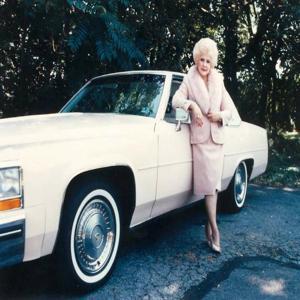
In Part Three of our journey through the history of American car culture, we explore how the massive cultural and political shifts of the 1960s made an impact on American automaking. From the Chevrolet Corvair spinning out and making Ralph Nader a household name, to the Ford Mustang turning boring housewives and husbands into hip celebrities, this was a wild era. When Detroit takes a sinister turn with the 1965 Pontiac GTO, a muscle car war grips American street racing subcultures, before it all burns out when the gas gets too expensive and the smog chokes the skies.
Full episode here: https://www.patreon.com/posts/episode-385-of-98244614
As we continue our story of America's love affair with the automobile, it's time to look at the tailfin behemoths of the 1950s, the cars that look like "guns you can fuck." With the automakers morphing into weapons manufacturers to help Uncle Sam win World War II, the postwar consumer reaped the strange benefits of military technology and imperial ideology seeping into the design of his suburban luxury sedan. Meanwhile, a cute little car produced by the Nazis was slowly stealing the hearts of America's budding counterculture.
Full episode here: https://www.patreon.com/posts/97593008?pr=true
This week we watch Fast Five (2011), the fifth installment in the Fast and Furious franchise, and contemplate how these movies embed radical ideas about criminality, subversion, insurgency, and family in often goofy stories about driving really fast cars, furiously.
Full episode here: https://www.patreon.com/posts/episode-383-fast-97420130
For more reflections on car culture, check out Part One of our new series, The History of America in Six Cars: https://www.patreon.com/posts/episode-382-of-t-97179277
The supreme object of the 20th century, the automobile's development as both transportation technology and cultural totem is literally the story of American capitalism. In the first episode of a six-part series, we examine the life and legacy of Henry Ford, whose Model T took the nation by storm after its debut in 1908. As Ford rises to an unprecedented position of wealth and power, his virulent anti-semitism and destructive business impulses threaten his company's dominance of an emerging mass market in the 1920s.
The Model T's rise and fall as the nation's most popular commercial product gives us a chance to examine the dark forces at the heart of the progressive era, connecting Ford's business innovations (the assembly line, the $5 day, etc) to the racism and hypernationalism that plunged the world into depression and war.
The series will continue with Parts 2-5 on our Patreon: https://www.patreon.com/nostalgiatrap
Sources/inspiration for this episode include:
Paul Ingrassia, Engines of Change: The American Dream in Fifteen Cars
100 Cars That Changed the World: The Designs, Engines, and Technologies That Drive Our ImaginationsWilliam Knoedelseder, Fins: Harley Earl, the Rise of General Motors, and the Glory Days of Detroit
Lizabeth Cohen, A Consumer's Republic: The Politics of Mass Consumption in Postwar America
Our friend Andrew Schustek is back with an all-new Housing Trap conversation all about the unfolding crisis of housing in 21st century New York City and beyond. This time he talks with returning guest Samuel Stein, a geographer, urban planner and housing policy analyst whose book Capital City: Gentrification and the Real Estate State is a must read for housing policy nerds (you know who you are). The boys talk about Sam's new piece in the New York Review of Architecture and contemplate the future of affordable housing in America.
You can listen to the entire Housing Trap series on our Patreon: https://www.patreon.com/collection/119363?view=expanded
Use the discount code AFFORDABLE at the NYRA site for 25% off a subscription, a publication well worth your support: https://nyra.nyc/subscribe
This week Justin and I discuss the 1989 tearjerker Field of Dreams, a film about ghosts playing baseball in some guy's backyard that endures as a beloved classic of American cinema. What's going on with that? As a lifelong devotee of the film, Justin articulates why Field of Dreams hits so hard, as we explore how the secular religious magic of baseball and movies intermingle with dreams of capitalist and socialist utopias.
Sign up for a free 7 day trial of our massive library of podcasts, videos, and more: https://patreon.com/nostalgiatrap
Float Universe is an Instagram meme/troll account that's ostensibly focused on the intersection of floatation tanks and psychedelic culture. The account's creator joins me this week to explain how the floating experience mirrors the druggy rush of online dopamine adventures, as we explore how trolling and conspiracy theories are bending our everyday realities.
Sign up for a free 7 day trial of our massive library of podcasts, videos, and more: https://patreon.com/nostalgiatrap
From the publisher's feed
Ranked by our users in the last 21 days

1,461 Listeners

1,577 Listeners

8,836 Listeners
1,941 Listeners

3,904 Listeners

587 Listeners

4,290 Listeners

2,081 Listeners

3,344 Listeners

3,137 Listeners

606 Listeners
1,064 Listeners
1,047 Listeners

1,487 Listeners
378 Listeners