
Sign up to save your podcasts
Or



Based on Podcast App listening data
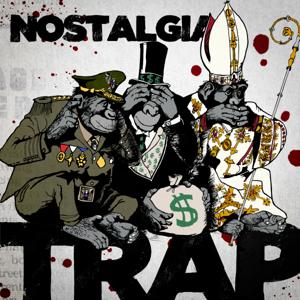
On this episode of TRAP TV, we examine a critical moment in the history of the Walt Disney Company, when the tremendous success of Snow White and the Seven Dwarfs in 1937 gave way to a period of rapid expansion and ambitious, ultimately unsuccessful projects that nearly bankrupted the business and ended the Disney era. Then, the war came. This is the story of how World War II not only rescued Disney from financial ruin, it sharpened the company's aesthetic and ideological purpose. With an unprecedented animator's strike nearly paralyzing production in 1941, the war and its fallout on the homefront began a new period for both Disney the man and Disney the cultural product, as hyper-nationalism, militarism, and explicit anti-communism entered Disney's bloodstream and brought the company to unimagined new heights of profit and influence.
Subscribe to watch/listen to the whole episode: patreon.com/nostalgiatrap
This week Justin and I talk about the fight between labor, management, unions, and the state now being waged in the railroad industry, and trace the longer history of rail and transport as central spaces for navigating the class violence bubbling under the surface of the American economy. Plus, Christmas nostalgia for all the boys and girls!
Full episode: patreon.com/posts/livestream-12-2-75429714
This week Yasmin and I watch Rosemary's Baby (Roman Polanski, 1968) and Birth (Jonathan Glazer, 2004), two films about trapped women, pixie haircuts, beautiful New York apartments, stifling bourgeois social norms, and creepy children born of Satan. There's plenty for us to chew on here—from architecture and occult power to deeply unsettling notions of childhood, death, and sexuality—as we consider how these films locate an atmosphere of dread and horror in the fantastic spaces of elite New York.
Chad E. Pearson is a labor historian and writer whose work focuses on ruling class organizations and violence in the late nineteenth and early twentieth centuries. In this episode we discuss his latest book, Capital's Terrorists: Klansmen, Lawmen, and Employers in the Long Nineteenth Century (UNC Press, 2022), which explores how elite capitalists evolved new strategies of violence and repression during the Second Industrial Revolution, employing extralegal terror—from book burning and blacklists to kidnappings, arson, and murder—as a means of securing their power over a rising population of wage workers.
This week Justin and I consider the possibility that news of Twitter's imminent demise may be premature, which leads to a discussion of tech bro culture's connection to the wider history of consumer capitalism and the series of swaggering men who promise utopian escapes from the very nightmare they've created, producing an endless cycle of technological baubles that attempt to remove us from linear time and distract us from the inevitable march toward death. Does it work? You tell me!
Listen to the whole episode
Shane Burley returns to the Trap for a challenging conversation about Stanley Kubrick's 1987 Vietnam war mindfuck Full Metal Jacket, a film that asks deep, dark questions about violence, masculinity, racial imperialism, and other persistent features of human history. From its prolonged opening training sequence of horrific, hilariously choreographed ritual abuse to the oddly staged final battle sequences and bleak, abrupt ending, we explore how Full Metal Jacket's relentless tone of removed, sarcastic cynicism offers a fractal view of war that remains one of Kubrick's most punishing visions.
Subscribe to listen to the full episode
On this installment of Housing Trap, Andrew Schustek talks with Benjamin Teresa, a professor in the Urban and Regional Studies and Planning program at the Wilder School of Government and Public Affairs at UVA. In this conversation, Teresa explains the role of finance and real estate in shaping the possibilities and limits of housing policy, and offers some ideas on how community engagement might open a trapdoor to a more livable future.
Subscribe to Nostalgia Trap to access our entire catalog
The livestream returns to a week full of exciting collapses: MAGA, Twitter, Meta, all run by men who talk a big game but suddenly can't seal the deal. Is this a temporary blip, "something that happens to all guys sometimes," or are the big swingers of the digital era reaching their limits?
Join the Nostalgia Trap Patreon and listen to the whole episode
This week Ryan and I watch an incendiary viral TikTok and debate the idea of "third places" – those special spaces where a human being can be a human being, around other human beings. Does such a space exist anymore? Who knows! But it seems like the degradation of public space in the past few decades just MIGHT have something to do with the decline of liberal social values – or is it the other way around? Let's ask Mike Davis…
Subscribe to access the entire Campus Trap catalog
Andrew Schustek and Samuel Stein continue their conversation on the inner workings of American housing policy, this time focusing on subsidies, affordable housing, and signs of weakness/vulnerability in the "real estate state."
Subscribe to listen to the whole episode
From the publisher's feed
Ranked by our users in the last 21 days

1,461 Listeners
1,577 Listeners

8,836 Listeners

1,941 Listeners

3,904 Listeners

587 Listeners

4,290 Listeners
2,081 Listeners
3,344 Listeners

3,137 Listeners

606 Listeners
1,064 Listeners
1,047 Listeners

1,487 Listeners
378 Listeners