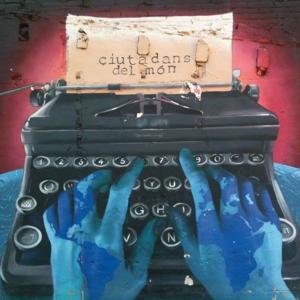
Notes from the World

Notes from the World

By Michael DeibertSociety & CultureNews
Download on the App Store

Notes from the World episodes

  • “Venezuela is a country that everybody wants to use as a rhetorical tool in the United States but not a country that a lot of people are interested in actually knowing.”
    In the early morning hours, of 3 January, a United States military operation spirited Venezuelan leader Nicolás Maduro and his wife Cilia Flores out of Caracas following an assault that left dozens dead, including at least 32 Cubans that the Cuban government later said were members of the Cuban armed forces and intelligence agencies.
    According to the Venezuelan government’s own tally sheets and conclusions of nongovernmental organizations such as the Carter Center, Maduro lost the July 2024 presidential election to former diplomat Edmundo González, who served as Venezuela’s ambassador to Argentina under the presidency of Hugo Chávez, who ruled Venezuela from 1999 until his death in 2013, at which point Maduro assumed the presidency. Rather than admit defeat, Maduro’s government simply declared victory and unleashed savage violence against those who dared oppose it. The United Nations Human Rights Council released a report in the aftermath of the elections that concluded that “violence used against opponents of the Venezuelan authorities has reached unprecedented levels [including] arrests, sexual abuse and torture.” Last July, Amnesty International released another report where it characterized the Maduro government’s “enforced disappearances” of critics “as part of a widespread and systematic attack against the civilian population, particularly those they consider dissidents, which amount to crimes against humanity.”
    For years, Maduro had sat atop a Mafia-like octopus of organized crime as a kind of capo di tutti i capi of a narco-kleptocracy that consisted of not only Maduro himself but also Minister of Interior Diosdado Cabello, the Rodriguez siblings, Delcy Rodríguez, who assumed the presidency after Maduro’s ouster and her brother, Jorge Rodríguez, president of Venezuela’s National Assembly.In April 2023, testimony submitted to the International Criminal Court about the Venezuelan government’s atrocities outlined "Crimes of murder, imprisonment or other severe deprivation of physical liberty, torture, other inhumane acts, rape and/or other forms of sexual violence, enforced disappearance, forced displacement [and] persecution on political grounds [with the victims including] human rights defenders; social and environmental activists; humanitarian workers and volunteers; health professionals; judges, prosecutors, defence lawyers and other civil servants in the judiciary; university students, professors and supporting staff...Former police and military personnel…a large variety of civil servants; workers in both the public and private sector; retirees; journalists, media outlets, bloggers and social media users; land, farm and business owners."
    Donald Trump - who recently freed the former President of Honduras, Juan Orlando Hernández from a 45 year prison sentence in the U.S. thanks to his role as one of the hemisphere’s most prolific drug traffickers - didn’t even attempt to conceal the mercenary and non-humanitarian nature of his seizure of Maduro, claiming the United States would “run” Venezuela until a “safe, proper and judicious transition” took place, claiming the U.S. “built Venezuela’s oil industry” and “the socialist regime stole it from us.” Trump was also brutally dismissive of both Edmundo González and opposition leader and Nobel Prize winner María Corina Machado, claiming the latter “she doesn’t have the respect within the country.” Thus, despite Maduro’s capture, Venezuela’s hydra-headed dictatorship continues in place. Videos from Venezuela confirm that colectivos - as the pro-government militia that have comprised one of the regime’s most fearsome tools of repression are known - have fanned out into the streets.
    To discuss the aftermath of Maduro’s capture and what might possible be in store for Venezuela in the future, today we will speak with Juan Luis Rodríguez, a Venezuelan anthropologist and Associate Professor at Queens College in New York and Venezuelan-American journalist Germania Rodriguez Poleo.

    56 min
  • "If You Don’t Tell Your Own Story, Somebody Else Is Going to Tell It for You."
    Michaël Brun is a Haitian DJ and record producer known for blending electronic music with traditional Haitian styles of song. His debut EP, Gravity, was released in 2013. Since then he has released two full length albums, Lokal on the Kid Coconut label and Fami Vol. 1 with Astralwerks. He became the first Haitian to play Miami’s Ultra Music Festival in 2014, and created, along with J Balvin, the single “Positivo” w which became Telemundo’s theme song for the 2018 FIFA World Cup. In recent years, he has put on an annual Haitian block party-style tour called Bayo. For our last episode of 2025, he stopped by Notes from the World today to discuss his music, Haiti and its culture.
    35 min
  • Marseille: "We're all losers, so we're all winners in a way."
    Philippe Pujol is a French journalist and writer based in Marseille. After starting out in science journalism, he eventually covered crime for the daily newspaper La Marseillaise. In 2014, he won the Albert Londres Prize for his series of articles “Quartiers Shit,” about the northern districts of Marseille. He is the author of several books, including French deconnection : au cœur des trafics, La fabrique du monstre : 10 ans d’immersion dans les quartiers nord de Marseille, Mon cousin, le fasciste (about his cousin, the far-right activist Yvan Benedetti) et Cramés : Les enfants du Monstre. We sat down for a conversation about for a conversation about Marseille, its charms, it violence, its challenges and its possible future.
    50 min
  • Inside the Maelstrom: Jihadists, Juntas & Russian mercenaries in the Sahel
    Since 2020, the Sahel region of Africa has been buffeted by a series of coups that upended the democratically-elected governments of the region and replaced them with military rulers. First in Mali, which saw the presidency of Ibrahim Boubacar Keïta overthrown in August 2020, and which then witnessed a subsequent May 2021 coup that saw General Assimi Goïta seize power; then in Burkina Faso in January 2022, which saw the overthrow of President Roch Marc Christian Kaboré and then in September of that same year, which saw Captain Ibrahim Traoré seize the reigns of state there; and finally in Niger, where a July 2023 coup d’état overthrew President Mohamed Bazoum and saw General Abdourahamane Tchiani seize power.
    Subsequently, the French military, which had participated in a series of counterinsurgency operations against Islamic insurgents, including the Al-Qaeda-affiliated Jama’at Nusrat ul-Islam wa al-Muslimin (JNIM), and Islamic State – Sahel Province (ISSP) and elements of Boko Haram, was ordered to leave the three countries. The French were replaced to a large extent by the Russian government proxy force the Wagner Group and now Africa Corps. Niger, Mali, and Burkina Faso subsequently withdrew from the Economic Community of West African States (ECOWAS) and formed the Alliance des États du Sahel (AES). This past September, the three nations also announced that they no longer recognized the International Criminal Court’s jurisdiction and said they want to create “indigenous mechanisms” to replace it. Recently, Jama’at Nusrat ul-Islam wa al-Muslimin engaged in a show a force around the Malian capital of Bamako, effectively blocking fuel deliveries to the city of 4 million.
    To discuss the complex situation in the Sahel, today on Notes from the World we will speak to two experts on the region, Heni Nsaibia, the West Africa analyst for Armed Conflict Location & Event Data (ACLED) and Yvan Guichaoua, senior research at the Bonn International Center for Conflict Studies.
    53 min
  • The Fall of El Fasher
    Late last month, the city of El Fasher, the capital of North Darfur State in western Sudan, fell to the legions of the Rapid Support Forces (RSF), one of the two competing sides in the civil war that has torn Sudan apart since April 2023. During and after the capture of the city, reports proliferated of gross human rights abuses and mass summary executions by RSF forces, a number of which the fighters recorded and broadcast on social media themselves. According to the United Nations, nearly 70,000 people have fled since the city’s fall. To decode the current situation in El Fasher and Sudan more broadly, on this special broadcast of Notes from the World, we speak to three guests about the situation in El Fasher: Hala al-Karib, a Sudanese human rights activist and the regional director of the Strategic Initiative for Women in the Horn of Africa; Nathaniel Raymond, the Executive Director of the Humanitarian Research Lab at the Yale School of Public Health; and Mukesh Kapila, an author, doctor, professor, and humanitarian who served as the United Nations Resident and Humanitarian Coordinator and the UN Development Program Resident Representative in Sudan from 2003 to 2004.
    1 hr 7 min
  • "I think H. P. Lovecraft's time in New York shaped him as the writer that he became."
    For this special Halloween edition of Notes from the World, we are joined by David J. Goodwin, a historian, writer, past Frederick Lewis Allen Room scholar at the New York Public Library and the author of Midnight Rambles: H. P. Lovecraft in Gotham, a biography of the horror writer’s New York years. His first book, Left Bank of the Hudson: Jersey City and the Artists of 111 1st Street, received the J. Owen Grundy History Award in 2018 and he has written for a variety of publications including Gotham: A Blog for Scholars of New York City History, The Metropole, The Providence Journal, Strand Magazine, Urban Archive and Voices: The Journal of New York Folklore.
    [Image: Frank Belknap Long, H.P. Lovecraft, and James F. Morton at the Edgar Allan Poe Cottage, Bronx, New York, April 1922, via H.P. Lovecraft Photo Gallery)
    30 min
  • "We have never figured out how to value Africa at its true worth."
    Howard W. French is a Professor at Columbia Journalism School who spent the bulk of his reporting career as a foreign correspondent for the New York Times working in Latin America, Africa and Asia. He is the author of several books, including A Continent for the Taking: The Tragedy and Hope of Africa, Born in Blackness: Africa, Africans and the Making of the Modern World and his new book and the subject of our discussion today, The Second Emancipation: Nkrumah, Pan-Africanism, and Global Blackness at High Tide.
    1 hr 7 min
  • "Ukraine is literally defending us"
    Linas Koyala is CEO of the Geopolitics and Security Studies Center in Vilnius, Lithuania, and Associate Professor of Partnership at Vilnius University’s Institute of International Relations and Political Science. He is also a Millennium Fellow at the Atlantic Council and Non-Resident Fellow at the Foreign Policy Research Institute. He joined us to discuss the current situation in the Baltics, the war in Ukraine and its possible implications for wider Europe.
    28 min
  • "Historically, Mexico's government has been complicit in hiding the high levels of violence."
    ldefonso Ortiz is an award-winning journalist with Breitbart Texas who has reported on Mexican drug cartels and public corruption along the U.S.-Mexico border and in Mexico itself for over 15 years. He is a regular guest on radio and television newscasts including on Telemundo, Univision, CNN and the BBC. He joined us to discuss the situation in the Rio Grande Valley and Mexico's Tamaulipas and the history and current state of drug trafficking and organized crime in the region.
    [Note: There were a few issues with the audio on my end which I fixed as best I could, but hopefully they will not detract too much from the discussion.]
    39 min
  • "This is the face of totalitarianism."
    Adam Hochschild was born in New York City in 1942, and in his youth worked as a writer and editor for Ramparts magazine and became a co-founder of the magazine Mother Jones. His writing has appeared in the New Yorker, Harper's, the Atlantic, the New York Times, and many other publications. He is the author of numerous books, most of which are united by dual themes of a granular examination of authoritarianism and despotism, and also of the unquenchable desire, even when facing great odds, of humankind to be free. Those books include The Mirror at Midnight, A South African Journey, The Unquiet Ghost, Russians Remember Stalin, King Leopold's Ghost, A Story of Greed, Terror, and Heroism in Colonial Africa, Bury the Chains: Prophets and Rebels in the Fight to Free an Empire’s Slaves and Spain in Our Hearts: Americans in the Spanish Civil War. We spoke about his body of work, some of the memorable characters he uncovered, and his thoughts about the current political climate in the United States.
    41 min

About Notes from the World

From the publisher's feed

Politics, culture, and society from the Caribbean, Latin America, and beyond.