
Sign up to save your podcasts
Or



Scripture: 2 Kings 22:13–14
“Go, enquire of the Lord for me, and for the people… for great is the wrath of the Lord that is kindled against us, because our fathers have not hearkened unto the words of this book.”Main Thought:
To be locked in means to be spiritually secure and emotionally stable in who God says you are. It’s a mindset that values obedience over validation, clarity over visibility, and purpose over popularity. When you’re locked in, you move when God says move, and you stand still when He says stand still.
Key Character: Huldah the Prophetess
Huldah isn’t often mentioned in Scripture, but her influence was powerful. Living during the reign of King Josiah—a time when God’s Word had been buried under idolatry—she became the voice of revival in a spiritually dark nation.
Her Hebrew name means weasel, a small but alert and focused creature. Like her namesake, she moved with precision and purpose. Her life teaches us that identity precedes assignment—you must know who you are before you can fulfill what God called you to do.
Three Keys to Staying Locked In
I. Concentration
Huldah was laser-focused in a culture filled with rebellion and distraction.
II. Conviction
When the King’s messengers arrived, Huldah didn’t water down God’s message—she spoke truth exactly as God gave it.
Note: Speak truth even when it’s uncomfortable—obedience is not optional when you’re on divine assignment.
III. Consistency
Though her story is brief, her impact was lasting.
Conclusion:
When you’re locked into the right place, you don’t need to escape—you just need to endure.
Final Word from God:
“Stay where I have placed you.Takeaway for Listeners:
Being locked in means being anchored in obedience. When you know who you are and whose you are, you won’t need applause to keep going—you’ll have divine assignment to keep you steady.
"Dealing with the Rejection of Your Selection"
60-28th Pastor Anniversary!
Scripture: II Samuel 2:4
In “A Survivor’s Victory,” Bishop Walker reminds us that God honors both our scars and our strength. This message celebrates the longevity, resilience, and divine purpose that come from surviving the battles of life. Every survivor—whether of sickness, struggle, loss, or hardship—stands as living proof of God’s faithfulness.
God doesn’t just deliver us; He keeps us. Isaiah 46:4 assures us that the same God who made us will carry and sustain us through every season. Our scars tell a story—evidence that His grace is not just a momentary victory, but a continuous movement of strength, healing, and peace.
Before diving into the difference between a “Victory” and a “Survivor’s Victory,” Bishop Walker pauses to celebrate all who have made it through. Whether you survived a diagnosis, depression, financial struggle, or heartbreak—today, we celebrate YOU.
Main Points
I. A Regular Victory Ends — But a Survivor’s Victory Continues
II. A Regular Victory is about an Event — A Survivor’s Victory is about the Evidence
III. A Regular Victory Ends with the Battle — A Survivor’s Victory Begins with Belief
IV. A Regular Victory is Temporary — A Survivor’s Victory is Transformational
A Survivor’s Declaration
“I am not what I went through—I am evidence of what I came out of.”Speak this over your life:
Takeaway for Listeners
Every scar tells a story, every storm leaves a testimony. You are not just a victor—you are a survivor, sustained by a God who carries you even when you can’t carry yourself. Let your life speak loudly: God still heals, keeps, and transforms.
Sometimes the resources we need don’t come from the places we expect. When God gives you the vision, He’s already prepared the provision—it just might arrive from unexpected people, places, and plans.
In this message, “Help From Unexpected Places,” Bishop reminds us that divine help isn’t always familiar. Solomon’s ability to build the temple of God came not only from heavenly wisdom but also from earthly workers sent by Hiram, the king of Tyre. God used a foreign king—an outsider—to supply the materials, manpower, and skill needed to fulfill a spiritual mission.
The backstory begins with King David. When David ascended to the throne, Hiram recognized the favor on his life and sent resources—cedarwood, masons, and carpenters—to help build David’s house (2 Samuel 5:11–12). Years later, that same favor flowed to David’s son Solomon. Because Hiram had honored David, he extended help again—this time to build God’s house.
Key Insight: Favor will finance your vision.
Before help builds the ministry, it first builds the man. God connects people to you not because of what you have, but because of what He has placed on you.
Main Points
I. Unfamiliar People – 1 Kings 5:1
II. Unfamiliar Places – 1 Kings 5:6
Declaration: “It’s coming from out there!”
III. Unfamiliar Plans – 2 Chronicles 2:13–14
Truth: When God gives you the plan, He’s already prepared the people.
Conclusion
David’s help looked like warriors, but Solomon’s help looked like workers.
Whether it’s a familiar face or a foreign friend, don’t limit how God can send help your way.
3 Key Reminders:
God’s next move in your life may come from the least likely direction—so keep your heart open, your faith ready, and your hands prepared to receive help from unexpected places.
This Sunday, Bishop reminded us that sometimes God shifts the message to meet us exactly where we are. What began as “Reserved Seating” became a powerful word titled, “You Know You’re Moving When…” — a message about growth, faith under pressure, and trusting God through the middle of the process.
Bishop began by reminding us that Jesus went into the wilderness to pray, and we must learn to do the same. Growth happens in solitude. “You’ve got to be your own overcomer,” he said. “You’ve got to handle your own stuff and learn how to counteract the trials and tribulations that come your way.”
The foundation of the message came from Psalm 46:1 —
“God is our refuge and strength, a very present help in trouble.”When we lean on God, we find stability even when everything around us feels unstable. Bishop declared, “He promised He’d never leave me nor forsake me. Though horses rise up against me, in Him will I be confident. God is the joy of my life!”
You know you’re moving when the enemy gets upset because you’re finally in a good place — smiling, growing, and making God proud. But this time, you’re prepared: prayed up, faith-filled, and determined to give God exactly what He wants.
Bishop shared that the Lord is saying,
“Just go with it. Never doubt My voice.”The message took us to the question,
“Who is man that Thou art mindful of him?”Everything we have to lean on is the Word of God. Even when it doesn’t look like God is moving, He’s still doing exactly what He said He would do. Our problem, Bishop said, is that we have preconceived notions of what our “next” should look like.
When you pray for change and things start to crumble, that’s not failure — that’s formation. “It’s working,” Bishop said, “and it’s working on me.”
If you’re not feeling pressure, God may not be stretching you yet.
When God says, “It ends well,” that’s a sign that something difficult is coming in the middle. But don’t focus on the middle — focus on the promise. Tell yourself, “I’m going to trust God for how it ends.”
Hold on to what God has promised you. Don’t let the enemy make you miss the finale.
Bishop encouraged us to pray:
“Lord, help me get out of my head. My mind has been transformed. Help me stop doubting what I know You already said — because Your Word has always been good.”Even in hard seasons, God is counting on us to keep showing up — to finish strong and trust Him for the finished work of the Cross. It’s already done!
If you can just push past this little hump, you’ll see clearer on the other side. God has not forgotten you.
So today, declare:
“I trust God for the finished work!”This message challenges believers to protect the anointing, faith, and victory that they’ve fought for. Using the life of Job as an example, we see that the closer we press toward God, the greater the resistance we face—but those same trials refine our faith and strengthen our walk. The enemy’s agenda is clear: he wants your worship, your witness, and your will. But when you realize what it cost you to get where you are, you’ll declare, “Because it cost me everything, I can’t let it go for nothing.”
Main Points & Notes for Listeners
I. Guard Your Faith
📖 Job 1:20 — “Then Job arose, and rent his mantle, and shaved his head, and fell down upon the ground, and worshipped.”
🩸 Takeaway: Because you’ve walked through fire, don’t let the enemy steal the faith you forged there.
II. Silence the Noise
🔇 Protect the inner voice of God within you from the outer noise that man throws at you.
When confusion, criticism, or comparison come, remember: peace speaks softer than pain, but it speaks truth.
🩸 Takeaway: The voice that called you is greater than the noise that surrounds you.
III. Don’t Focus on Temporary Loss
🔥 Lesson 1: Don’t forfeit what fire has forged—the fire didn’t pacify you; it purified you.
💧 Lesson 2: Don’t release what loss has refined—you are better because of it.
🩸 Takeaway: Everything you went through produced something holy in you—protect it with your life.
IV. The Anointing
👊 Tell your neighbor:
“Protect it in the Fire, the Fight, and the Famine—because it cost too much to let it go.”
Final Reflection
Romans 12:1 reminds us to “present our bodies as a living sacrifice.” That means offering your entire self to God—even when it costs you everything.
Job protected his integrity even when all was stripped away. Likewise, we must guard what God birthed through our pain.
🩸 If it cost you your life, protect it with your life.
You fought for this faith. You bled for this breakthrough.
Now stand firm, and protect what you paid for.
This sermon focuses on the power of conviction and what it means to be fully persuaded that you are walking in God’s will. Drawing from Ruth’s decision to stay with Naomi despite famine, death, and uncertainty, the message highlights how conviction—not convenience—ushers us into God’s promises and destiny.
The preacher begins with a personal story: a conversation with siblings who also pastor, reflecting on the joys and struggles of ministry. The Spirit impressed the word “convinced” early one morning, reminding us that consistency flows from conviction. Romans 4:20-21 shows us Abraham’s faith—he was fully persuaded that God would perform what He promised. The world today promotes self-centered living—“I’m protecting my peace,” “I’m living my best life”—but what about the promises we made to God? Believers must remain persuaded that holiness is still right and non-negotiable.
Ruth’s story embodies this truth. Though she had every reason to return to her past life, gods, and culture, she chose conviction. She declared: “Your people shall be my people, your God shall be my God.” That decision led her into destiny—the lineage of Christ.
Key Points
I. Conviction Over Comfort
II. Clinging, Not Quitting (Ruth 1:14)
III. The Right Connection Unlocks the Right Future
IV. Convinced People Become Covenant People
Conclusion:
Like Ruth, we must be convinced we are in the right thing and the right place. There’s no wavering, doubting, or second-guessing when we are persuaded of God’s will. Outside of Him there is confusion and loss, but in Him there is safety, promise, and inheritance.
Declare it: “I’m in the right thing, in the right place. I’m fully persuaded, and I’m not turning back.” Celebrate your connection to God’s covenant and destiny.
Waiting is one of the hardest seasons God calls us into — because waiting often feels like nothing is happening. You prayed, you worked, you believed, you kept showing up, and yet the doors stayed shut. But Elder David Totten reminds us through the life of Caleb in Joshua 14:6–14 that waiting is not wasted. It is the process where God strengthens us, shapes us, and positions us to receive the promise at the right time.
Caleb was 40 years old when Moses promised him an inheritance for following God wholeheartedly, yet he had to wait 45 years before stepping into it. At 85 years old, Caleb declared with bold faith, “Give me this mountain!” His testimony proves that waiting doesn’t weaken us — it preserves us for the very moment when God’s promise comes due.
Key Points for Listeners:
1. Waiting Is Not Wasted
2. Lessons from the Seed
3. Caleb as an Example of Faithful Waiting
Takeaway:
Waiting is not a sign of God’s absence—it’s proof of His preparation. Just like Caleb, your waiting season is preparing you for your winning season. The promise is still yours, no matter how much time has passed. But when your moment comes, don’t shrink back—rise up in faith and declare, “Lord, give me my mountain!”
👉 Reflection Questions for Listeners:
From the publisher's feed
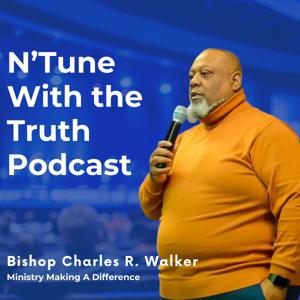
Join Bishop Charles Walker, lead pastor of True Holiness the Intentional Church, in “N’Tune With the TruTH” podcast. Faithfully interpreting scripture, he connects God’s teachings with modern day…