
Sign up to save your podcasts
Or



In this message, Overseer Mary Annette Walker reminds us that God has called His people to be vessels of honor, prepared for His use at any time and in any way He chooses. Using Paul’s imagery in 2 Timothy 2:20-21, we are shown that the church contains all types of vessels—gold, silver, wood, and clay—representing those who walk in truth and those who stray from it. Yet, as verse 19 reminds us, God’s solid foundation stands firm, and nothing catches Him off guard.
The challenge is clear: when others bring false teaching, negative thinking, or distractions into the church, will we stand firm in the truth, or will we move aside and let them take the space God has given us? Spiritually, we cannot afford to give ground. God knows every vessel—those of honor, dishonor, and those who are simply struggling. Our responsibility is to love, encourage, and help each other mature into who God has called us to be.
Key Points for Listeners:
1. Stand Firm in Truth
2. Vessels for the Master’s Use
3. Preparation Through Holiness
4. Remove Excuses—Live for God
5. Be Sensitive to God’s Voice
Takeaway:
God is calling us to be vessels of honor, sanctified and ready for His use. That means standing firm in truth, pursuing holiness, removing excuses, and being open for God to use us anytime and anywhere. Don’t wait for a convenient season—live now in such a way that the Master can use you for His glory and His plan.
👉 Reflection Questions for Listeners:
Many of us boldly declare, “I believe God for my miracle, blessing, or healing!” But the real question is: Are you prepared for what you’re asking God for? Prayer and expectation without preparation often lead to frustration. In this message, we’re challenged to align our faith with readiness—emotionally, spiritually, and practically—for the blessings God is sending.
Scriptures:
Key Points
I. Expectations Without Preparation Lead to Frustration
II. Can You Carry What’s Coming?
III. The Condition of Your Vessel
IV. Preparation Is Proof of Faith
Conclusion – Miracle Prep: FOCUS
Preparation is not wasted effort—it’s faith in action. If you want to be ready for the blessing you’re praying for, keep your FOCUS:
👉 Takeaway: Don’t just pray for it—prepare for it. Your preparation proves your faith and positions you to walk into the miracle God has already designed for you.
In this powerful sermon, Victory in the Valley, we are reminded that not every victory will be won on the mountaintop. While mountain victories are visible and celebrated, some of our greatest breakthroughs happen in the quiet, shadowed places of the valley. David declared in Psalm 23, “Though I walk through the valley of the shadow of death, I will fear no evil,” because even there God brings victory.
Ezekiel 37 reveals a valley filled with dry bones—death, despair, and hopelessness. Yet God asked Ezekiel, “Can these bones live?” His answer wasn’t based on sight but on faith: “O Lord God, You know.” In that valley, God transformed what looked impossible into a vision of restoration and life. This shows us that valley victories accomplish three things:
Key Points from the Message:
I. You have to see it before you see it (Ezekiel 37:3).
II. You must speak what He says (Ezekiel 37:4).
III. Stand until the shaking is over (Ezekiel 37:8).
Conclusion:
The valley is not your end—it’s where your testimony is being built. What God is shaping in the valley will become your greatest victory. It may not look like it now, but it ends well. Trust the process, keep speaking life, and stand firm until you see God’s promises fulfilled.
Homework for the Week:
Speak life over everything that’s supposed to live in your world until you see it standing. Remember—the valley is the pathway to victory.
Life will test your faith, your endurance, and your resolve. Not everyone will make it through the storms still holding on to God. Some will give in to pressure, some will walk away, but God is calling you to be the one left standing. This isn’t about being better than others—it’s about being anchored, steadfast, and faithful when the dust settles.
The call to “stand” means more than surviving; it’s about remaining rooted in worship, pressing past fear, and praising through pain. Scripture is filled with examples—Daniel refused to bow, Job held on after losing everything, the Hebrew boys stood in the fire, Jesus stood silent before Pilate, and Paul declared, “After you’ve done all… to stand.”
Key Points & Notes for Listeners
I. Lasting From the Lessons (Romans 15:4)
II. Struggling From a Place of Strength (2 Corinthians 12:9-10)
Conclusion — Standing is Winning (Matthew 24:13)
In the Kingdom, standing isn’t what you do after you’ve won—it is the victory. You may not walk away with a trophy, but endurance secures eternal reward. God is looking for those who will still be standing when the storm passes—anchored in His word, fueled by His grace, and faithful to the finish.
Challenge to Listeners:
When trials hit, don’t measure victory by the absence of wounds—measure it by your refusal to quit. Stand like Daniel, endure like Job, walk through the fire like the Hebrew boys, and remain rooted like Paul. When the dust settles, let God find you still standing.
What do you do with what's left? In science, “residual” refers to what remains after the main part is removed — the leftover, the remainder. But in God’s hands, the residual isn't just what’s left — it's what He chooses to use. In this message, we examine how God uses what's left — the remnant — to reveal His power and establish His presence. Sometimes, what remains after the cutting, the pruning, and the separating, is exactly what’s right for God to begin His work.
This sermon follows the story of Gideon and his army in Judges 7. God stripped Gideon’s army down from 32,000 men to just 300 — not because of weakness, but because He wanted to show that victory comes from Him, not from numbers or might. The message encourages us to not mourn what has been removed but to rejoice in what God has decided to keep.
I. Too Many (Judges 7:2)
God told Gideon, “The people that are with thee are too many...” — not too weak, but too many for God’s purpose.
22,000 left the camp because they were afraid. Fear has the power to paralyze progress — that’s why God made room for only the faithful. Then, out of the remaining 10,000, God refined again. The final 300 were chosen based on posture and alertness — those who stayed watchful even while drinking water. Discipline, awareness, and readiness mattered more than numbers.
II. The Core Over the Crowd (Judges 7:7)
God chose the core, not the crowd.
God is calling us to appreciate the power of the core. In your life, He may be removing the extra so you can see the essential. Don’t be discouraged by subtraction — it’s God's setup for true impact.
III. Strategy Over Strength (Judges 7:16)
Gideon’s 300 didn’t need to fight with weapons. God had a strategy.
This powerful illustration reminds us: God doesn’t need our strength — He needs our surrender. Often, it’s our broken seasons that allow His glory to shine the brightest. The sound of worship can tear down strongholds greater than any sword. Victory was not won by military might but by obedient hearts and a God-ordained strategy.
Key Takeaways:
In the end, “Residual” is not what we’ve lost, but what God chooses to use. God is dwelling with the remnant. He’s building revival on the foundation of what remains. The subtraction was necessary so that His power could be multiplied.
In this powerful and timely message, the Lord speaks a clear directive: “Don’t Deviate from the Plan.” Just like Jonah, many of us have felt the urge to go our own way, but in this season, God is calling His people to stay the course. The storms around us may tempt us to detour, but obedience is critical—not just for us, but for everyone connected to our journey.
Introduction:
God’s plan is still good. The Holy Spirit prompted this word as a warning and encouragement to the body of Christ. Now is not the time to veer off course. While everyone’s journey may be different, God’s universal plan for every believer includes:
This framework answers the question: “What is God’s plan for my life?”
What does it mean to deviate?
To deviate is to stray from the assigned path. It’s choosing convenience over consistency and substituting our will for God’s. Like Jonah, we sometimes flee from assignments we don’t understand or want—but God’s purpose must be fulfilled.
Key Points of the Message:
I. Deviation Endangers Others
II. Deviation Delays Destiny
III. Deviation Demands a Return
Conclusion:
Deviation starts as delay but can lead to devastation. Don’t let temporary comfort cost you your eternal calling. Repent, return, and fulfill the mission God gave you. There is a nation assigned to your voice—don’t leave them waiting.
In this inspiring and timely message drawn from the story of Lazarus, we are reminded that faith isn’t a one-time experience—it’s a journey. Through the lens of Martha’s encounter with Jesus after her brother’s death, we see how faith evolves, stretches, and grows even in seasons of delay, loss, or impossibility.
Martha believed Jesus could heal Lazarus while he was alive—but when Jesus arrived after Lazarus had died, her words still carried power: “Even now, whatever You ask of God, He will give it to You.” This declaration becomes the foundation of the message: faith that believes beyond the grave, beyond the closed doors, beyond the deadline.
This sermon is a call to those whose situations seem too far gone—relationships, dreams, ministries, or health—reminding us that Jesus is not restricted by time or circumstance. Even now… He can do it.
I. Elevated Faith
John 11:22
Martha’s faith evolved—from believing in healing to believing in resurrection.
II. Even Now Faith
Luke 8:49–50
When Jairus was told his daughter was dead, Jesus said: “Fear not: believe only.”
Even Now means:
Reflection: God doesn’t just heal—He makes whole. Faith thrives in the face of impossibility.
III. At Your Word
Matthew 8:8
The centurion said, “Just speak the word and my servant will be healed.”
IV. Prophetic Declaration
God is speaking LIFE to what has looked lifeless:
V. Cold Case / Cold Faith
Like the show Cold Case, where unsolved crimes are reopened, many of us have filed away:
But today, God is reopening the case.
Takeaway Truth:
God’s breaking point is our building point. Even now—when all seems lost—faith still works. God still speaks. And resurrection is still possible.Closing Invitation:
If you’ve closed the door on something because of time, pain, or silence—this message is for you. Tune in and declare with boldness: Even Now, God Can.
In this motivating and spiritually-charged sermon, Minister Gary Woodson encourages believers to “Stay in Motion”—spiritually, mentally, and emotionally. Anchored in Romans 12:4-5, the message reminds us that we are all members of one body in Christ, each with a unique role and purpose. When one part moves, the rest are impacted. God has gifted us with the ability to manage our emotions, especially when it comes to how others influence us. The key? Staying grounded and moving forward in God.
Minister Woodson illustrates the message using the example of a rowing team—eight rowers guided by a coxswain. In our spiritual walk, the Holy Ghost is our Coxswain, setting the pace and giving direction. But Jesus is the Captain of the boat—our lives. When we let God lead, we move in sync with His purpose. God is in control—trust Him.
2 Peter 1:5-8 outlines eight spiritual qualities that help us stay spiritually productive:
These virtues aren’t just suggestions—they are spiritual tools that keep us effective and fruitful in the knowledge of Christ. When we cultivate these, we remain spiritually in motion.
Key Takeaways for Listeners:
Closing Encouragement:
Minister Woodson reminds us that momentum is spiritual. Once you're in motion in Christ, don’t let anything slow you down. Victory is already declared for those who stay the course, follow the Spirit, and keep their eyes fixed forward. No matter the storm, no matter the opposition—stay in motion and trust the One who leads your boat.
What if Father’s Day was more than just a moment of celebration—what if it was a Divine Demonstration? This year’s message isn’t just about biology—it’s about identity, legacy, and unity. Fatherhood is more than a title; it’s a transfer of purpose. Through a powerful visual illustration, a father and son walk in step—same motion, same pause—revealing that Jesus and His Father were not just connected, they were one.
Jesus didn’t just represent His Father—He revealed Him. And just like Christ stepped through the frame of flesh and into His purpose, we too are called to step into the image and intention of our Heavenly Father.
I. The Wrestle with Release
John 1:14, Genesis 32:24-30
Before legacy can be fulfilled, there’s a wrestle that must be faced.
Lesson: God doesn’t wrestle us to weaken us—He wrestles us into purpose.
Son’s Wrestle: The Garden of Gethsemane
Luke 22:42 – “Not my will, but Thine be done.”
Jesus didn’t wrestle demons here—He wrestled His own will.
Key Reflection: Every son will have a Gethsemane moment, where surrender shapes destiny.
Conclusion: The Return and the Reunion
After the Cross came the tomb. After the tomb came the cloud—the ascension.
Final Declaration (Read Together):
“So on this Father’s Day, remember this:
Every son carries a glimpse of his father’s glory, and every father, when he looks at his son, should see his legacy alive.
Just like Jesus, we were born to reflect, to wrestle, and to return.”
Key Takeaways for Listeners:
I. From Ordinary to Extraordinary
Acts 2:14; Acts 4:13 (ESV)
II. Five Kinds of Power Released at Pentecost
1. Power to Be Bold Witnesses
Acts 1:8; John 20:19
2. Power to Speak with Divine Authority
Acts 2:4,6
3. Power to Transform Lives
Acts 2:37-38
4. Power to Unite Believers
Acts 2:1; Acts 2:44 (ESV)
5. Power to Operate in Signs and Wonders
Acts 2:43
Reflection Questions:
Conclusion: From Fisherman to Fireman
Peter wasn’t just reformed—he was ignited. Pentecost turned him from a fisherman into a “fireman,” not the kind who puts out flames, but the kind who starts them. He preached the Gospel with boldness, became a key leader in the early church, and operated in the full force of the Holy Spirit.
Final Thought:
You didn’t just receive a moment—you received movement. The same fire that fell at Pentecost still burns today. You have power—use it. Don’t just carry it, release it.
From the publisher's feed
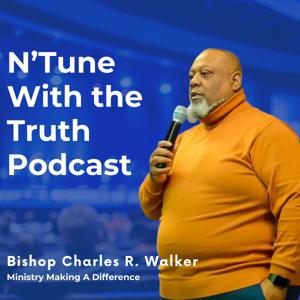
Join Bishop Charles Walker, lead pastor of True Holiness the Intentional Church, in “N’Tune With the TruTH” podcast. Faithfully interpreting scripture, he connects God’s teachings with modern day…