
Sign up to save your podcasts
Or

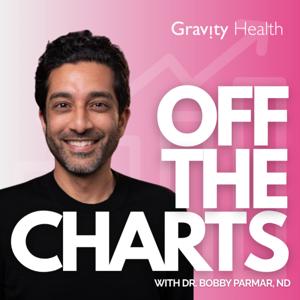


Iron deficiency is one of the most common and most misunderstood medical issues affecting women today.
In this episode of Off the Charts, Dr. Bobby Parmar, ND and Dr. Paul Maximus, ND break down why so many patients are told their labs are “normal” while they continue to experience exhaustion, brain fog, hair loss, chronic pain, mood changes, and low libido.
The conversation explores how laboratory reference ranges differ from clinical reality, why iron deficiency is routinely missed until it becomes anemia, and how outdated screening practices disproportionately affect women. This is especially true for those with heavy periods, perimenopause, inflammatory conditions, plant-based diets, or absorption issues.
Dr. Parmar and Dr. Maximus explain why oral iron often fails, why symptoms can persist well above traditional ferritin cutoffs, and why IV iron is positioned as a system-level solution rather than unnecessary intervention.
The discussion covers bone marrow iron stores, ferritin targets, pregnancy and postpartum depletion, libido, mental health, and energy regulation. This episode challenges the idea that feeling tired, foggy, or unwell is simply part of being a woman.
If you have ever been told your labs are fine but your body says otherwise, this conversation puts iron deficiency back where it belongs: front and center.
WHAT YOU’LL LEARN
TIMESTAMPS
TOP REFERENCES
This resource page is for educational purposes only and does not constitute medical advice.
CONNECT WITH GRAVITY HEALTH
FOLLOW US
Off the Charts is a podcast by Gravity Health, created for general informational and educational purposes only. It does not constitute the practice of medicine, nursing, or any other healthcare service, and should not be taken as medical advice. Listening to this podcast does not create a doctor–patient relationship. Listeners should always seek the guidance of qualified healthcare professionals regarding any medical condition or treatment.
For more information about content use and disclaimers, please visit:
Medicine wasn’t built for women — and today, the consequences show up in every corner of healthcare.
From misdiagnosed pain to delayed diagnoses, from biased research to outdated medical training, women around the world are still fighting to be heard, believed, and properly treated.
In this episode, Dr. Bobby Parmar, ND sits down with activist and storyteller Karen “Kaz” Twomey for a powerful conversation about the gender data gap and how it continues to shape women’s health outcomes. Together, they explore why conditions like endometriosis, PCOS, perimenopause, and iron deficiency are so often dismissed or overlooked; how historical bias has shaped modern gynecology; and why women still struggle to find accurate information, compassionate care, and timely diagnosis.
This episode dives into the cultural, scientific, and systemic roots of medical sexism, the lingering influence of the WHI hormone therapy study, and the growing movement of women reclaiming their own health literacy through social media, advocacy, and community education. If you’ve ever wondered why women’s symptoms are minimized, why diagnostic delays are so common, or why women’s health research lags behind — this conversation pulls back the curtain.
WHAT YOU’LL LEARN
TIMESTAMPS
TOP REFERENCES
This resource page is for educational purposes only and does not constitute medical advice.
CONNECT WITH GRAVITY HEALTH
FOLLOW US
Off the Charts is a podcast by Gravity Health, created for general informational and educational purposes only. It does not constitute the practice of medicine, nursing, or any other healthcare service, and should not be taken as medical advice. Listening to this podcast does not create a doctor–patient relationship. Listeners should always seek the guidance of qualified healthcare professionals regarding any medical condition or treatment.
For more information about content use and disclaimers, please visit:
Understanding how estrogen affects breast cancer risk is one of the most confusing and highly searched topics in women’s health. In this episode of Off the Charts, Dr. Bobby Parmar, ND breaks down the science behind estrogen, breast density, hormone therapy (HRT), IUDs, birth control, IVF, pregnancy timing, breastfeeding, and other factors that shape breast cancer risk throughout a woman’s life.
We explain what “lifetime estrogen exposure” means, why early periods and late menopause matter, and how breast density, alcohol, height, metabolic health, and reproductive history all contribute to risk in different ways. We also clarify one of the biggest misconceptions circulating online: estrogen-only menopausal hormone therapy after hysterectomy is associated with lower breast cancer risk according to large randomized trials.
This episode gives women a clear, evidence-based understanding of breast cancer risk factors—without fear-based messaging or misinformation.
WHAT YOU’LL LEARN
How estrogen influences breast cancer risk across the lifespan
Estrogen’s benefits for bone, brain, metabolic and cardiovascular health
The truth about perimenopause, menopause and hormone therapy (HRT)
Breast density, BI-RADS categories and how density affects screening accuracy
Family history, atypia and combined breast cancer risk
Alcohol, height, growth hormones and metabolic contributors
Pregnancy timing, breastfeeding cycles and breast tissue biology
What studies actually show about IUDs, birth control and IVF
What women can and cannot control when it comes to breast cancer prevention
TOPICS COVERED (TIMELINE STYLE)
Why estrogen is misunderstood
What “lifetime estrogen exposure” really means
Menopause, HRT and clearing the confusion
Breast density, BI-RADS and cancer detection
Family history, atypia and stacked risks
How breast density changes with age
Alcohol as a Group 1 carcinogen and what studies show
Does alcohol type matter?
Height, growth hormones and cancer risk
Metabolic health, inflammation and early-life factors
Pregnancy timing and why age matters
Never having kids (nulliparity)
How breastfeeding changes breast tissue
What it means if you cannot breastfeed
IVF hormones and breast cancer risk
Birth control, hormonal IUDs and real-world numbers
Misinformation, fear-based messaging and how to understand your personal risk
EPISODE RESOURCES AND REFERENCES
Off the Charts provides a companion reference page for every episode to support transparency and evidence-based discussion. Key sources for Episode 2 include Frontiers in Oncology, The Lancet, Nature, the National Cancer Institute, the Canadian Cancer Society, FORCE XRAY, Susan G. Komen, Radiopaedia and the American College of Radiology (BI-RADS).
Primary studies and clinical resources:
Frontiers in Oncology – Estrogen Effects on the Mammary Gland
https://www.frontiersin.org/journals/oncology/articles/10.3389/fonc.2017.00110/full
PubMed – Estrogen-Alone Therapy and Breast Cancer Incidence (2024)
https://pubmed.ncbi.nlm.nih.gov/38653905/
FORCE XRAY – Estrogen-Only HRT and Breast Cancer
https://www.facingourrisk.org/XRAY/estrogen-without-progesterone-as-HRT-may-lower-breast-cancer
Canadian Cancer Society – Breast Density
https://www.cancer.ca/en/treatments/tests-and-procedures/mammography/breast-density
National Cancer Institute – Reproductive History and Cancer
https://www.cancer.gov/about-cancer/causes-prevention/risk/hormones/reproductive-history-fact-sheet
Nature – Pregnancy Duration and Breast Cancer Risk
https://www.nature.com/articles/s41467-018-06748-3
Susan G. Komen – Age at First Childbirth
https://www.komen.org/breast-cancer/risk-factor/age-at-first-childbirth
Radiopaedia – Breast Density Classification
https://radiopaedia.org/articles/breast-density-classification
American College of Radiology – BI-RADS
https://www.acr.org/Clinical-Resources/Clinical-Tools-and-Reference/Reporting-and-Data-Systems/BI-RADS
CONNECT WITH GRAVITY HEALTH
Website: https://www.gravityhealthclinics.com/
Book a Consult: https://gravityhealth.janeapp.com/
Mint Reproductive Health: https://mintreproductivehealth.com/
FOLLOW US
Instagram (Clinic): https://www.instagram.com/gravityhealthclinics/
Dr. Bobby Parmar: https://www.instagram.com/docparmar_nd/
Dr. Paul Maximus: https://www.instagram.com/drmaximus/
DISCLAIMER
Off the Charts is a podcast by Gravity Health created for general informational and educational purposes only. It does not constitute medical advice, diagnosis or treatment. Listening to this podcast does not establish a doctor–patient relationship. Always seek the guidance of a qualified healthcare professional regarding your personal health concerns.
Terms of Use: https://www.gravityhealthclinics.com/terms-of-use
Medical Disclaimer: https://www.gravityhealthclinics.com/medical-disclaimer
With Dr. Bobby Parmar and Dr. Paul Maximus
Brought to you by Gravity Health
“Behind the hype and hashtags, millions of people are quietly reshaping their health with GLP-1s, but the stigma hasn’t caught up to the science.”
Ozempic®, Mounjaro™, and other GLP-1 medications are changing how the world thinks about metabolism, weight, and longevity — but not without controversy.
In this conversation, Dr. Bobby Parmar and Dr. Paul Maximus explore how these drugs went from diabetes treatments to cultural lightning rods. They dig into what science really says about GLP-1s, why moral bias still shapes how we talk about obesity, and what this shift means for the future of health and medicine.
You’ll walk away with a deeper understanding of the biology behind appetite, the psychology of shame, and how longevity isn’t just about living longer — it’s about living better.
The physiological role of GLP-1 hormones in regulating hunger, satiety, and blood sugar
Why these treatments are helping patients with metabolic and cardiovascular disease — not just weight
The history of fat-shaming and why stigma still affects treatment access
How obesity is now understood as a chronic, relapsing condition — not a personal failure
What the research shows about long-term safety, muscle preservation, and sustained metabolic improvement
0:00 Welcome to Off the Charts: The truth about GLP-1s and Ozempic
0:52 Why people hide their use of Ozempic and Mounjaro
2:52 Shame, willpower, and moral judgment in weight loss
4:55 Obesity as a disease — from circus cages to modern medicine
8:16 Fatphobia in healthcare and everyday life
9:13 Food noise, dopamine, and how our brains drive eating behavior
10:33 It’s not willpower — how biology shapes weight
13:55 The “cheating” narrative and natural vs pharmaceutical myths
15:31 The Gila monster story — how nature led to GLP-1 discovery
21:47 The rise of GLP-1 drugs and the billion-dollar shift
27:28 Why some doctors won’t prescribe Ozempic
32:30 Debunking “dangerous side effect” myths
37:27 Chronic disease, longevity, and why GLP-1s are for life
44:15 Muscle loss myths — what actually happens on Ozempic
48:38 Closing thoughts — send us your questions and hot takes
To maintain transparency and support evidence-based discussion, every Off the Charts episode includes a companion page listing all primary research, clinical trials, and cultural references mentioned in the conversation.
These references include publications from the New England Journal of Medicine, Physiological Reviews, the FDA, Obesity Canada, and more.
1️⃣ Holst JJ (2007). The physiology of glucagon-like peptide-1 (GLP-1). Physiological Reviews.
🔗 https://journals.physiology.org/doi/full/10.1152/physrev.00034.2006
2️⃣ Drucker DJ (2018). Mechanisms of action and therapeutic application of GLP-1 and GIP. Cell Metabolism.
🔗 https://pubmed.ncbi.nlm.nih.gov/29617641/
3️⃣ Liraglutide and cardiovascular outcomes in type 2 diabetes. (2016). New England Journal of Medicine.
🔗 https://www.nejm.org/doi/full/10.1056/NEJMoa1603827
4️⃣ U.S. Food and Drug Administration (2024). FDA approves first treatment to reduce risk of serious heart problems in adults with obesity or overweight.
🔗 https://www.fda.gov/news-events/press-announcements/fda-approves-first-treatment-reduce-risk-serious-heart-problems-specifically-adults-obesity-or
5️⃣ Obesity Canada (2025). Recognizing and reducing weight bias in obesity management.
🔗 https://obesitycanada.ca/wp-content/uploads/2025/03/1-Canadian-Adult-Obesity-CPG-Reducing-Weight-Bias-Stigma.pdf
This resource page is for educational purposes only and does not constitute medical advice.
Website → https://www.gravityhealthclinics.com/
YouTube → Watch on YouTube
Book a Consult → https://gravityhealth.janeapp.com/
Instagram → https://www.instagram.com/gravityhealthclinics/
Dr. Bobby Parmar → https://www.instagram.com/docparmar_nd/
Dr. Paul Maximus → https://www.instagram.com/drmaximus/
Off the Charts is a podcast by Gravity Health, created for general informational and educational purposes only. It does not constitute the practice of medicine, nursing, or any other healthcare service and should not be taken as medical advice. Listening to this podcast does not create a doctor–patient relationship.
Listeners should always seek the guidance of qualified healthcare professionals regarding any medical condition or treatment.
For more information about content use and disclaimers, please visit:
https://www.gravityhealthclinics.com/terms-of-use
https://www.gravityhealthclinics.com/medical-disclaimer
From the publisher's feed