
Sign up to save your podcasts
Or

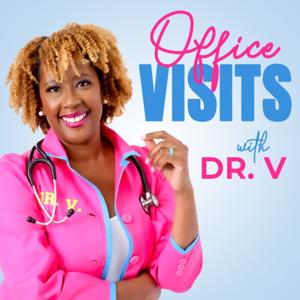


In this episode of the Office Visits with Dr. V, we meet Physician Dr. Kimberly R Shelton, she specializes in internal medicine and functional medicine. She is Dr. V’s personal physician. Dr. Shelton explains why Covid is such a serious virus, misinformation about the virus, reasons to consider the vaccine, and alternative treatments she prescribed her patients early on as well as other alternatives being used and their efficacy.
[00:02:14] Who is Kimberly Shelton?
Functional Medicine & Why Dr. Shelton Decided to Practice:
Functional medicine is a way of thinking, a way of approach that looks not at just a patient’s prior diagnosis of disease but their condition based on a set of symptoms. Functional medicine looks beyond that to the cause and looks at trends in their personal history and tries to put the whole story together. So looking at the patient from a more holistic perspective and looking at the systems and mechanisms behind the progression of certain symptoms rather than just the end game, which is the symptom of the condition itself. Dr. Shelton early on in her career, found there to be an overuse of prescriptions, procedures, and surgeries as the answer to treatment without trying to view the patient holistically looking at their health and wellness over time and the lack of education for patients around their ability to heal naturally (not in all cases, of course).
------------------------------
Facebook: Office Visits with Dr. V
Links and Resources:
It has been said, "If you do what you love, you will never work a day in your life." But for so many of us, we are in the Matrix and have failed to realize that we are not pursing our purpose. This is a follow up episode from Dr. V's Covid Epiphany and the Great Resignation. We speak to Jerome Myers, the Preeminent Authority on Dream Realization and Chief Inspiration Officer of Dream Catchers, to discuss the psychology behind why we stay and some of the effects on her health by staying stuck. Learn about how to "Take the Red Pill", Learned Helplessness and the levels you need to address to live a life of meaning and purpose. Note: If you haven't seen the movie, The Matrix, you will need to watch it for homework.
[00:02:38] Jerome Tells His Story
Learned Helplessness:
Jerome explains learned helplessness as an addiction to a paycheck. People with learned helplessness are waiting for somebody to send them money every week or every other week or once a month, whatever the pay cycle is, instead of convincing themselves that they can go out there and offer the world something that they will compensate them for. More importantly, people do not see their value. And so, first, they must get clear on what their gift is, what they are really good at. What do people seek them out for? And that thing, if packaged the proper way and put in front of the right person will command some income, but what are you good at? So, the starting point is getting quiet and actually thinking about what are people seeking you for?
------------------------------
Facebook: Office Visits with Dr. V
Links and Resources:
The global pandemic caused by Covid changed the course of my life. The hustle and grind of a thriving Ob/Gyn practice was no longer appealing after I realized what was most important to me. Millions of other Americans have made the same choice to leave their jobs, which is being called The Great Resignation. Living out my priorities has boosted my health and happiness, which has started me on a path to doing and achieving things I never thought possible. Be inspired by following your heart's desire.
[00:01:55] Dr. V is Retiring from Private Practice
------------------------------
Facebook: Office Visits with Dr. V
Links and Resources:
Menopause. Perimenopause. Do you have to be sweaty, moody, forgetful with a spare tire around your waist? Not necessarily. The average age of menopause is 51, some start before and some start after. Learn how you can make this time a new phase of life and not a hardship.
------------------------------
00:30 - For the most part, both men and women view menopause as a death sentence. The misconceptions, rumors, and negative beliefs associated with menopause make it an unbearable concept once a woman hits 45. Well, it’s not a death sentence, neither is it a disease, and Dr. V. is here to tell you why it’s perfectly normal to have pre and post-menopausal symptoms.
01:30 - Medically, menopause is described as a one-year period when a woman fails to experience her regular menstrual flow. The ovaries are one of the places where estrogen is made, and by the time a woman hits menopause, estrogen levels will have gradually dropped by a whopping 95%. Consequently, the uterine wall, which develops as a result of estrogen stimulation, does not grow as much as it used to. Thus, a woman’s periods become lighter and lighter until they eventually stop. Once you start experiencing lighter to no menses, it would be best if you kept track of your periods because any post-menopausal bleeding can be a sign of something serious.
06:10 - Perimenopause is the time before and after menopause where a woman starts to experience symptoms marking the end of her reproductive years. Unfortunately, just because your periods have stopped doesn’t necessarily mean that your menstrual symptoms will also stop. Symptoms like hot flashes and night sweats can go on for years, which might force you to seek professional help. You might also experience symptoms such as vaginal dryness, mood swings, memory loss, low sex drive, joint pain, or low metabolism.
10:44 - Menopause is inevitable, and whether we like it or not, every woman must pass through this stage. As a woman, it helps to be physically and mentally prepared for menopause. The symptoms will be there, and it’s up to you to start changing certain aspects of your life. To do this, start by exercising, having regular sleep patterns, reduce stress, and maintain your weight. Not everything has to be fixed using a pill; somethings can be fixed by just eating healthy.
12:07 - By eating healthy, Dr. V. talks about avoiding processed and deep-fried foods and instead adopting a plant-based diet. In particular, Dr. V. advises women to start consuming soy because soy has been proven to stimulate estrogen receptors the same way the ovary does. Back then, it was believed that soy consumption caused cancer. However, a recent soy study quashed all the misconceptions with findings pointing to several benefits, such as a 45% reduction in symptoms of hot flashes. If you’re experiencing severe bouts of hot flashes, you might want to consider incorporating soy into your diet.
20:36 - When it comes to treating menopausal symptoms, most people prefer using pills as a quicker and easier option. Dr. V. is not against taking pills in severe cases, but she believes that people should consider other options before taking medication. She particularly believes that if everybody, including men, were to exercise regularly, we could potentially see a drop in the number of people booking medical appointments. Dr. V. further explains why exercising is essential for women who’ve reached menopause since the reduction in the body’s metabolism rate can lead to a sudden weight gain.
25:55 - Next to puberty, menopause is the other increasingly stressful time in a woman’s life, so it’s normal to be a little anxious. However, seeking quick fixes is something that should be avoided at all costs. Back in the day, women experiencing menopausal symptoms used to take estrogen and progesterone, similar to vitamin pills. Recent studies have pointed out that when taken together, estrogen and progesterone increased a person’s chances of suffering a stroke or heart attack. By itself, estrogen is not as bad as when combined with progesterone.
38:24 - As earlier mentioned, menopausal symptoms can also include mood swings, which can significantly affect your social life. Your doctor might recommend antidepressants, which, interestingly, also help reduce hot flashes. So, if you’ve been experiencing hot flashes and can not take hormone replacements, you need to consider antidepressants.
Dr. V’s message to you today is that menopause is not the end of everything. Your sex drive might take a hit, and you may experience sudden mood swings, but that doesn’t mean you should stop living a normal life. Menopause is just a transition that all women must go through.
------------------------------
Facebook: Office Visits with Dr. V
Links and Resources:
Yeast or BV? Which one could it be? FYI-BV is Bacterial Vaginosis. In these 2 episodes, you'll learn how to know when Houston has a problem with your vaginal discharge.
------------------------------
00:30 – In part two of our Itchy and Fishy topic of discussion, we discuss the Itchy part-- a yeast infection. As mentioned in part 1, BV is very common among women, but yeast comes in a close second as far as vaginal infections are concerned. In fact, yeast is so common that there are actually over-the-counter medications in almost every pharmacy.
01:47 – Normally, yeast is characterized by a thick white vaginal discharge that comes out daily with the likelihood of the infection becoming worse. The second symptom is actually the topic of today's discussion-- severe itching. Yeast patients often find themselves scratching the areas around the vulva because with a yeast infection comes a burning sensation that can be quite uncomfortable. If not treated early enough, the scratching can weaken the vulva leading to severe ulcers.
03:18 - According to Dr. V., the best way to go about treating the yeast infection is by seeking help as soon as possible because the longer you wait, the harder it will be to get rid of the yeast. The thing to note about yeast infections is that 25% of the tests done might not show a yeast infection; thus, your doctor might be forced to rely on some other symptoms to come up with a diagnosis.
07:28 – According to Dr. V., yeast infections can be caused by a lot of things. If you find yourself time and time again coming down with a yeast infection, then you need to consult your doctor. One common disease that might lead to a yeast infection is diabetes. If you have a lot of extra sugar in your system, you are more likely to get a yeast infection because yeast thrives on excess sugar.
09:24 - Over the years, Dr. V. has noticed that a lot of women tend to apply lotion or perfume to the regions around the vulva due to several different reasons. However, lotion and perfume have been known to alter the vagina's pH of the vagina, leading to a yeast infection. So, if you ever find yourself scratching after applying these products, that's your cue to stop because you might be causing more harm than good.
10:28 - As you probably already know, herpes can also lead to a burning and itching sensation. With most people associating the itching with a yeast infection, many people tend to self-diagnose and self-treat a potential herpes infection as a yeast infection. Dr. V. blames this sorely on the availability of over the counter medication. Dr. V. advises women not to rush when self-diagnosing a potential yeast infection because yeast and some other STDs have many symptoms in common.
14:03 – We all want to live happy and healthy lives. However, having an itchy vulva is not what comes to mind when we think about happiness. So, if you are unsure about the itchy feeling you've been struggling with, it would be best if you consult your doctor immediately. Dr. V. concludes the episode by again mentioning the demerits of douching. As mentioned in the previous episode, douching can potentially alter your vaginal pH, thereby leading to a yeast infection.
------------------------------
Facebook: Office Visits with Dr. V
Links and Resources:
Yeast or BV? Which one could it be? FYI-BV is Bacterial Vaginosis. In these 2 episodes, you'll learn how to know when Houston has a problem with your vaginal discharge.
------------------------------
00:35 - In episode 1 part 1 of the Itchy and Fishy discussion, Dr. V talks about Bacterial Vaginosis or BV for short, is a bacterial disease that is not necessarily an STD but behaves a lot like a typical STD. As mentioned in the previous episodes, vaginal discharge during ovulation is normal, and it's something that shouldn't worry you one bit. However, with BV, Dr. V explains that the vaginal discharge is usually heavy, white, and produces a fishy odor. The foul smell is the symptom you need to look out for if you suspect that you might have BV.
07:00 - BV normally thrives in an environment where your vaginal pH is higher than normal. So, the way to treat BV is by using antibiotics that return your pH to normal. A word of caution from Dr. V is that you should try as much as possible not to drink alcohol when taking antibiotics because alcohol is known to cause sickness if ingested together with antibiotics. Another thing to keep in mind is that BV recurrence is mainly caused by people not completing their doses. The common trend among patients is that immediately a person feels better, that's the last day they take their medication. If you never want to produce that fishy smell ever again, not finishing your medication should be the last thing on your mind.
10:35 - Back in the day, women used to douche their vaginas in preparation for going to church or special occasions. While this was considered normal, these women increased their chances of getting BV because, according to Dr. V, douching potentially tampers with the normal vaginal pH. Another way of keeping your vaginal pH stable is through using a condom. Tests done on semen have found that semen has the capability to alter a woman's vaginal pH. On matters prevention, Dr. V concludes by highlighting the demerits of running a bubble bath. Sometimes taking a bubble bath might not be good for you because Dr. V believes that the more you bubble bath, the more you run the risk of tampering with your pH.
14:10 - Although BV is not sexually transmitted, the common thing between BV and an STD is that the pH is usually impacted. Dr. V goes on to explain that BV is normally harmless to pregnant women but is known to cause early labor. If you feel like you might have BV during pregnancy, the wisest thing to do is talk to your doctor. Don't self-diagnose or self-treat against BV using over the counter drugs. This is because BV sometimes shares similar symptoms with other STDs, making it impossible to differentiate unless properly tested. If you feel like you might have BV, please make a point of visiting your doctor first.
------------------------------
Facebook: Office Visits with Dr. V
Links and Resources:
Please listen to this episode! Please! Get your joy back, if you have Herpes, and if you don't, learn more about this infection. Merry Christmas!
------------------------------
01:34 - Although herpes can affect everybody just like the other STDs, it should not be treated as a common STD since there is usually a lot of stigmas, shame, and miscommunication surrounding herpes. After contracting the disease, you'll probably start seeing a blister or an ulcer around your genital area, which is usually very painful. The pain is usually because herpes loves making camp in the nerves. In extreme conditions, patients can sometimes get a fever or general body weakness.
04:21 – Like most STDs, the only way to get herpes is through skin to skin contact or sex. And by sex, Dr. V refers to everything that involves sexual organs, so that also includes both anal and oral. The bad thing about herpes is that it can sometimes be asymptomatic, which means a person can have it and not know about it. Dr. V advises people to seek medical help as soon as they notice any symptoms or feel like they might have come into contact with an infected person.
07:30 - In order for your doctor to test for herpes, they will take samples from the blisters. If you don't have blisters on your genital area, your doctor will instead draw blood and test it for herpes.
10:20 – Physical treatment of herpes is usually straightforward, your doctor only has to deal with the blisters, and you'll be fine in no time. However, the emotional part of it is sometimes hard since the fact that herpes will be with you all your life is something most patients struggle to accept. There are three reasons why doctors treat herpes. The first one is to prevent an outbreak. If you have herpes outbreaks they can attack you every once in a while and doctors have a medication for treatment. The second reason is to prevent you from transmitting the infection to other people. The third reason is to protect your unborn child from contracting herpes.
14:47 – As earlier mentioned, once you contract herpes, you'll have it all your life since there is currently no cure. This means that a lot of people tend to stigmatize people with herpes forgetting that contracting herpes is not the end of life. In fact, the CDC states that the anxiety and stigma surrounding genital herpes does not reflect the severity of the disease. Although herpes is incurable it is not as detrimental as some other diseases with life-threatening consequences. Dr. V believes herpes does not define an individual negatively, because many people have been known to live happy and healthy lives just like normal people with herpes.
------------------------------
Facebook: Office Visits with Dr. V
Links and Resources:
Human Papilloma Virus. What is it? Why do I have it? Take a breath, relax, and learn how it can affect you and what you can do about it.
------------------------------
01:17 - While it might be a new term to most men, a lot, if not all women know what HPV is. HPV stands for Human Papillomavirus, a common STI with Dr. V confirming that a staggering 80% of adults will get HPV at some point in their life. Dr. V goes on to address the infidelity issue concerning HPV. Since HPV is known to reactivate itself even after treatment, a partner’s infidelity should not be judged primarily through an HPV infection.
04:02 - Just like every other STD, the only way to contract HPV is by coming into physical contact with an infected person or through sex. Condoms are usually a recommended prevention measure, but as you might probably know, they are usually not 100% effective.
04:40 - Dr. V stresses that cervical cancer from HPV is preventable. A point to note about cervical cancer is that it takes years before the infection can become cancerous. As earlier mentioned, condoms are not very effective in preventing HPV, so Dr. V emphasizes the need for abstinence and faithfulness. Although those two measures are easier said than done, they are the surest way to protect yourself against HPV.
07:19 - The past few years have witnessed a decrease in the number of patients coming down with HPV. This is because the HPV vaccine launched a couple of years ago is proving to be effective. The vaccine is so effective that the cut off age to get the vaccine has increased to 45 years.
08:21 - Unless advised by a professional doctor, pap smears should be started at 21 years of age. This is because, at 21, most women are usually sexually active. Since the body can naturally deal with foreign materials in your body in a 1-year time frame, many doctors are advising their patients to get pap smears every 3 years. Disclaimer: Every patient is different and should consult with their doctor about any changes in their health care plan.
10:41 - Most cancerous cells can be easily dealt with if detected early enough, and the same is true for cervical cancer. Cervical cancer cells take years before eventually becoming cancerous so Dr. V advises her patients to look out for signs such as pre-cancerous cells which can be easily dealt with if detected early enough. In severe cases, medics might be forced to remove your uterus and the cervix, but you’ll still need to get a pap smear every three years to prevent any reactivation of the HPV cells.
12:17 - Although warts are usually highly infectious, Dr. V admits that she rarely meets patients suffering from warts. However, that doesn’t mean that warts aren’t real. The good news is that warts are easily treatable, and patients have been known to be feeling better in no time.
13:03 - HPV is real, and although a lot of people have it, it’s not a death sentence. Since it might take a couple of years before HPV can cause cancer, it pays to contact your health provider early enough to get the necessary tests done. Dr. V’s message for you today is that you need to free yourself from anxiety and worry about HPV. You are not alone, there is help.
------------------------------
Facebook: Office Visits with Dr. V
Links and Resources:
Your period should not be disruptive to your life. If you can't eat, sleep or go to work/school because of it, that's a problem. If you have to pack a bag, wear different clothes, or avoid certain activities, your period is too heavy or painful. You might not know what a normal period is because you may not have discussed it with anyone. That's why you have Dr. V.
------------------------------
02:00 - Today's topic is one of the issues that Dr. V believes would require a whole podcast series to cover period or the more technical term menses. While most people seem to have regular menses, the few that don't tend to lead frustrated lives. But how do you define normal periods? According to Dr. V, if you have painful, long, heavy, or irregular menses, then there's a problem. Menses are a part of a woman's life, and if by any chance your menses are disrupting your life, then it's time you seek professional help.
04:10 - During ovulation, the body modifies itself to receive sperms by preparing the uterine walls. If fertilization doesn't take place, then the body is forced to get rid of the uterine wall, and that's what comes out during menstruation.
05:12 - A lot of reasons can lead to abnormal periods. The number one cause, however, is fibroids. Although not cancerous, fibroids are abnormal tumors that tend to grow in a woman’s uterus. The interesting thing about fibroids is that about 70% of women have them, and about 90% of African American women have them too. Fibroids that develop within the uterine cavity may distort the lining of the uterus, which could potentially cause heavy flow and irregular menstruation.
06:50 - Endometriosis is another known cause of irregular menses. What happens during endometriosis is that the endometrium implants itself in different parts of the body, such as the intestines or stomach. When this happens, the woman involved usually faces longer cycles since the body has more tissues to shed. Endometriosis was low-key in the past but has been gaining ground for the past couple of years.
08:08 - Irregular ovulation can sometimes lead to abnormal periods. The most common factor leading to irregular ovulation is obesity. With the number of people suffering from obesity increasing daily, Dr. V is worried that the number of women who might experience irregular ovulation might be on the rise. Dr. V admits that while it might be hard to lose weight, it's doable and well within your control.
11:08 - To understand what's making you have irregular menses, Dr. V normally performs a couple of tests and starts with the physical exam where she examines your belly for any abnormal tissues. The second procedure is usually the internal pelvic exam which gives medics a lot of information about what's happening inside you. In extreme circumstances, Dr. V might recommend surgery so that they can go in and find out what's bugging you.
11:25 - Anemia can also sometimes cause irregular menses. Anemia is a condition in which the body's hemoglobin count is below the normal count based on age and sex. People with heavy menses are more susceptible to anemia since the high amount of blood lost contains iron, and if not replaced, can lead to anemia. If you are anemic, visiting your doctor might be the fix you need to get rid of those irregular periods.
13:10 - According to Dr. V, before you even get a doctor’s appointment, change your lifestyle. What you eat and how you live are a significant determinant on how your menses behaves. Change your diet, avoid processed foods, start exercising, and stop drinking milk, if your problems persist, please seek medical help.
------------------------------
Facebook: Office Visits with Dr. V
Links and Resources:
What is the cervix? What is mucus? This is one of the common things I see in women that I know is normal but they don't. You don't need an antibiotic to fix normal. It's something that every woman has and it has a purpose.
------------------------------
Facebook: Office Visits with Dr. V
Links and Resources:
01:31 - When you visit your doctor, you'll have to part with a specific amount of money unless you're there for your annual wellness check. After several years in the industry, Dr. V noticed that some women actually visit their doctors complaining of entirely normal stuff. Issues like vaginal discharge are familiar to every woman, yet some women will still schedule an appointment to get the discharge looked at.
02:10 - Most women don't understand that vaginal discharge is a crucial element of their menstrual and reproductive cycles. It's not their fault, though, since these topics are usually not taught in schools, so women have to figure it out on their own. If you notice some form of mucus discharge from your vagina, that's just the usual stuff. However, if by chance the mucus is either smelly, itchy, or has a weird color, then it's time to schedule that appointment.
02:50 - The cervix is one of the most important body parts in the female reproductive system. The most common roles played by the cervix are keeping the baby safe during pregnancy, dilating to let the baby out during birth, and most importantly producing mucus. According to Dr. V, the mucus produced not only welcomes the sperms deposited into the vagina but also regulates temperature and ph inside the vagina.
04:13 - Women who would like to use natural birth control techniques can use mucus discharge as a sign of ovulation and therefore abstain from sex. Other than delicate breasts, clear egg-white like discharge is a sign that you're ovulating and couples looking to get pregnant can also take advantage of that. Dr. V being a woman, she goes through the same things as every other woman out there. So, she goes on to describe that at first, the mucus will be clear but after some time turn thicker and yellowish, which is a clear sign that you've ovulated.
05:40 - The only time you won't see any mucus is when you're not on any birth control medications or not ovulating. Women past their menopause are also less likely to produce any mucus since their bodies are not able to make any more babies so their reproductive system kind of shuts down.
09:15 - Dr. V's message to you today is that, as a woman, it's up to you to take the initiative to learn about your body. Doctor’s appointments are pretty expensive, so you need to start learning what's expected by tracking the different cycles in your body.
------------------------------
Thank you for listening, please like and share this episode with a friend!
If you would like to stay connected and get your questions answered by Dr. V, feel free to reach out!
Facebook: Office Visits with Dr. V
Instagram: office_visits_with_dr_V.
Website: https://officevisitswithdrv.com/
From the publisher's feed