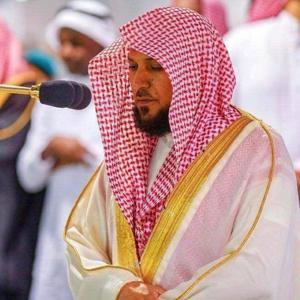
omarspodcast

omarspodcast

Download on the App Store

omarspodcast episodes

  • Suraht Al-Fil
    In this Surah, God's punishment which was inflicted on the people of the elephant is referred to and described very briefly because it was an event of recent occurrence, and everyone in Makkah and Arabia was fully aware of it. That's why the Arabs believed that the Ka'bah was protected in this invasion, not by any god or goddess, but by God Almighty Himself. Then God alone was invoked by the Quraysh chiefs for help, and for quite a few years the people of Quraysh, having been impressed by this event, had worshiped none but God.
    1 min
  • Suraht Al-Humazah
    al-Humazah (Arabic: الهمزة‎, "The Backbiter"[1] "The Slanderer" [2] "The Scorner" [3]) is the 104th chapter (sūrah) of the Qur'an, with 9 verses (āyāt).
    1 min
  • Suraht Al-Asr
    1-2 Men generally seek for gain and find loss
    3-4 The righteous, however, are the exception to this rule
    1 min
  • Suraht At-Takathur
    1-3 Men spend their time seeking the things of this world
    3-5 The judgment-day shall reveal their folly
    6-8 In consequence they shall see hell-fire
    1 min
  • Suraht Al-Qariah
    1-5 The day of judgment a day of calamity [6][1]
    6-9 The good and bad shall be judged according to their works
    10-11 Háwíyah described [6]
    After a picturesque depiction of judgement day in first 5 verses,[7] next 4 verses (ayat) describe that God's Court will be established and the people will be called upon to account for their deeds. The people whose good deeds will be heavier, will be blessed with bliss and happiness, and the people whose good deeds will be lighter, will be cast into the burning fire of hell.[8]
    The last 2 verses describe Háwíyah[9] in similar emphatic[10][11] way as Al-Qariah was emphasized[12][13] in the beginning. According to the Papal translator, Maracci, the original word Hâwiyat is the name of the lowest dungeon of hell, and properly signifies a deep pit or gulf.[14] Jewish to Muslim convert, Muhammad Asad comments here: Lit., "his mother [i.e., goal] will be an abyss" (of suffering and despair). According to Quranite translator, Sam Gerrans, the term "mother" (umm) is used idiomatically to denote something that embraces or enfolds.[15]
    1 min
  • Suraht Al-Adiyat
    1-6 Oaths that man is ungrateful to his God
    7-8 Man loves the things of this world
    9-11 Man’s secret thoughts shall be discovered in the judgment-day [2]
    A one liner theme of surah al-adiyat would read that this surah gives an example that horses are more grateful to their owners than men are to their Rabb (Allah).[3]
    First five ayaat of the surah consist of an oath as a metaphor enforcing the lesson.[4] They describe a scene of horses charging, panting, producing sparks by their hooves, raiding at the time of dawn, stirring up the cloud of dust and arriving a gathering.
    The substantive proposition is in verses 6-8 that Man is ungrateful to his Lord and himself is a witness to it and he is immoderate in the love of worldly good.[5]
    The last three ayaat conclude the surah with a rhetorical question that Does the man not know about the time when contents of the graves will be resurrected and that which is in men's breasts shall be brought to light on that Day their Sustainer will show that He has always been fully aware of them.
    1 min
  • Juz 30 Suraht Al-ZalZalah
    Its theme is the , rising from their graves, will come out in their varied groups from all corners of the earth, to be shown their deeds and works, and their presentation of the deeds will be so complete and detailed that not an atom's weight of any good or evil act will be left unnoticed or hidden from his eyes.
    1 min
  • Juz 30 Suraht Al-Bayina
    1-2 The idolaters stagger at the revelations of the Quran
    3-4 Jews and Christians dispute among themselves since the advent of Muhammad and his new religion
    5 Unbelievers of all classes threatened with divine judgments
    6 People of the Book and polytheists are the worst of all creatures, destined for hell[1]
    7-8 Muslims are “the best of creatures;” their reward
    2 min
  • Juz 30 Suraht Al-Qadr
    Quran 97 describes Laylat al-Qadr, the "Night of the abundant portion of blessings" in Ramadan on which Muslims believe the Qur'an was first revealed. The night is not comparable to any others in view of Muslims[4] and according to a tradition, the blessings due to the acts of worship during this night cannot be equaled even by worshipping throughout an entire lifetime. The reward of acts of worship done in this one single night is more than the reward of around 83 years (1000 months) of worship.[5] Laylat al-Qadr is referenced in the Quran:[6][4]
    VERILY we sent down the Koran in the night of al Kadr.s
    And what shall make thee understand how excellent the night of al Kadr is?
    The night of al Kadr is better than a thousand months.
    Therein do the angels descend, and the spirit of Gabriel also, by the permission of their LORD, with his decrees concerning every matter.t
    It is peace until the rising of the morn.[7]
    The "Spirit" mentioned in verse 4 is commonly interpreted as referring to the angel Jibreel (Gabriel). The "peace" referred to is called by Mujahid "security in which Shaytan (Iblis) cannot do any evil or any harm", while Ibn Kathir quotes Ash-Sha'bi as saying that it refers to the angels greeting the people in the mosques throughout the night.
    Laylat al-Qadr occurs during an odd-numbered night within the last ten days of Ramadan, but its exact date is uncertain; due to the promises made in the chapter and in various hadith. Muslims consider it a particularly good time for prayer, supplication, and repentance to God. This event marks the descent of the first revelation of the Quran to Earth. The official Islamic teaching is that Muhammad received the revelations that formed the Quran piecemeal for the next twenty-three years of his life up until the time of his death. Shia Muslims believe that Ali (the first Shia Imam, and the fourth caliph of the Rashidun Caliphate to Sunnis) had special insight and intimacy with God on this night.[8] The prominent Shia thinker Nasir Khusraw interprets verse stating that “the night of power (laylat al-qadr) is better than a thousand months” (Quran 97:3) to refer to the proof (ḥujjat) of the Lord of the Resurrection (Qāʾim al-Qiyāma) whose knowledge is superior to that of a thousand Imams, though their rank, collectively, is one. [9]

    1 min
  • Juz 30 Suraht Al-Alaq
    1-5 Command to Muhammad to recite the Quran
    6-14 Rebuke of Abu Jahl for hindering the Muslim cause
    15 ۩ 19 Abu Jahl threatened with the pains of hell [2]
    1 min

About omarspodcast

From the publisher's feed

This podcast is generally a personal podcast! I have no intention of getting public and I am using this App to use its benefits and apply it to my reciting the Quran and sharing it only with my loved…

More shows like omarspodcast

The Holy Quran, Sheikh Maher Al-Muaiqly | القران الكريم ماهر المعيقلي by Sheikh Maher Al-Muaiqly

The Holy Quran, Sheikh Maher Al-Muaiqly | القران الكريم ماهر المعيقلي

25 Listeners