
Sign up to save your podcasts
Or



Based on Podcast App listening data
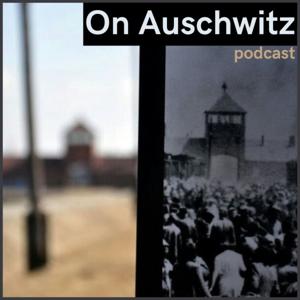
The Archives of the Auschwitz Memorial collect, preserve, and provide access to documents and materials connected mainly with the history of the Auschwitz camp.
The collection includes original German camp records, copies of documents obtained from other institutions in Poland and abroad, source material of postwar provenance (memoirs, accounts by survivors, material from the trials of Nazi war criminals, etc.), photographs, microfilms, negatives, documentary films, scholarly studies, reviews, lectures, exhibition scenarios, film scripts, and research results.
On October 7, 1944 a revolt took place at the Auschwitz II-Birkenau camp, in the Sonderkommando - the special work unit that consisted mainly of Jewish prisoners whom the Germans forced to work in gas chambers, burning pits areas and crematoria. Dr. Igor Bartosik of the Auschwitz Memorial Research Center talks about the background of resistance of the Sonderkommando and the revolt itself.
In the picture: gas chamber and crematorium IV at Auschwitz that was set on fire by Sonderkommando prisoners during the revolt.
“Auschwitz. A Monograph on the Human” is a new book by the Auschwitz Museum Director Dr. Piotr Cywiński. It is the first attempt - on a global scale - to delve so deeply into human emotions inside the camp. It is a must-read for those seeking to understand what Auschwitz was all about.
The gathering of materials and work on the publication took almost six years. Piotr Cywiński analysed nearly 250 books with memoirs of survivors of the German Nazi camp Auschwitz and extensive hitherto unpublished archival material containing their accounts. On this basis, he presented an in-depth reflection on the condition of people subjected to the process of turning into prisoners of the concentration camp.
Listen to the interview with Dr. Piotr Cywiński about the book in the podcast.
Read more about the book.
During the time of operation of Auschwitz, some 8,100-8,200 SS men worked there as part of the camp garrison. In our podcast Dr. Piotr Setkiewicz, the head of Research Center of the Auschwitz Memorial, talks about functioning of the SS garrison in the Auschwitz camp complex, its organizational structure and everyday work in the management, functioning, and isolation of the camp.
We also recommend our online lesson: http://lekcja.auschwitz.org/2021-zaloga-en/
In the thousands of preserved registration photographs of Auschwitz prisoners, we can see faces of the men and women imprisoned in the camp.
Dr Wojciech Płosa, the head of Auschwitz Memorial Archives, talks about the history of these photographs.
The Auschwitz concentration camp had almost 50 sub‑camps. The largest of them had extensive administrative structures, separate hospital barracks, showers and even small crematoria. In the smaller ones, prisoners were locked up for the night in rooms or cellars—there were no fences or guard towers there and meals were delivered from the main camp. The majority of prisoners were employed in the armaments and extractive industries, or agriculture. At the beginning of 1945, they held 35,000 men and women prisoners, more than Auschwitz I and Auschwitz II-Birkenau combined (31,000).
Dr. Piotr Setkiewicz, the head of the Memorial research center talks about the history of Auschwitz sub-camps.
Activities by the Jehovah’s Witnesses were banned in the Third Reich in 1933 because of the Witnesses’ religious principles and pacifistic views, as well as their organization’s international connections. As a result, many of them were imprisoned in concentration camps.
Teresa Wontor-Cichy from the Auschwitz Memorial Research Center talks about the history and fate of some 400 Jehovah’s Witnesses incarcerated in the camp.
The historians of the Memorial today estimate, that the Germans murdered around 1,1 million out of 1,3 million people deported to Auschwitz.
Dr. Piotr Setkiewicz, the head of the Museum Research Centre, talks about the history of research on the number of Auschwitz victims.
The fate children who were registered in Auschwitz as prisoners was no different in principle from that of adults. Just like them, they suffered from hunger and cold, were used as laborers, and were punished, put to death, and used as subjects in criminal experiments by SS doctors.
Dr. Wanda Witek-Malicka from Memorial’s Research Center talks about the Auschwitz camp through the eyes of a child.
---
Listen also to the podcast "Children in Auschwitz": https://anchor.fm/auschwitz-memorial/episodes/On-Auschwitz-8-Children-at-Auschwitz-e16t4gh
Two extremely important factors in the exhaustion, deprivation and destruction of prisoners at Auschwitz were hunger and hard slave labour.
Dr. Jacek Lachendro of the Auschwitz Memorial Research Centre talks in our podcast about this aspect of the camp's functioning.
---
Listen also to the podcast about living and sanitary conditions as well as camp clothing: https://anchor.fm/auschwitz-memorial/episodes/On-Auschwitz-10-Living-and-sanitary-conditions-as-well-as-camp-clothing-at-Auschwitz-e18dcik
From the publisher's feed

3,982 Listeners

4,779 Listeners

37,583 Listeners
183 Listeners

1,431 Listeners

2,826 Listeners

1,174 Listeners

151 Listeners
74 Listeners

448 Listeners
10 Listeners
3 Listeners
443 Listeners

805 Listeners
248 Listeners